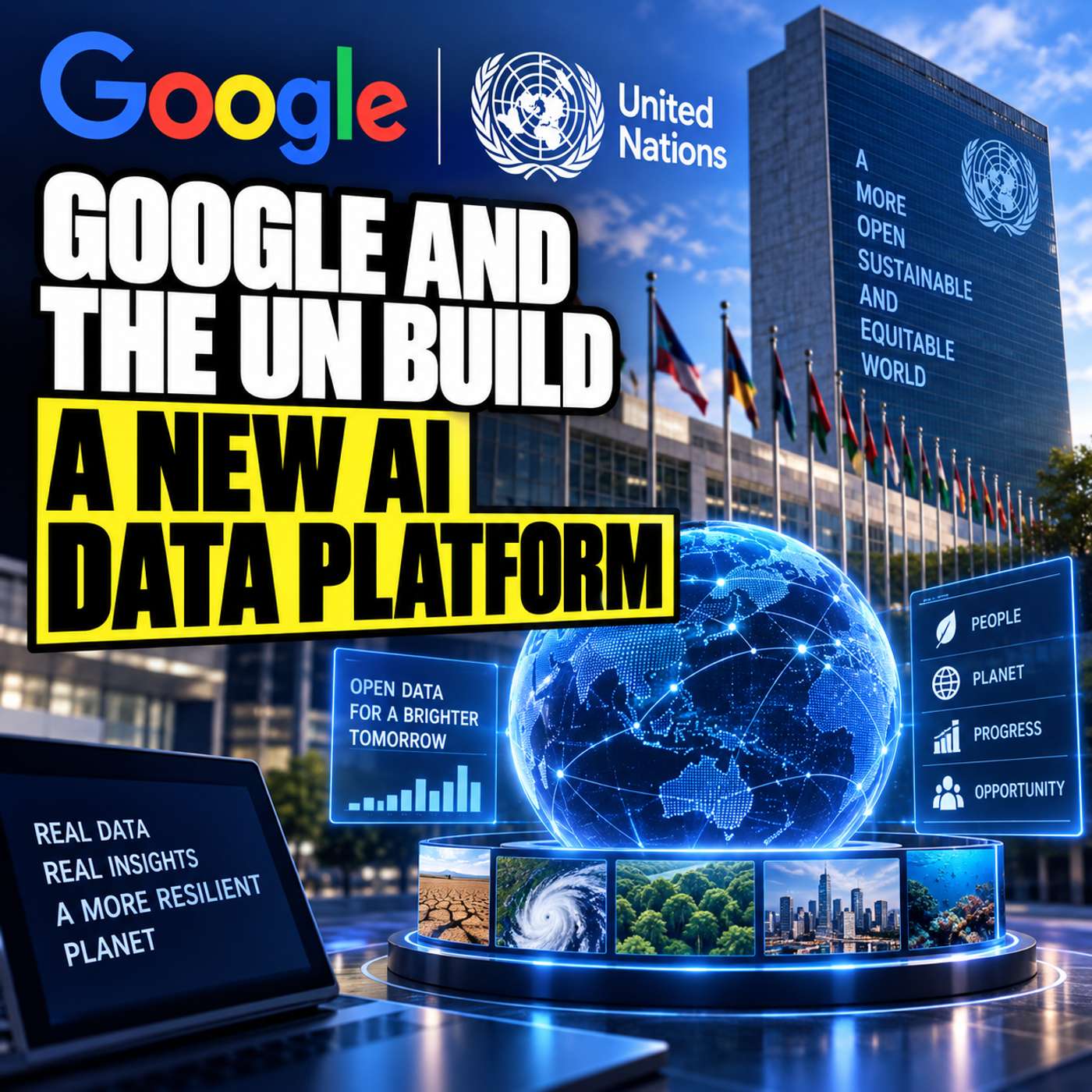


What if anyone could search trusted UN statistics in plain English and instantly turn them into interactive charts, visualizations, and research?
In this episode of TechDaily.ai, David and Sophia explore the UN System Data Commons, a newly launched open platform created through collaboration involving Google.org and the UN Foundation. The platform is designed to bring fragmented UN statistical data into one interconnected environment, making it easier for researchers, journalists, nonprofit leaders, policymakers, and curious citizens to work with authoritative global information.
For decades, valuable UN statistics have been spread across separate organizations, systems, formats, timelines, and geographic definitions. Connecting those datasets could require extensive manual cleaning and reconciliation before meaningful analysis could even begin.
The UN System Data Commons aims to change that through an AI-ready knowledge graph that harmonizes datasets and helps different statistical concepts work together.
In this episode, you’ll hear about:
• Why fragmented data has made global research slow and difficult
• How knowledge graphs can connect statistics across health, education, infrastructure, labor, poverty, and other domains
• How natural language search allows users to ask questions without writing complex code
• How the platform can generate interactive charts from cross-domain questions
• Why verified, institutionally sourced data matters when AI is involved
• How AI agents and the Model Context Protocol, or MCP, can support more advanced research workflows
• How AI assistants could help assemble charts, infographics, and draft reports from authoritative data
• Why human review remains essential when interpreting correlations and citing critical figures
• The UN system’s goal of including 80% of its statistical datasets on the platform by 2027
The discussion also considers a bigger possibility: what happens when local observations can be viewed alongside interconnected global statistics? Better access to trusted data could give communities, researchers, and decision-makers new ways to identify patterns and explore evidence-based solutions.
Explore how AI, open data, knowledge graphs, and natural language search are changing access to global statistics—and what that could mean for the future of research and problem-solving.
Subscribe to TechDaily.ai for more conversations about artificial intelligence, technology, data, and the tools shaping how we work with information.