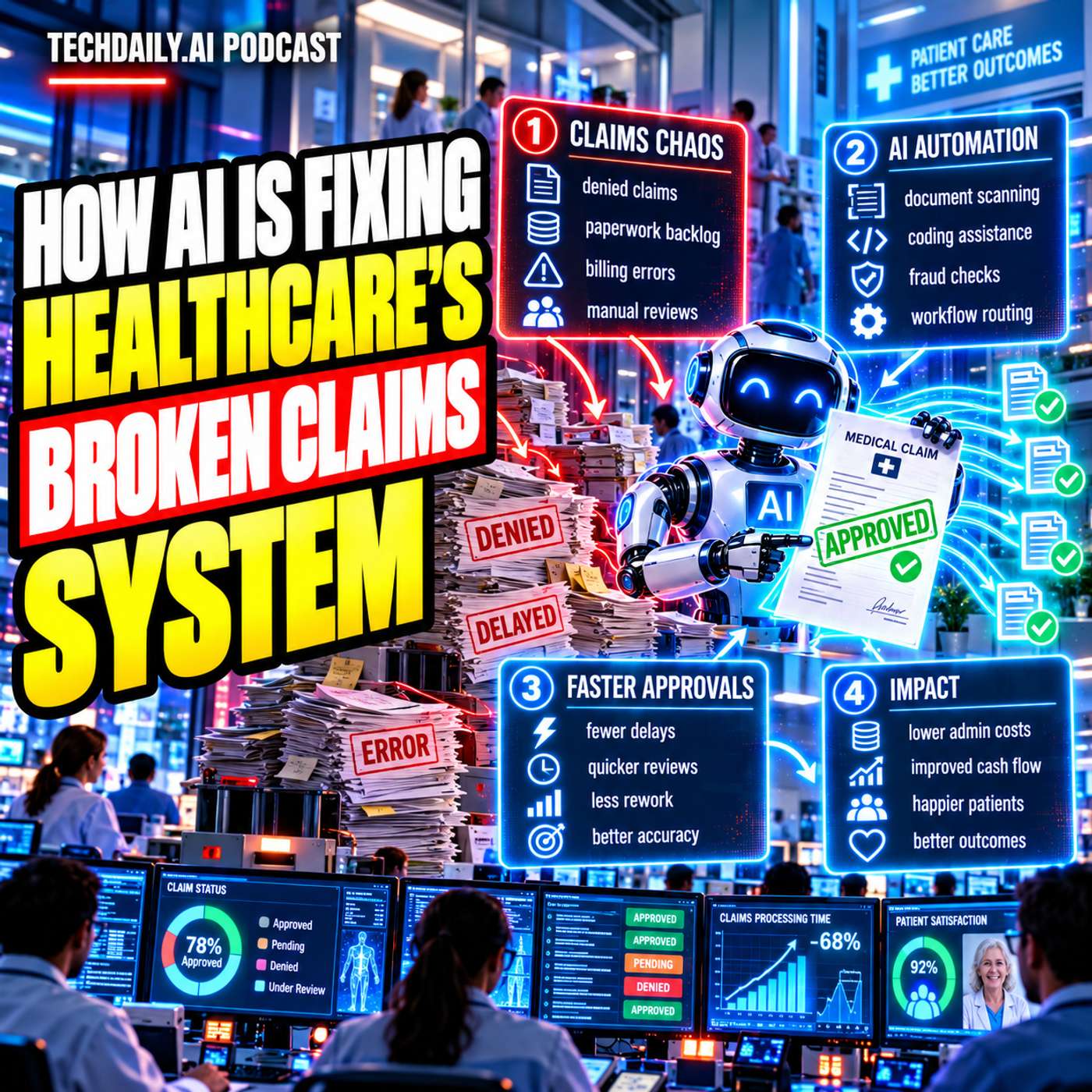


Healthcare has spent billions digitizing records, claims, and payment systems. So why are providers still losing enormous amounts of time and money fighting denied claims?
In this episode of techdaily.ai, David and Sophia explore why the real problem in healthcare revenue management isn’t simply inefficient claims processing. It’s a lack of intelligence, visibility, and connection between fragmented systems.
Healthcare providers spend an estimated $20 billion every year dealing with denied claims, while total administrative waste across the U.S. healthcare system approaches $200 billion annually. Much of that cost comes from organizations trying to understand why claims fail only after the damage has already occurred.
The conversation explores how artificial intelligence and system observability could move healthcare from reactive appeals toward predictive revenue cycle management.
You’ll hear about:
• Why digitizing healthcare did not eliminate administrative friction
• How fragmented EHRs, payer policies, billing systems, and clinical notes create blind spots
• Why traditional robotic process automation can make inefficient processes faster without fixing them
• How AI can detect emerging denial patterns before they affect thousands of claims
• Why healthcare organizations are moving intelligence upstream before claims are submitted
• How predictive systems could identify missing authorizations, coding conflicts, and changing payer behavior
• Why fewer claim denials could reduce financial anxiety for patients
• How administrative friction creates costs for both healthcare providers and insurance companies
• Why shared visibility may ultimately benefit payers, providers, and patients
The episode also introduces the idea of AI functioning as a “financial immune system.” When an unusual denial pattern appears, an intelligent platform can identify the change, isolate the cause, and help revenue cycle teams prevent the same problem from recurring.
Instead of spending months responding to payment failures, healthcare organizations could begin designing processes around what is likely to happen next.
And that raises an even bigger question:
If AI eventually becomes accurate enough to predict exactly what a payer will approve before a claim is submitted, could the medical claims process itself eventually disappear?
Listen to the full episode for a look at how AI, observability, and predictive intelligence could reshape the business infrastructure behind modern healthcare.
Subscribe to techdaily.ai, share the episode with someone working in healthcare or technology, and follow the show for more conversations about the systems shaping our world.