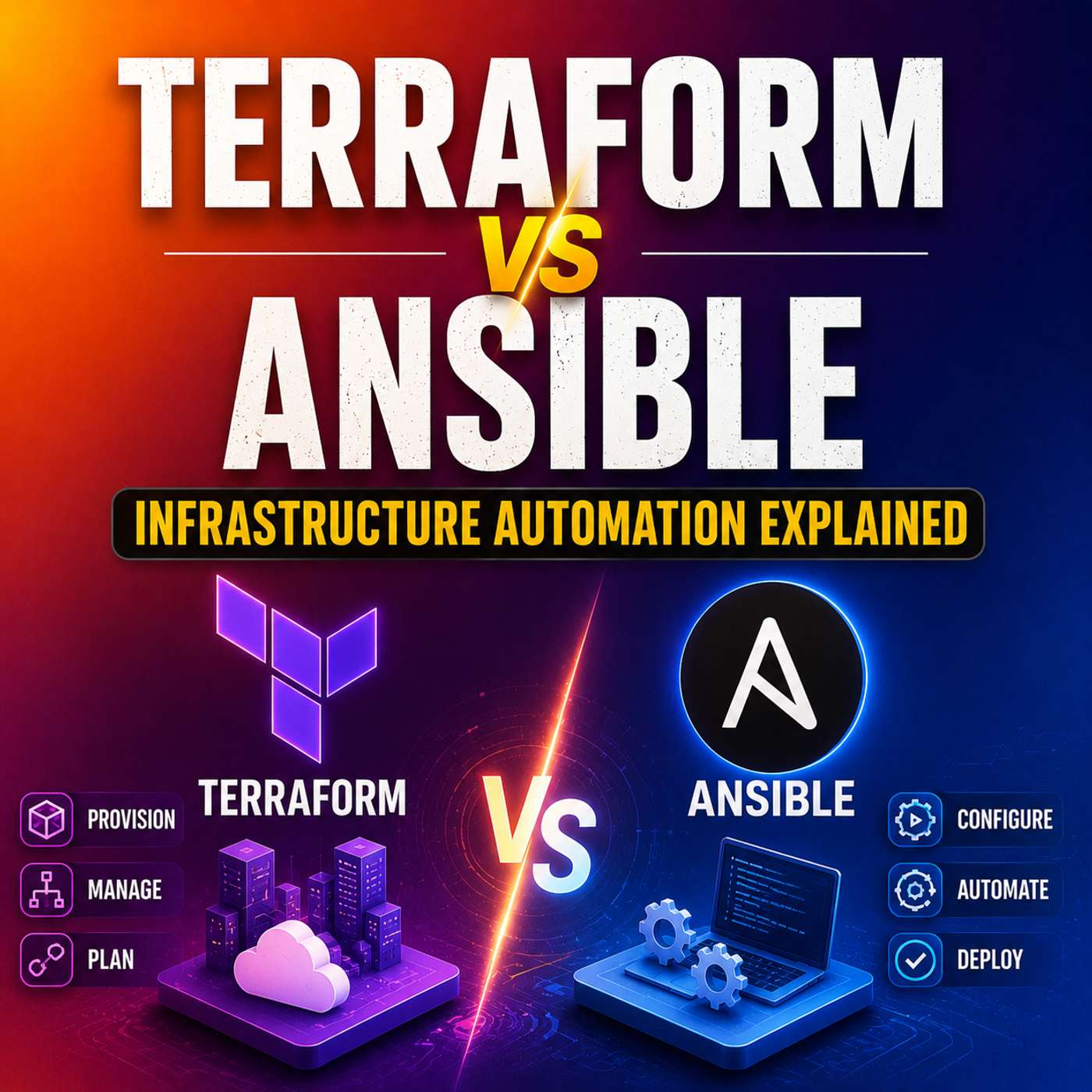


Ansible and Terraform are two of the biggest names in infrastructure automation, but they solve very different problems.
In this episode of techaily.ai, David and Sophia break down where Terraform ends and Ansible begins, why treating the two tools as interchangeable can create serious deployment problems, and how modern DevOps teams can combine them into a powerful automation workflow.
Terraform operates primarily at the infrastructure provisioning layer. It communicates with cloud provider APIs to create and manage resources such as virtual machines, networks, subnets, routing tables, firewalls, load balancers, and Kubernetes infrastructure.
Ansible focuses on what happens after those resources exist. Using agentless connections such as SSH, it configures operating systems, installs packages, applies security patches, deploys applications, and manages the ongoing software state of servers.
In this episode, you’ll hear about:
- How Terraform and Ansible divide infrastructure provisioning and configuration
- Why Terraform uses HCL while Ansible relies heavily on YAML
- How Terraform’s state file tracks infrastructure and detects configuration drift
- Why Terraform’s dependency graph enables parallel resource creation
- How Ansible works without maintaining a persistent infrastructure state file
- The importance of idempotency when building Ansible playbooks
- Why native Ansible modules are safer than relying heavily on raw shell commands
- How agentless automation simplifies large-scale infrastructure management
- The role of Terraform providers and Ansible Galaxy
- Terraform’s licensing change and the emergence of OpenTofu
- How Terraform outputs can feed dynamic inventories directly into Ansible
- Why many teams use Terraform and Ansible together instead of choosing only one
- How AI-driven infrastructure automation could eventually blur the line between provisioning and configuration
The episode also walks through a practical multi-tier application deployment. Terraform first provisions the networking, firewall rules, load balancers, and virtual machines. It then passes dynamically generated infrastructure information to Ansible, which connects to the new servers and performs operating system configuration, security updates, runtime setup, code deployment, and service management.
The key lesson is simple: match the automation tool to the layer it was designed to manage. Terraform excels at defining and provisioning infrastructure, while Ansible excels at configuring systems and deploying software.
Subscribe to techaily.ai for more conversations about DevOps, infrastructure automation, cloud architecture, AI, and the technologies shaping modern IT operations.