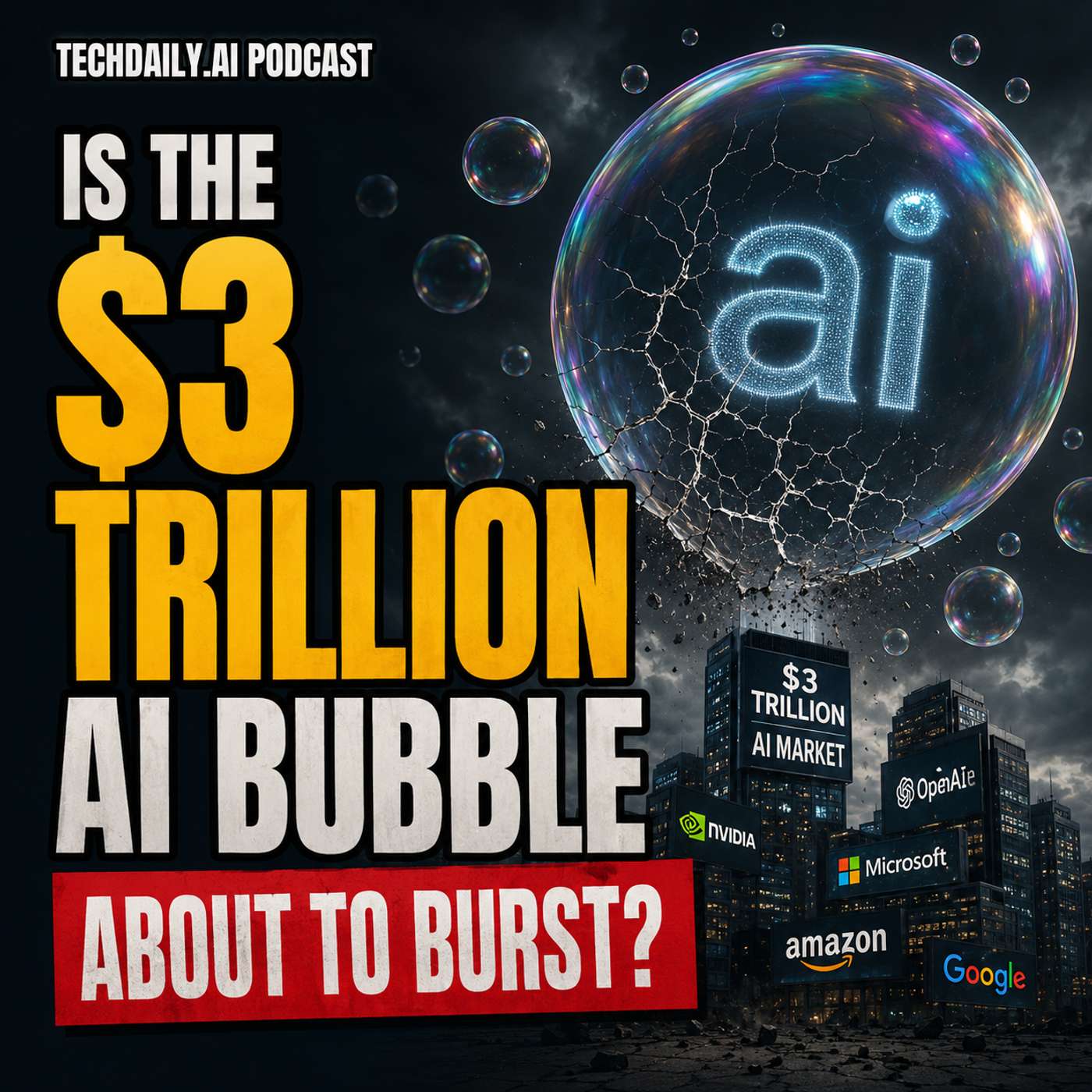


The AI boom is producing record revenues, massive infrastructure projects, and some of the biggest technology investments ever attempted. But beneath those headline numbers, the financial picture described in this episode looks far more fragile.
David and Sophia examine the apparent contradiction at the center of the AI economy: Big Tech can report enormous profits while simultaneously pouring extraordinary amounts of cash into data centers, chips, power, and compute infrastructure.
Using Alphabet as a starting point, the conversation explores why reported profit and free cash flow can tell dramatically different stories—and why investors may be increasingly concerned about how much capital the AI race requires.
In this episode:
• Why Alphabet’s record results can coexist with negative free cash flow
• The enormous infrastructure spending required to compete in AI
• Why AI companies may need dramatically more revenue to support current investment levels
• How Nvidia-style vendor financing could create circular financial relationships
• The espresso-machine analogy that makes vendor financing easy to follow
• How extending server depreciation schedules can boost reported profits
• Why rapidly aging AI hardware could eventually create major write-offs
• How off-balance-sheet entities can shift data-center debt away from corporate balance sheets
• The transcript’s claim of roughly $1.65 trillion in hidden AI-related debt
• Why credit default swaps could provide another signal of institutional concern
• The optimistic case: falling compute costs make today’s investments sustainable
• The pessimistic case: weak AI economics trigger defaults throughout the financing chain
• Why 2028 is presented as a potential collision point between accounting assumptions and aging hardware
The central question is bigger than whether AI technology succeeds. Can AI generate enough sustainable cash flow, quickly enough, to justify the extraordinary infrastructure and financing commitments being made today?
Tune in for a deep dive into the financial mechanics described as powering the AI boom—and the risks that could emerge if revenue, compute costs, and hardware economics fail to keep pace.
Subscribe to techdaily.ai for more conversations exploring technology, AI, markets, and the forces shaping the future.