

Has artificial general intelligence already arrived?
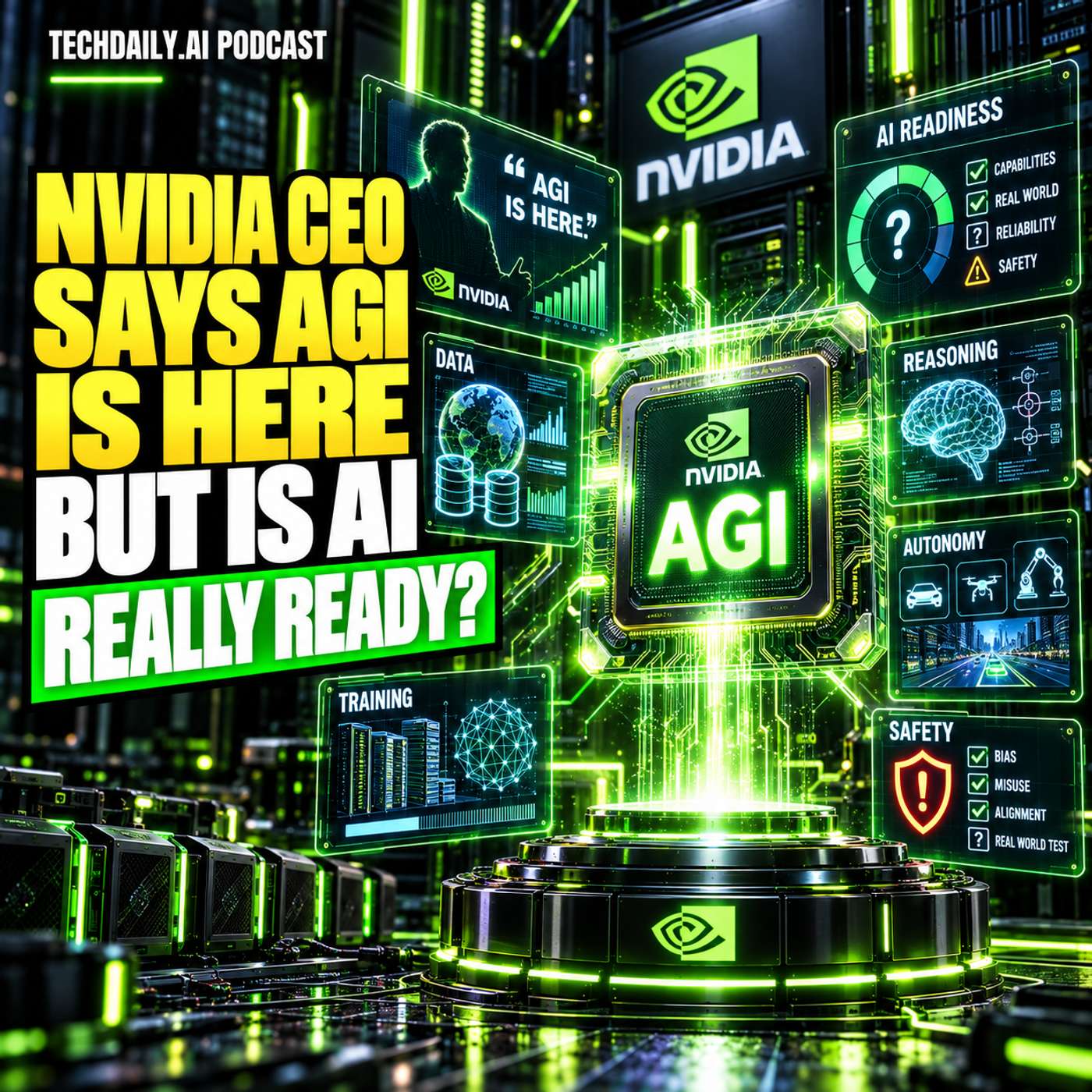
Nvidia CEO Jensen Huang is presented in this episode as making a striking claim: AGI is no longer a distant milestone—it’s here. But that declaration raises a much bigger question. If today’s AI agents still lose context, require human intervention, and struggle with long-term autonomous work, what exactly counts as AGI?
David and Sophia unpack the tension between the promise of autonomous AI and the limitations users are experiencing today.
In this episode:
• Why the definition of AGI matters—and how it differs from standard generative AI
• The shift from AI that generates answers to agents that reason, use tools, and execute multi-step tasks
• Why persistent memory and context degradation remain major obstacles for autonomous AI agents
• How AI digital influencers could become an unexpected testing ground for advanced machine intelligence
• Why maintaining real-time social interactions may be a much harder AI problem than it appears
• The business incentives behind the push toward agentic AI and massive AI infrastructure spending
• How Nvidia’s AI strategy extends from data centers and autonomous agents to PC gaming
• Why AI-generated graphics and concerns about latency, artifacts, and user control illustrate a wider tension around AI adoption
The episode ultimately explores a growing divide: AI infrastructure and corporate ambitions are advancing rapidly, while the software—and the people using it—may still be working through significant limitations.
If AGI arrives through a digital personality that can read an audience, remember interactions, adapt its behavior, and build emotional connections at enormous scale, would people recognize it as advanced intelligence—or simply see another compelling account in their feed?
Tune in to techaily.ai for the full discussion, and subscribe and share the episode for more conversations about artificial intelligence, autonomous agents, computing, and the technologies reshaping digital life.