

Are wired earbuds making a comeback?
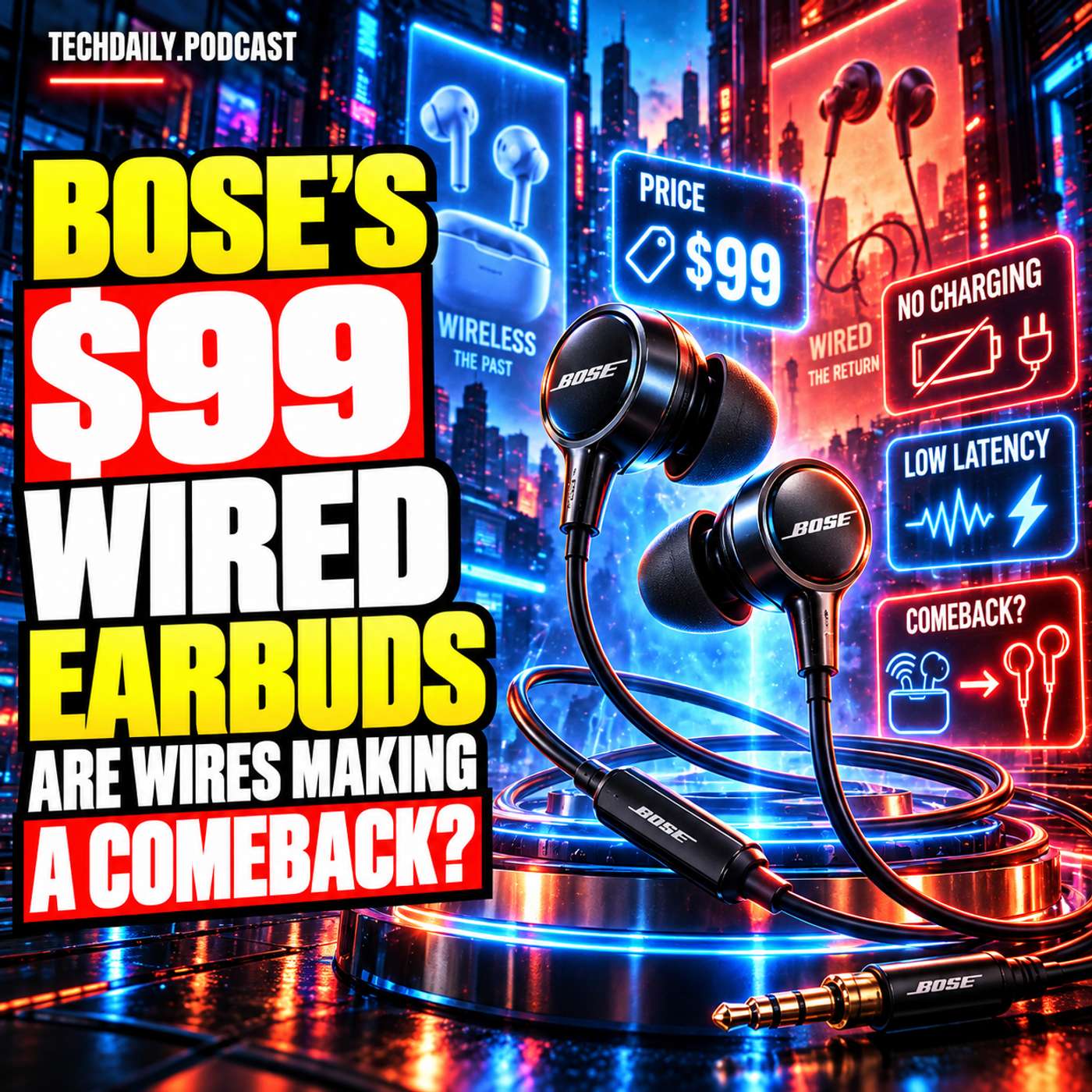
After years of Bluetooth dominating personal audio, this episode explores why some listeners may be ready to plug back in—and whether the $99 Bose noise-cancelling wired earbuds discussed in the transcript offer enough to justify going back to a cable.
David and Sophia examine everything from the reinforced 4.2-foot cord and stability wings to USB-C power, active noise cancellation, lossless audio, call quality, and zero-latency listening.
You’ll hear about:
• Why battery anxiety could be fueling renewed interest in wired earbuds
• How Bose reportedly redesigned the cable for durability and fewer tangles
• Why thicker insulation may help reduce cable microphonics
• How stability wings help manage the weight of the earbuds and cable
• The IPX4 splash-resistance rating discussed in the episode
• Why these earbuds rely exclusively on powered USB-C
• The major limitation for airplane seatback entertainment systems
• How removing an internal battery changes the wired ANC experience
• Bose Quiet Control and the three listening modes described
• How active noise cancellation handles different types of environmental noise
• Why USB audio can avoid Bluetooth compression
• The 24-bit/48 kHz audio stream discussed in the episode
• Why a wired connection can eliminate Bluetooth latency
• The potential benefits for mobile gaming and video
• How an inline microphone changes voice-call quality
• Why sidetone can make calls with sealed earbuds feel more natural
• Whether $99 makes sense compared with cheaper USB-C earbuds
The central trade-off is fascinating: these earbuds eliminate the need to charge another device, but they still need electricity. Instead of carrying their own battery, they draw power directly from the connected phone, tablet, laptop, or gaming device.
That raises the episode’s biggest question: does going wired actually solve battery anxiety—or simply transfer that power consumption to the device you depend on most?
Tune in for a detailed discussion of Bose wired earbuds, USB-C audio, active noise cancellation, lossless audio, Bluetooth latency, call quality, battery life, and the unexpected return of wired technology.