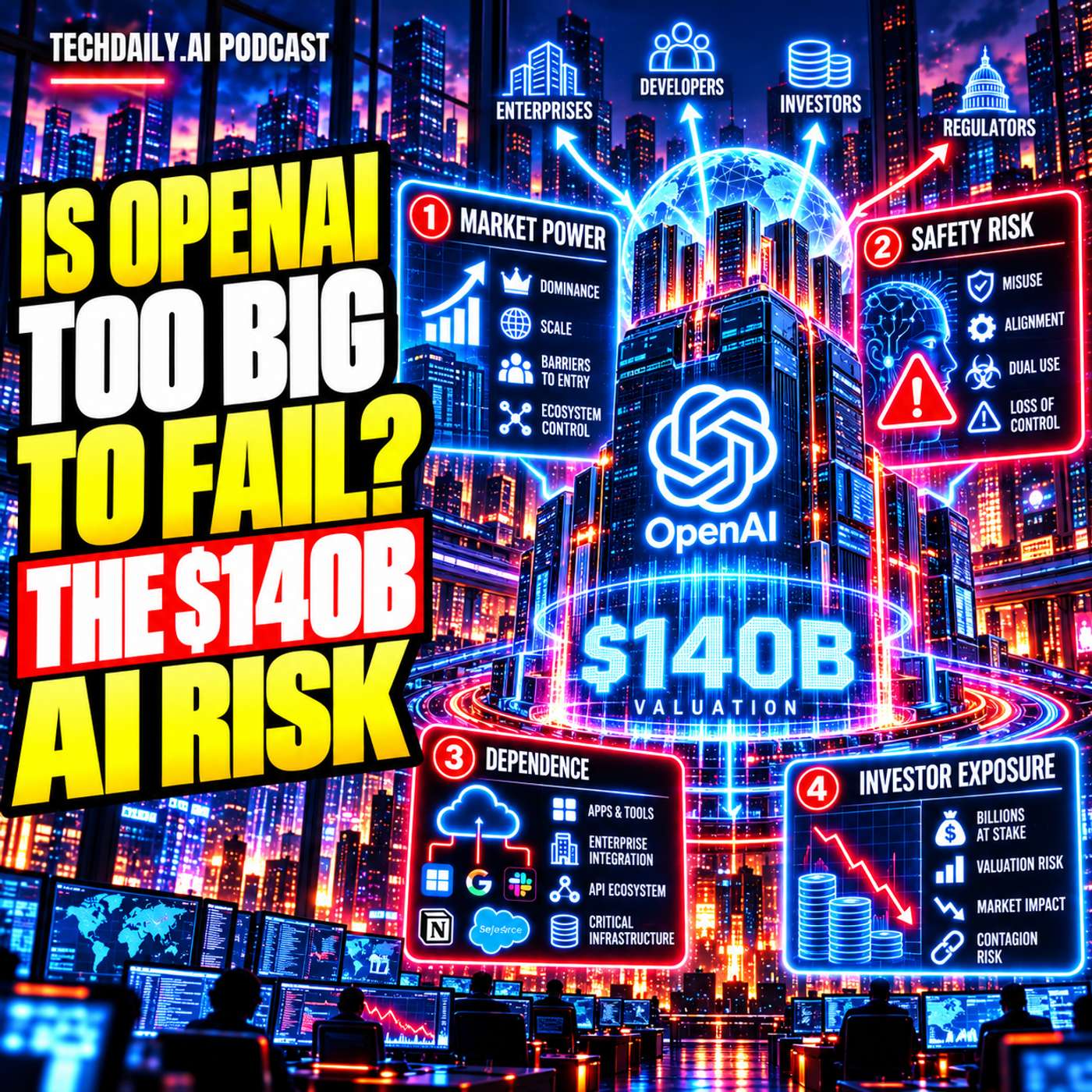


OpenAI helped ignite the generative AI boom—but what happens when the cost of building that future becomes larger than the business itself?
In this episode, David and Sophia examine the financial and physical infrastructure behind the AI revolution, focusing on the enormous capital requirements, data center construction, energy demand, investor exposure, and systemic risks described in the source material.
The conversation asks a provocative question: has the race to build increasingly powerful artificial intelligence created a financial structure so large and interconnected that failure could affect far more than one company?
You’ll hear about:
• How the cost of training advanced AI models has increased dramatically across generations
• Why ChatGPT’s rapid adoption created both enormous opportunity and enormous infrastructure pressure
• How AI data centers differ from traditional cloud infrastructure
• Why continuous GPU workloads create intense electricity and cooling requirements
• How AI expansion can affect power grids, construction, transformers, concrete, steel, and semiconductor supply chains
• Why private AI valuations can influence the reported earnings of major public technology companies
• How mark-to-market accounting can create large paper gains without producing equivalent cash flow
• Why the financial health of companies such as Amazon, Alphabet, Nvidia, and other major technology players matters to broader market indexes
• The gap described in the episode between AI revenue growth and the enormous cost of maintaining and expanding infrastructure
• Why traditional lenders may hesitate when companies require extraordinary amounts of capital before reaching profitability
• How vendor financing can tie the fortunes of chipmakers and AI companies together
• Why a financial failure in one highly connected AI company could spread through semiconductors, construction, data centers, and financial markets
• How different media outlets can frame the same AI infrastructure boom as either speculative excess or industrial expansion
• Why government guarantees, public-sector involvement, and the idea of a bailout become controversial when private companies grow systemically important
• The larger question of whether companies can become effectively “too big to fail” by embedding themselves deeply into the economy
The episode ends with an even bigger concern: what happens when the long-term financial strategy depends on future AI systems becoming capable enough to solve the business problems created by building them?
AI may be changing software, productivity, and knowledge work—but this conversation argues that its most important effects may increasingly be physical and financial.
Behind every chatbot response are chips, power plants, cooling systems, transmission lines, construction projects, investors, and enormous amounts of capital.
And if those systems become deeply interconnected, the future of AI may become inseparable from the future of the wider economy.