Noise is not one problem. It is two, and almost nobody tells you that before you spend. A plane engine, a bus, a fan over your desk: that is steady, low rumble, and a cheap pair now wipes out most of it. A coworker on a call, a toddler two rows back, forks hitting plates: that is the hard kind, and only the top of the market makes a real dent in it. So the best noise cancelling earbuds are not the pair with the biggest number on the box. They are the pair aimed at the noise that is actually getting to you. Name your noise first, then pick. For most people that answer is the Soundcore P30i, and that is a genuinely new thing to be able to say.
Disclosure: TechDaily is an Amazon affiliate and earns a commission on purchases made through links on this page. It costs you nothing extra, and it does not change which earbuds made the list.
- Steady rumble is the easy noise. Any decent pair now handles a plane, a bus or an office fan, so paying more for that job is money you can keep.
- Voices are the hard noise. If your problem is people talking, that is the one job the expensive pairs still do better than everything else.
- The Soundcore P30i is the pick for most people, because it solves the common problem for the price of a takeout dinner.
- The Bose QuietComfort Ultra Earbuds 2nd Gen are worth the money only when your noise has a voice in it.
- AirPods Pro 3 are not really a silence purchase any more. You buy them for the iPhone habits, the hearing tools and the tough water rating.
- The Sony WF-1000XM6 is the one built around a bad ear-tip seal, which is worth its price only if yours is actually leaking.
- Your ear tip does half the work. A loose tip loses the high notes and the bass at once, and no chip on earth fixes that.
What noise are you actually trying to get rid of?
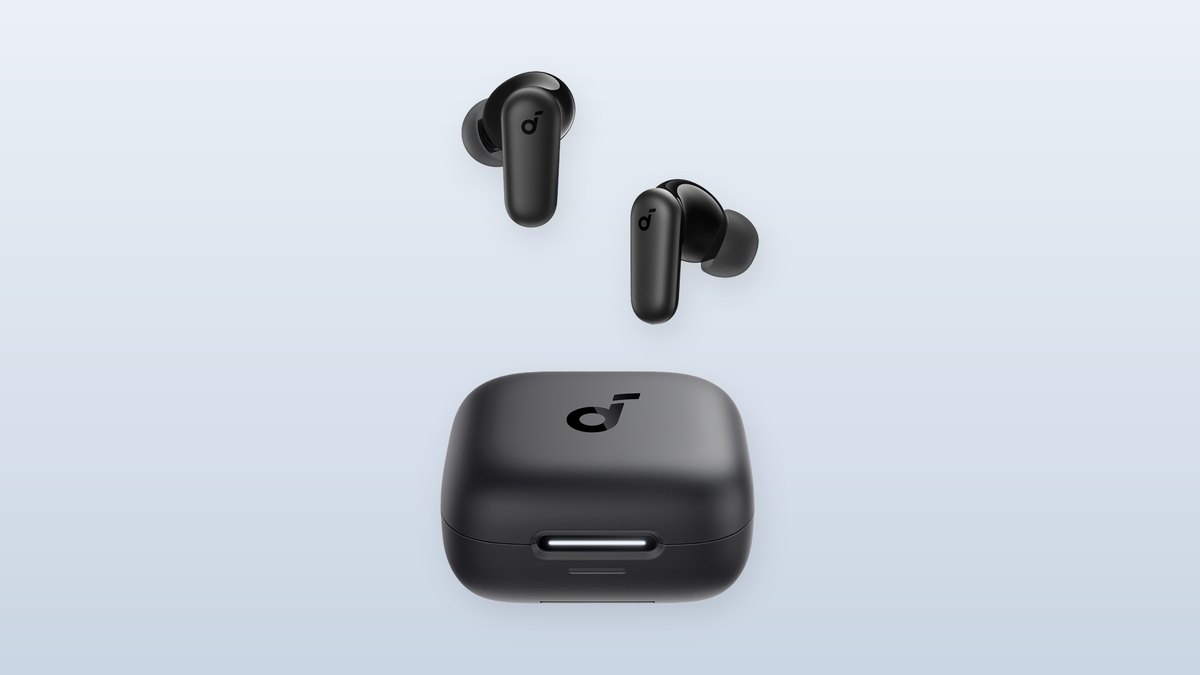
★ Your pick: Soundcore P30i
Engine drone and vent hum are the easiest sounds to cancel, and cheap pairs already do both well.
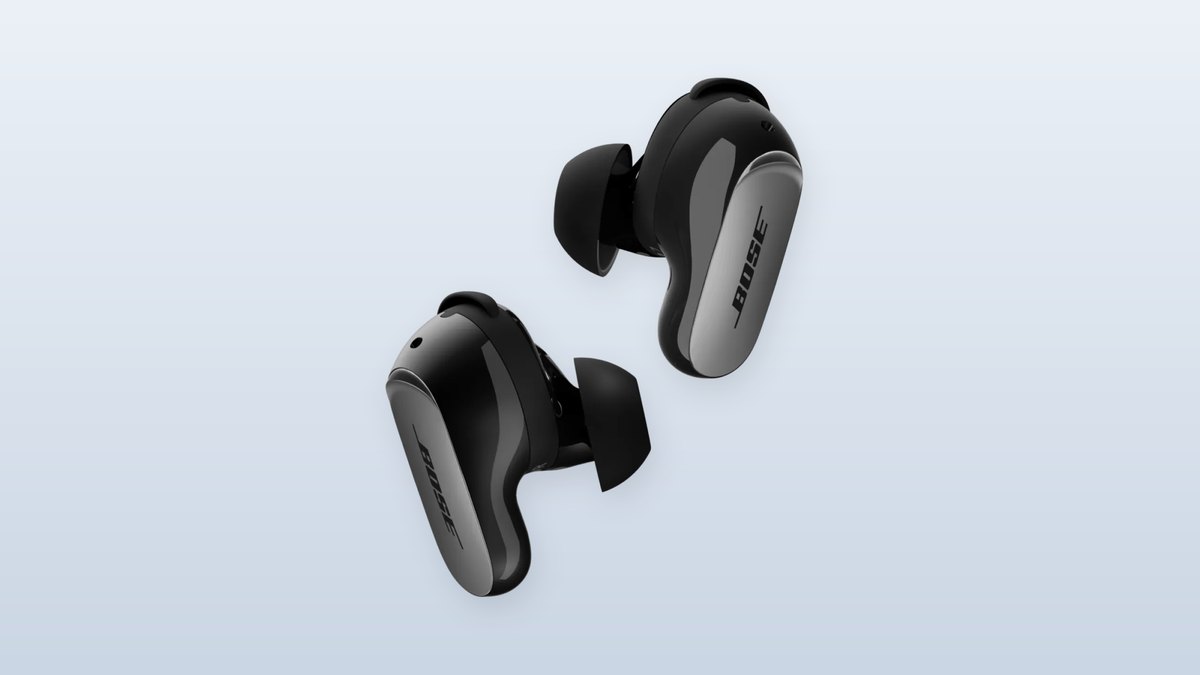
★ Your pick: Bose QuietComfort Ultra Earbuds 2nd Gen
Voices are the hard job, and this is the pair that genuinely quiets a room.
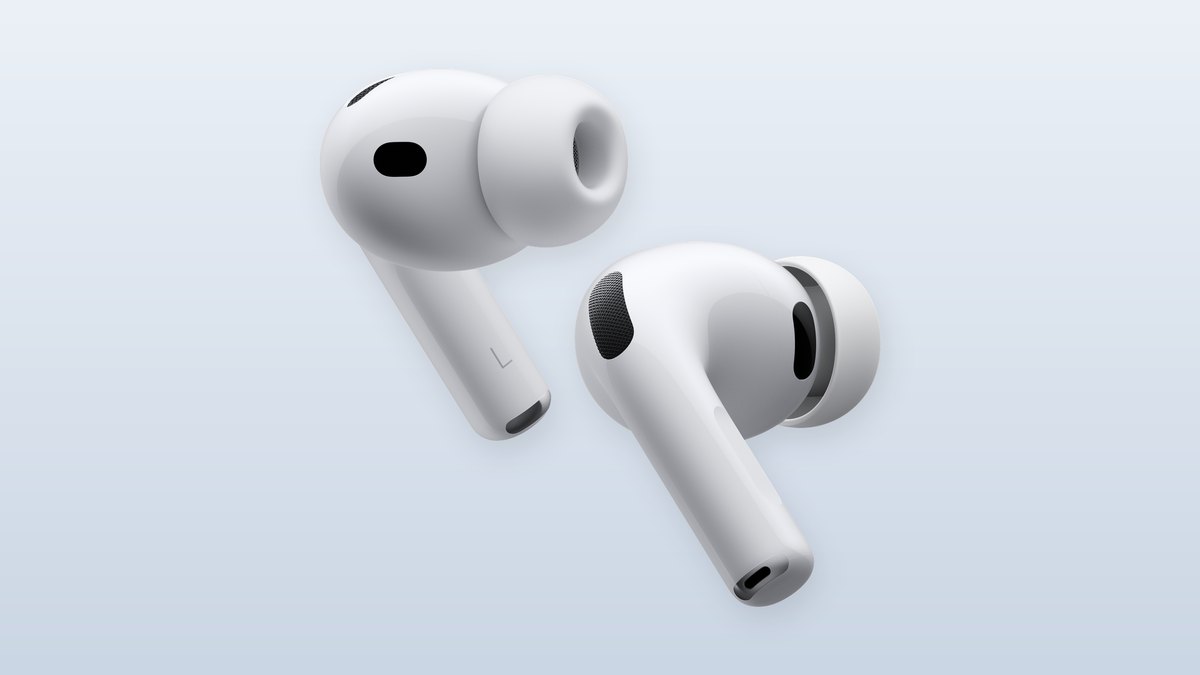
★ Your pick: AirPods Pro 3
Switching, calls, the hearing test and the sweat rating only line up this well inside Apple’s world.
★ Your pick: Bose QuietComfort Ultra Earbuds 2nd Gen
The second version adds background noise removal on calls, which is the fix people ask for most.
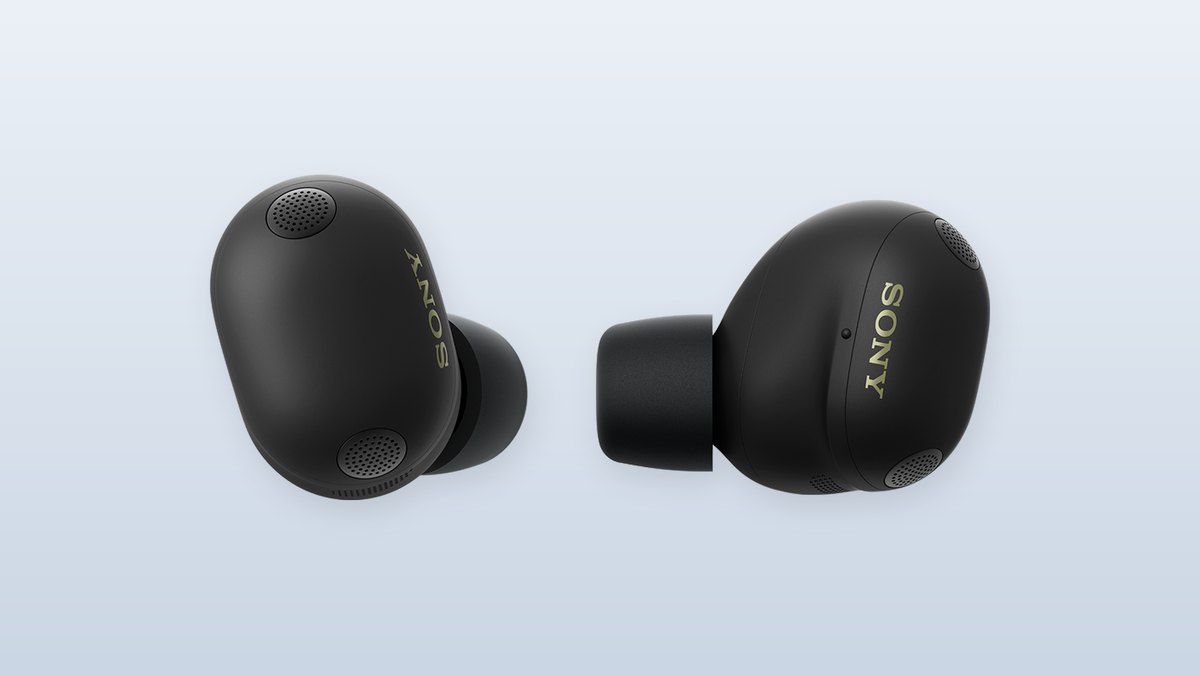
★ Your pick: Sony WF-1000XM6
It targets the sound leaking past a loose ear tip, which is the gap the others leave alone.
👑 Our Top Pick — Best Overall Value
Soundcore P30i
Handles the steady rumble that bothers most people, and leaves the rest of your money alone.
Opens on our Top Pick. Tap an option to see the best match for you.
What Noise Cancelling Really Removes and What It Leaves Behind
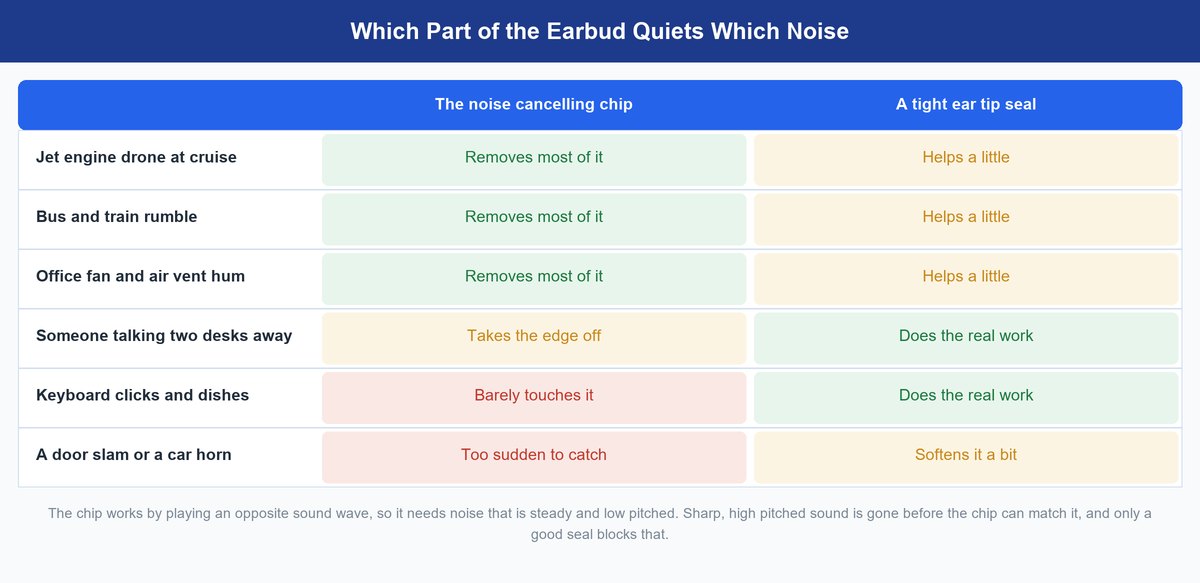
Active noise cancelling is one trick performed very fast. A tiny mic listens to the sound coming at your ear. A chip works out the opposite sound wave. The speaker plays that opposite wave, and the two mostly flatten each other out.
That trick has a rule built into it. To play the opposite of a sound, the chip has to know what the sound is about to do next. Steady, low, repeating noise is easy to predict, so a jet engine at cruise is close to a perfect target. Sharp, high, sudden noise is not. A door slam is over before the chip has finished guessing. That is not a flaw in one brand. It is the shape of the whole idea, and it explains almost every complaint people have.
Two things follow from that, and they are the reason this post exists.
First, the easy half got solved for everyone. Cancelling a drone is now a cheap chip and some decent tuning. Soundcore rates the P30i at up to 42 decibels of reduction, and it is firmly a budget pair. Ten years ago that job cost real money. Now it does not.
Second, the hard half is still hard. Voices wobble. They jump in pitch, they stop and start, and they carry a lot of energy in the range your ear is most tuned to. No pair on the market makes a person talking near you disappear. The good ones make that person sound like they are behind a wall. That gap, between a wall and a disappearance, is what a few hundred dollars still buys.
Worth knowing: noise cancelling and wind are a bad pair. The outside mics catch moving air and turn it into a low roar that is louder than the wind was. Most pairs now ship a wind mode, and every pair has an off switch. On a breezy walk, switching cancelling off is usually the better sounding choice.
Which brings up the honest question for your own money. Sit still for a second and picture where you will actually wear these. If the picture is a seat on a plane, a train carriage, a treadmill in a gym with a fan running, the cheap answer is the right answer and you are done. If the picture is an open office, a cafe you work from, or a house with people in it, keep reading, because you are the reader the expensive pair was built for.
The Best Noise Cancelling Earbuds Worth Buying Right Now
Four pairs, four different answers to that question. I have kept each one to the case it actually wins, and said plainly who should walk past it. Every number below comes from the maker’s own spec sheet or launch announcement, linked where it appears. We do not run a test lab, and where a claim has no basis behind it, we say so.
Real talk: all four of these come with an app, and the app is where the pair you bought becomes the pair you wanted. Cancelling strength, transparency, bass, touch controls and the fit test all live there. People who say noise cancelling did nothing for them have usually never opened it.
1. Soundcore P30i — Best for Steady Rumble on a Small Budget
≈ $25–$40Up to 42dB claimed10h per chargeFold-out phone stand
This is the pair that changed the argument, and it is the one I would hand to most people. Soundcore rates it at up to 42 decibels of reduction with an adaptive system that reads the room and picks a level for you. On a bus or a plane it does what a much pricier pair did a few years ago. Not as neatly. But close enough that you would have to hear them side by side to care.
The rest of the sheet is sensible rather than clever. Ten millimetre drivers with a bass boost you can switch on. Ten hours of listening on one charge, and about forty five with the case, which means most people charge it once a week and forget it. A ten minute top up buys roughly two more hours, which is the number that actually saves you on the way to the airport.
Then there is the case, which sounds like a gimmick until you use it. The back panel folds out into a phone stand. On a tray table, with the seat in front of you reclined, that is a genuinely good idea rather than a marketing one.
Here is where it stops. Voices come through. Not loudly, but clearly enough that you will still know your neighbour is on a call. Call quality is fine and no better. And the bass boost is on by default, which makes it sound thick until you go into the app and turn it down. If your main problem is a room full of people talking, this is the wrong pair and you should spend the money instead.
Features
- Adaptive noise cancelling rated at up to 42dB
- Transparency mode for hearing the room
- 10mm drivers with a switchable bass boost
- About 10 hours per charge, near 45 with the case
- A 10 minute charge for about 2 more hours
- Charging case that folds into a phone stand
Pros
- Removes the drone that bothers most people, for very little money.
- Battery you can ignore for most of a week.
- The case stand is useful on a plane or a train.
- Cheap enough to keep in a gym bag and not worry.
Cons
- Voices still get through fairly clearly.
- Calls are passable rather than good.
- Bass boost is on out of the box and needs turning down.
2. Bose QuietComfort Ultra Earbuds 2nd Gen — Best for Rooms Full of People
≈ $230–$300Best on voicesIPX46h per charge
If your noise has a voice in it, this is the pair. Bose calls it their best in-ear noise cancelling, and for once that is not just a slogan. Bose’s cancelling keeps adjusting to the room instead of holding one fixed setting, and in a busy cafe that is the difference between a wall of chatter and a low murmur you can work through. The feature Bose calls ActiveSense is a separate thing worth knowing: in the see-through Aware mode it ducks sudden loud sounds for you, so a coffee grinder does not go straight through your head.
The second version fixes the thing owners complained about most. Bose has added background noise removal on calls, so the person on the other end stops hearing the room you are sitting in. It also finally charges wirelessly, reports the case battery in the app, and lets you switch the touch controls off, which anyone who has skipped a track by scratching an itch will appreciate.
Now the part the marketing skips. Battery is up to six hours, and that drops to about four with Immersive Audio switched on. Immersive Audio is the mode that makes music sound like it is playing in the room in front of you rather than inside your skull. It is a lovely trick and it is expensive in power. Four hours does not cover a transatlantic flight, so you will be dipping into the case mid journey. The water rating is IPX4, which means sweat and rain are fine and a dropped bud in a sink is not.
Who should skip it. Anyone whose noise is only a plane. You would be paying a lot for the hard half of the problem when you only have the easy half. And anyone who wants all day battery without touching the case, because that is not this pair.
Features
- Cancelling that adjusts as the room changes, plus ActiveSense to duck sudden loud sounds in Aware mode
- Immersive Audio spatial listening mode
- Background noise removal on calls, new to this version
- Wireless charging and case battery shown in the app
- Touch controls that can be switched off
- IPX4 water resistance and Bluetooth multipoint
Pros
- The most convincing job on voices and busy rooms.
- Call quality is now a reason to buy rather than a compromise.
- Adjusts on its own instead of making you fiddle with modes.
- Multipoint keeps a laptop and a phone connected at once.
Cons
- Up to six hours, and nearer four with Immersive Audio on.
- Costs meaningfully more than the AirPods for one job rather than many.
- IPX4 handles sweat and rain, not a soaking.
3. AirPods Pro 3 — Best for iPhone Owners Who Want More Than Quiet
≈ $200–$2508h with cancelling onIP57Hearing test built in
Apple says these deliver up to twice the noise cancelling of AirPods Pro 2. Apple does not say twice at which pitches, and that is exactly the part that decides whether you notice. Treat the number as a headline, not a measurement, and judge the pair on the things Apple does state plainly. There are plenty of those, and together they are the real reason to buy.
Start with battery, because it is the quiet win. Eight hours of listening with cancelling switched on is two hours more than the last generation managed, and it matches what Sony quotes for the far pricier WF-1000XM6. Then the water rating. IP57 covers dust as well as sweat and water, and it is a tougher rating than any other pair here. If you run in the rain, this is the only pair on this page I would trust without thinking.
The hearing features are the part that separates this from a normal set of earbuds. There is a hearing test you take on your phone. There is a hearing aid feature that Apple says has received FDA authorization. There is hearing protection for loud places. Whatever you think of Apple, a set of earbuds you already own quietly turning into a screening tool is a real change in what this product is.
Live Translation is the headline feature, and it is worth being clear eyed about. Two people each need a pair for the full back and forth, and it covers selected languages and regions rather than everything. Useful, not magic.
Who should skip it. Android users lose half the list above, so the price stops making sense. And Apple’s fit suits some ears and fights others, which is worth knowing before you commit. For noise, buy the Pro 3, not the AirPods 4: the AirPods 4 have no silicone tip, so they cannot seal, and without a seal the high half of the noise comes straight through. If you are weighing this against the standard AirPods 4, we broke that choice down in our AirPods Pro 3 and AirPods 4 comparison.
Features
- Apple H2 chip with adaptive cancelling and transparency
- Up to 8 hours of listening with cancelling switched on
- IP57 rating for dust, sweat and water
- Heart rate sensor for workouts
- Hearing test, hearing protection and an FDA authorized hearing aid feature
- Live Translation in selected languages and regions
Pros
- Eight hours with cancelling on, matching the far pricier Sony.
- The toughest water and dust rating here by a clear step.
- Hearing tools you will not find on a normal pair of earbuds.
- Switching between iPhone, iPad and Mac just happens.
Cons
- Half the value disappears if you carry an Android phone.
- The claimed doubling of cancelling comes without any detail.
- The fit does not suit every ear, and there is no fin to help.
4. Sony WF-1000XM6 — Best If You Want the Strongest Cancelling Money Buys
≈ $300–$3308h with cancelling on24h with the case4 mics per bud
Sony launched the WF-1000XM6 in February 2026. Sony says it cuts 25 percent more noise than the WF-1000XM5 did, with the biggest gain in the mid to high pitches, the café and train carriage sound a chip normally struggles with. That comes from a new QN3e processor and four mics on each bud, up from three. The part that matters here is the Adaptive NC Optimizer. It reads the room and your fit at the same time and claws back the sound that leaks through a gap between the ear tip and your ear canal. Every other pair here assumes you found the right tip. This is the one built for the day you did not.
Fit is where Sony did the real work. The bud is about 11 percent slimmer than the last model and weighs about 6.5 grams with the medium tips on. Sony’s Noise Isolation tips come in four sizes, so an odd-sized ear still seals. A new vent cuts the thud of your own footsteps and the sound of chewing. Battery is 8 hours with cancelling on, 12 with it off, and 24 with the case. That matches the AirPods Pro 3 and beats the Bose by two hours, though the Soundcore still runs longest at 10. Water resistance is IPX4, the same as the Bose and a step below the AirPods’ IP57, so sweat and rain are fine and a downpour is a gamble.
Calls and the see-through mode are where it squares up to the Bose. For calls, each bud uses two of its mics plus a bone conduction sensor that reads your voice through your jaw, and AI beamforming strips the room out, which on paper answers the call noise removal Bose added to its second generation. Ambient Sound Mode is the transparency setting, and Quick Attention lets you cup a bud to hear a barista without taking anything out. The Sound Connect app holds the fit test, a 10 band EQ and Adaptive Sound Control, which switches modes on its own when you start walking. Multipoint keeps a laptop and a phone connected, same as the Bose. Sony’s mid to high gain is the closest anything here gets to the Bose on voices, but for a room full of people I would still send you to the Bose. Sony’s figure is a lab measurement, not a promise about your office.
Buy it if you have fought with ear tips for years and want the pair that meets you halfway, or if you take calls from loud places and want pickup built around your voice rather than the room. Walk past if your noise is only a plane or a bus, because the Soundcore does that job well and lasts two hours longer per charge. If your noise is people, the Bose is the surer bet. And on an iPhone, the AirPods Pro 3 give you the same 8 hours, a tougher water rating and the hearing tools, so Sony has to win you on cancelling strength and fit alone.
Features
- Adaptive NC Optimizer that compensates for gaps between the ear tip and the ear canal
- HD Noise Cancelling Processor QN3e with Multi Noise Sensor technology
- 8 hours of listening with cancelling switched on
- Roughly 24 hours total once the charging case is counted in
- IPX4 water resistance
- Bluetooth multipoint connection
Pros
- Adaptive NC Optimizer works around a loose ear-tip seal instead of losing to it.
- Sony backs the strongest cancelling claim here with a published lab figure: 25 percent more noise removed than the last model.
- Two mics and a bone conduction sensor per bud make calls a real strength.
- 8 hours with cancelling on matches the AirPods Pro 3 and beats the Bose by two.
- Four tip sizes and a slimmer, lighter bud make a good seal easier to find.
- Multipoint keeps two devices connected without you touching a setting.
Cons
- IPX4 handles sweat and rain, a step below the AirPods Pro 3’s IP57.
- 24 hours with the case, against about 45 for the Soundcore.
- The Bose is still the safer pick if your noise is people talking.
How to Fit the Ear Tips so Noise Cancelling Actually Works
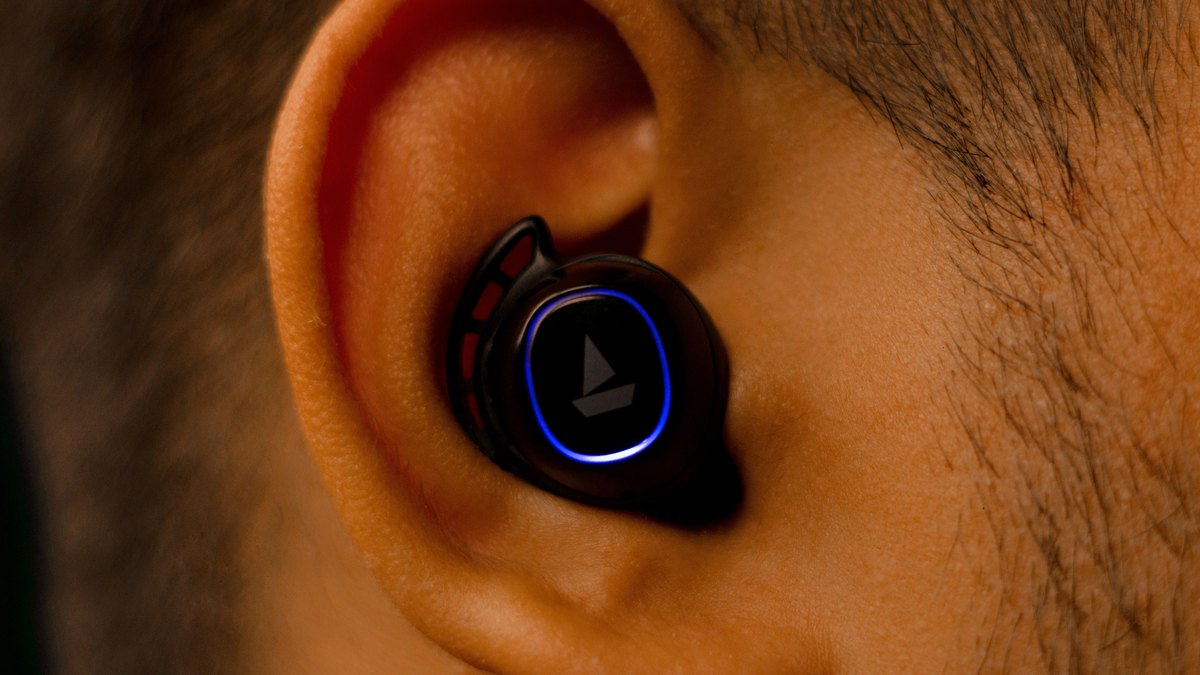
Here is the split that decides how quiet your day is, and it has nothing to do with which brand you picked.
Blocking sound with a physical seal is called passive isolation. It is just rubber in the way. Rubber is very good at stopping high pitched sound, which is the sound the chip is worst at. The chip is very good at stopping low pitched sound, which rubber barely touches. The two halves cover for each other, and together they cover everything.
So a loose tip does not lose you a little quiet. It loses you the entire high half of the job, the half the chip cannot pick up. It also lets bass leak out, so music sounds thin and you turn the volume up to compensate. That is the same pair of earbuds, two completely different products, decided by a piece of silicone.
Fixing it takes about two minutes.
- Go one size up first. Most people default to the tips already fitted, and most people should be a size larger. A tip that feels slightly present is usually right. A tip you cannot feel at all is usually leaking.
- Use different sizes in each ear. Ears are not a matched pair. Mixing a medium and a large is normal, and every box gives you enough tips to do it.
- Run the app’s fit test. All four pairs here can play a tone and listen back to check the seal. It takes seconds and it is the only part of the app that is not a preference.
- Do the swallow check. Put them in, swallow, and listen. If the sound changes noticeably, the seal moved, and the tip is not holding.
Before you buy: if you have tried earbuds before and they always fall out or ache after an hour, the problem is shell size, not tips, and no tip swap will fix it. Start with our guide to the best earbuds for small ears instead of buying another pair that will not sit. If the shell is the issue, the case for going over ear instead is laid out in our earbuds and headphones comparison.
How to Test a New Pair Before the Return Window Shuts
Almost everybody tests earbuds wrong. They open the box at home, in a quiet room, and listen to music they love. That tells you nothing about the one job you bought them for. Four tests, done in the first week, will tell you whether to keep them.
Take Them Straight to Your Real Noise
Do not judge them at your kitchen table. Wear them on the commute, in the office, on the flight. A pair that seems only slightly quieter at home can be transformed on a train, and a pair that wowed you in the shop can turn out to do nothing about the person who sits behind you.
Listen for the Pressure Feeling Early
Strong cancelling makes some people feel a light pressure, a bit like a plane starting to descend. It is not harmful and many people never notice it. But if you are one of the people who does, you will know inside ten minutes, and no amount of getting used to it helps. Switch to transparency mode and see if the feeling goes. If it does, that was the cancelling, and this pair may not be for you.
Record Yourself on a Call
Call quality is the spec that is hardest to judge and easiest to test. Send a voice message from somewhere noisy and play it back. You are listening for whether your voice sounds thin or underwater, and whether the room comes through with you. Do this before the return window closes, not after your first important meeting.
Wear Them for Two Hours Straight
Comfort problems hide. Everything feels fine for twenty minutes. The ache shows up somewhere between the first and second hour, which is exactly the length of the flight or the work session you bought them for. Sit and work in them for two hours before you throw the box away.
What Noise Cancelling Will Not Do for Your Hearing
This is the part worth being careful about, because it is easy to assume quiet earbuds are safe earbuds. They are not the same thing.
Noise cancelling helps your hearing in one indirect way. When the background is quieter, you stop pushing the volume up to hear over it, and the volume is what actually does the harm. That is a real benefit and it is the strongest health argument for buying a pair at all.
What it does not do is protect you from loud sound in the room. NIOSH sets a recommended exposure limit of 85 decibels averaged over an eight hour day, and for every 3 decibel increase above that, the safe time is cut in half. So 88 decibels is four hours, 91 is two, and it keeps halving. Earbuds cancelling a drone do not put you inside those limits at a concert, on a job site or under a leaf blower. That is a job for real ear protection.
The one pair here that steps into this space on purpose is the AirPods Pro 3, with its hearing test, its loud sound reduction and the hearing aid feature Apple says is FDA authorized. That is a genuine health tool. It is also not a reason to wear earbuds in a workshop.
One warning: never use transparency mode as ear protection. It is a microphone feeding outside sound into your ear, so in a loud room it can hand you the noise rather than block it. In anything genuinely loud, take the earbuds out and put proper protection in.
Frequently Asked Questions
Do cheap noise cancelling earbuds actually work now?
For steady noise, yes, and that is the real news. A plane, a bus, a fan and an air vent are all low and repeating, which is the easiest thing to cancel, and the budget tier does it well. What cheap pairs still struggle with is voices and sudden sharp sound. So the honest answer is that cheap earbuds now solve the common problem and not the hard one.
How many decibels of noise cancelling do I need?
Fewer than the boxes imply, and the number is less useful than it looks. Brands measure reduction at the pitches their system handles best, so two pairs quoting the same figure can feel very different in the same room. Use the number to sort budget pairs from premium ones, then decide with your own ears in your own noise.
Are noise cancelling earbuds bad for your ears?
There is no good evidence that the cancelling itself harms hearing. Some people feel a light pressure, similar to a plane descending, which is uncomfortable rather than damaging. The real risk with any earbuds is volume over time, and cancelling actually reduces that risk, because a quieter background means you stop turning the music up.
Why can I still hear people talking with noise cancelling on?
Because voices are the hardest sound to cancel. The system works by predicting the next bit of a sound and playing its opposite, and speech keeps changing pitch and stopping and starting. Steady rumble is predictable, so it goes. Speech is not, so it survives. A tight ear tip does more about voices than the chip does.
Do noise cancelling earbuds work with nothing playing?
Yes. Cancelling runs whether or not there is music, and plenty of people use earbuds purely as a quiet button on a flight or in an office. Battery drains more slowly with no audio playing, so the hours you get in silence mode are usually better than the number on the box.
Should I get earbuds or over ear headphones for noise?
Over ear cups block more high pitched sound because there is simply more material in the way, and they usually last longer per charge. Earbuds win on pocket size, on wearing them in a gym, and on not flattening your hair before a meeting. If the noise you face is people rather than engines, the extra blocking of a cup is a genuine advantage.
The Bottom Line Before You Spend
Name your noise, then buy for it. If what bothers you is a plane, a bus, a train or the fan over your desk, the Soundcore P30i handles it and you can keep the rest of your money for something that is not earbuds. If what bothers you is people, the Bose QuietComfort Ultra Earbuds 2nd Gen are the pair that genuinely quiets a room, and they are worth the jump for that one reason. If you live inside an iPhone and you want the hearing tools, the battery and the water rating, AirPods Pro 3 make sense on those grounds rather than on silence alone. And if you want the strongest cancelling on this page and you suspect your seal is the weak link, the Sony WF-1000XM6 is the one that goes after that gap directly.
Whichever you pick, spend the first ten minutes in the app and the tip box. That is where a decent pair turns into the quiet you thought you were buying.