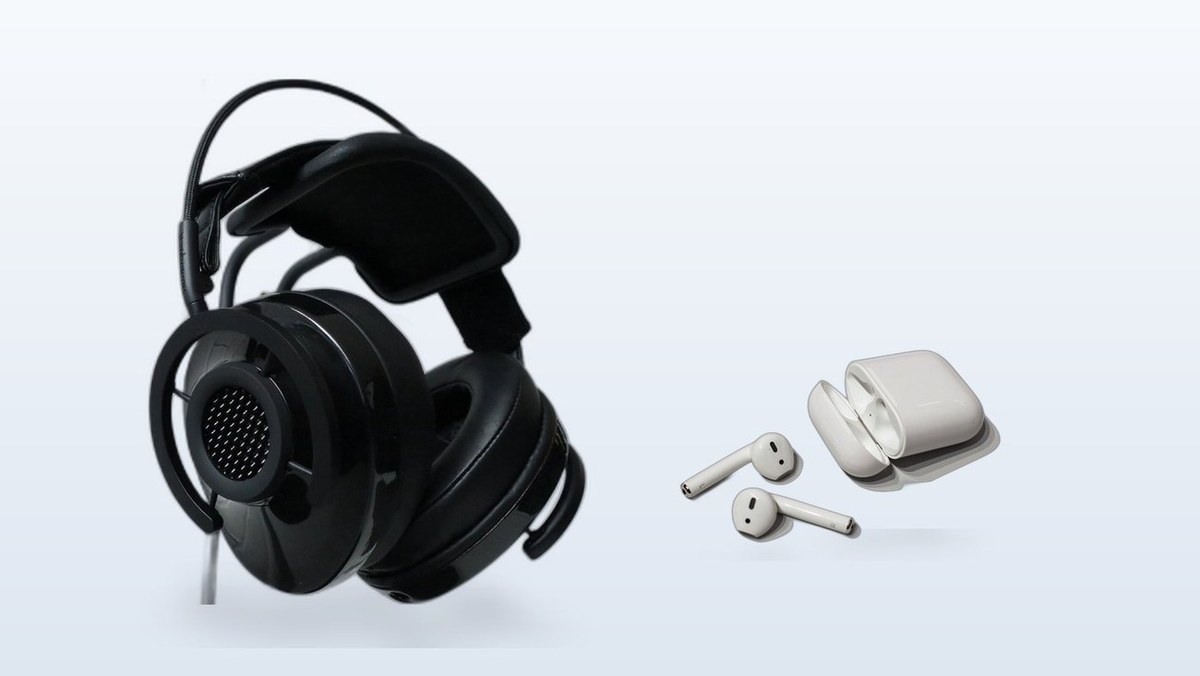
Neither one wins in the abstract. Over-ear headphones take per-charge battery, low-frequency noise blocking and long-session comfort. Earbuds take portability, staying put when you move, and surviving sweat. So the real earbuds vs headphones question is not which is better. It is which pair’s particular discomfort you can live with, hour after hour, week after week.
Published August 3, 2026
- The battery numbers on the two boxes are not measuring the same thing. Headphones are sold on hours per charge; earbuds are sold on hours including the case. Bose’s own flagship pair reads 30 hours against 6.
- Noise cancelling is a rumble specialist. It flattens engine drone and air conditioning and does almost nothing to the person talking three feet away.
- Comfort is the factor nobody rates and everybody eventually decides on. Earbuds press outward inside your ear canal; over-ears squeeze inward on the sides of your head. Both stop being pleasant, just on different clocks and for different reasons.
- If you wear glasses, the arms of your frames turn an over-ear’s gentle clamp into two narrow pressure lines. That single fact settles the choice for a lot of people.
- Expensive over-ear headphones usually carry no water rating at all, while the same brand’s earbuds are splash-rated. Flagship cans are not gym equipment, and the manufacturers quietly say so.
- Plenty of people end up owning both. That is not indecision. The two designs fail in completely different places, so one pair genuinely cannot cover a whole week.
Earbuds vs Headphones at a Glance
Here is the honest scorecard before we get into why any of it is true. Every product figure in this article was observed on the manufacturer’s own spec page on 27 July 2026, with the Sony price re-checked on 3 August 2026.
| What actually matters | In-Ear Earbuds | Over-Ear Headphones |
|---|---|---|
| Fits in a pocket | Yes, case included | No, they need a bag |
| Hours on one charge | Roughly 5 to 8 | Roughly 20 to 30 |
| Hours including the case | Roughly 24 to 30 | Not applicable, there is no case battery |
| Blocking engine and cabin rumble | Good with ANC, weaker passively | Best in class with ANC |
| Blocking nearby voices | Depends entirely on the ear tip seal | Depends on the cup seal, and ANC will not help |
| Sweat and rain rating | Commonly IPX4 or better | Frequently no rating at all |
| Comfort ceiling | Canal soreness after a few hours | Clamp and heat after a few hours |
| Staying put while you move | Excellent, they are anchored in the ear | Poor, they shift and bounce |
| Grabbing one out to talk to someone | Instant | Awkward, you take the whole thing off |
Look at that table and you can see the shape of the answer. The two columns do not disagree about who is better. They disagree about what job they are for. Spec sheets encourage you to score them like rival phones, but there is no shared scoreboard here, and the one variable that decides whether you keep using a pair — how long you can stand to wear it — does not appear on either box.
Why Over-Ear Headphones Usually Sound Bigger
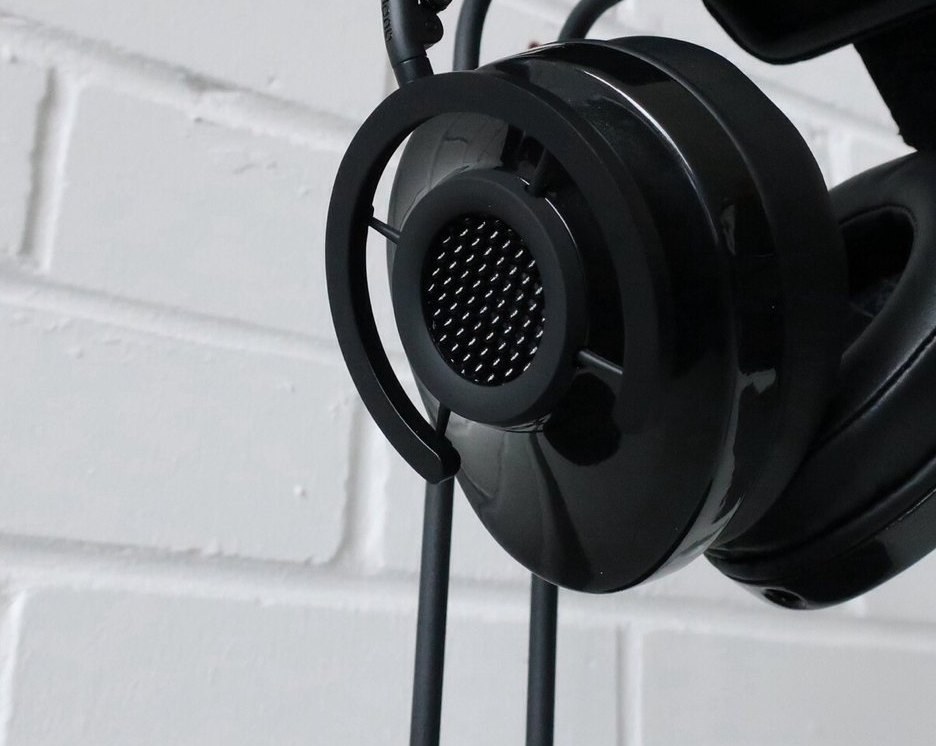
Driver Size Sets the Ceiling, Not the Result
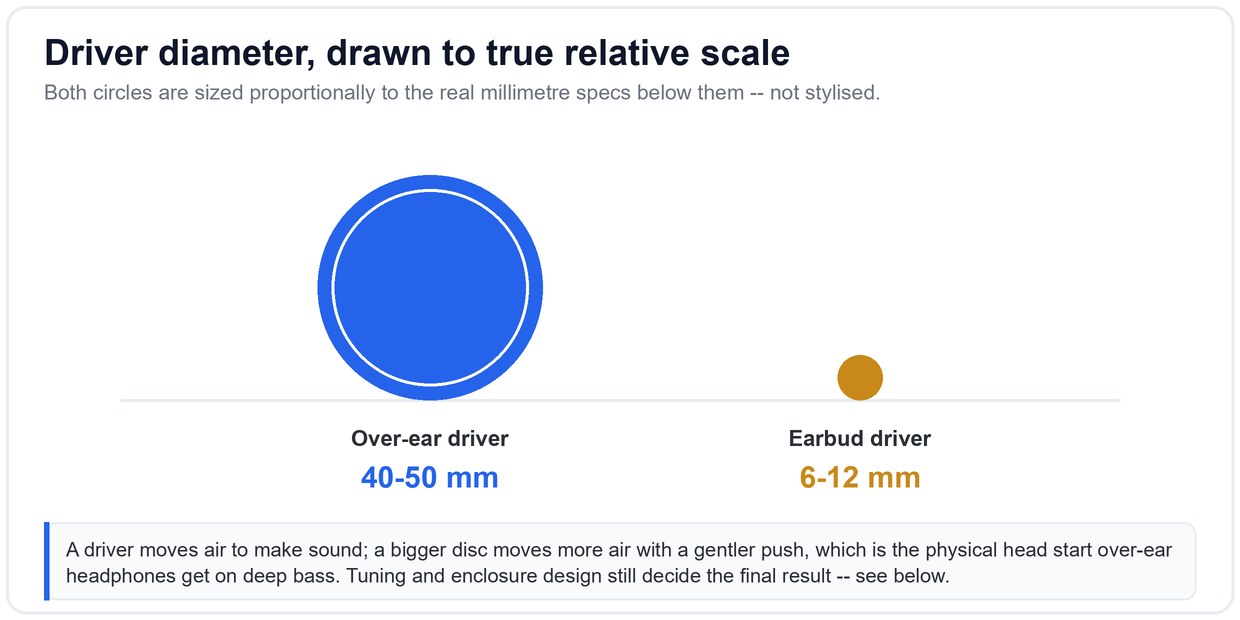
Inside every pair is a driver, which is just a small speaker: a stiff disc that pushes air back and forth to make sound. Bass is the hard part, because low notes need a lot of air moved. A big disc moves a lot of air with a gentle push. A tiny disc has to move violently to shift the same amount, and violent movement is where distortion creeps in. Over-ear drivers commonly run 40 to 50 mm across. Earbud drivers are usually 6 to 12 mm. That is the whole physical reason over-ears reach deep bass more easily.
Now the caveat that no brand blog will hand you, because it undercuts the marketing. Driver size sets the ceiling, not the result. Tuning, damping, the shape of the enclosure and the digital processing all matter as much or more. A well-engineered earbud will absolutely beat a badly tuned over-ear at the same price. If you walk away from this section thinking “bigger driver equals better sound,” you have learned the wrong lesson and you will buy badly.
Why Earbuds Sound Like They Are Inside Your Head
Your outer ear is not a decoration. Those folds and ridges bend incoming sound in ways your brain reads as direction and distance. An over-ear cup sits away from the ear and traps a pocket of air around the whole outer ear, so those cues still get to do their job. That is why a good pair of cans can make a recording feel like it is happening in a room in front of you.
An in-ear bud sits past all of that, plugged into the canal itself. It skips most of the direction cues entirely, which is exactly why earbuds are so often described as sounding “in your head.” It is not a quality failure. It is geometry. Some very expensive in-ears sound superb and still sound like they are between your ears rather than in front of you.
What Earbuds Win Instead of Space and Bass
Mass and anchoring. An earbud weighs single-digit grams and wedges into the bowl of your ear, so acceleration barely bothers it. A pair of over-ears is a 250 to 290 gram object held on by friction and squeeze, which shifts every time you break into a jog and traps heat because it covers the ear completely.
Do not file portability under “nice to have.” It is the reason earbuds get used in situations where over-ears simply never come out of the bag. A pair you carry is worth more than a better-sounding pair you left at home, and that trade is the entire argument for the small ones.
How Each Form Factor Blocks Noise and Which Wins Where
Passive Isolation Depends Entirely on the Seal
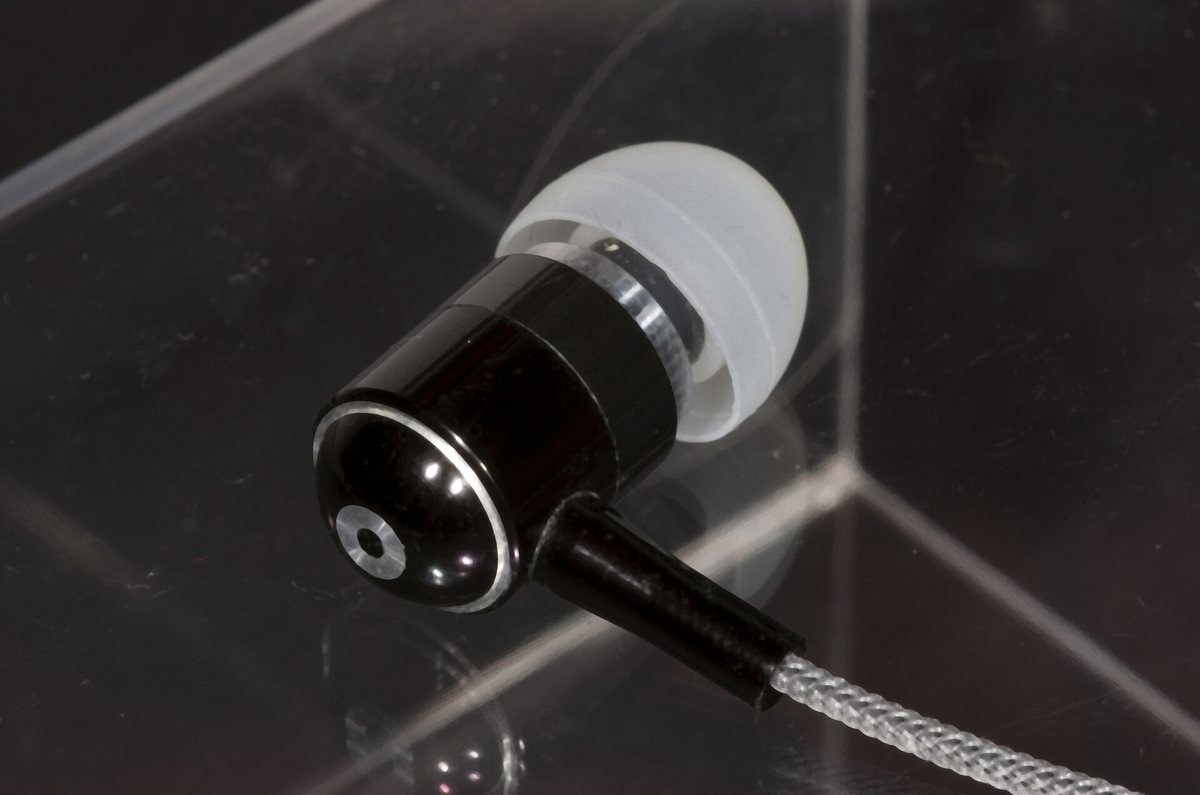
Passive isolation is the plain physical blocking, before any electronics get involved — the same principle as a wall or an earplug. And it works differently in the two designs, which is where the received wisdom falls apart.
An over-ear cup is a barrier held against the side of your head. Barriers are good at short waves and poor at long ones, so a sealed cup does real work on voices, keyboards and clatter, and starts running out of talent below roughly 200 Hz, where the wave is far longer than any cup is thick. A well-fitted in-ear is not a barrier at all. It is a plug in the canal, and with the right tip it can block mid and high frequencies as well as an over-ear or better. That is not a marketing claim: foam in-ear tips are used as actual hearing protection.
So “headphones isolate better” is only reliably true for low rumble, and for anyone whose ear tips do not seal. Independent test outfits like SoundGuys measure this properly, playing shaped noise at an artificial head and subtracting the curves with and without the product fitted. Their conclusion on in-ears is blunt: the seal is the whole game, and memory foam beats silicone slightly. An earbud with the wrong tip is close to an open window, and most people never open the little bag of spare tips that came in the box.
How Active Noise Cancelling Actually Works
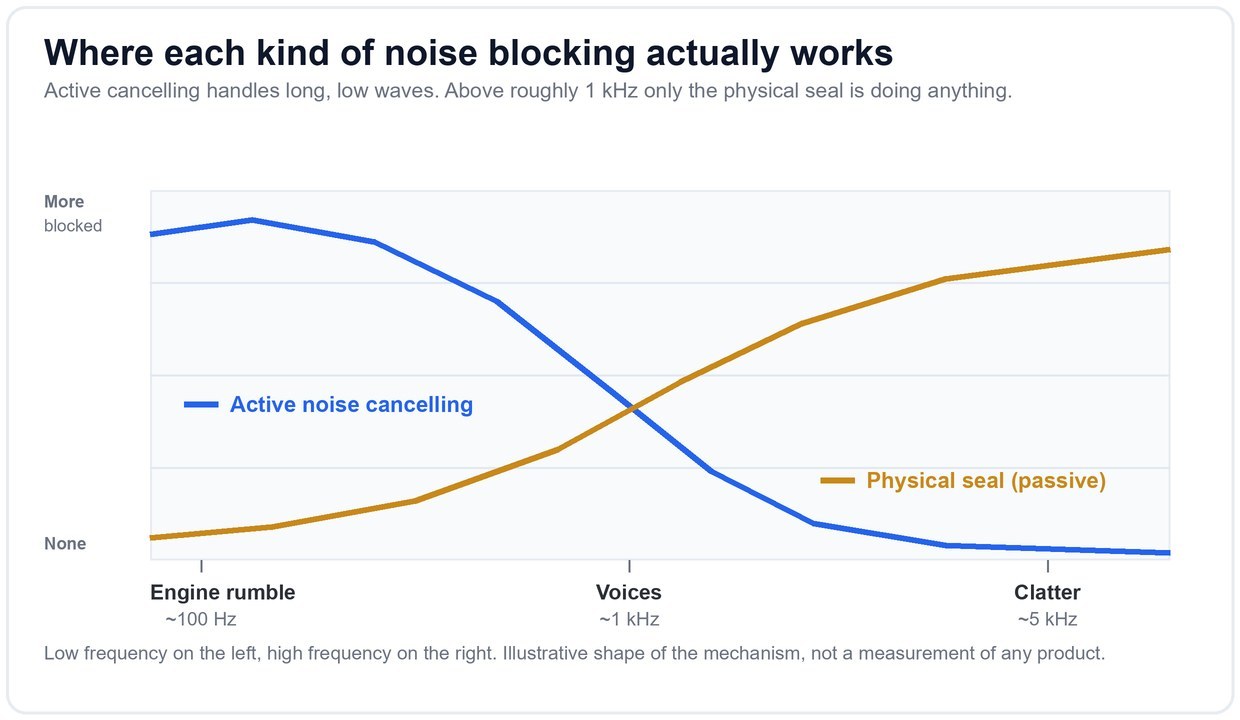
Active noise cancelling listens to the noise around you, then plays the exact opposite of that noise, so the two cancel out. The catch is timing. To cancel a wave, you have to hit the opposite of it at exactly the right instant, and how forgiving that is depends entirely on how long the wave is.
A 100 Hz rumble — think jet engine, bus, air conditioning — is about 3.4 metres from crest to crest. Being a fraction of a millisecond late on something that long barely matters. A 5 kHz sound, like a fork on a plate, is about 7 centimetres long. The same tiny timing error now lands you on the wrong part of the wave, and instead of cancelling you are adding. That is why ANC works from the very low frequencies up to roughly 1 kHz and then quietly gives up, and it is why marketing says “silence” when the honest word is “rumble.”
Note: Noise cancelling barely touches human speech. If your problem is people talking near you, the ANC badge on the box is not what saves you — a proper seal is, which makes tip size a more important purchase decision than the feature list.
Why Over-Ear ANC Beats Earbuds on Low Rumble
Both designs cancel low frequencies, but over-ears do it better, for reasons that are physical rather than clever. A big cup encloses more air and gives the driver more room to move, so it can generate a strong low-frequency cancelling wave without strain. A large cup also gives engineers space to place microphones both outside and inside the earcup, which is what lets the system correct itself in real time.
Add the passive picture from the previous section and you get the real split. Low frequencies are ANC’s home turf and passive sealing’s weak spot, so on a plane or a bus the over-ears pull clearly ahead. Mid and high frequencies are the opposite: ANC is nearly useless up there, so the winner is whoever seals better, and a well-fitted in-ear often does. The honest verdict is narrower than the ads: over-ear ANC is not broadly better, it is better at rumble specifically.
What Neither One Blocks Is the People Talking Near You
Open-plan offices are the case that exposes the whole category. Conversation lives in exactly the band where cancellation stops working and where blocking depends on how well your gear seals against or inside your ear. No amount of spending fixes this with electronics.
What actually helps is unglamorous: get a real seal, or accept masking. Sealed in-ears with the correct tip, or over-ears with dense pads and a firm clamp, will lower voices more than any ANC upgrade will. Failing that, playing something with steady content — rain, brown noise, instrumental music — buries speech better than silence does. Buying a more expensive ANC model to solve a chatty office is the most common wasted upgrade in this entire category.
The Battery Numbers Are Not Measuring the Same Thing
Per Charge Versus Total With the Case
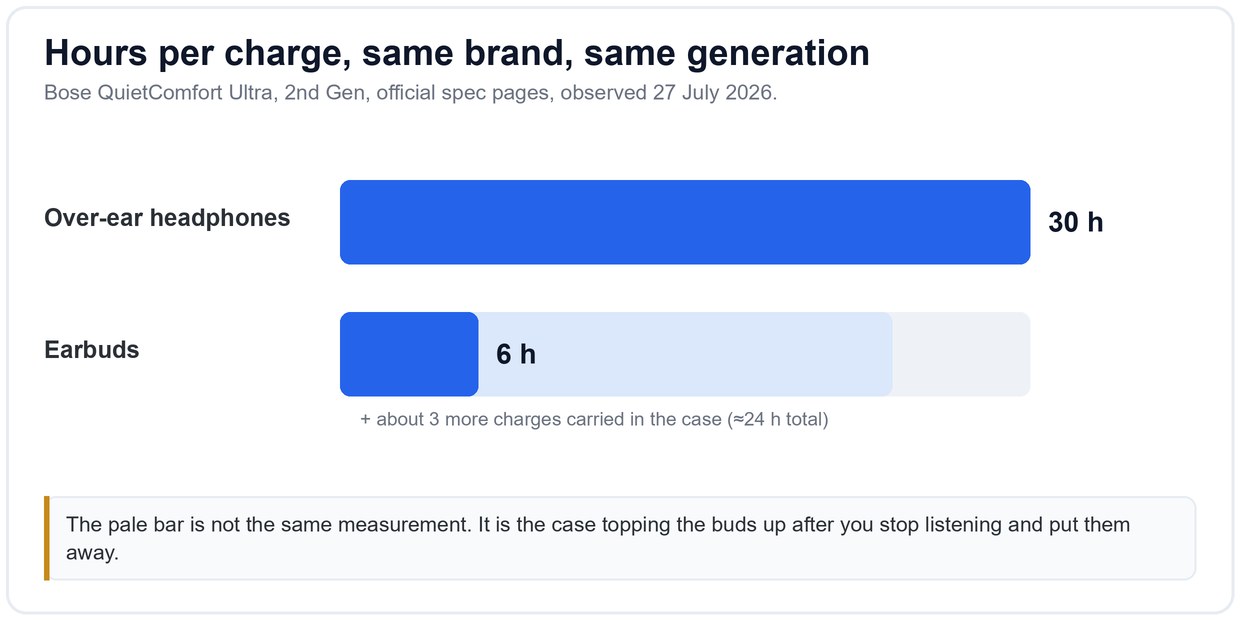
This is the comparison the whole market fudges, and once you see it you cannot unsee it. Headphones are advertised on hours per charge. Earbuds are advertised on hours including the charging case. Both numbers get printed in the same big font, and shoppers compare them as if they mean the same thing. They do not.
Take one brand, one generation, one price tier, so nobody can accuse anyone of cherry-picking. Bose’s own spec pages, observed 27 July 2026:
| Bose QuietComfort Ultra, 2nd Gen | Per charge | With the case | Water rating |
|---|---|---|---|
| Headphones | Up to 30 hours (23 with Immersive Audio) | No case battery exists | None. Bose says avoid situations where they may get wet |
| Earbuds | Up to 6 hours (4 with Immersive Audio) | About 3 more full charges | IPX4 |
Five times the runtime, from the same company, in the same product family. Apple’s AirPods Pro 3 show the same trick more politely: 8 hours of listening with noise cancelling on, and “up to 24 hours” with the case. Both numbers are true. Only one of them describes how long you can sit still and listen.
The catch: Turning on Bose’s Immersive Audio costs the headphones 7 hours, dropping 30 to 23, and costs the earbuds a third of everything they have, dropping 6 to 4. The premium feature you paid for is also the one draining the battery you paid for.
What Thirty Hours Against Six Hours Means for a Real Day
Stop thinking in totals and start thinking in sessions, because a total is only useful if you never have to stop. Six hours covers a commute, a gym session, a couple of calls, a dog walk. It does not cover a transatlantic flight, a full day on headsets, a warehouse shift, or a long editing session, and at the point it runs out you are not topping up in the background — you are taking them out of your ears and putting them in a box for fifteen minutes.
Thirty hours covers all of it and then covers the next day too. Whether that matters is not a spec question, it is a life question: how long is your longest single unbroken listening stretch? If the honest answer is ninety minutes, per-charge runtime is irrelevant to you and you should ignore it completely. If the honest answer is “most of a working day,” it is the single most important number on the page.
The Charging Case Is Now a Load-Bearing Part
Here is the second-order consequence nobody mentions at the till. Buying earbuds means buying a system with two batteries, and the second one lives in a small object you carry loose in a pocket or a bag. It is not an accessory. Lose it and you have not lost a holder, you have lost most of your battery life and your only convenient way to recharge.
That case ages too. It is a lithium battery being cycled and heated like any other, so a three-year-old case holds fewer top-ups than a new one, which is why so many earbuds feel like they “suddenly” got worse. Over-ears have no equivalent single point of failure. Worst case, you plug them into a cable. Before you conclude any pair is dying, rule out the boring causes first — a stuck pairing profile is a very common one, and resetting your Bluetooth headphones or fixing a connection that keeps dropping out solves more “battery problems” than people expect.
Fit and Fatigue, the Factor Reviews Skip
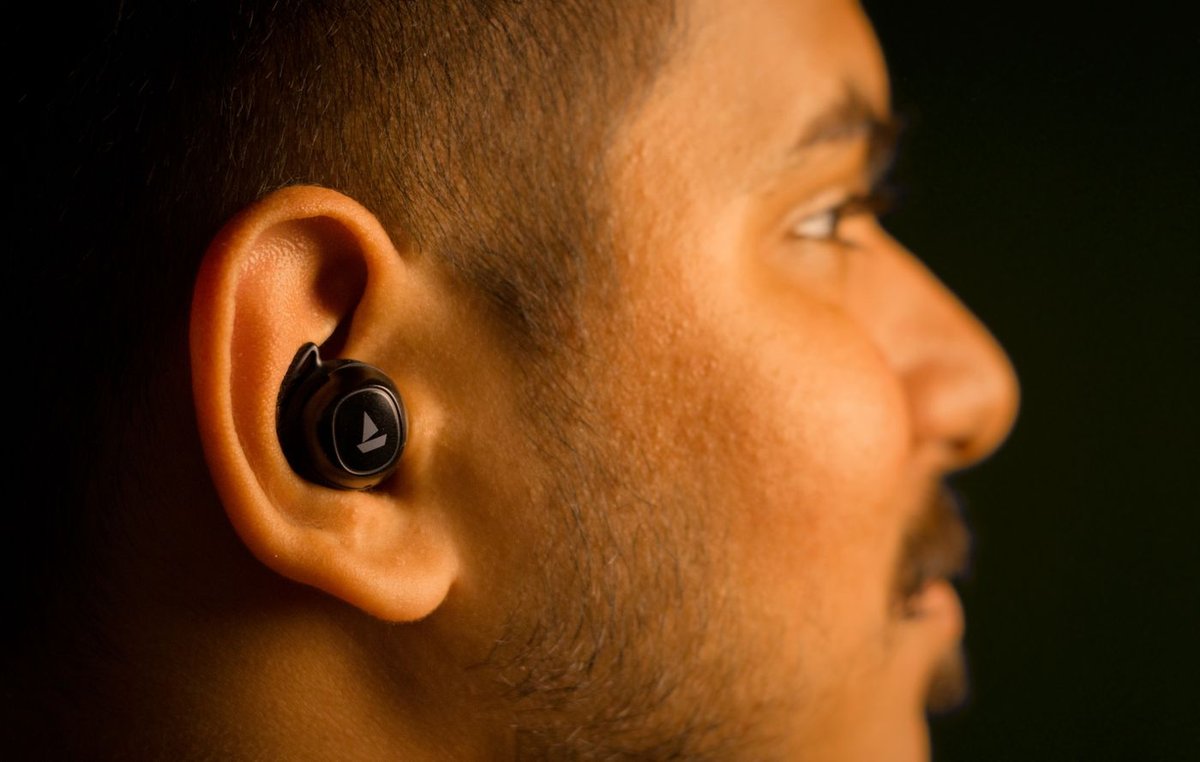
How Earbuds Get Uncomfortable, From Canal Pressure to Trapped Moisture
An ear tip works by expanding against the wall of your ear canal. That is a continuous outward push against skin with almost no padding under it, and past a couple of hours your body starts reporting it as a dull ache. Nothing is wrong with the product. That is simply what a seal costs.
The seal has a second cost. Your ear canal is already warm and slightly damp, and plugging it traps that warmth and moisture in place. Small clinical studies have linked regular in-ear use with more earwax and with a higher rate of fungal ear-canal infections, and roughly 90% of outer-ear infections are bacterial. That is an association rather than a proven chain of cause and effect, and it is not a reason to panic — it is a reason to do the obvious things. Wipe the tips. Do not share buds. Give your ears an hour to dry out between long sessions.
Tip: If one side suddenly sounds quiet or thin, suspect wax packed into the mesh grille before you assume a dead driver. Pull the tip off and look at the grille in good light first — that is by far the most common cause of one bud playing and the other not.
How Over-Ears Get Uncomfortable, From Clamping Force to Heat
Over-ears stay on your head by squeezing it. That squeeze gets spread across the whole surface of the pad, which is why a good pair feels like gentle pressure rather than a clamp for the first hour or two. What ends the honeymoon is usually heat, not force. A cup that seals around your ear also seals in the heat your head produces, and in summer or indoors without air conditioning that becomes the reason you take them off — not the sound, not the weight, the temperature.
The second failure is the jaw and temple area. Pressure that felt fine at hour one is still there at hour four, and unlike an ear tip you cannot subtly reseat it for relief. This is why the return window is a genuinely more useful feature than any number on the box: only your own head can tell you which of these two failure modes you will tolerate.
If You Wear Glasses, This Is Probably Your Deciding Factor

Everything above assumes the pad meets your skin evenly. Glasses break that assumption completely. The arm of your frames runs between the pad and your skull, so the entire clamping load stops being spread across the pad and concentrates onto two narrow strips pressing the arms into the side of your head — into the shallow bowl of the temple, the bone in front of your ear, and the cheekbone ridge. That is why glasses wearers report a specific, localised ache that people with perfect vision genuinely do not recognise as a thing.
There is a fix and a limit to it. SoundGuys finds that soft, pliable pads — velour, suede, fabric — deform around the arms and share the load, while firm synthetic leather stays rigid, leaves gaps in the seal and creates pressure points. So if you wear glasses and want over-ears, pad material is not a preference, it is the specification. And note what earbuds do here: they sidestep the problem entirely, because they never touch your frames at all. For a lot of glasses wearers, that one sentence is the whole decision.
Ear Tips Are the Cheapest Upgrade You Are Not Making
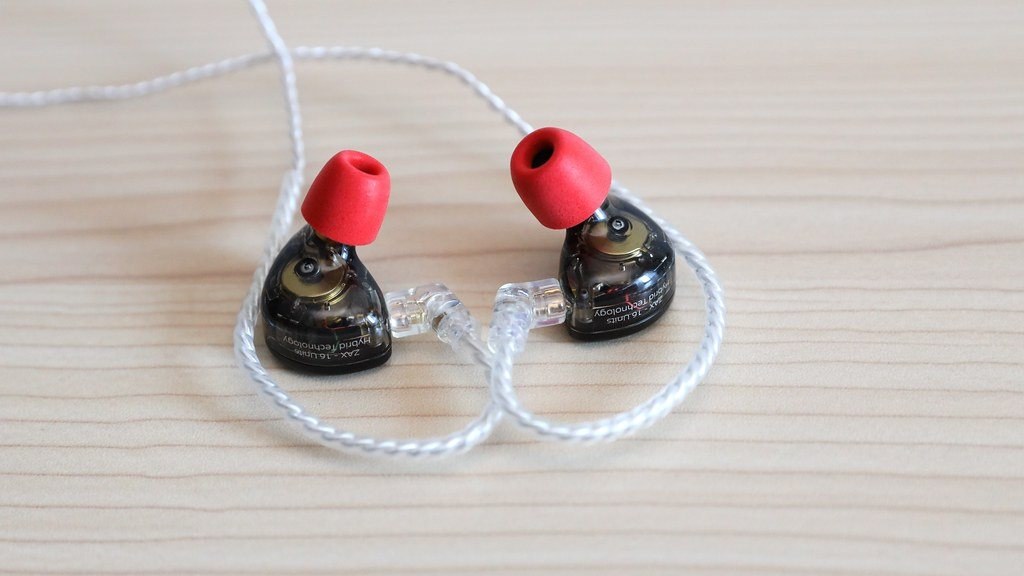
Almost every set of earbuds ships with three or four tip sizes, and almost every owner uses whichever pair was already fitted. That single habit is responsible for most complaints about earbuds sounding thin, bass-light and useless in noise, because all three of those symptoms are the same symptom: a broken seal.
Test it properly. Put them in, play music, then press each bud gently deeper with a fingertip. If the bass suddenly arrives, your tips are too small and you have been listening to a compromised product. Go up a size, and try foam if silicone will not hold. A five-dollar bag of tips can do more for what you hear than a two-hundred-dollar upgrade, and it also lowers the volume you need — which matters more than it sounds, as the next section explains.
What the Evidence Actually Says About Hearing Safety
The Numbers From WHO and NIOSH
The scale of this is genuinely large. The World Health Organization states that over 1 billion young adults are at risk of permanent, avoidable hearing loss from unsafe listening, and its Making Listening Safe programme puts the same figure on people aged 12 to 35 exposed through recreational sound. The peer-reviewed basis is a 2022 BMJ Global Health meta-analysis, which found a pooled prevalence of unsafe listening of 23.81% for personal listening devices, and a modelled estimate of 48.20% for loud entertainment venues.
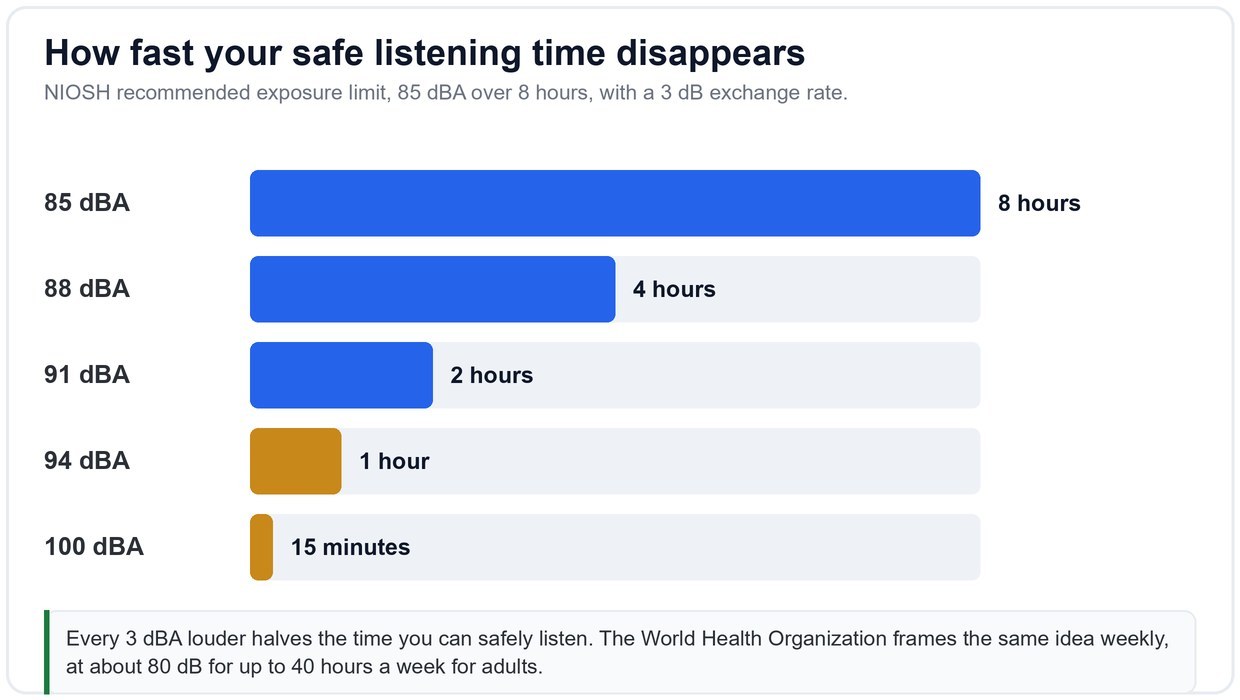
The useful part is the limits, because they are expressed as a dose — loudness multiplied by time, the way sun exposure works rather than the way a speed limit works. WHO’s reference points are 85 dB for a maximum of 8 hours a day, and 100 dB for no more than 15 minutes. The WHO and ITU safe-listening standard frames the same idea weekly, at roughly 80 dB for up to 40 hours a week for adults, and 75 dB for children. America’s NIOSH recommends 85 dBA over an 8-hour day with a 3 dB exchange rate, which is the part worth memorising.
Keep in mind: That 3 dB exchange rate means every 3 dBA louder cuts your safe time in half. 85 dBA for 8 hours, 88 for 4, 91 for 2, 94 for 1. Volume climbs in small-sounding steps; the clock collapses in big ones.
Why Proximity Matters Less Than Dose
The popular claim is that earbuds are more dangerous because they sit closer to the eardrum. It sounds obvious, and it is weaker than it sounds. Risk is governed by the dose that arrives at the eardrum — how loud, for how long. Proximity only matters to the extent it changes loudness, and a headphone driver an inch further away that you have turned up to compensate delivers the same dose as a bud you left quieter.
What actually drives real-world dose is behaviour: how far you push the volume, and for how many hours. And the single biggest reason people push the volume is that they cannot hear over their surroundings. Which means the safety question is not really a form-factor question at all. It is an isolation question.
Good Isolation Is a Hearing-Protection Feature
Follow that logic and you land somewhere genuinely useful. Whichever design blocks more of your environment lets you hear the same detail at a lower volume, and lower volume is a smaller dose. Isolation is not a comfort perk. It is protective equipment that also happens to sound better.
The corollary is the warning. Loose, leaky earbuds in a loud place are the genuinely risky combination, because you will compensate with volume without ever deciding to. It is also the most common combination in the world, since most people never change their stock tips. Meanwhile a well-sealed pair of earbuds and a good set of ANC over-ears both reduce your dose on a noisy commute, which makes them closer to equals on safety than the usual advice suggests.
Practical Habits That Actually Lower Your Dose
Four habits do nearly all the work, and none of them require buying anything. Get the seal right, so you are not using volume to fight background noise. Take breaks, because dose is cumulative and a quiet hour genuinely buys back budget. Turn on any volume-limit or loud-sound-reduction feature your phone or buds offer, since they enforce the discipline you will not. And treat noisy environments as the actual hazard, rather than the headphones.
You will also see the 60/60 rule quoted everywhere — no more than about 60% volume for no more than about 60 minutes at a stretch. It is a useful habit and a sensible simplification, but be clear on what it is: a popularisation that clinicians teach, not a published WHO regulation. The official standards are written as dose, not as a percentage on a slider, because a slider position means different things on different devices.
If ringing, muffled hearing or ear pain sticks around after a loud day rather than fading by the next morning, that is your cue to stop guessing and see an audiologist or your GP — this section is practical listening guidance, not medical advice.
Which One to Buy for How You Actually Listen
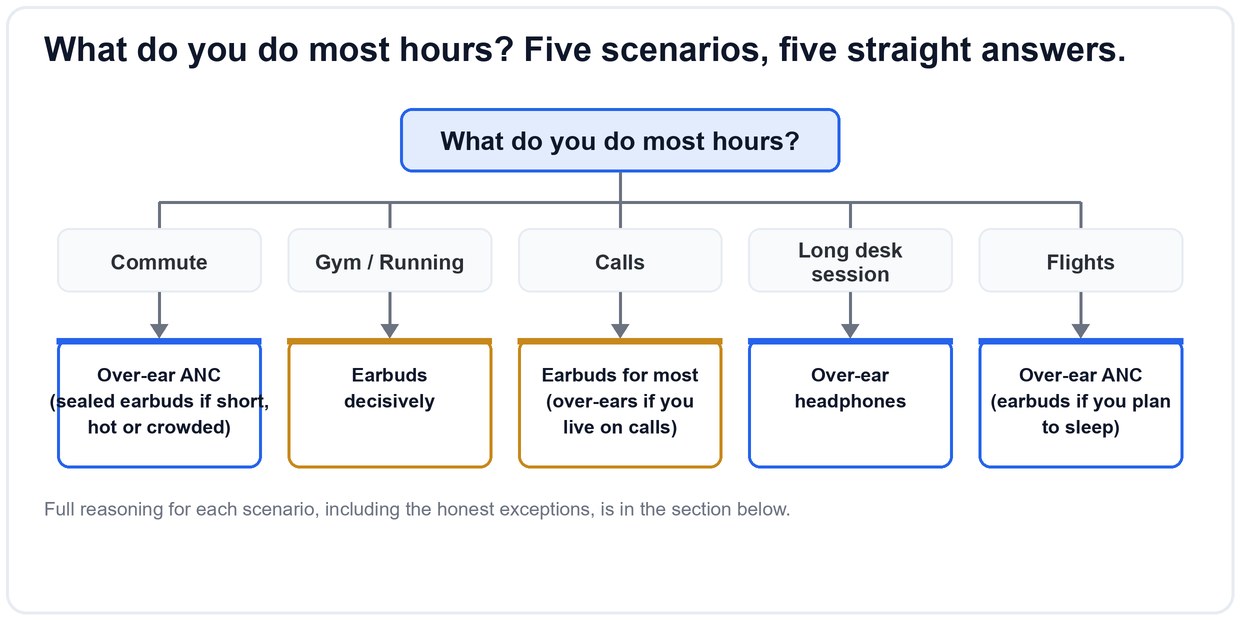
Five scenarios, five straight answers. No hedging, and no products recommended — the models named below appear only as evidence for a claim, with figures observed on 27 July 2026 and the Sony price re-checked on 3 August 2026.
For Commuting and Public Transit
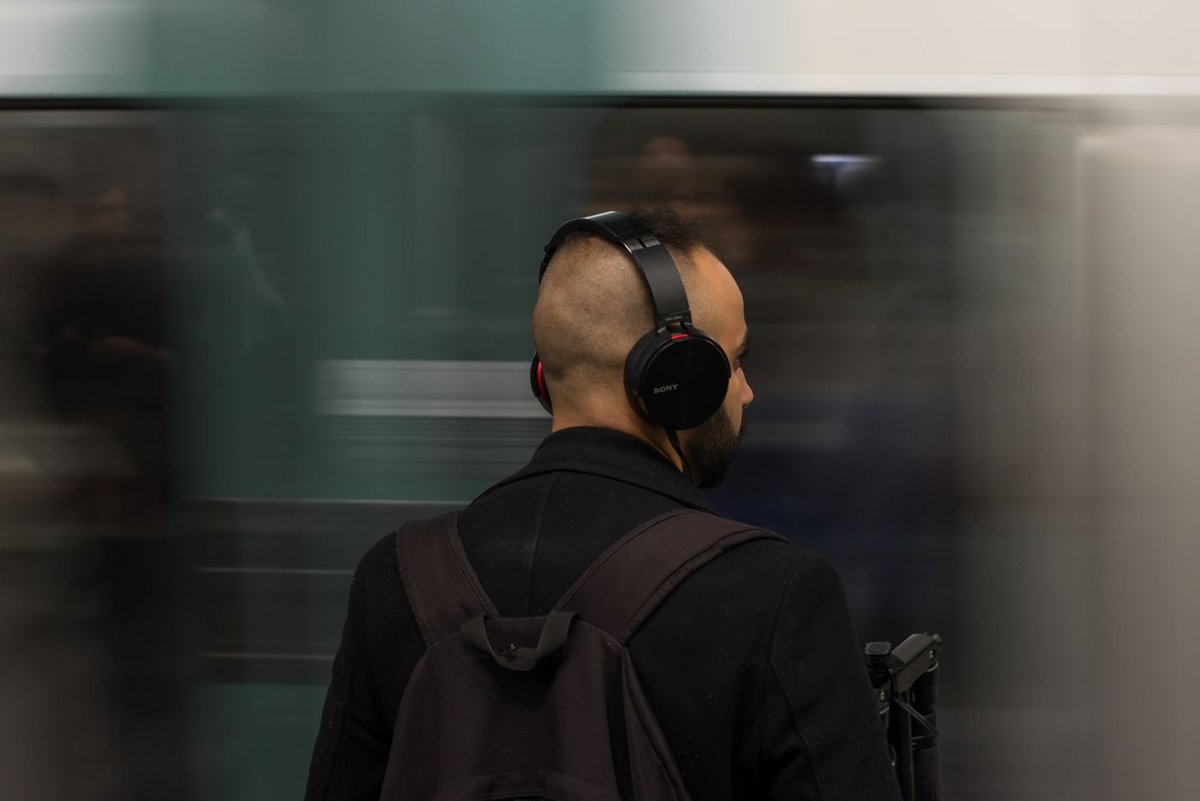
Over-ear ANC, if you are willing to carry them. Transit noise is dominated by low-frequency rumble from engines, wheels and ventilation, which is exactly the band cancellation handles best and passive sealing handles worst. Longer per-charge runtime also gets the charging case out of your daily routine entirely, and there is a real quality-of-life difference between a pair you pick up and a pair you manage.
The honest concession: on a packed train in July, bulk and trapped heat are not trivial complaints, and lifting one cup to hear an announcement is clumsier than pulling out one bud. If your commute is short, hot or crowded, well-sealed earbuds with the correct tips are a legitimate choice rather than a compromise.
For the Gym and Running

Earbuds, decisively, and it is not close. Two independent reasons stack up. First, mass: a few grams anchored in the bowl of your ear stay where you put them, while roughly 280 grams held on by clamping force bounces, shifts and slides on your sweat. Second, and more damning, moisture.
Before the evidence, the rating itself, because two of the biggest guides on this topic name IP ratings without ever saying what they are. IP stands for Ingress Protection, and it is defined by the international standard IEC 60529. The first digit covers solid objects on a 0 to 6 scale, where 6 means dust-tight. The second digit covers liquids, where 4 means splashes from any direction and 7 means surviving a metre of fresh water for half an hour. An X simply means that half was never tested, so IPX4 is “splash-rated, dust untested.” Apple, to its credit, cites the standard by name and lists AirPods Pro 3 as IP57 under IEC 60529.
Now look at what the manufacturers publish for the big cans. Bose rates the QC Ultra Earbuds IPX4 and gives the QC Ultra Headphones no water rating at all. Sony’s own help guide for the flagship WH-1000XM6 states flatly that “the headset is not waterproof,” while Sony’s WF-1000XM6 earbuds are IPX4. Our own review of the WH-1000XM6 covers what that flagship does well, and getting rained on is not on the list.
Warning: Flagship over-ear headphones are not gym equipment, and the brands say so in their own documentation rather than in their advertising. Sweat is a conductive salt solution sitting against electronics that carry no ingress rating — that is a warranty conversation, not a maintenance one.
If you run outdoors, add awareness to the checklist: use transparency mode or an open-ear design so you can hear traffic, and check your local rules, because some places restrict wearing both ears covered while running on roads.
For the Office and Video Calls

Earbuds for most people, over-ears if you genuinely live on calls. First, kill a myth: microphone quality tracks how close the mic sits to your mouth and how many mics are doing the array processing, not whether the thing is big or small. Whether you sound good to other people is a per-model question, and every buying guide that implies otherwise is guessing.
The real deciders are social and physical. Earbuds let you pull one out mid-sentence when a colleague appears, which over-ears cannot match. Over-ears are a visible do-not-disturb sign that saves you interruptions, and they will carry a six-hour call day on a single charge while a set of buds asks for a case break in the middle of it. One warning specific to open-plan offices, straight from the ANC section above: if your noise problem is talking colleagues, cancellation is not the tool, and choosing on the ANC badge will disappoint you.
For Long Listening Sessions at a Desk

Over-ear, and both halves of the argument are structural rather than a matter of taste. Runtime first: 30 hours against 6 on the Bose pair means the headphones simply never interrupt a working day, while the earbuds require a planned break and a box. Comfort second: past about the two-hour mark, pressure spread across a large pad is easier to forget than continuous outward pressure inside your ear canal, which is why editors, programmers and gamers converge on cans without much debate.
The exception is the one from the fit section. If you wear glasses, insist on soft, pliable pads — with firm synthetic-leather pads, the temple-arm pressure can invert this verdict entirely inside an hour.
For Travel and Long Flights
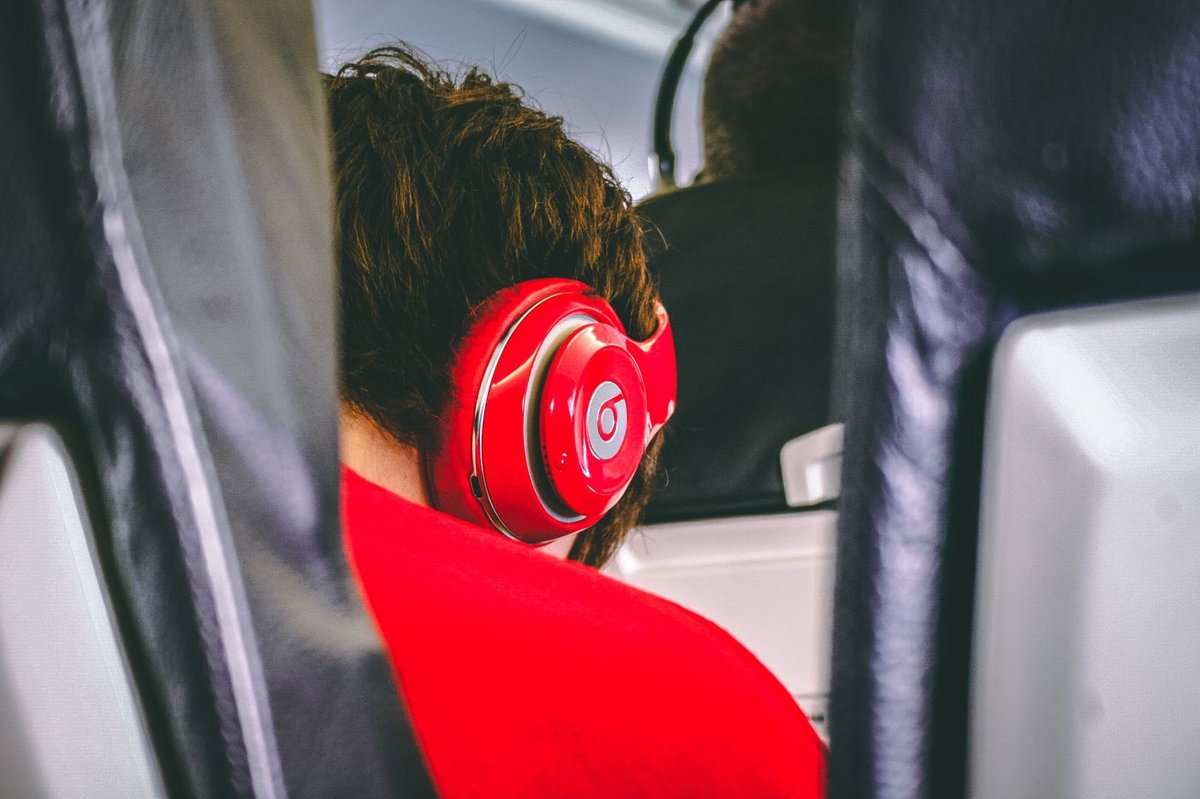
Over-ear ANC, with one real exception. Cabin noise is broadband but rumble-dominated, which is cancellation’s best case in the world, and a twelve-hour flight is precisely where per-charge runtime beats case-total runtime: you cannot leave your seat, put your buds in a box for a quarter of an hour, and call that a good listening experience.
The exception is sleeping. You cannot lie on your side wearing over-ears, so if your plan for a long-haul flight is to be unconscious for most of it, small sealed earbuds are genuinely the better tool and the bigger pair stays in the bag. If you are curious why any of this works wirelessly at 35,000 feet in the first place, the physics of Bluetooth is a good rabbit hole.
Why Owning Both Is the Right Answer More Often Than You Think
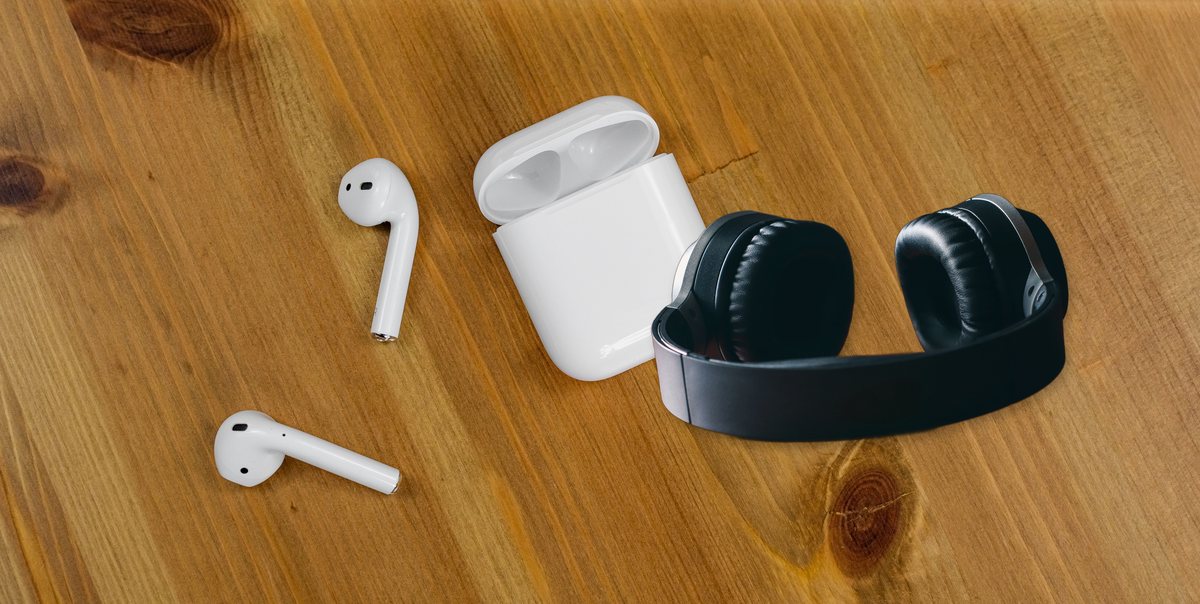
Every buying guide treats “get both” as a cop-out. It is actually the conclusion the evidence points at, and the reason is that the two designs do not fail in overlapping ways. Earbuds fail at long unbroken sessions, sustained battery and canal comfort. Over-ears fail at movement, sweat, heat, portability and glasses. There is no single product that fixes both lists, because the fixes contradict each other — you cannot build something that both encloses your ear and disappears into a pocket.
So a person with two genuinely different listening contexts, a desk job and a gym habit, or a commute and a home office, is not being indecisive by owning two pairs. They are matching two tools to two jobs, which is what you already do with shoes. And the money argument runs the same direction: a solid mid-range pair of each frequently costs less than one flagship, and covers far more of your week.
The failure mode is not owning two pairs. It is owning one pair that is wrong for half your week and slowly, quietly not using it. That waste just happens to be paid up front, which is why it never feels like waste.
Frequently Asked Questions
Are earbuds or headphones better for the gym?
Earbuds, clearly. They weigh a few grams and anchor in your ear instead of bouncing on your head, and they are usually rated for sweat — IPX4 is common on flagship buds. Flagship over-ear headphones frequently carry no water rating at all; Sony states outright that the WH-1000XM6 is not waterproof, and Bose advises keeping the QuietComfort Ultra Headphones away from wet situations.
Do earbuds or headphones sound better?
Over-ear headphones have the easier job, because a 40 to 50 mm driver moves air more comfortably than a 6 to 12 mm one and the cup preserves the spatial cues your outer ear provides. But size sets the ceiling, not the result. A well-tuned earbud beats a badly tuned over-ear at the same price, and a poorly sealed earbud sounds thin regardless of how good it is.
Are earbuds or headphones more comfortable?
Neither, indefinitely — they get uncomfortable in different ways on different clocks. Earbuds apply steady outward pressure inside your ear canal and trap warmth there, which usually shows up as soreness after a couple of hours. Over-ears squeeze the sides of your head and trap heat around your ears, and the pressure concentrates badly if you wear glasses. Judge on a return window, not on a review.
Do earbuds or headphones have better noise cancelling?
Over-ear ANC is better, but only at low-frequency rumble like engines, buses and air conditioning. Cancellation works up to roughly 1 kHz and then falls away, so nearby conversation is barely affected by either design. Against voices, the result is decided by how well the product seals — and a correctly fitted earbud can match or beat an over-ear there.
Are earbuds or headphones healthier?
Neither is inherently safer, because hearing risk is driven by dose, meaning loudness multiplied by time, not by how close the driver sits. The practical answer is that whichever pair blocks more of your environment lets you listen quieter for the same clarity, which lowers your dose. Loose, leaky earbuds in a loud place are the genuinely risky setup, because they push you to raise the volume without noticing.
Do earbuds or headphones last longer?
Headphones, by a wide margin, on the number that matters. Bose’s QuietComfort Ultra Headphones (2nd Gen) are rated up to 30 hours per charge; the matching QuietComfort Ultra Earbuds are rated up to 6, with about three more charges stored in the case. Earbud marketing quotes the case total, which is a different measurement from a single unbroken session.
Are headphones or earbuds cheaper?
Entry-level earbuds are cheaper than entry-level over-ears, and at the flagship end the two converge. Sony’s WH-1000XM6 sits right at the top of the market, and flagship earbuds sit in the same neighbourhood. Factor in lifespan though: an earbud system depends on a charging case with its own ageing battery, and losing or wearing out that case costs you most of your usable runtime.
Which is safer, earbuds or headphones?
For your hearing, whichever one you can listen to quietly — which usually means whichever seals better on your particular ears. For your surroundings, the answer flips: covering both ears with over-ears reduces your awareness of traffic and announcements far more than a single bud does, so for running or cycling outdoors, transparency mode or an open-ear design is the safer setup.
The Bottom Line
If you take one decision rule away, make it this one. Pick by your longest single listening session and your worst regular environment, not by the spec comparison. Long unbroken sessions and low-frequency noise point at over-ears. Movement, sweat and pockets point at earbuds. Everything else on the box is a tiebreak between products, not between form factors.
Then treat the first week as a fit test rather than a celebration. Buy from somewhere with a real return window, wear them for the longest stretch you actually do — the whole flight, the full workday, the real run — and notice which discomfort shows up and whether you can live with it. That is the only test that predicts whether a pair will still be in daily use in six months, and it is the one no review, including this one, can run for you.