

What happens when the security protecting the internet relies on a private key as simple as the number four?
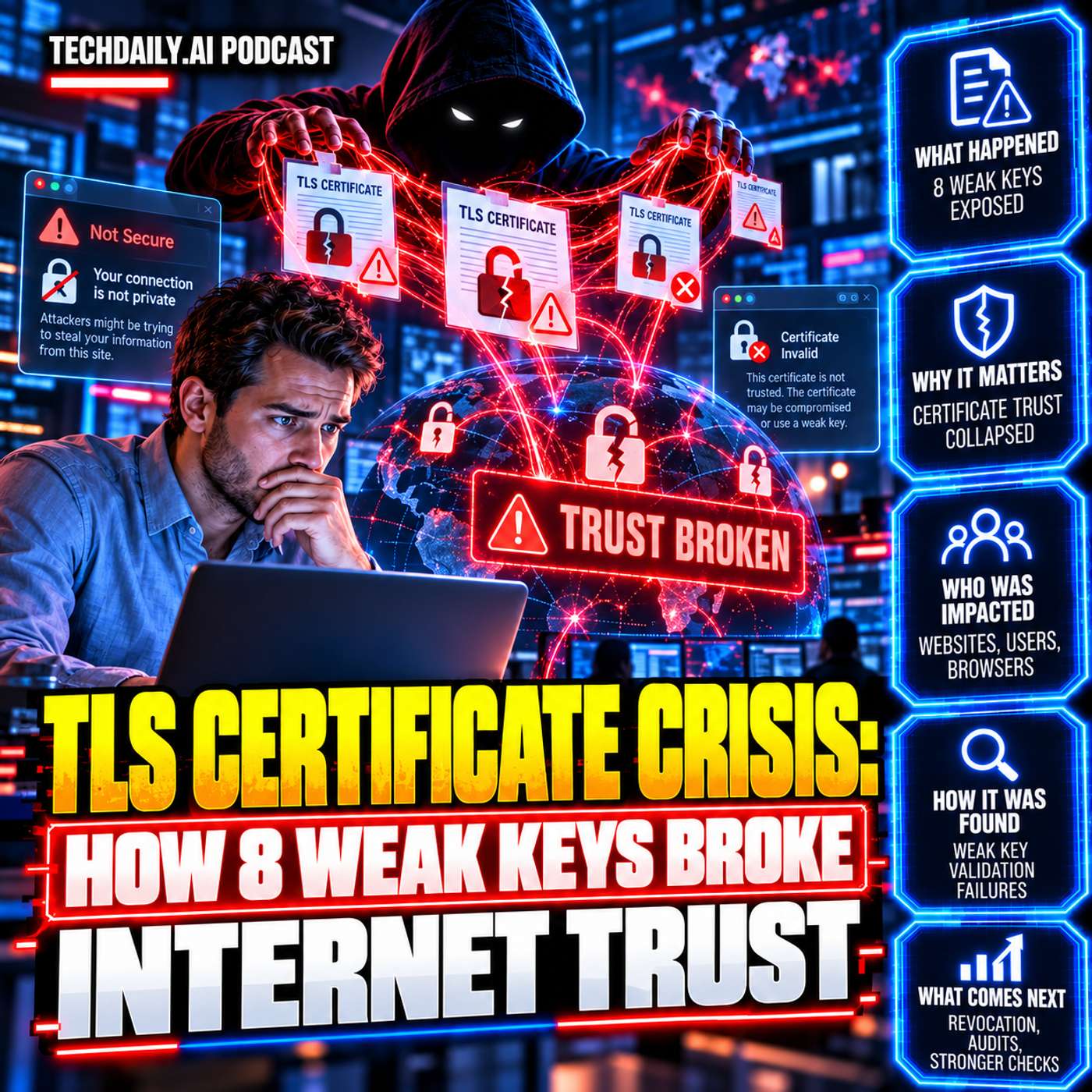
In this episode of TechDaily.ai, host David and cybersecurity expert Sophia investigate a major TLS certificate security failure involving eight compromised intermediate certificates associated with India’s eMudhra certificate authority. The incident exposes serious weaknesses in public key infrastructure (PKI), certificate authority security, and the systems responsible for protecting encrypted internet communications.
Modern internet security depends on cryptographic keys containing enormous amounts of randomness. But according to the incident discussed in this episode, eight intermediate certificate private keys contained just 3 to 8 bits of entropy, with values as small as four. This shocking security breakdown raises urgent questions about cryptographic key generation, certificate validation, and the reliability of the internet’s chain of trust.
David and Sophia explore how weak cryptographic keys could enable attackers to forge trusted TLS certificates, carry out man-in-the-middle attacks, and potentially intercept sensitive communications without triggering traditional browser security warnings.
The conversation also examines why revoking compromised certificates creates enormous challenges for IT teams managing legacy systems, Docker containers, Python applications, IoT devices, and outdated certificate trust stores.
In this episode, you’ll discover:
- How eight compromised intermediate TLS certificates threaten public key infrastructure and internet security.
- Why cryptographic private keys containing just 3 to 8 bits of entropy represent a catastrophic security failure.
- How certificate authority weaknesses can enable forged certificates and man-in-the-middle attacks.
- The possible roles of software configuration errors, flawed key-generation tools, and CI/CD test code in the incident.
- Why certificate revocation and trust store updates can be more complicated than patching traditional security vulnerabilities.
- How Docker containers, Python certificate bundles, legacy servers, and IoT devices can retain outdated security certificates.
- What certificate transparency logs reveal about the strengths and limitations of today’s TLS security architecture.
- Why applications using independent encryption frameworks, including Signal and WireGuard, face different risks from compromised web PKI certificates.
Beyond the immediate security implications, this incident raises a fundamental question: Can the internet’s trust infrastructure remain secure when a single certificate authority’s failure can affect systems worldwide?
From cryptographic entropy and certificate issuance to enterprise security risks and long-term remediation, this episode examines the vulnerabilities hidden beneath everyday encrypted communications.
If you’re a cybersecurity professional, IT administrator, DevOps engineer, systems architect, or simply interested in how internet encryption works, this conversation offers a closer look at one of the most concerning types of failures in digital trust infrastructure.
Tune in to TechDaily.ai as David and Sophia explore the TLS certificate crisis, the challenges of restoring trust, and what this incident means for the future of internet security.
Subscribe to TechDaily.ai for more conversations about cybersecurity, artificial intelligence, emerging technologies, and the security challenges shaping our connected world. Share this episode with your IT or security team and join us for the next discussion.
Want to sponsor TechDaily.ai? Visit techaily.ai to feature your message across podcast platforms, including Spotify, Apple Podcasts, and Amazon Music, starting at $25.