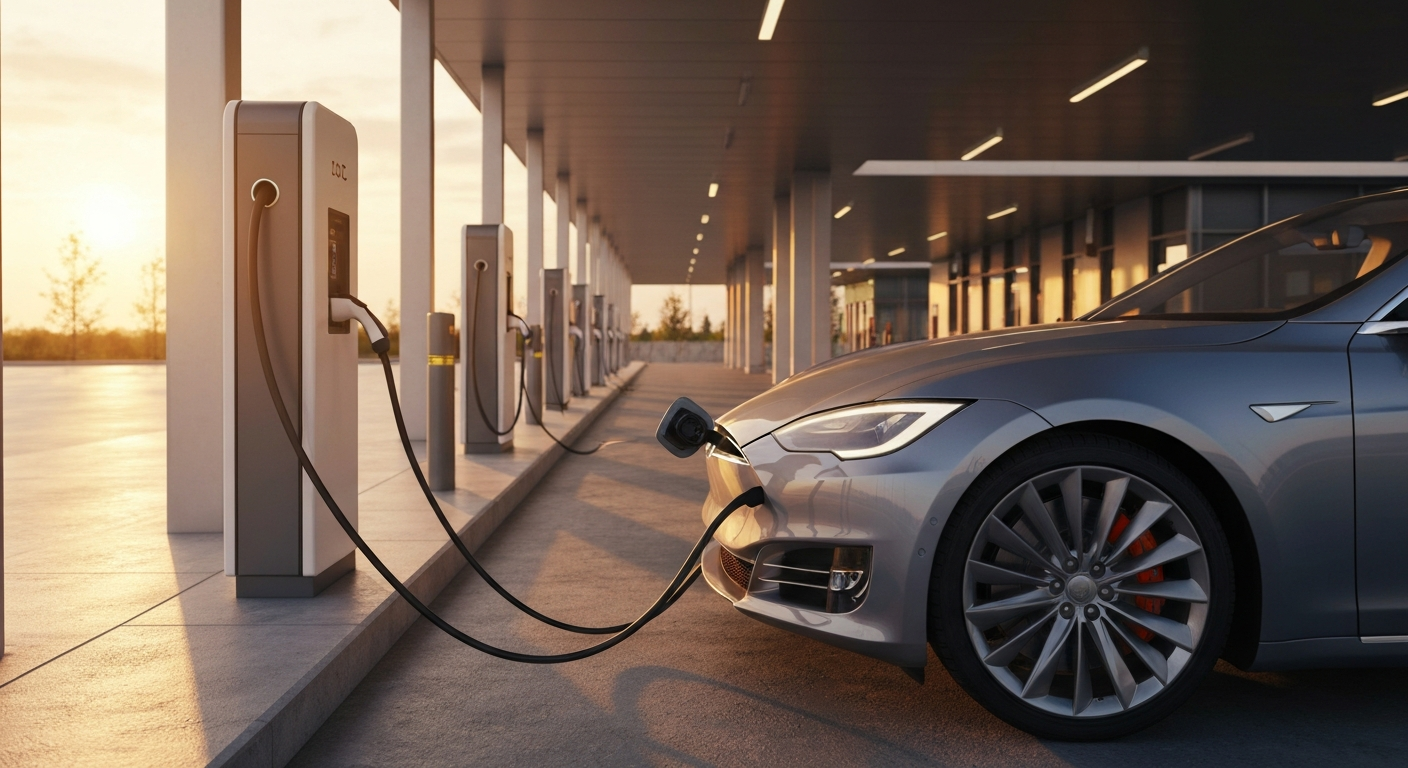
Pull into any highway charging stop and you will hear the same nervous question traded between drivers: does fast charging hurt ev battery life, or is that just garage-forum folklore? It is one of the most persistent worries in electric-vehicle ownership, and like most good myths, it survives because there is a kernel of truth buried inside it.
Here is the honest version as of 2026: occasional DC fast charging is not the battery killer many people fear. The nuance that gets lost in the panic is that frequency, heat, and cell chemistry are what actually move the needle, not the simple act of plugging into a fast charger now and then. Real-world fleet data and large owner studies now let us replace gut feelings with numbers, and those numbers tell a more reassuring, and more interesting, story than either the alarmists or the cheerleaders want to admit.
This guide walks through what the latest data shows, where the caveats hide, and exactly how to charge so your pack ages gracefully.
- Occasional fast charging is fine. A study of roughly 13,000 Teslas by Recurrent found no statistically significant range difference between cars that fast-charged heavily and those that rarely did.
- Frequency and power are the real stressors. Geotab’s 2025 dataset shows vehicles that lean hard on high-power DC fast charging degrade about twice as fast as those that mostly charge slowly.
- Average degradation is creeping up. The fleet-wide average rose from about 1.8% per year in 2023 to roughly 2.3% per year in 2025, which researchers tie partly to wider high-power charging access.
- Chemistry sets the rules. LFP batteries tolerate regular 100% charging; NMC/NCA packs prefer about 80% for daily use.
- Heat is the silent accelerant. Charging a hot battery, in hot weather, at high power is the worst-case combination for long-term health.
The Short Answer on Whether Fast Charging Hurts Your EV Battery
If you remember one thing, make it this: the difference between a fast charge once a week on a road trip and a fast charge as your only charging method is enormous, even though both involve the exact same hardware.
DC fast charging pushes large amounts of current into the pack quickly, which generates heat and stresses the cells more than a slow trickle does. A modern EV’s battery management system (BMS) is built to absorb that occasional stress, throttling charge speed and managing temperature to protect the cells. What the BMS cannot fully undo is the cumulative effect of doing it constantly, especially at the highest power levels.
So the myth (“fast charging ruins your battery”) and the reality (“fast charging is one of several stressors, and only matters at high frequency”) are not opposites. They live on the same spectrum. The rest of this article is about where you fall on that spectrum and how to nudge yourself toward the gentle end of it. If you are still fuzzy on the difference between charging speeds in the first place, our explainer on EV charging levels breaks down Level 1, Level 2, and DC fast charging before we dig into the health trade-offs.
It also helps to understand why heat is the villain in this story. Lithium-ion cells degrade through side reactions that grow the solid-electrolyte interphase layer, plate lithium, and gradually lock away the lithium ions that carry your range. Higher temperatures and higher voltages both speed those reactions up. Fast charging raises both at once, which is why a single high-power session is more demanding than a slow one, and why doing it repeatedly is what compounds into measurable capacity loss. Your car’s thermal-management system fights back by cooling the pack and tapering charge speed, but it is managing the stress, not erasing it.
What the 2025 Geotab Data Reveals About Everyday Battery Degradation
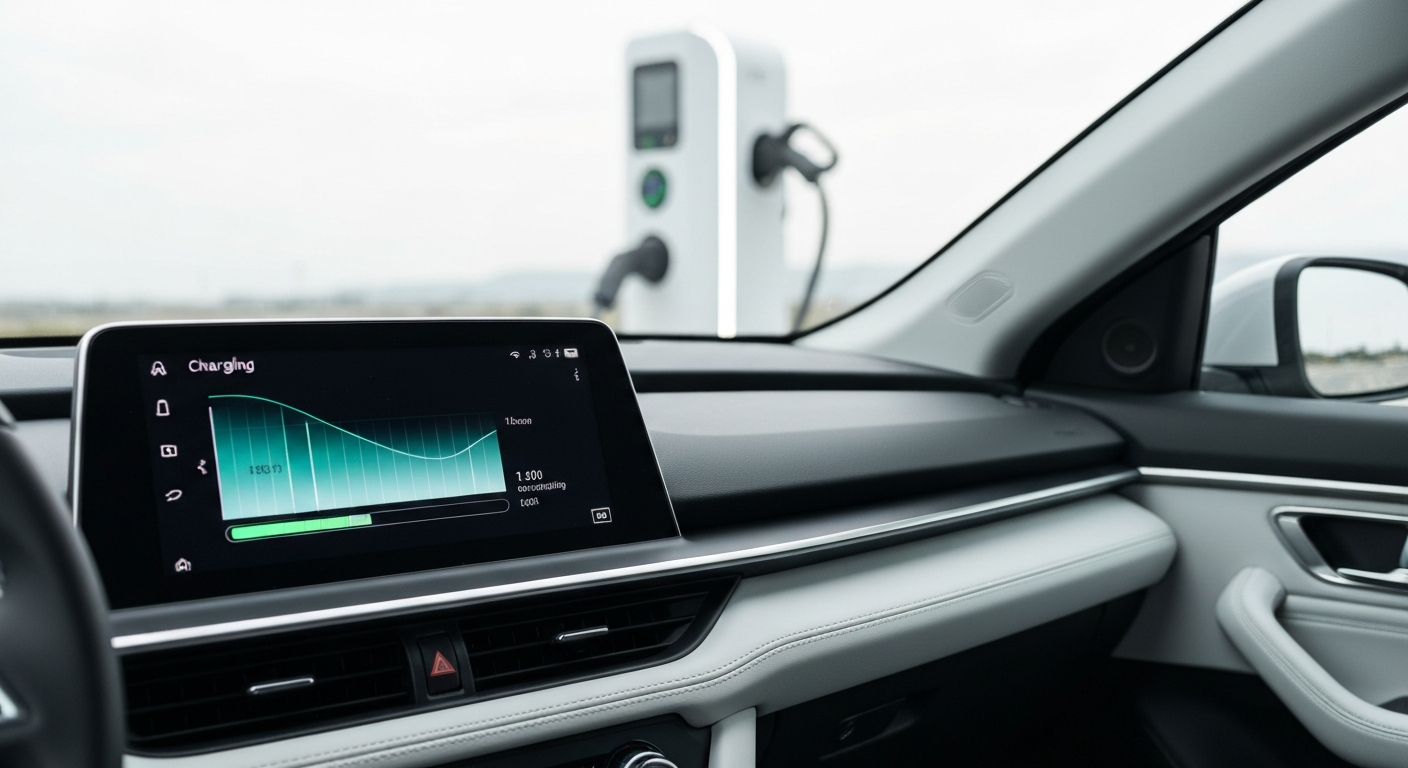
The most useful recent picture comes from telematics firm Geotab, which analyzed more than 22,700 EVs across 21 models to see how real driving and charging habits map to battery aging. Because it draws on connected vehicles rather than a lab bench, it captures messy, real-world behavior at scale.
The headline figure: average annual battery degradation was about 2.3% in 2025, meaning a typical pack would retain roughly 81.6% of its original capacity after eight years, per Geotab. Notably, that 2.3% is up from about 1.8% in 2023. Researchers, as reported by InsideEVs, attribute part of that uptick to the rapid spread of high-powered charging infrastructure across North America, which makes heavy fast charging easier for more drivers to fall into.
When Geotab split the fleet by charging behavior, a clear gradient emerged:
- Light fast-charging use (under 12% of sessions): about 1.5% average annual degradation.
- Frequent fast charging (more than 12% of sessions): about 2.5% average annual degradation.
- Frequent high-power use (more than 40% of sessions above 100 kW): about 3.0% annual degradation, projecting to roughly 76% capacity after eight years.
In other words, the heaviest high-power fast chargers degrade at roughly double the rate of drivers who mostly charge slowly. That is the strongest evidence that frequency and power, not fast charging as a category, are what hurt. One caveat worth flagging: Geotab’s split is built on charging power levels (above or below 100 kW), not a clean DC-versus-AC label, so it is best read as a frequency-and-intensity signal rather than a verdict on any single plug type.
How Long Do EV Batteries Last in Practice
Plugging those rates into real lifespans is reassuring. At the 2025 average of 2.3% per year, a pack still holds about 81% of capacity after eight years, comfortably above the 70% threshold most warranties guarantee over 8 years or 100,000 miles. Even the hardest-charging 3.0%-per-year group lands near 76% after eight years. For most drivers, the battery will outlast the time they plan to keep the car, and many packs are now expected to last 15 to 20 years before retirement or second-life use. Degradation is also front-loaded: packs typically lose a few percent early, then settle into a slow, predictable decline.
DC Fast Charging vs Level 2 Battery Health Compared
This is the comparison most owners actually care about, so let us put it side by side. Level 2 (the 240-volt charging you get at home or work) delivers power slowly and coolly. DC fast charging delivers it quickly and hot. Both have a place; the trick is matching the tool to the job.
| Factor | DC Fast Charging | Level 2 Charging |
|---|---|---|
| Typical power | 50 kW to 350 kW | 7 kW to 19 kW |
| Heat generated in pack | High | Low |
| Best use case | Road trips, quick top-ups | Daily and overnight charging |
| Effect on long-term health | Minimal if occasional; measurable if frequent at high power | Gentlest option; ideal for routine use |
| Geotab-linked degradation signal | Up to ~3.0%/yr for heavy high-power users | ~1.5%/yr for light fast-charge users |
| Convenience | Very high on the go | High at home, slow away |
The takeaway on dc fast charging vs level 2 battery health is not that one is good and one is evil. It is that Level 2 should be your default and DC fast charging should be your exception. Drivers who can plug in at home overnight on Level 2 and reserve fast charging for trips are charging almost exactly the way the Geotab data says is gentlest on the pack. Charging infrastructure provider Qmerit and others have long made the same practical point: home Level 2 is the backbone of healthy EV ownership, with public fast charging as the convenient supplement.
It is also worth weighing the Recurrent finding here. In its analysis of roughly 13,000 Teslas and more than 160,000 data points, Recurrent found no statistically significant range difference between cars that fast-charged more than 70% of the time and those that did so less than 30% of the time. That sounds like a full exoneration of fast charging, and for everyday use it largely is. But read the sample carefully: only about 344 vehicles fell into the heavy-fast-charge group, versus more than 13,000 in the light group. That imbalance, plus the fact that most cars were 2018 or newer (so observed over roughly five to six years, not a full lifetime), means the heavy-charging conclusion rests on a thin, relatively young slice of data. The honest reading is “no alarm bells in the real world so far,” not “fast charge with total impunity forever.”
Should You Charge Your EV to 100 Percent Every Day
Charging behavior at the top of the battery often matters more than the speed you used to get there, which is why so many owners ask whether they should fill to 100% daily. The answer depends almost entirely on your battery chemistry, and getting it wrong in either direction wastes either range or longevity.
For most long-range EVs built on NMC or NCA (nickel-based) chemistry, sitting at 100% state of charge raises voltage and heat inside the cells, which accelerates wear. The widely recommended habit is to set a daily charge limit around 80% and save 100% for days you genuinely need the full range. Resting at a high state of charge, especially in hot conditions, is one of the more avoidable stressors in EV ownership.
LFP (lithium iron phosphate) packs flip that advice. LFP chemistry is far more stable at a high state of charge, and many manufacturers actually recommend charging LFP cars to 100% regularly, partly because it helps the BMS calibrate the range estimate accurately. So if you own an LFP car and have been religiously stopping at 80%, you may be leaving usable range on the table for no longevity benefit. Check your owner’s manual to confirm which chemistry you have before setting a limit.
How Battery Chemistry Changes the Fast-Charging Rules
The LFP-versus-nickel split deserves its own moment because it quietly governs almost every charging recommendation, including how much fast charging your pack shrugs off.
- LFP (lithium iron phosphate): More thermally stable, tolerant of regular 100% charging, and rated for a high cycle count, often quoted around 3,000 to 5,000 full cycles. Common in standard-range trims and increasingly in mainstream models. These packs are generally the most forgiving of imperfect habits.
- NMC / NCA (nickel-based): Higher energy density and longer range, but more sensitive to high states of charge and heat, with cycle ratings often cited around 1,500 to 2,500 full cycles. These are the packs that genuinely benefit from the 80% daily rule and from minimizing high-power fast charging.
Knowing your chemistry turns vague anxiety into a concrete plan. An LFP owner can relax about the occasional 100% road-trip charge; a nickel-based owner gets the most longevity by treating both 100% charges and high-power fast charging as occasional events rather than daily routines.
There is a practical wrinkle here too. LFP cars also tend to handle cold a little differently and benefit from that periodic full charge to keep their range estimate honest, since LFP’s flat voltage curve makes state-of-charge harder for the BMS to read. Nickel-based cars rarely need that recalibration, so for them the 80% habit costs almost nothing. The point is not to obsess over either chemistry, but to stop applying nickel-pack rules to an LFP car or vice versa, which is one of the most common pieces of well-meaning but misapplied EV advice circulating online.
How to Slow EV Battery Degradation Without Giving Up Fast Charging
You do not have to choose between convenience and longevity. A handful of habits, most of them effortless once set, capture nearly all the available benefit. Here is how to slow EV battery degradation while still using fast charging when it actually helps you.
Precondition the Battery Before Fast Charging
Most EVs can warm the battery to its ideal charging temperature on the way to a charger, often automatically when you route to one in the nav system. A preconditioned pack accepts a fast charge more efficiently and with less harmful stress, because the cells are in their happy thermal window rather than cold and resistant. On a road trip, set the charger as a navigation destination so the car can prep itself.
Avoid Fast Charging to 100 Percent
Fast charging slows dramatically past roughly 80% as the BMS protects the cells, so the last 20% is both the slowest and the most stressful part of a DC session. On trips, unplug around 80% and let the next leg’s charging stop fill the gap. You will spend less time waiting and put less strain on the pack at the same time.
Do Not Fast Charge a Hot Battery
Heat is the common thread in nearly every degradation study. Stacking a high-power charge on top of an already-hot battery, after spirited driving or on a scorching day, is the worst-case scenario. If the pack is hot, give it a few minutes, let active cooling work, or choose a slower charger until temperatures settle.
As a rule of thumb, lithium-ion aging roughly doubles for every ~10°C (18°F) rise in cell temperature — which is why one hot-weather, high-power session stresses the pack far more than the identical charge on a mild day.
Use Level 2 for Daily Charging
The single highest-impact habit is making Level 2 your default. Overnight home or workplace charging is slow, cool, and gentle, and it keeps you off fast chargers for routine top-ups, which is exactly the behavior the Geotab data associates with the lowest degradation. If you can install home Level 2, it pays for itself in both convenience and battery health.
Reserve Fast Charging for Road Trips
Fast charging is a fantastic tool for long-distance travel, where speed matters and you are using the energy immediately rather than parking at a high state of charge. Used this way, on the order of a small fraction of your total sessions, fast charging barely registers in the long-term degradation data. Save it for the job it is best at.
What the NACS Transition Means for Fast Charging in 2026
A structural shift is reshaping how often drivers fast charge. Through 2025 and into 2026, most major automakers have adopted the North American Charging Standard (NACS), the connector pioneered by Tesla, opening the formerly Tesla-only Supercharger network to a wide range of EVs via adapters and native ports.
That expanded access is a double-edged sword for battery health. On one hand, more reliable, well-managed fast chargers are a genuine convenience win. On the other, the easier and more available fast charging becomes, the more tempting it is to lean on it for daily charging, which is precisely the behavior linked to faster degradation in the 2025 data. The NACS era does not change the underlying chemistry or the advice in this guide. It just raises the stakes on charging intentionally: use the growing fast-charge network for trips and convenience, and keep slow, cool Level 2 as your everyday default.
Frequently Asked Questions
Does Fast Charging Affect EV Range Over Time
For most drivers, not in a way you will notice. Recurrent’s study of roughly 13,000 Teslas found no statistically significant range difference between heavy and light fast chargers, though the heavy-use group was a small sample of about 344 cars observed over five to six years. Heavy, high-power fast charging does correlate with faster degradation in Geotab’s larger fleet data, so frequency is the variable that matters.
Is It Bad to Fast Charge Every Day
It is not ideal for nickel-based (NMC/NCA) packs. Geotab’s 2025 data shows vehicles that fast charge frequently, especially above 100 kW, degrade up to about 3.0% per year versus roughly 1.5% for light fast-charge users. If you must fast charge daily, preconditioning, stopping near 80%, and avoiding hot-battery sessions all help limit the impact.
Should I Charge My EV to 100 Percent
It depends on chemistry. LFP packs are stable at full charge and many makers recommend regular 100% charging for accurate range calibration. NMC/NCA packs last longer with a daily limit around 80%, reserving 100% for days you need the full range. Check your owner’s manual to confirm which chemistry your car uses.
What Is Better for Battery Health DC Fast Charging or Level 2
Level 2 is gentler. It delivers power slowly and coolly, generating far less heat than DC fast charging, and Geotab associates light fast-charge habits with the lowest degradation, around 1.5% per year. Use Level 2 as your daily default and DC fast charging for trips and quick top-ups.
Does Hot or Cold Weather Make Fast Charging Worse
Heat is the bigger long-term concern. Fast charging a hot battery in hot weather is the worst combination for degradation, so let a hot pack cool first or use a slower charger. Cold weather mainly slows charging speed and temporarily reduces range; preconditioning the battery before charging helps in both extremes.
How Long Do EV Batteries Last
At the 2025 average degradation rate of about 2.3% per year, a typical pack retains roughly 81% of capacity after eight years, above most 70% warranty thresholds. Even heavy high-power fast chargers land near 76% after eight years per Geotab, and many packs are expected to remain serviceable for 15 to 20 years.
Will the NACS Transition Change How I Should Charge
No. Wider access to the Supercharger network through the 2026 NACS rollout makes fast charging more convenient, but the battery-health advice is unchanged: use the expanded fast-charge network for road trips and keep slow, cool Level 2 charging as your everyday habit.