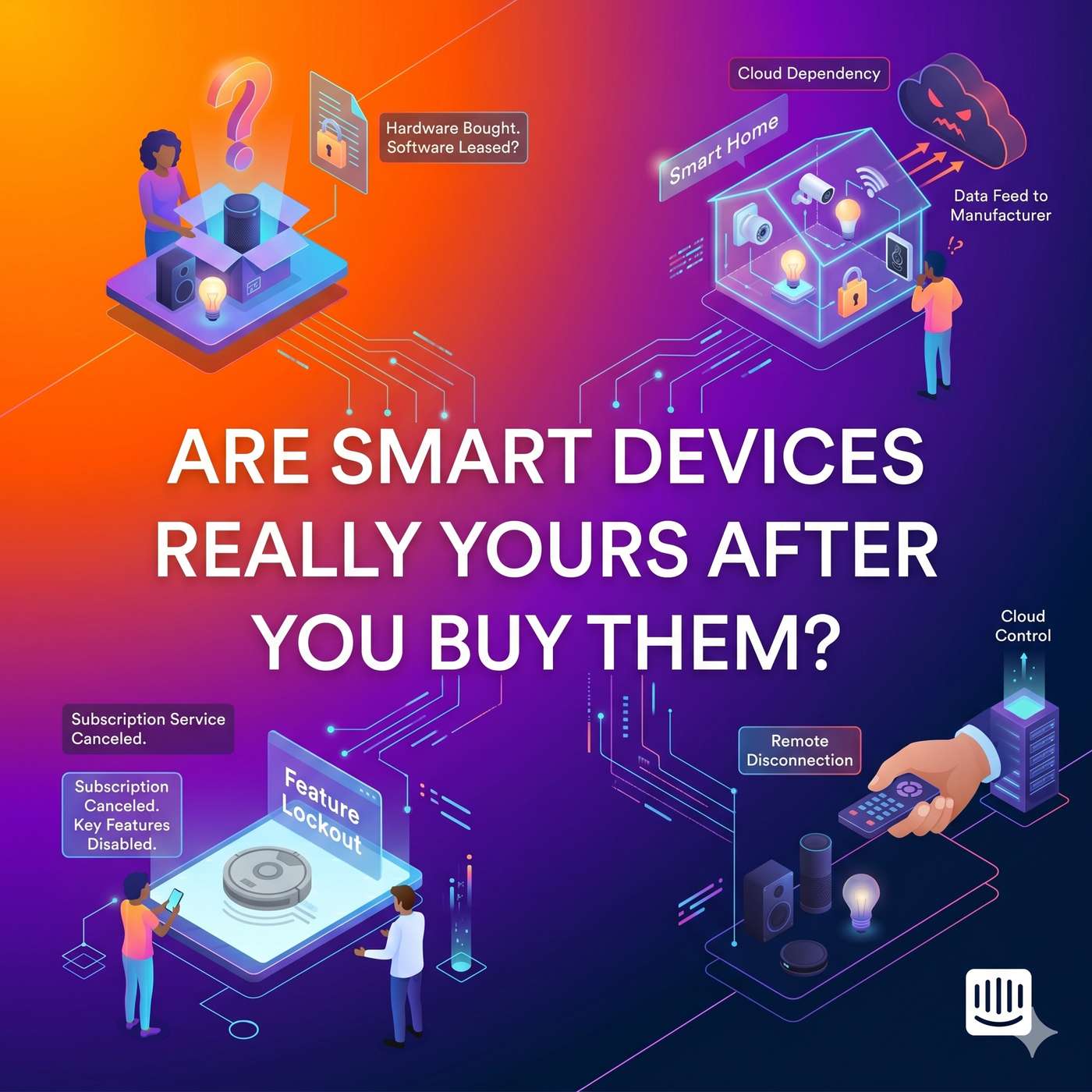


Do you really own a smart device if the manufacturer can change how it works after you buy it?
In this episode of TechDaily.ai, David and Sophia explore a major U.S. class action lawsuit against Amazon involving older Fire TV Sticks and the growing controversy around software tethering — the idea that a device you physically own can remain permanently dependent on software controlled by the manufacturer.
The conversation begins with a simple analogy: when you buy a blender, you expect it to work until the physical parts wear out. But what if the manufacturer could remotely slow it down years later? That is the core question behind claims that early Fire TV Stick models became sluggish, unstable, and nearly unusable after software updates and support changes.
You’ll hear David and Sophia break down:
- Why early Fire TV Sticks were marketed as a simple way to make older TVs smart
- How lightweight streaming interfaces became heavier over time
- Why autoplaying ads, animations, and telemetry can overwhelm old hardware
- What “functional bricking” means for devices that still physically work
- How support timeline promises may influence consumer trust
- Why degraded performance can act as an invisible upgrade nudge
- What software tethering means for ownership in the smart device era
- How lawsuits like this could change consumer protection rules
- Why connected appliances may face the same risks in the future
The episode also explores the broader shift from owning a product to renting a capability. A streaming stick, smartphone, thermostat, smart refrigerator, or connected oven may sit inside your home, but its real functionality can still depend on remote software updates, cloud services, and manufacturer-controlled operating systems.
David and Sophia also consider what stronger transparency could look like, including clearer support timelines, optional lightweight updates, and more honest labeling around how long a device will remain fully usable.
This episode is for anyone interested in consumer technology, smart devices, digital ownership, right to repair, software updates, planned obsolescence, and the changing relationship between buyers and the companies that control their gadgets after the sale.
Subscribe to TechDaily.ai for more conversations on technology, consumer rights, digital ownership, smart homes, and the hidden systems shaping the devices we use every day.