

What if your AI application could connect to databases, process refunds, manage Kubernetes clusters, and communicate with enterprise tools without requiring weeks of custom integration code?
In this episode of TechDaily.ai, host David and AI expert Sophia explore Model Context Protocol (MCP), a new approach to connecting AI models with external tools, APIs, and enterprise systems. Discover why traditional API integrations create major challenges for AI developers and how MCP is changing the way intelligent applications access data, discover tools, and execute complex workflows.
Imagine building an AI-powered customer support assistant that needs to retrieve orders from PostgreSQL, search thousands of products through Elasticsearch, process Stripe refunds, and send Slack notifications. Traditionally, each integration requires custom authentication, error handling, and API-specific code. Switching between AI models like Claude, GPT-4, and Gemini only adds to the complexity.
MCP offers a standardized approach that simplifies these connections, reduces repetitive development work, and makes AI-powered applications easier to extend.
In this episode, we explore:
- What Is Model Context Protocol (MCP)? Learn how MCP works as a universal connector between AI applications, external tools, and data sources.
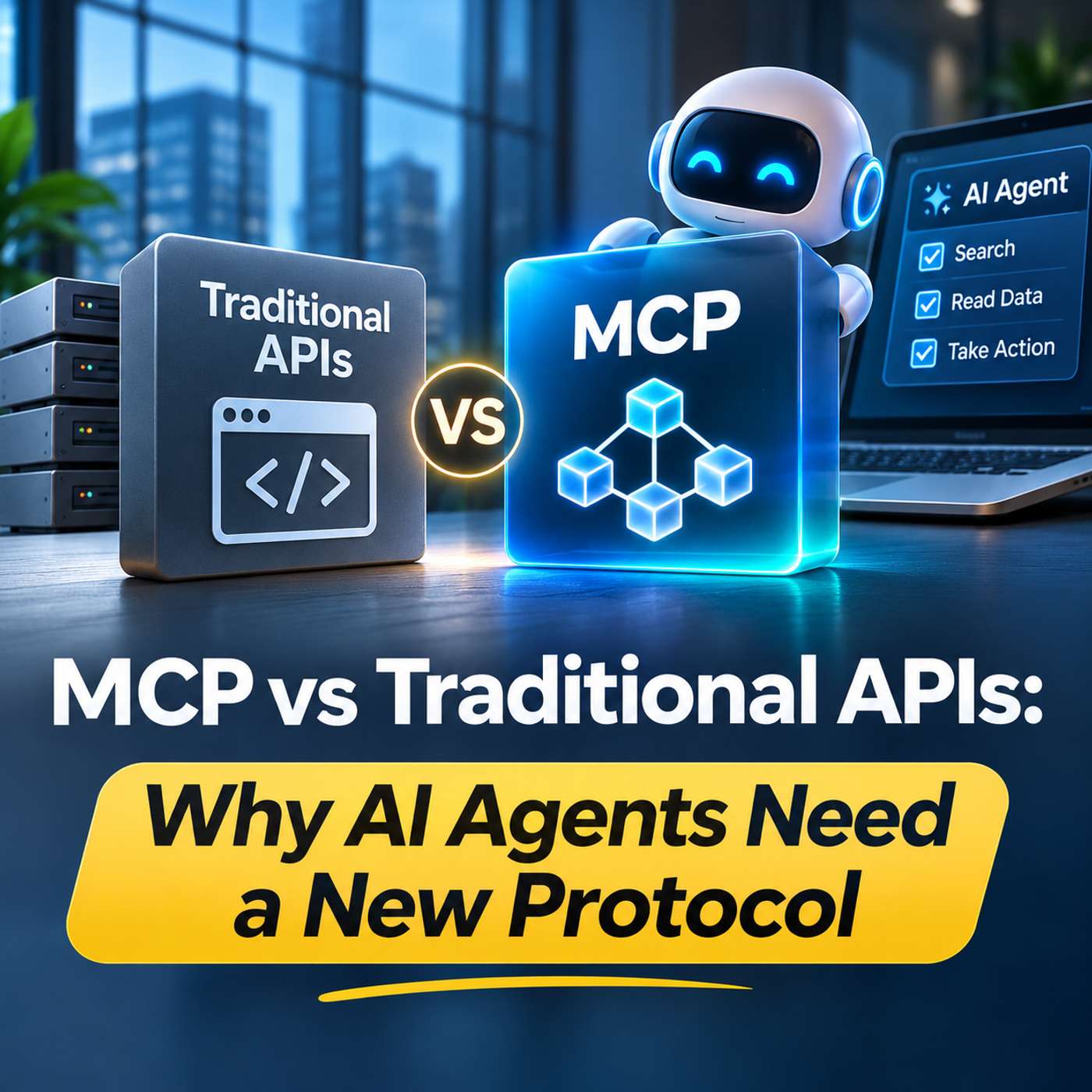
- MCP vs Traditional APIs: Discover why conventional REST APIs can overwhelm large language models with unnecessary JSON data, increasing token consumption, latency, and the risk of inaccurate responses.
- Dynamic Tool Discovery: Explore how MCP enables AI applications to discover available tools through commands such as tools/list instead of relying entirely on hardcoded integrations.
- MCP Architecture: Break down the roles of MCP hosts, clients, and servers and how they work together to connect AI models with external systems.
- Context and Multi-Step Workflows: Examine how MCP sessions support coordinated tool interactions and why maintaining context matters for AI automation.
- Enterprise AI Security: Learn how MCP servers can manage credentials, validate requests, enforce permissions, and reduce direct exposure of sensitive API keys.
- Zero Trust Networking: Explore how Tailscale and Aperture fit into the discussion of private connectivity, access controls, and monitoring AI tool activity.
- MCP Servers and Integrations: Discover the differences between open-source MCP servers, official enterprise integrations, and custom aggregators connecting tools such as Stripe, Slack, Kubernetes, and PostgreSQL.
- The Future of Autonomous AI Agents: Consider what happens when AI agents can dynamically discover and interact with increasingly complex digital systems.
David and Sophia also discuss how developers can enforce business rules directly within MCP servers rather than relying solely on AI prompts to prevent unauthorized actions.
From reducing integration complexity to strengthening enterprise security, this conversation explores why MCP is becoming an important part of AI application development.
And it raises a bigger question: If autonomous AI agents can discover and use tools without developers explicitly coding every connection, how much of the digital world could they eventually operate on their own?
Tune in to TechDaily.ai for an engaging discussion about MCP, AI agents, API integration, enterprise security, and the future of intelligent automation.
Enjoyed the episode? Subscribe to TechDaily.ai on Spotify, Apple Podcasts, Amazon Music, or your favorite podcast platform, and share this episode with developers, AI enthusiasts, and technology professionals exploring the next generation of AI applications.
Want to promote your business to technology-focused listeners? Sponsor TechDaily.ai for just $25 and get your message featured across major podcast platforms.
Visit techdaily.ai to learn more about sponsorship opportunities and upcoming episodes.