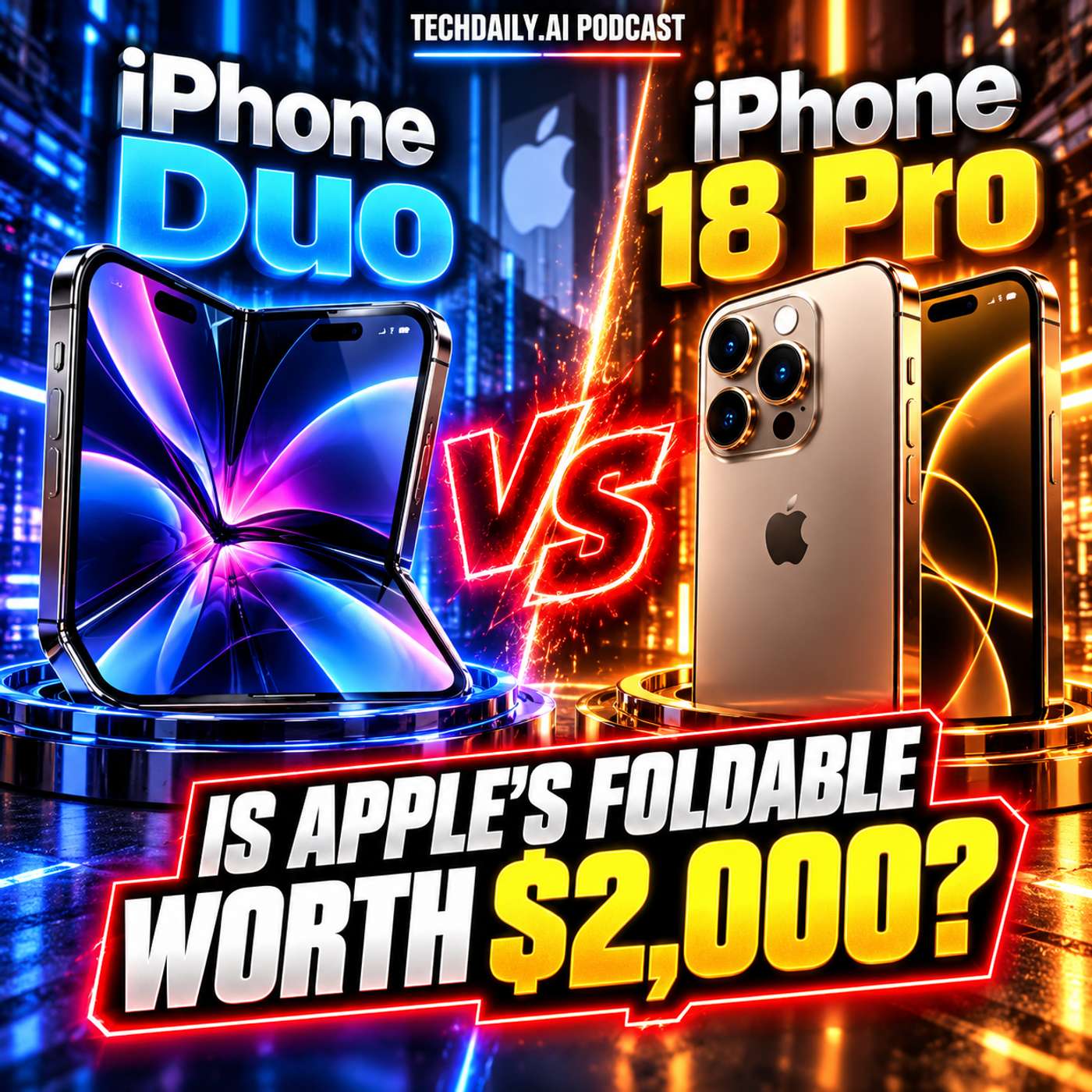


Would you pay $2,000 for Apple’s first foldable iPhone if it meant giving up Face ID, advanced camera features, and some of the conveniences you’ve come to expect from a premium smartphone?
In this episode of techdaily.ai, host David and technology strategist Sophia explore the iPhone Duo vs. iPhone 18 Pro debate, examining the trade-offs between Apple’s experimental foldable concept and its traditional flagship smartphone design.
The discussion centers on one question: Is a foldable iPhone worth a substantial price premium when a conventional iPhone may offer better cameras, familiar features, and fewer compromises?
From the proposed 7.6-inch folding display and titanium hinge to multitasking capabilities and Apple Pencil support, David and Sophia explore how a foldable device could change mobile productivity, entertainment, and everyday smartphone use.
What You’ll Discover in This Episode:
- iPhone Duo vs. iPhone 18 Pro Pricing: The transcript’s comparison of a $1,999 foldable starting price against a $1,199 traditional Pro model.
- Foldable Display Design: How a 5.4-inch cover screen and 7.6-inch inner display could combine smartphone portability with tablet-style functionality.
- Face ID vs. Touch ID: Why the conversation highlights biometric authentication as a major engineering challenge for ultra-thin foldable devices.
- Camera System Trade-Offs: The potential impact of losing a dedicated telephoto lens, LiDAR scanning, and professional video recording features.
- A20 Pro Chip Performance: The processing power, graphics capabilities, and on-device AI features discussed for Apple’s next-generation devices.
- Foldable Battery Life: How a dual-screen design and split battery architecture could affect daily power consumption.
- iOS 27 Multitasking: The proposed benefits of split-screen applications, flexible display layouts, and improved productivity.
- Apple Pencil Compatibility: Why stylus support could make a foldable iPhone appealing to professionals, students, and creative users.
- First-Generation Technology: Whether the excitement of a new design justifies paying more for hardware that may involve compromises.
David and Sophia also discuss criticism attributed to Nothing CEO Carl Pei, comparisons with Samsung and Google foldable devices, and the engineering difficulties of fitting flagship hardware into an exceptionally thin folding smartphone.
The episode looks beyond specifications to examine how people actually use their devices. For photographers and everyday users, camera performance, battery endurance, and convenience may remain the deciding factors. For professionals and creators, a pocket-sized display capable of running two applications side by side could offer an entirely different kind of value.
The conversation ultimately frames the buying decision as a choice between two philosophies: the reliability and refinement of a traditional flagship smartphone versus the flexibility and possibilities of a first-generation foldable design.
Whether you’re an Apple enthusiast, smartphone photographer, mobile productivity fan, or technology early adopter, this episode explores the questions worth asking before investing in a radically different phone.
The biggest takeaway? The most expensive smartphone isn’t necessarily the best choice for everyone. Its value depends on whether the new form factor actually improves your daily workflow enough to justify the compromises.
Listen to the full episode and decide which matters more to you: the polished performance of a conventional iPhone or the possibilities of a foldable device.
Note: This episode discusses product specifications, pricing, features, and release dates presented in the transcript. These details have not been independently verified and should not be treated as confirmed Apple announcements.
Subscribe to techdaily.ai for more conversations about smartphones, Apple technology, emerging devices, mobile computing, and the future of consumer electronics.
Interested in sponsoring techdaily.ai? For just $25, your message can be featured across major podcast platforms, including Apple Podcasts, Spotify, Amazon Music, and more.
Visit https://techdaily.ai to get started.