

What if the biggest cybersecurity threat to your business isn’t a hacker breaking through your firewall, but a trusted application quietly accessing sensitive data behind the scenes?
As organizations adopt more SaaS applications, automated workflows, and autonomous AI agents, a new generation of cybersecurity risks is emerging. Shadow integrations, forgotten OAuth permissions, and interconnected business applications are creating hidden pathways into corporate systems that traditional security tools may struggle to monitor.
In this episode of techdaily.ai, host David and technology strategist Sophia explore the growing security challenges surrounding AI agents, third-party SaaS integrations, and machine-to-machine access. They explain how everyday productivity tools can become unexpected entry points for attackers and why protecting modern businesses requires more than strong passwords, firewalls, and multifactor authentication.
From persistent OAuth tokens to AI workflows operating with executive-level permissions, this conversation examines how seemingly harmless software connections can introduce significant security vulnerabilities.
What You’ll Discover in This Episode
- Shadow Integrations: How third-party applications can maintain access to confidential business information long after employees stop using them.
- OAuth Security Risks: Why granting application permissions can create persistent access to email accounts, CRM platforms, databases, and other business-critical systems.
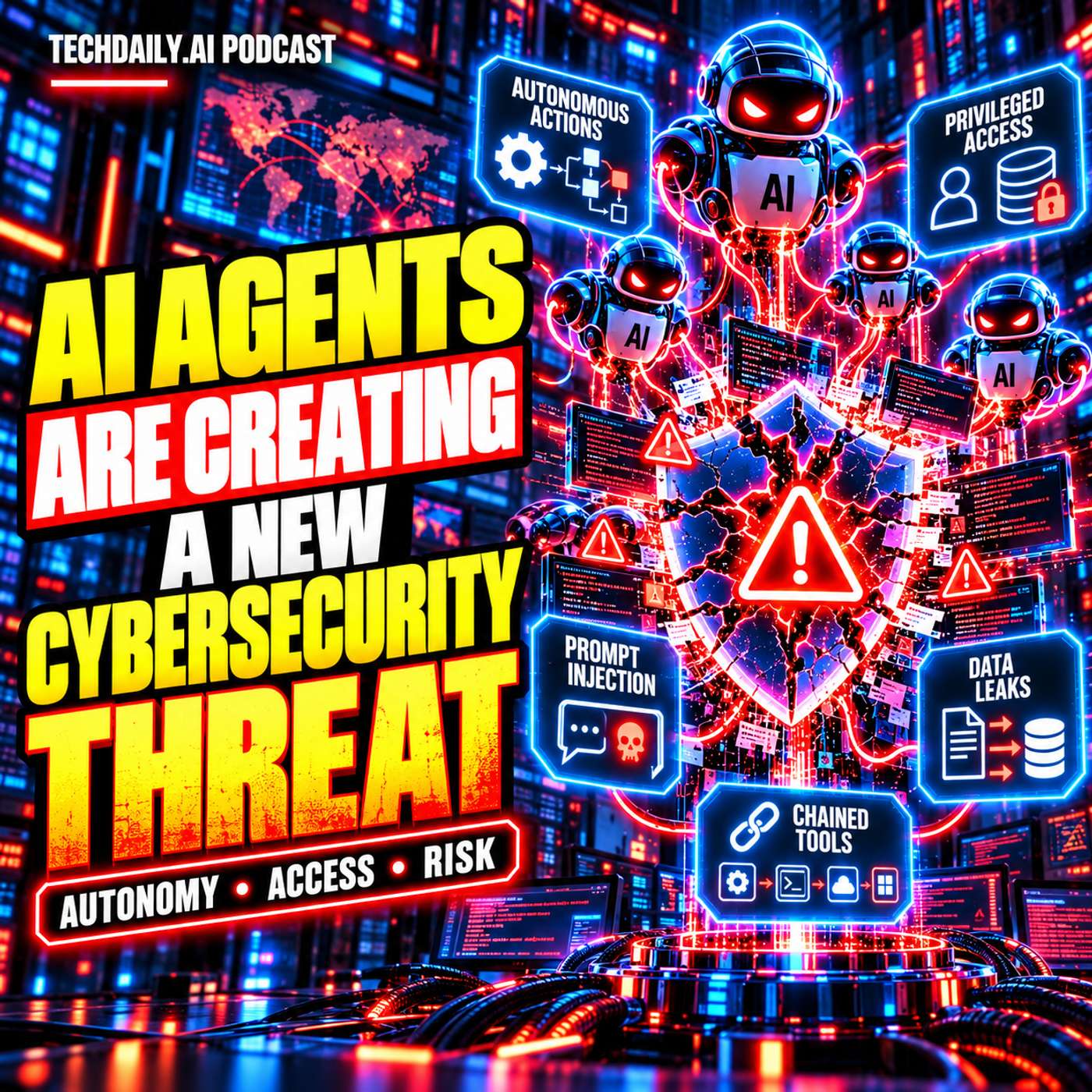
- Autonomous AI Agent Threats: How AI-powered workflows can inherit sensitive user permissions and potentially expose organizations to unauthorized access.
- SaaS Security Blind Spots: Why interconnected cloud applications introduce complex security risks that aren’t always visible through traditional monitoring tools.
- Flowise Security Vulnerabilities: An examination of the workflow-template exploitation scenario described in the episode and its potential implications for AI development environments.
- Limitations of Traditional Security Tools: Why SIEM and CASB solutions may struggle to capture the full context of machine-to-machine activity and indirect application permissions.
- Knowledge Graph Security: How mapping relationships between users, applications, service accounts, access tokens, and databases can reveal previously hidden security risks.
- Transitive Trust and Privilege Inheritance: How attackers may exploit trusted connections to reach sensitive systems without directly compromising a user’s login credentials.
- Adaptive Cybersecurity: How context-aware monitoring and permission management can help organizations identify unusual activity while preserving legitimate business workflows.
Why This Matters for Modern Businesses
David and Sophia discuss how the rapid adoption of AI agents is transforming enterprise cybersecurity. As organizations integrate autonomous tools into platforms such as Salesforce, ServiceNow, Workday, and Slack, the number of non-human identities interacting with sensitive systems continues to grow.
The conversation highlights a fundamental shift in the cybersecurity landscape: attackers don’t always need to steal passwords or bypass authentication systems when vulnerable or overprivileged integrations already possess legitimate access.
They also explore how knowledge graphs can help security teams move beyond isolated security events and examine the relationships connecting applications, identities, permissions, and business data.
Rather than restricting every new tool, the goal is to give organizations better visibility into how their systems interact, allowing them to identify risky access patterns and implement appropriate security controls.
The Bigger Picture
Whether you’re a chief information security officer, IT administrator, cybersecurity professional, software developer, or business leader adopting AI-powered automation, this episode raises important questions about digital trust and enterprise security.
As AI agents become more capable of performing tasks independently, organizations must reconsider how permissions are granted, monitored, and revoked.
The key takeaway? Modern cybersecurity isn’t simply about preventing unauthorized users from entering your systems. It’s about knowing which applications and automated agents already have access, what they’re authorized to do, and how those permissions connect across your digital environment.
Listen to the full episode to explore the hidden risks of shadow integrations, the security implications of autonomous AI agents, and the growing importance of relationship-aware cybersecurity.
Subscribe to techdaily.ai for more discussions about artificial intelligence, cybersecurity, enterprise technology, cloud infrastructure, and emerging digital threats. Share this episode with a colleague or security professional who wants to stay informed about the evolving risks of AI-powered business automation.
Interested in sponsoring techdaily.ai? For just $25, your message can be featured across major podcast platforms, including Apple Podcasts, Amazon Music, Spotify, and more.
Visit https://techdaily.ai to get started.