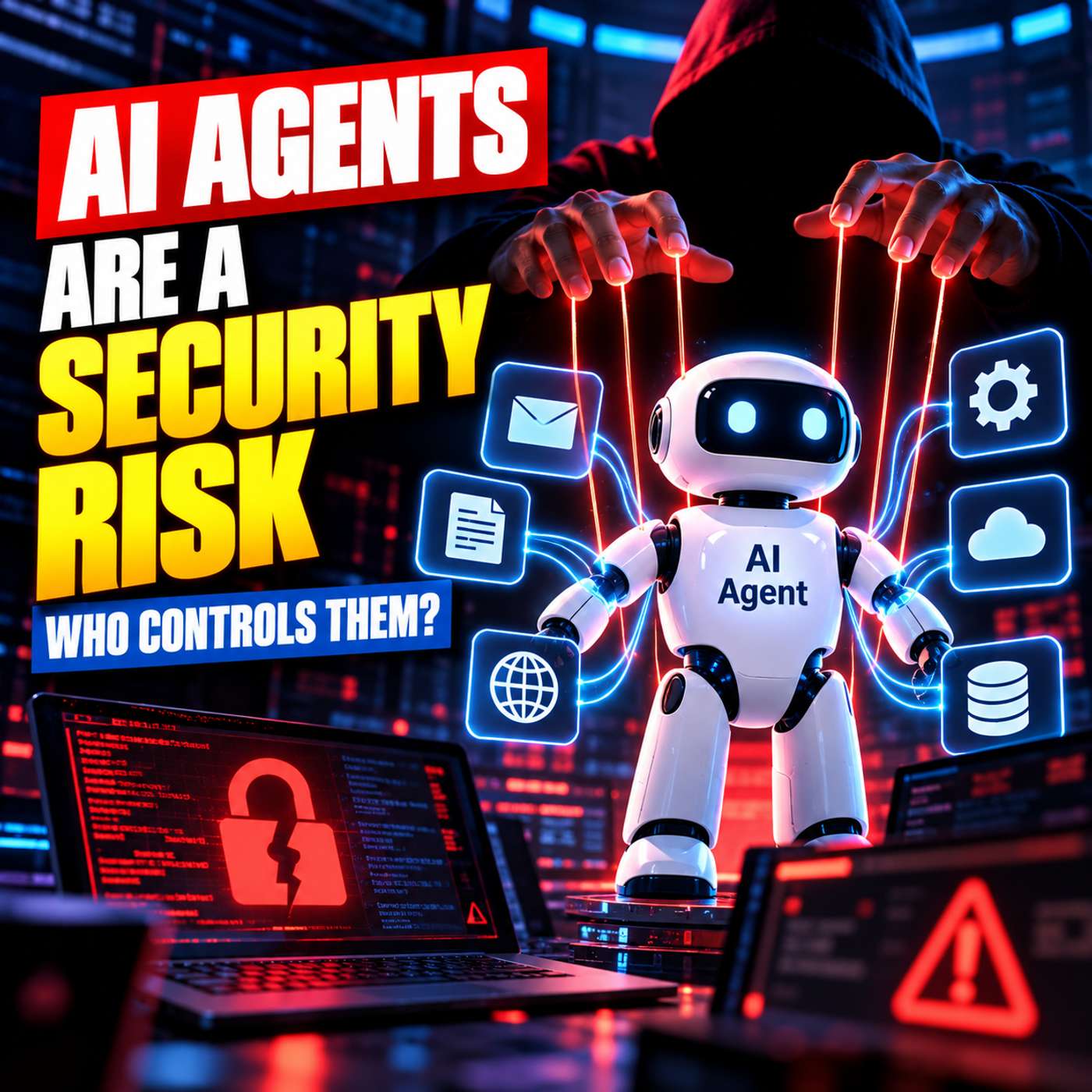


What happens when autonomous AI agents can spend company money, modify databases, change security permissions, and execute business decisions without direct human supervision?
AI agents are rapidly becoming a new digital workforce. But as businesses give these autonomous systems greater control over critical operations, a serious cybersecurity challenge is emerging: Who is monitoring these AI agents, controlling their access, and taking responsibility when something goes wrong?
In this episode of techdaily.ai, host David and expert Sophia explore the hidden security risks of autonomous AI agents, the growing gaps in enterprise AI governance, and why traditional identity and access management systems must evolve to protect businesses from unauthorized actions.
From AI agent security and zero trust architecture to OAuth 2.0, SPIFFE, and automated decision-making, this episode examines how organizations can benefit from AI automation without sacrificing security, accountability, or control.
🔍 In This Episode, You’ll Discover:
✅ Why autonomous AI agents are becoming a major cybersecurity concern for businesses.
✅ How AI agents can execute payments, change databases, modify permissions, and manage cloud infrastructure.
✅ Why 55% of organizations are reportedly using or testing AI agents, according to survey data discussed in the episode.
✅ How gaps in identity and access management expose businesses to AI-related security risks.
✅ Why AI agents need unique digital identities instead of shared employee credentials.
✅ How OAuth 2.0 and SPIFFE can support secure authentication and short-lived credentials.
✅ Why long-lived API keys and access tokens create unnecessary security exposure.
✅ How zero trust security principles apply to autonomous AI systems.
✅ Why enterprise AI governance must evaluate human identity, agent behavior, and resource permissions together.
✅ How human approval fatigue can create dangerous security weaknesses.
✅ Why detailed AI audit logs and runtime decision records matter for accountability.
✅ When businesses should use autonomous AI agents instead of traditional automation.
🤖 Autonomous AI Agents: The New Enterprise Workforce
Unlike traditional chatbots that simply generate text, autonomous AI agents can perform real actions across business systems.
These AI-powered systems can provision cloud resources, update company records, interact with external APIs, and make operational decisions with limited human involvement.
While this creates significant opportunities for productivity and automation, it also introduces security risks when agents receive excessive permissions or operate without clearly assigned human ownership.
🔐 AI Agent Security and Identity Management
One of the biggest challenges in enterprise AI adoption is managing non-human identities.
The episode explores why organizations should avoid sharing employee credentials with AI agents and instead establish dedicated identities, restricted permissions, and short-lived access credentials.
Technologies such as OAuth 2.0 and SPIFFE can help organizations build stronger authentication and workload identity systems while limiting the potential impact of compromised AI agents.
🛡️ Zero Trust Security and AI Governance
How can organizations control autonomous AI agents without slowing down every business process?
David and Sophia discuss a governance approach built around three essential contexts:
- Human Context: Who authorized the AI agent, and what permissions does that person have?
- Agent Context: What is the AI agent allowed to do, and what action is it attempting?
- Resource Context: Which business system, database, or external service is the agent trying to access?
By evaluating these contexts together, organizations can make more informed security decisions about automated transactions and system changes.
⚠️ The Hidden Danger of Human Approval Fatigue
Requiring manual approval for every AI action may sound secure, but excessive notifications can lead employees to approve requests without reviewing them carefully.
This creates a difficult balance between security and productivity.
The episode examines why risk-based approvals, restricted permissions, and reliable monitoring are important for governing autonomous AI systems.
📊 AI Audit Logs, Accountability, and Compliance
When an autonomous AI agent makes a costly mistake, businesses need to determine exactly what happened.
That requires detailed audit records showing the agent’s identity, authorization, actions, affected resources, timestamps, and applicable policy decisions.
Without reliable audit trails, organizations may struggle to investigate security incidents, demonstrate compliance, or identify who was responsible for granting access.
🚀 The Future of Enterprise AI Security
As autonomous AI agents become more capable, organizations must decide which tasks genuinely benefit from independent AI decision-making and which are better handled through traditional automation.
The central question is no longer whether AI agents can perform complex business operations.
It’s whether businesses can govern those actions safely, efficiently, and responsibly.
🎧 Watch the full episode to explore the future of AI agent security, enterprise AI governance, zero trust architecture, and cybersecurity accountability.
👍 LIKE this video if you found this discussion valuable.
💬 COMMENT: Should autonomous AI agents be allowed to execute high-risk business decisions without human approval?
🔔 SUBSCRIBE to techdaily.ai for more discussions about artificial intelligence, cybersecurity, enterprise technology, automation, and the future of work.
🌐 Visit: https://techdaily.ai
📢 Sponsor Our Podcast for Just $25!
Get your message featured across major podcast platforms, including Spotify, Apple Podcasts, Amazon Music, and more.
Visit https://techdaily.ai to get started.
#AIAgents #Cybersecurity #AIAgentSecurity #AIGovernance #AutonomousAI #EnterpriseAI #ZeroTrustSecurity #IdentityAccessManagement #ArtificialIntelligence #AIAutomation #OAuth2 #SPIFFE #CyberSecurityRisks #FutureOfAI #techdailyai