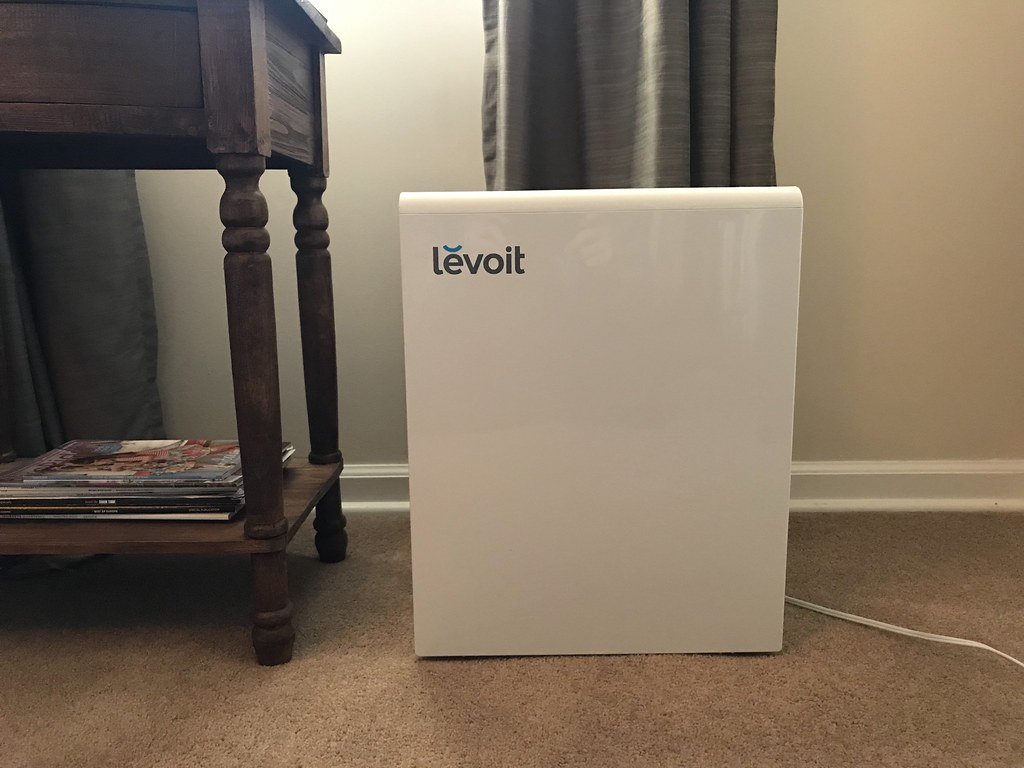
There’s no single best air purifier. There’s a best air purifier for your room, your problem, and your budget, and those three things point to different machines. A compact unit that’s perfect for a 10-by-12 bedroom will do almost nothing in an open-plan living room. A purifier built to strip pet dander out of the air won’t necessarily touch the musty smell coming from a damp basement. Most buying guides skip the one number that actually sorts this out: CADR, matched against your room’s real square footage. Get that match right first. Then the pet, allergy, bedroom, and mold questions below tell you which of the five picks in this guide is actually yours.
This guide contains affiliate links. If you buy an air purifier through one of them, TechDaily may earn a small commission at no extra cost to you.
- CADR (Clean Air Delivery Rate) matched to your room’s square footage is the one spec that predicts whether a purifier will actually work, more than brand name or price.
- A purifier with a CADR well under two-thirds of your room’s square footage is undersized. It’ll run constantly and still lose the fight against dust, pollen, or pet dander.
- Pet dander and fine pollen need True HEPA filtration specifically; a basic ionizer or a “HEPA-type” filter traps far less of it.
- An air purifier reduces airborne mold spores. It does not clean mold off a wall or stop a leak. Visible mold still needs real remediation.
- A bigger unit isn’t automatically the right call. Oversized purifiers in small rooms often just mean more noise and a bigger filter bill for no real gain in air quality.
- Filters are the real ongoing cost. Budget for a replacement every 6 to 12 months, not just the purchase price on the box.
What’s driving your air purifier search?
★ Your pick: Levoit Core 300
Quiet enough to sleep next to and correctly sized for rooms under roughly 250 square feet.
★ Your pick: Winix 5500-2
The washable AOC carbon filter is built to cut pet odor, not just catch loose hair.
★ Your pick: Blueair Blue Pure 211+
The highest CADR in this lineup, rated for rooms well over 500 square feet.
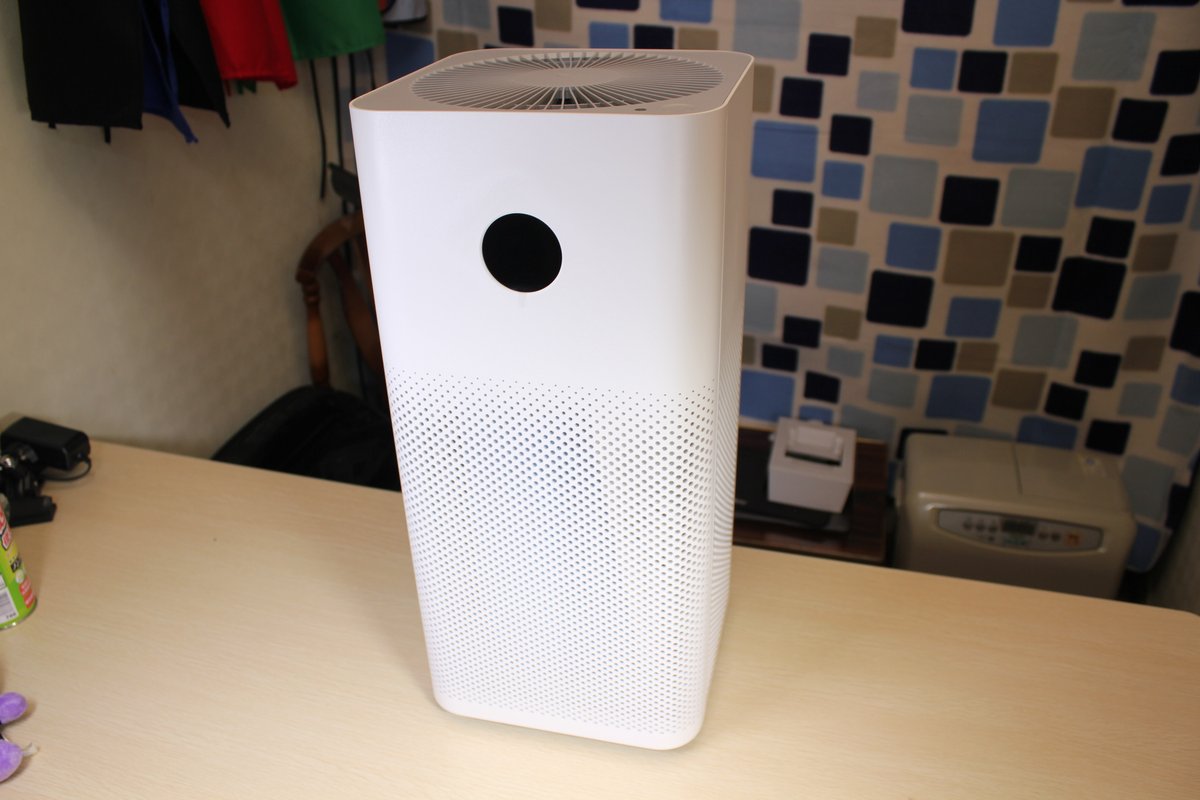
★ Your pick: Xiaomi Smart Air Purifier 2S
A real PM2.5 display and app control for less than most picks here cost on their own.
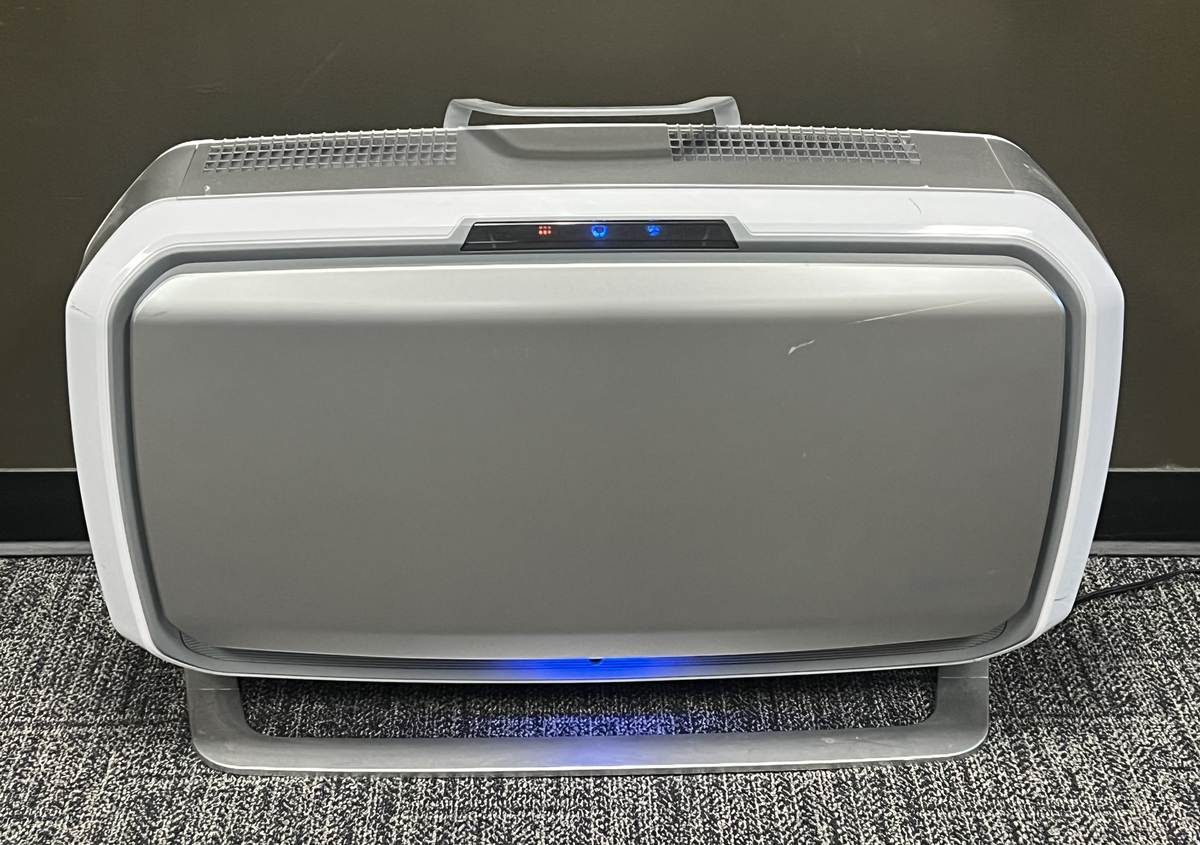
★ Your pick: Fellowes AeraMax Pro AM4
Commercial-grade filtration built for spaces far bigger than a single bedroom.
👑 Our Top Pick — Best Overall Value
Winix 5500-2
Strong CADR for mid-size rooms, a washable carbon filter built to blunt pet odor, and a price that doesn’t need a second thought.
Opens on our Top Pick. Tap an option to see the best match for you.
How to Match CADR to the Actual Size of Your Room
CADR stands for Clean Air Delivery Rate. It’s a lab-tested number from AHAM, the Association of Home Appliance Manufacturers. It measures how much filtered air a purifier pushes out each minute. Smoke, pollen, and dust each get their own separate CADR score. It’s not a marketing estimate, either. A manufacturer can’t just print a number they like. AHAM tests every certified unit on its own. That’s why CADR is worth trusting more than a vague “covers large rooms” claim on the box.
The sizing math itself is simple. AHAM’s own rule of thumb is that a purifier’s smoke CADR should be at least two-thirds of your room’s square footage to hit a solid air-change rate. A 300-square-foot bedroom needs a smoke CADR of roughly 200. Undershoot that, and the purifier has to run on high all the time. That means more noise and a shorter filter life. Worse, it still loses ground against normal dust and allergens.
| Room Size | Smoke CADR You Need (≈2/3 Rule) | Which Pick Fits |
|---|---|---|
| Under 150 sq ft (small bedroom, nursery, office) | ~65–100 | Levoit Core 300 |
| 150–250 sq ft (standard bedroom) | ~100–165 | Levoit Core 300 or Xiaomi Smart Air Purifier 2S |
| 250–400 sq ft (large bedroom, open kitchen) | ~165–265 | Winix 5500-2 |
| 400–600 sq ft (living room, open-plan space) | ~265–400 | Blueair Blue Pure 211+ |
| 600–1,000+ sq ft (great room, finished basement) | ~400–670 | Fellowes AeraMax Pro AM4, or two smaller units |
Worth knowing: Square footage alone isn’t the whole picture. A room with 9-foot or vaulted ceilings holds more air than the floor plan suggests. Round up a size tier if your ceilings are taller than standard. The same goes for an open floor plan that blends a kitchen and living room into one space. Measure the whole connected area, not just the spot where the purifier will sit.
The 5 Air Purifiers Worth Buying for Pets, Allergies, Bedrooms, and Mold
These five cover the real situations above: a compact bedroom unit, a pet-and-allergy workhorse, a high-CADR pick for big rooms, a budget smart option, and a commercial-grade unit for large or mold-prone spaces. Specs below come straight from each manufacturer. Confirm the current model number before you buy, since filter and accessory kits occasionally change.
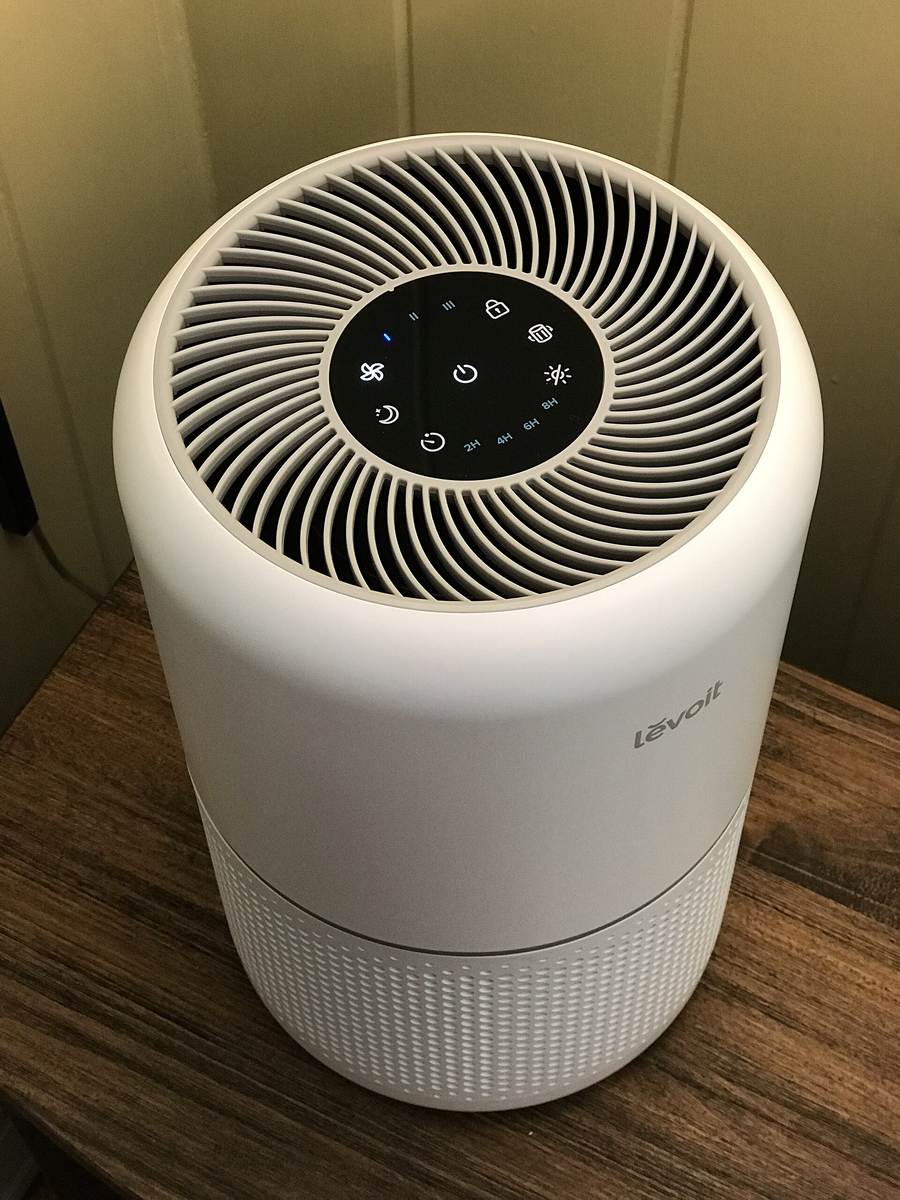
1. Levoit Core 300 — Best for Bedrooms and Small Rooms
Photo: Home Air Quality Guides, CC BY-SA 2.0, via Wikimedia Commons
Under $100 class143 CFM CADRFits rooms under ~250 sq ft24–54.5 dB3-stage True HEPA
The Core 300 is Levoit’s small-room workhorse, and it’s the pick this guide sends most bedroom searches to. It’s a compact cylinder built to sit on a nightstand or in a corner without eating floor space. A 360-degree intake pulls air in from every side, not just the front.
The published CADR is 143 CFM. AHAM’s own math puts that at a comfortable fit for rooms up to roughly 220 square feet at a strong air-change rate. It can handle a larger room too, if you’re fine with a slower refresh. The real selling point for a bedroom is how quiet it runs. Levoit’s QuietKEAP technology brings the lowest fan speed down to around 24 decibels, close to a whisper. A dedicated sleep mode dims the display and locks out the louder speeds overnight. The 3-stage filter stack has a pre-filter for large particles, a True HEPA layer for 0.3-micron particles like pollen and dust, and an activated carbon layer for everyday odors. Levoit also sells a dedicated pet-allergy filter swap for this same unit, if dander is the main concern in a smaller room.
Against the Winix and Blueair picks below, it gives up real CADR and room coverage for its size and nightstand-friendly noise level. Skip it for anything bigger than a large bedroom. Push it into a 400-square-foot living room, and it runs loud on high while still losing ground.
Pros
- Noise floor low enough to run on a nightstand without disturbing sleep.
- 360-degree intake pulls air from every side, not just the front vent.
- Dedicated pet-allergy filter option for this exact model.
- Compact enough for a small bedroom, dorm, or home office without eating floor space.
- Among the least expensive True HEPA units in this guide.
Cons
- CADR tops out well short of anything useful in a living room or open floor plan.
- Replacement filters need swapping roughly every 6 to 8 months with daily use.
- No display showing real-time air quality, unlike the Xiaomi pick below.
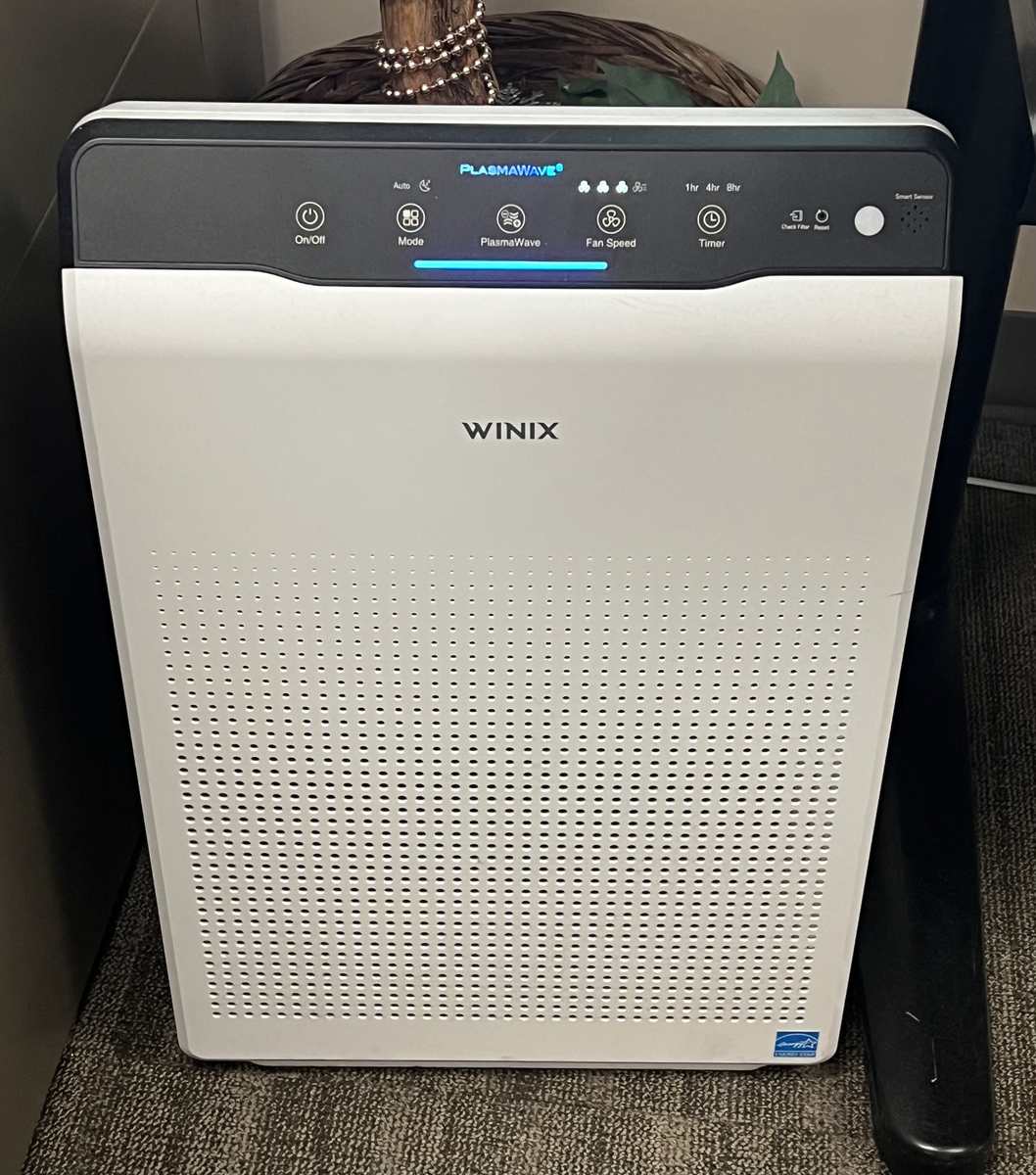
2. Winix 5500-2 — Best for Pet Owners
Photo: TaurusEmerald, CC BY-SA 4.0, via Wikimedia Commons
$150–$200 class~232–246 CFM CADRFits rooms up to ~360 sq ftWashable AOC carbon filterPlasmaWave (optional)
The 5500-2 is the pick this guide reaches for when a dog or cat is the whole reason someone’s shopping. It’s built around a True HEPA filter wrapped in a washable AOC carbon layer — AOC stands for Advanced Odor Control. That layer is the detail that actually matters for pet owners. A standard carbon pre-filter traps odor molecules until it gets full, then stops working as well. The AOC layer is different: you can rinse it and reuse it. That means it keeps pulling pet smell out of the air between full filter changes, instead of filling up and going quiet.
CADR lands around 232 for smoke, 246 for pollen, and 243 for dust. That comfortably covers rooms up to roughly 360 square feet. The AOC Smart Sensor reads particle levels in real time and bumps the fan speed up on its own, like right after a dog comes in from outside. PlasmaWave technology is included as an extra ionization layer, but you can switch it off entirely in the settings. That matters if you’d rather run a purely mechanical HEPA filter with no ionizer at all.
It trades the Core 300’s nightstand quietness for real coverage and the odor-specific carbon layer pet owners need. It also beats the Blueair below on price, while adding auto-sensing the Blueair doesn’t have. Skip it for a big open living room over 400 square feet; size up to the Blue Pure 211+ instead.
Pros
- Washable AOC carbon filter is built specifically to cut pet odor, not just trap particles.
- Auto-sensing mode reacts to real spikes, like a dog coming in from a muddy yard.
- PlasmaWave ionizer can be fully disabled if you’d rather run HEPA-only.
- Strong CADR-to-price ratio for a 300-plus square foot room.
- Filter check indicator tells you exactly when a swap is actually due.
Cons
- Louder on the top fan speed than either Levoit pick in this guide.
- The AOC carbon filter still needs periodic washing to keep performing.
- Not sized for a large open-plan living room on its own.
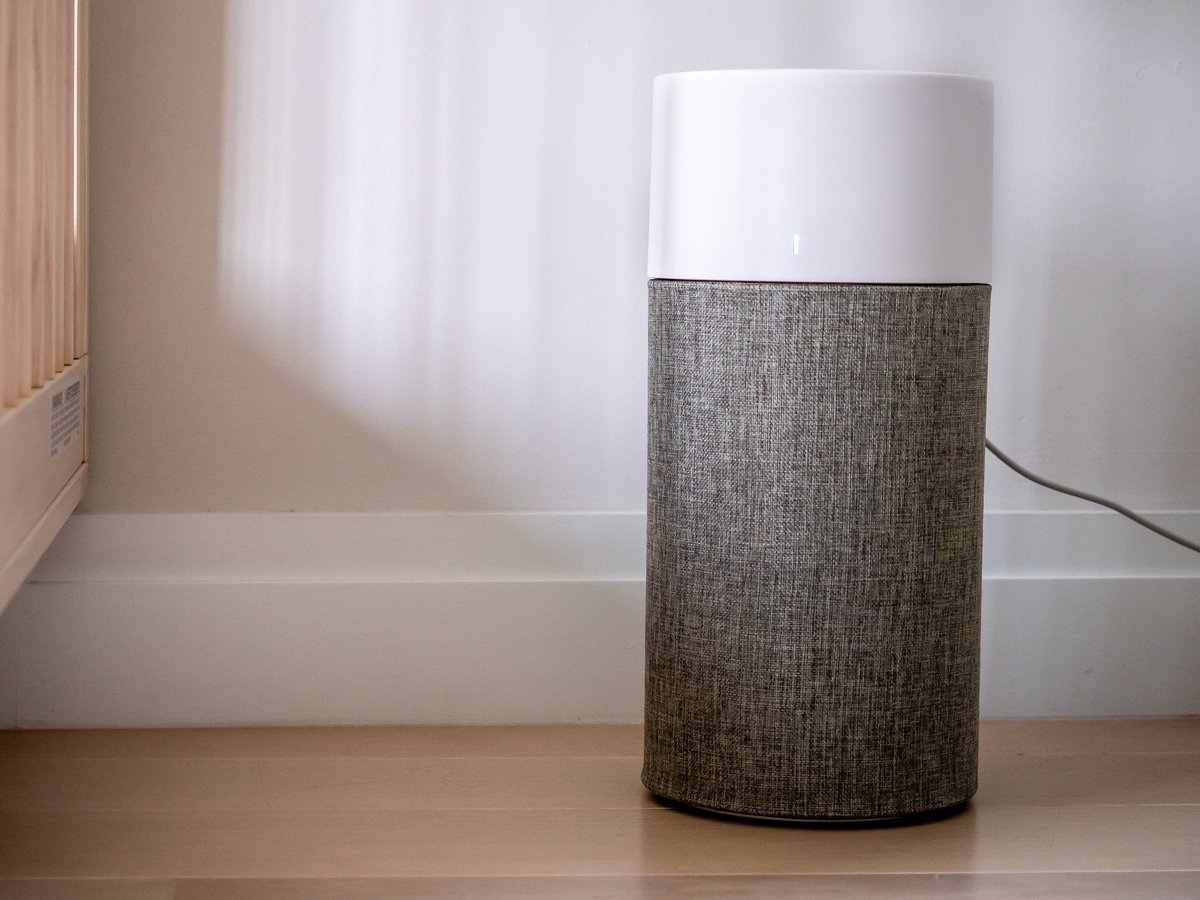
3. Blueair Blue Pure 211+ — Best for Allergies and Large Rooms
Photo: ajay_suresh, CC BY 2.0, via Wikimedia Commons
$200–$300 class~350 CFM CADRFits rooms up to ~540 sq ftWashable fabric pre-filter3-stage filtration
The Blue Pure 211+ carries the highest CADR of any pick in this guide, and it’s the one to reach for once a room crosses the 400-square-foot mark — an open living room, a combined kitchen-and-dining space, or a finished room over a garage. The design is distinctive on purpose. A washable fabric pre-filter sleeve wraps the entire particle filter, and it comes in several colors. That lets the whole unit double as a piece of furniture, instead of something you hide in a corner.
At roughly 350 CFM CADR, it comfortably covers rooms up to about 540 square feet. That’s more headroom than either the Levoit or Winix picks give you. That extra capacity matters most for allergy sufferers, because pollen and fine dust settle unevenly across a large room. A purifier with real margin above the minimum CADR keeps cycling air fast enough to catch particles before they resettle, instead of just barely keeping pace. The three-stage filter combines the fabric pre-filter, a particle filter rated for 0.1-micron capture (finer than the standard HEPA threshold), and an integrated activated carbon layer for odors.
It beats the Winix on raw coverage and fine-particle capture — that’s why it’s the allergy pick here, not the pet pick. It loses out on price, though, and on the auto-sensing the Winix builds in. Skip it for a small bedroom — its CADR is genuine overkill below about 200 square feet.
Pros
- Highest CADR in this guide, with real margin for large or open-plan rooms.
- 0.1-micron particle filter catches finer dust and pollen than standard HEPA.
- Washable fabric pre-filter extends the life of the main particle filter.
- Fabric sleeve comes in multiple colors, so it blends into a living room instead of standing out.
- Genuinely quiet for its CADR class on the lower fan speeds.
Cons
- No auto-sensing mode built in; fan speed is manual only.
- Meaningfully pricier than the Winix or Levoit picks here.
- Oversized, and overpriced for the job, in anything smaller than a large bedroom.
4. Xiaomi Smart Air Purifier 2S — Best Budget Smart Pick
Photo: GEEK KAZU, CC BY 2.0, via Wikimedia Commons
Under $100 class~320 m³/h CADRFits rooms up to ~290 sq ftOLED PM2.5 displayApp + voice control
The 2S is the pick for anyone who wants real-time feedback on their air without paying for it. A laser particle sensor feeds a small OLED display on the front of the unit. It shows the current PM2.5 reading as an actual number, not just a vague colored light. You can watch air quality improve after you turn it on, instead of guessing. The companion app adds scheduling, a fan-speed curve tied to that live reading, and voice control through a connected smart speaker.
CADR comes in around 320 cubic meters per hour, which converts to roughly 188 CFM. That puts it between the Levoit and Winix picks on raw room coverage — call it a comfortable fit up to about 290 square feet. The cylindrical tower design is narrow enough to tuck into a corner. The touch-free app control is a real convenience if the unit ends up somewhere slightly out of reach, like a high shelf or a kid’s room where small hands shouldn’t be adjusting fan speeds.
It trades a little of the Core 300’s CADR for the live display at a similar price, and gives up the Winix’s odor-focused carbon filter in exchange for app-driven fan control. Skip it if spotty Wi-Fi or a no-cloud household rules out an app-dependent device; the Levoit and Winix both run fully standalone.
Pros
- Real-time PM2.5 number on an actual display, not just a vague air-quality light.
- App and voice control add scheduling without touching the unit itself.
- Among the least expensive picks here with genuine smart features.
- Narrow tower footprint fits tight corners better than the wider picks in this guide.
Cons
- Full functionality depends on the companion app and a stable Wi-Fi connection.
- No dedicated pet-odor carbon layer like the Winix pick.
- Replacement filters can be less widely stocked locally than Levoit or Winix parts.
5. Fellowes AeraMax Pro AM4 — Best for Large Rooms and Musty Mold Odors
Photo: TaurusEmerald, CC BY-SA 4.0, via Wikimedia Commons
$400–$600 classCommercial-grade 4-stageRated for large rooms and open floorsAeraSmart auto sensorHeavy-duty carbon stage
The AeraMax Pro AM4 is built for a different scale than the rest of this guide. It’s a commercial-grade unit, the kind found in medical offices and larger commercial spaces. This version is scaled down to a price a homeowner can actually justify. That fits a finished basement, an open great room, or a floor that a single consumer purifier simply can’t keep up with. Where this pick earns its spot is the heavier carbon stage. It’s built with meaningfully more activated carbon than the consumer-grade picks above. That matters specifically for the musty, damp smell a basement throws off, not just pollen or pet dander.
The 4-stage filtration runs a carbon pre-filter, a True HEPA stage, and the heavy-duty carbon layer. An optional PureView indicator tracks filter saturation visually, instead of on a timer. The AeraSmart sensor reads the room continuously and adjusts fan speed on its own. That matters more here than on a bedroom unit, since a space this large has air quality that genuinely varies by corner.
One honest limit before buying this for a mold problem: it reduces airborne spores passing through the filter. It doesn’t clean mold off a wall or fix the moisture causing it — more on that in the mold section below. Even so, it wins decisively on raw capacity against every other pick here. Skip it for anything smaller than a large room; its size and price are wasted on a bedroom.
Pros
- Commercial-grade 4-stage filtration scaled for home use.
- Heavy-duty carbon stage built specifically for odor, not just particles.
- AeraSmart sensor auto-adjusts fan speed across a large, uneven space.
- The only pick in this guide genuinely rated for rooms over 600 square feet.
- Visual filter-saturation indicator instead of a guessed replacement schedule.
Cons
- The highest price and largest footprint of any pick here by a wide margin.
- Meaningful overkill, and overpriced, for a single bedroom or small office.
- Does not clean existing mold growth or fix a moisture source on its own.
Picking an Air Purifier When Pets Are the Main Problem
Pet dander stays airborne far longer than most dust, which is why an allergy flares up the second you walk into a room that looks spotless. A True HEPA filter, like the Winix and Blueair picks above use, captures at least 99.97% of particles down to 0.3 microns. That comfortably covers dander. The real differentiator is the carbon layer. The HEPA stage traps the dander itself, but lingering pet smell is a separate odor problem — only a real carbon filter fixes that. That’s exactly why the Winix 5500-2’s washable AOC layer beats a purifier with a thin, bolt-on carbon pad.
It’s a real help, not a full fix. It cleans what’s already airborne; it doesn’t stop shedding or replace a bath. Pair it with regular vacuuming (our best robot vacuum for hardwood floors guide covers daily pickup) and washing pet bedding weekly — the purifier handles what’s floating, the vacuum handles what’s settled.
What Actually Helps With Allergies, and What’s Marketing
Seasonal pollen and dust mite debris both fall into the fine-particle category True HEPA is built to catch. That’s why every pick here uses real HEPA, not a cheaper “HEPA-type” filter. That term isn’t regulated the same way, and it traps meaningfully less at the smallest sizes that trigger reactions. For allergies specifically, the Blueair’s 0.1-micron particle filter is the strongest pick here, since it filters finer than the standard HEPA benchmark.
Ionizers and “plasma” technologies marketed as an allergy cure help less than the marketing suggests. They’re not a replacement for mechanical HEPA filtration. Some even produce trace ozone, which is itself a lung irritant. That’s why the Winix pick above lets you disable PlasmaWave and run HEPA-only. A purifier reduces exposure to airborne allergens; it doesn’t replace allergy medication or a doctor’s guidance for diagnosed asthma.
Running an Air Purifier Overnight in a Bedroom Without Losing Sleep
A bedroom purifier lives or dies on its lowest fan speed, since that’s what runs all night. The Levoit Core 300’s roughly 24-decibel low setting is close to a whisper. That’s why it’s the bedroom pick here, over units with a higher CADR but a louder minimum speed. Tip: Run any purifier on its sleep or auto mode overnight instead of a fixed high speed — it dims the display, locks out louder settings, and still cleans the air at a pace matched to a room that isn’t adding new dust while you sleep.
Placement matters almost as much as the model. Keep the intake at least a foot from a wall or furniture. Avoid tucking a purifier behind a curtain or inside a closet — that chokes airflow and makes even a correctly sized unit underperform.
Can an Air Purifier Actually Help With Mold
Here’s the honest answer: a purifier reduces airborne mold spores passing through its filter while it’s running. That’s genuinely useful if mold is actively releasing spores into the air. What it doesn’t do is clean mold that’s already growing on a wall, in grout, or inside drywall. It also won’t fix the moisture problem that let the mold start growing. Buying a purifier instead of fixing a leak just means breathing slightly cleaner air next to a problem that keeps getting worse.
The EPA’s guidance on mold, moisture, and your home is direct about this. The real fix is controlling moisture and physically removing growth from hard surfaces, not air filtration alone. Visible mold, or a persistent musty smell with no obvious source, is a remediation job, not a purifier job. Beyond a small, easily cleaned spot, that typically means a professional assessment. Once the moisture source is fixed, a high-carbon unit like the Fellowes AeraMax Pro AM4 above is a reasonable way to keep residual spores and odor down while a basement fully dries out.
Whether You Need an Air Purifier, a Humidifier, or Both
These get confused constantly, and they solve different problems. A purifier removes particles already in the air — dust, pollen, dander, smoke — by filtering it. A humidifier adds moisture to air that’s too dry, which helps with cracked skin, irritated sinuses, or a scratchy throat overnight. Neither one covers for the other. A purifier in bone-dry winter air still leaves skin and sinuses dry. A humidifier in a dusty room does nothing to clear the particles. It can even make mold and dust mites more comfortable, if humidity climbs too high.
Run them for different seasons or symptoms, not as substitutes. A purifier earns its keep year-round if pets, allergies, or dust are the issue. A humidifier earns its keep specifically in heating season, when indoor air genuinely dries out. Running both in the same room isn’t a conflict — just don’t expect one to cover for the other.
What These Air Purifiers Actually Cost to Own, Not Just to Buy
The unit price is the easy number. The one that actually determines your yearly cost is the filter replacement schedule, which varies more across these five picks than the purchase price suggests.
| Pick | Purchase Price | Filter Replacement | Replacement Cost Range |
|---|---|---|---|
| Levoit Core 300 | Under $100 class | Every 6–8 months | $20–$30 |
| Winix 5500-2 | $150–$200 class | HEPA every 12 months; carbon filter washable | $30–$50 |
| Blueair Blue Pure 211+ | $200–$300 class | Particle filter every 6 months; pre-filter washable | $30–$50 |
| Xiaomi Smart Air Purifier 2S | Under $100 class | Every 6–8 months | $15–$25 |
| Fellowes AeraMax Pro AM4 | $400–$600 class | Carbon + HEPA stages, roughly annually | $80–$150 |
Do the math: Add one or two filter changes a year to any purchase price here. The real first-year cost runs meaningfully above the sticker number on every pick. The units with a washable pre-filter layer, like the Winix and Blueair, stretch the gap between full filter purchases the furthest. That’s worth weighing against their higher starting price.
Keeping an Air Purifier Working for Years, Not Just Months
A purifier quietly running on a clogged filter is just moving air past a filter that’s already saturated. Check the filter indicator, or set a phone reminder matching the table above, instead of waiting for a smell to tell you it’s overdue. Vacuum the pre-filter or exterior intake monthly between full changes. A dust-caked intake restricts airflow and makes the fan work harder for less actual filtration.
Run it continuously, rather than only when a room smells off — particles build up well before you can smell them. Resist the urge to run it on the lowest speed permanently to save filter life. That just means it’s filtering less air than your room’s size actually needs.
Frequently Asked Questions
What’s the single most important spec when buying an air purifier?
CADR matched to your room’s actual square footage. A purifier’s CADR should be at least two-thirds of your room’s square footage to hit a solid air-change rate; undersized units run constantly and still fall behind.
Does a higher CADR always mean a better air purifier?
Not once it’s well past what your room needs. A high-CADR unit in a small bedroom mostly adds noise and a bigger filter bill for air quality that was already fine. Match the CADR to the room size table above instead of just buying the highest number available.
Can an air purifier actually help with pet allergies?
Yes, with a real caveat. A True HEPA filter captures airborne pet dander effectively, and a carbon layer like the Winix 5500-2’s reduces lingering pet odor. It won’t stop shedding or replace vacuuming and washing pet bedding — it’s addressing what’s already airborne, not the source.
Will an air purifier remove mold from my house?
No. It reduces airborne mold spores while it’s running, but it does not clean mold already growing on a surface and does nothing to fix the moisture problem causing it. Visible mold or a persistent musty smell needs real remediation, not just a purifier.
Should I run an air purifier and a humidifier at the same time?
Yes, if you need both. They solve different problems — a purifier removes particles, a humidifier adds moisture to dry air — and running one doesn’t cover for the other. Most households only need a humidifier seasonally, during heating season.
How often do I actually need to replace the filter?
It varies by model and usage, generally every 6 to 12 months. Units with a washable pre-filter layer, like the Winix 5500-2 and Blueair Blue Pure 211+, stretch the time between full replacement filter purchases the furthest. Check the filter-change indicator rather than guessing by the calendar alone.