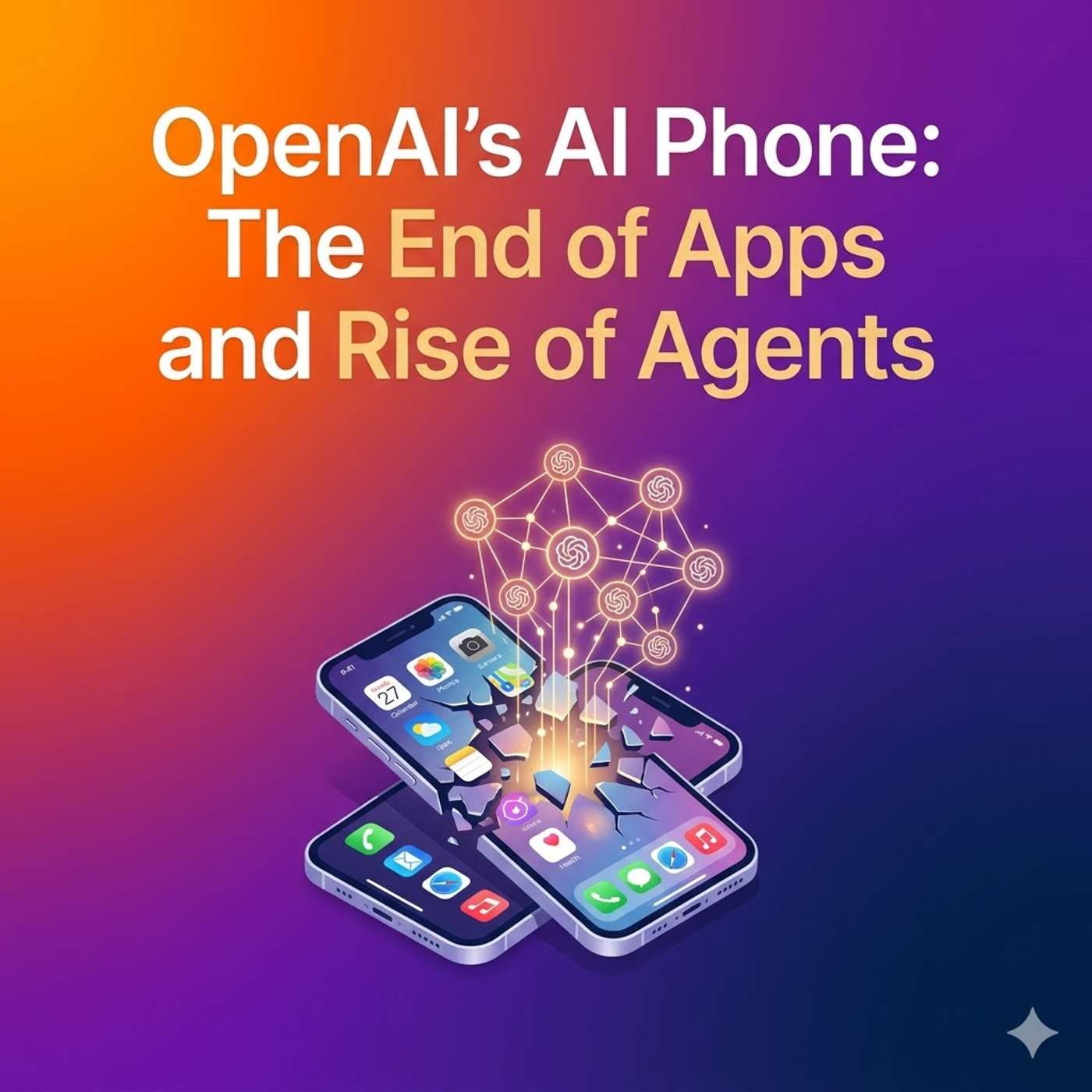


What happens when the app icons on your phone disappear?
In this episode of TechDaily.ai, host David and expert Sophia explore the possibility that OpenAI is building its own smartphone, not just to compete with Apple or Samsung, but to challenge the entire app-based model of mobile computing.
The conversation looks at mounting signals from analyst notes, supply chain activity, and hardware partnerships suggesting that OpenAI may be preparing a device designed around AI agents, continuous context, and a post-app user experience. Instead of opening separate apps for email, rides, food delivery, calendars, and files, users may interact with a single intelligent assistant that handles tasks in the background.
This episode covers:
- Why the traditional app grid may be reaching its limit
- How AI agents could replace app-based workflows
- Why OpenAI may need its own hardware instead of living inside Apple or Google’s ecosystem
- How operating system control affects AI capabilities
- The role of Qualcomm, MediaTek, and Luxshare in a potential OpenAI phone
- Why hardware supply chains make smartphone development so difficult
- How on-device AI and cloud-based models may work together
- Why continuous user context is the key to smarter AI assistance
- How vibe coding points toward temporary, task-specific interfaces
- What a post-app economy could mean for app stores and developers
- Why privacy may be the biggest obstacle to AI-first phones
- How local processing could become central to trust and security
- Why the 2026 to 2028 timeline creates major hardware risks
David and Sophia also break down the core trade-off behind an AI-first smartphone: less friction in daily life in exchange for deeper system access, broader context, and far more personal data awareness.
At its core, this episode is about the next major shift in human-computer interaction. For nearly two decades, smartphones have trained us to tap icons, open apps, and manually move information between digital silos. An AI agent-powered phone could replace that model with a device that understands intent, anticipates needs, and acts on the user’s behalf.
Listen now to explore whether OpenAI’s rumored smartphone could mark the beginning of the post-app era.