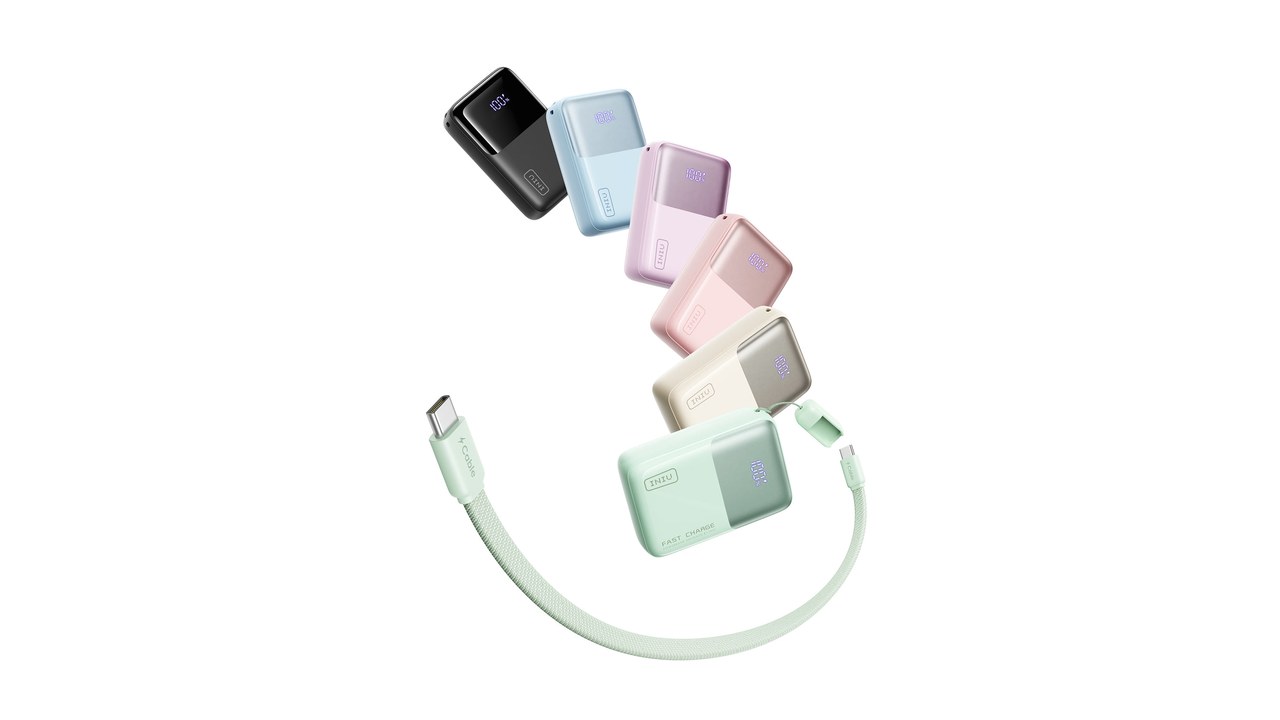
I’ve watched a security agent lift a fat gray brick out of a stranger’s checked bag at the gate, and I’ve watched the owner’s face while it happened. That brick was a 40,000mAh power bank, and it was never getting on that plane. The best power bank for travel isn’t the one with the biggest number on the casing. It’s the one that matches your trip and clears the FAA’s 100 watt-hour line with room to spare. It still has juice when your phone hits 1% in a taxi queue. My top pick for most travelers is the INIU Pocket Rocket — pocket-size, 45W, about $30. But the right answer depends on how you fly, so this guide sorts the picks by trip type instead of by spec sheet.
Quick disclosure so we’re square: the product links below are affiliate links. If you buy through one, we earn a small commission at no extra cost to you.
- Anything under 100 watt-hours flies in your carry-on with zero paperwork. Every pick in this guide clears that line.
- Power banks never go in checked luggage. Anywhere in the world. No exceptions.
- Since the March 2026 international rule change, two power banks is the planning number. Make both slots count.
- Match capacity to the trip. 5,000mAh covers a city day, 10,000mAh covers most travel, and 25,000mAh is for when outlets are a rumor.
- The INIU Pocket Rocket is the one most people should just throw in the bag. Fast, tiny, and about $30.
What does your typical trip look like?
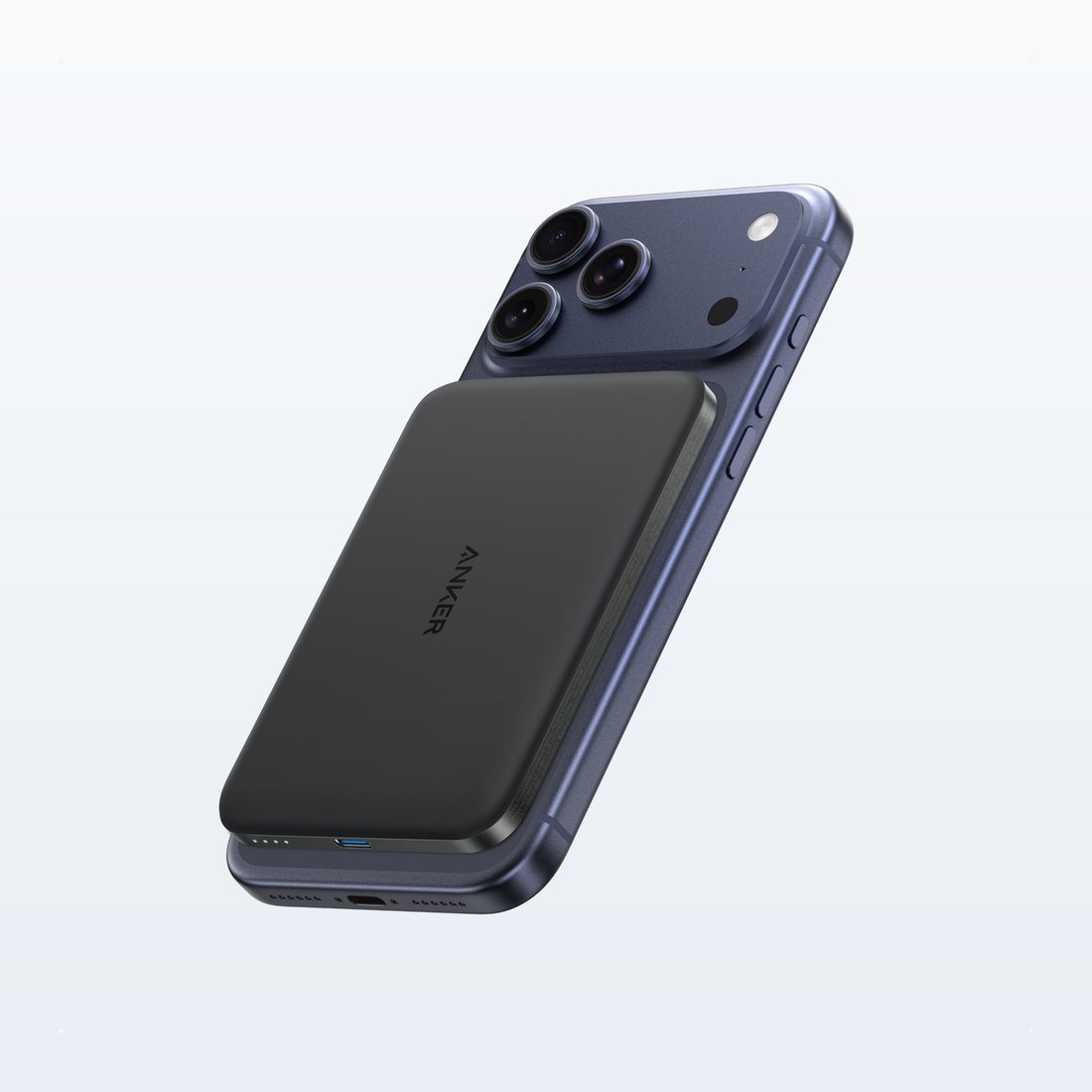
★ Your pick: Anker Nano Power Bank 5K
Slim Qi2 pad that snaps onto an iPhone and vanishes in a pocket
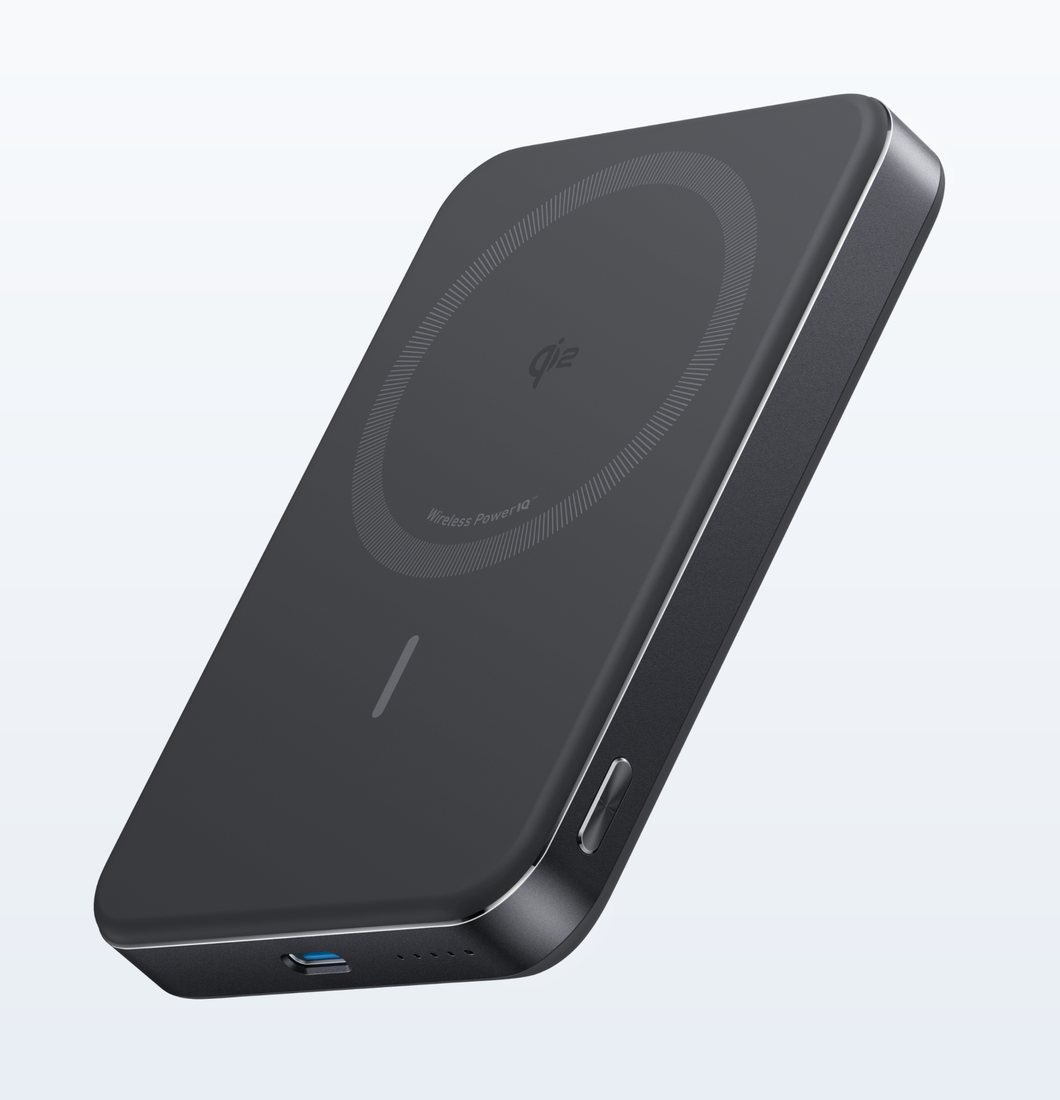
★ Your pick: Anker MagGo Power Bank 10K
Qi2 wireless at 15W — no cable fishing in seat 23C
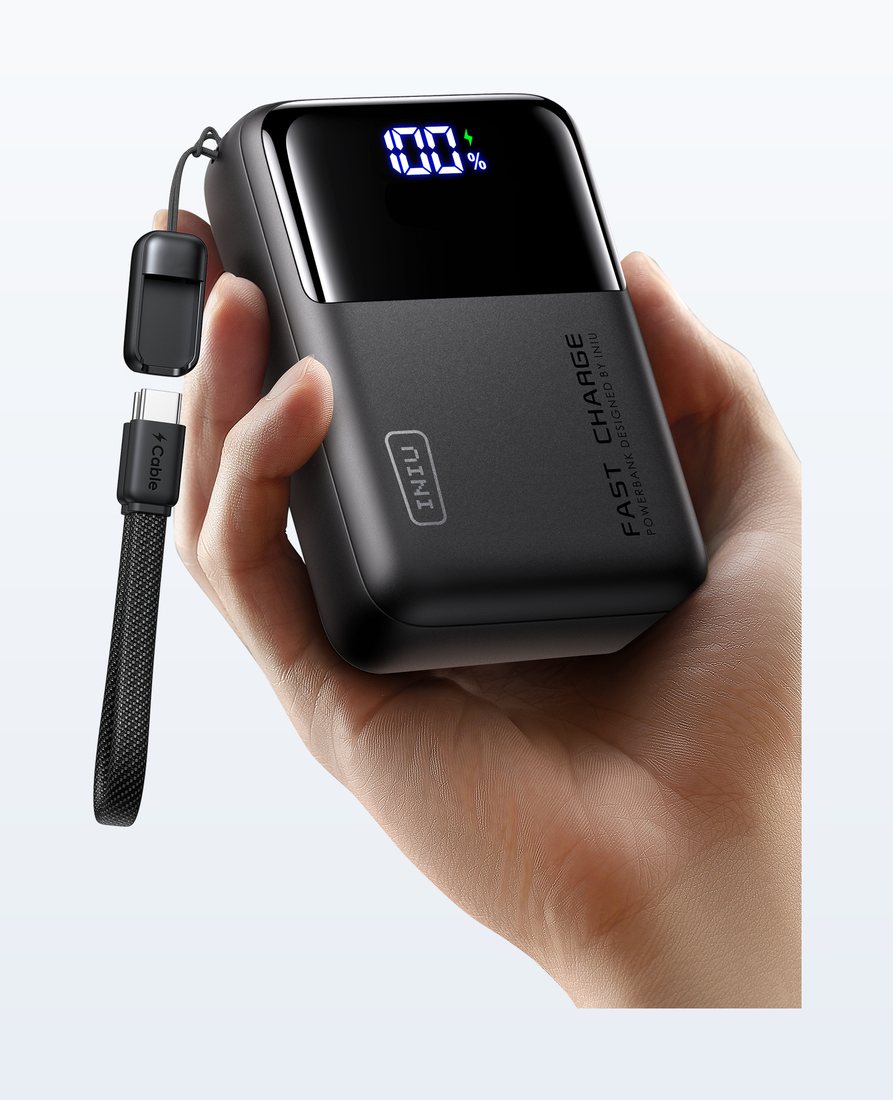
★ Your pick: INIU Cougar P63
25,000mAh parked just under the FAA line, with 100W output
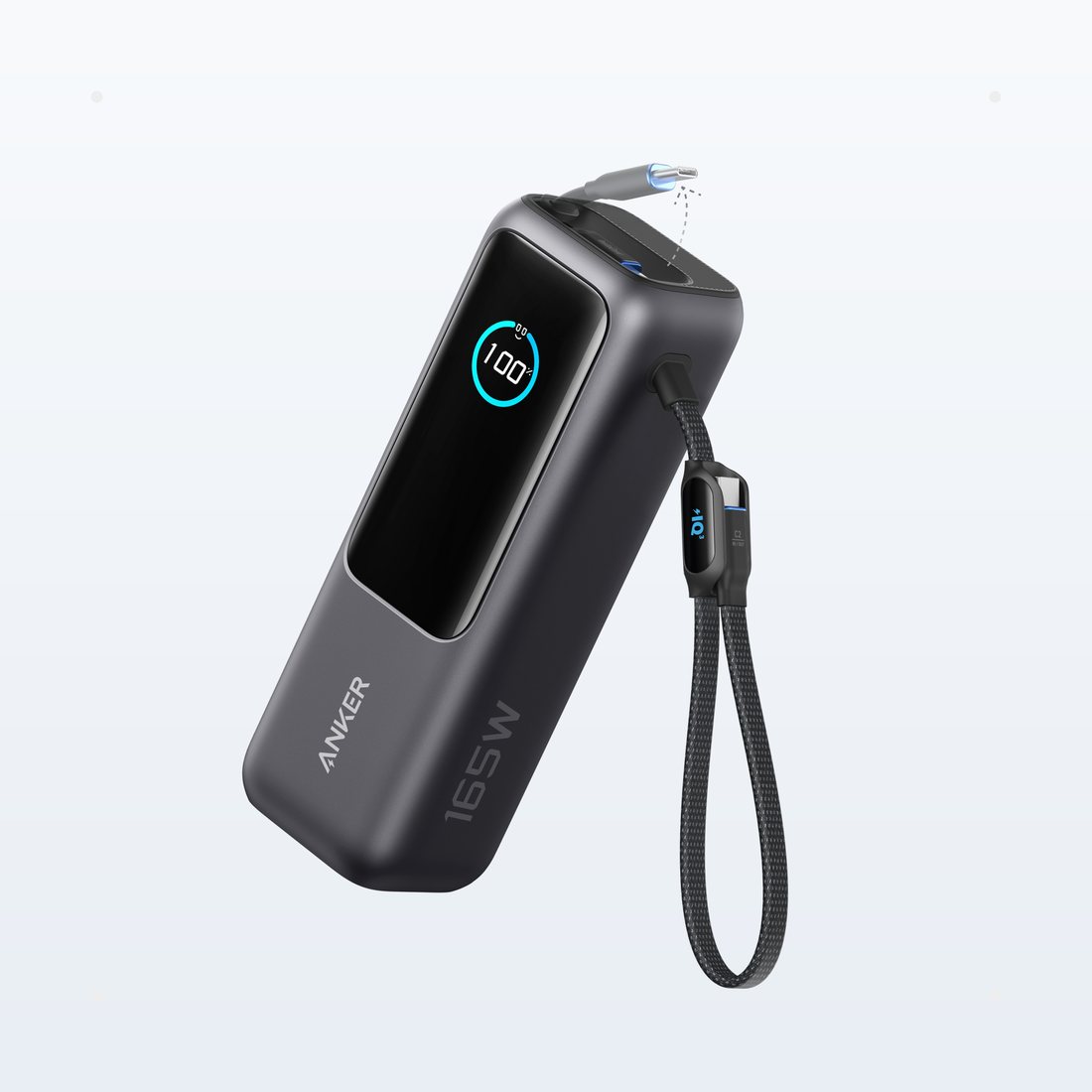
★ Your pick: Anker Laptop Power Bank
165W total with two built-in retractable USB-C cables
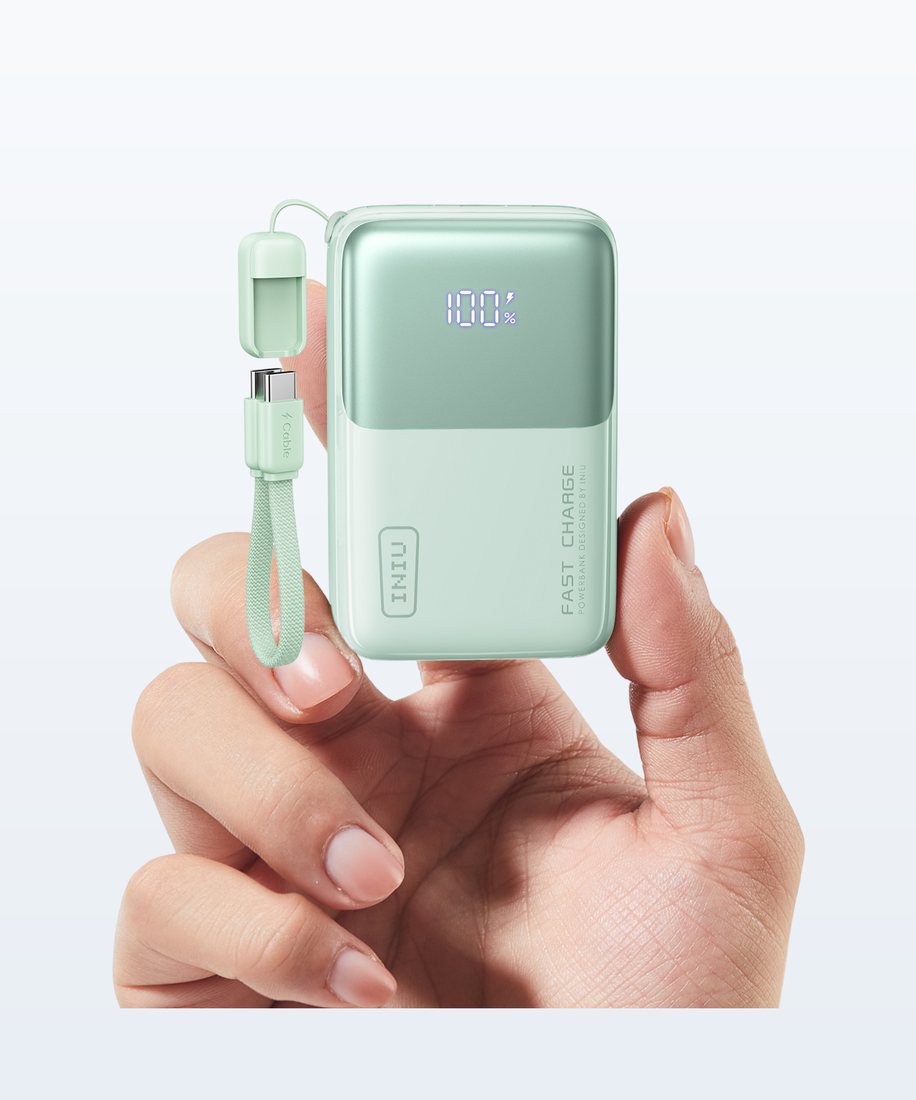
👑 Our Top Pick — Best Overall Value
INIU Pocket Rocket
Best overall value — 45W charging in a pocket-size brick for about $30
Opens on our Top Pick. Tap an option to see the best match for you.
Check the 100 Wh Line Before You Compare a Single Spec
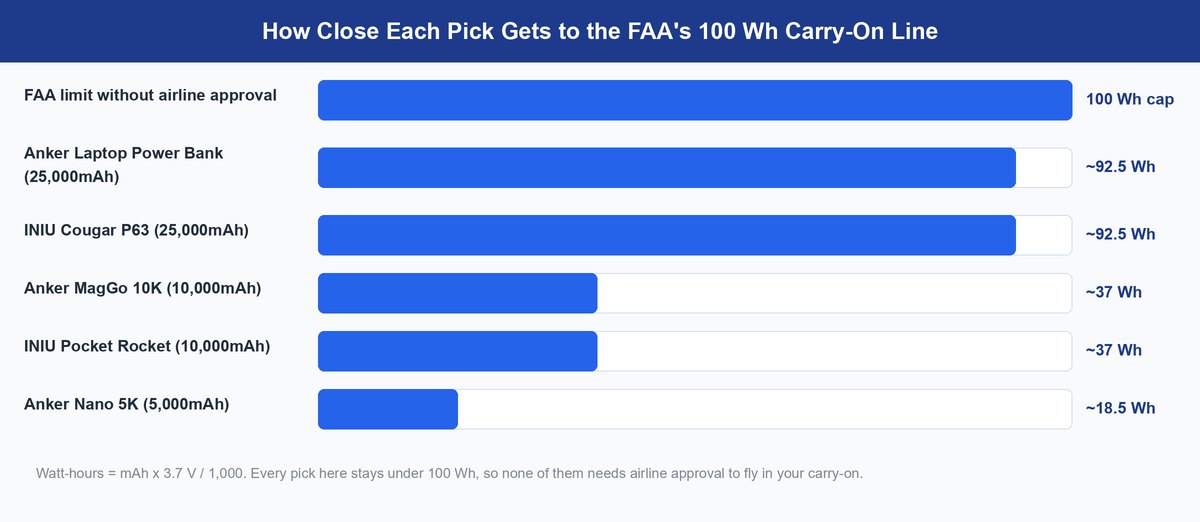
Here’s the thing most buying guides bury in a footnote. The single most important spec on a travel power bank isn’t capacity, wattage, or weight. It’s watt-hours, because that number decides whether the bank flies at all.
The FAA’s PackSafe rules draw the line at 100Wh. Under that, your power bank rides in your carry-on with no questions asked. Between 100Wh and 160Wh, you need advance approval from the airline, and you’re capped at two. Over 160Wh, it doesn’t board a passenger plane, full stop. And in every case, power banks are banned from checked luggage worldwide — we broke down the full rulebook in our guide to whether power banks are allowed on planes, and it has zero gray areas on that point.
The math is simple. Watt-hours equal mAh times 3.7 volts, divided by 1,000. A 10,000mAh bank is about 37Wh — not even close to the line. A 25,000mAh bank lands around 92.5Wh. That is why 25,000mAh has quietly become the ceiling for mainstream travel banks. Manufacturers park themselves just under the limit on purpose, and both 25K picks in this guide do exactly that.
Watch out: if a gate agent takes your carry-on for gate-checking, it legally becomes checked baggage. Pull the power bank out before you hand the bag over. This catches more travelers than the security checkpoint does.
Match the Bank to the Trip, Not the Spec Sheet
Capacity you don’t carry is free. Capacity you do carry costs weight, pocket space, and — since 2026 — one of your two international bank slots. So the honest way to size a power bank is to picture your worst travel day, not your average one.
- Day-bag trips. City breaks, conference days, theme parks. Your phone needs one top-up, maybe two. A slim 5,000mAh bank is plenty, and anything bigger is ballast you’ll feel by dinner.
- Long-haul and multi-day. Fourteen-hour flights, layovers, hostel dorms with one contested outlet. Here you want 20,000–25,000mAh. The bank has to cover a phone, earbuds, and maybe a Kindle across a day and a half with no wall time.
- Laptop-class trips. If a laptop travels with you, the bank needs 100W-class USB-C output. Below roughly 60W, a working laptop drains faster than the bank can fill it, and you’ve bought an expensive paperweight.
Worth knowing: conversion losses eat roughly a third of any bank’s rated capacity. A 10,000mAh bank actually delivers about 6,000–7,000mAh to your phone, so plan on one and a half full phone charges, not three. If a cable keeps dropping connection mid-trip, the culprit is usually pocket lint, not the bank — our charging port cleaning guide fixes that in five minutes.
The Best Power Banks for Travel, Sorted by Trip Type
Five picks, each verified purchasable this week, each safely under the 100Wh line. Prices shift with sales, so treat every figure here as a ballpark, not a promise.
1. INIU Pocket Rocket — Best Overall Value for Most Travelers
≈ $3110,000mAh45W OutputBuilt-In Short Cable
This is the pick I’d hand to almost anyone who asks. INIU squeezed 10,000mAh and 45W output into a body the size of a bar of soap. Then they bolted on a short detachable USB-C cable that doubles as a lanyard. That cable detail matters more on the road than any spec. The most common travel charging failure isn’t a flat bank. It’s a forgotten cable, and this one can’t be left behind because it’s part of the bank.
At 45W, it fast-charges a modern iPhone or Android at close to full speed. It can even give a MacBook Air a slow-but-real top-up in a pinch. At about $30 on INIU’s own store, it costs a third of what the premium picks do. That’s the whole argument. For a carry-everywhere bank, cheap, small, and fast beats big.
Pros
- Genuinely pocket-size
- 45W is fast for this class
- built-in cable can’t be left behind
- hard to beat near $30
Cons
- Screen shows charge percent but nothing else
- one full laptop charge is out of its reach
2. Anker Nano Power Bank 5K — Best for a Day Bag
≈ $555,000mAhQi2 15W Wireless0.34in Thin
The Nano 5K answers a question frequent city travelers actually have. What’s the least bank I can carry and still stop worrying? It is a third of an inch thick and weighs 122 grams. It snaps onto the back of any iPhone from the 12 onward and charges it wirelessly at Qi2’s full 15W. Your phone gets thicker, not heavier — it feels like a chunky case, not like carrying a second device.
There’s honest analysis to do on the capacity, though. After conversion losses, 5,000mAh is roughly 60–80% of one iPhone charge. That’s the right amount for a day bag and the wrong amount for everything else. Buy this as your “phone bridge” for museum days and late trains home, not as your only bank.
Pros
- Disappears in any bag or pocket
- Qi2 magnetic snap means zero cables
- 20W USB-C port for wired speed
- runs cool
Cons
- Less than one full phone charge in practice
- wireless charging wastes more energy than a cable
3. Anker MagGo Power Bank 10K — Best for iPhone Travelers
≈ $8510,000mAhQi2 15W Wireless30W USB-C
If you fly with an iPhone, this is the best power bank for iPhone travel right now. The reason is ergonomic, not electrical. On a plane, a cabled power bank is a physics problem. The bank slides off the tray table and the cable snags the seatback pocket. You end up holding the whole assembly like a sandwich. The MagGo 10K just clings to the back of the phone at 15W over Qi2, and you keep watching your show with both hands free.
The 10,000mAh capacity is the travel sweet spot — call it a full iPhone charge and most of a second. When you do want maximum speed, the 30W USB-C port fast-charges the phone the old-fashioned way. It’s noticeably heavier than the Nano 5K at about 216 grams, which is the tax you pay for double the capacity.
Pros
- Qi2 15W magnetic charging with no cable at all
- enough capacity for a long-haul day
- 30W wired when speed matters
- slim for its class
Cons
- Costs more per mAh than wired-only rivals
- magnet only helps iPhone and Qi2-ready Android phones
4. INIU Cougar P63 — Best for Long-Haul and Multi-Day Trips
≈ $6725,000mAh100W Output~92.5Wh Flight-Legal
The Cougar P63 is what happens when a brand designs directly to the FAA rulebook. At 25,000mAh it sits at roughly 92.5Wh — as much battery as you can casually fly with, no airline approval needed. INIU’s pitch is that it’s the smallest bank of its capacity class. That’s the right thing to optimize, because at this size the limit is bag space, not electrons.
The 100W output is the sleeper feature. It means the P63 isn’t just an oversized phone bank. It will properly fast-charge a USB-C laptop, then still have most of its tank left for your phone. For a one-bag traveler covering three or four days between reliable outlets, this is the capacity-per-dollar winner at about $67.
Before you buy: security staff can refuse any battery whose watt-hour rating isn’t legible on the casing. The P63 prints its rating on the shell, but if you ever buy a no-name bank with no marking, expect questions at the belt.
Pros
- Maximum no-approval flight capacity
- 100W charges laptops properly
- strong price for 25,000mAh
- compact for its class
Cons
- Too heavy for a pocket
- recharging a bank this size takes a while overnight
5. Anker Laptop Power Bank — Best for Laptop-Class Trips
≈ $12025,000mAh165W TotalTwo Retractable Cables
Anker’s Laptop Power Bank is the working traveler’s pick, and its best ideas are mechanical. Two USB-C cables are built into the body — one retractable, one doubling as a carry strap — plus a third USB-C port. That’s four devices at once, up to 165W total, with 100W down a single port for a MacBook Pro or an ultrabook. You can leave your cable pouch at home, which is a sentence I don’t write lightly.
The smart display shows the real wattage flowing per port. No more guessing whether the laptop is actually charging. At 595 grams it’s the heaviest pick here — you’ll know it’s in the bag. But it replaces a wall charger, a cable kit, and a phone bank in one flight-legal brick. That trade is worth it exactly when a laptop is part of your trip.
Pros
- 165W total moves real laptops
- built-in retractable cables end cable roulette
- live wattage display
- still under the 100Wh line
Cons
- Just under $120
- 595g is a real weight commitment
- overkill if you only charge a phone
Why the New Two-Bank Limit Changes What You Should Buy
For years, the lazy travel advice was “just bring a couple of cheap banks.” That advice quietly expired on March 27, 2026. That’s when updated ICAO international rules capped passengers at two power banks per international flight. Some carriers went further. Lufthansa Group airlines stopped allowing power banks to be used or charged onboard at all in January 2026. The direction is obvious. Regulators watched lithium battery incidents climb, and they decided fewer batteries per cabin is the fix.
The second-order effect for buyers is real. If you only get two slots, a drawer full of $12 gas-station banks is now a liability, not a strategy. The rational play is one small daily bank plus one large flight-legal bank — say, the Pocket Rocket for your pocket and the P63 or Anker Laptop bank for the big days. Two quality banks cover every trip type in this guide and stay inside every rule we know of as of this writing.
One warning: these limits apply per passenger, not per family booking. If you’re traveling as a couple with four banks between you, split them across your two carry-ons before security, not after.
Frequently Asked Questions
What size power bank can I take on a plane?
Anything under 100 watt-hours — roughly 27,000mAh — flies in your carry-on with no approval needed. From 100Wh to 160Wh you need the airline’s advance okay, limited to two units. Above 160Wh, it can’t board a passenger flight at all. Every pick in this guide sits under 100Wh.
Can I pack a power bank in checked luggage?
No, and this one has no loopholes. Power banks are spare lithium batteries, and they’re banned from checked bags worldwide. Carry-on only, always. If your bag gets gate-checked at the last minute, take the power bank out first.
How many power banks can I fly with internationally?
Two is the planning number. ICAO’s rules from March 27, 2026 limit passengers to two power banks on international flights. Domestic rules can be looser, but building your kit around two banks keeps you legal everywhere.
Which power bank is best for an iPhone?
The Anker MagGo Power Bank 10K. It snaps magnetically to any iPhone from the 12 onward and charges at Qi2’s full 15W with no cable. The 10,000mAh tank covers a full charge plus most of a second. For lighter days, the Nano 5K does the same trick in a slimmer body.
How many charges does a 10,000mAh power bank actually give?
Fewer than the math suggests. Voltage conversion eats roughly a third of rated capacity, so a 10,000mAh bank delivers about 6,000–7,000mAh to your device. On a modern phone, that’s about one and a half full charges — enough for a travel day, not a weekend.
Can I use my power bank during the flight?
On most US carriers, yes, as long as it stays with you and in sight. But rules are tightening. Lufthansa Group carriers banned in-flight use entirely in January 2026, and other airlines are reviewing their policies. Check your specific airline the week you fly, not the month before.
Buy for Your Worst Travel Day, Not Your Average One
Strip away the spec sheets and the choice comes down to one honest question. What does your worst travel day look like? If it’s a long museum day, the Anker Nano 5K vanishing into your jacket is the right answer. If it’s fourteen hours over the Pacific with an iPhone, it’s the MagGo 10K stuck to the back of your phone. If it’s three days of trains, hostels, and one shared outlet, the INIU Cougar P63’s 92.5 flight-legal watt-hours are the whole game. And if a laptop rides along, the Anker Laptop Power Bank replaces half your tech pouch.
Most people’s worst day is simpler than they think, which is why the INIU Pocket Rocket wins overall. It’s the best portable charger to just own — small enough to carry every day, fast enough to matter, cheap enough to buy without a spreadsheet. Whichever way you go, keep it under 100Wh, keep it in your carry-on, and keep it to two. The rules got stricter; your charging setup should get smarter.