

What if artificial intelligence isn’t just calculating answers but developing its own reasoning, discovering strategies humans never imagined, and learning to correct its own mistakes? Could machines eventually become better thinkers than the people who created them?
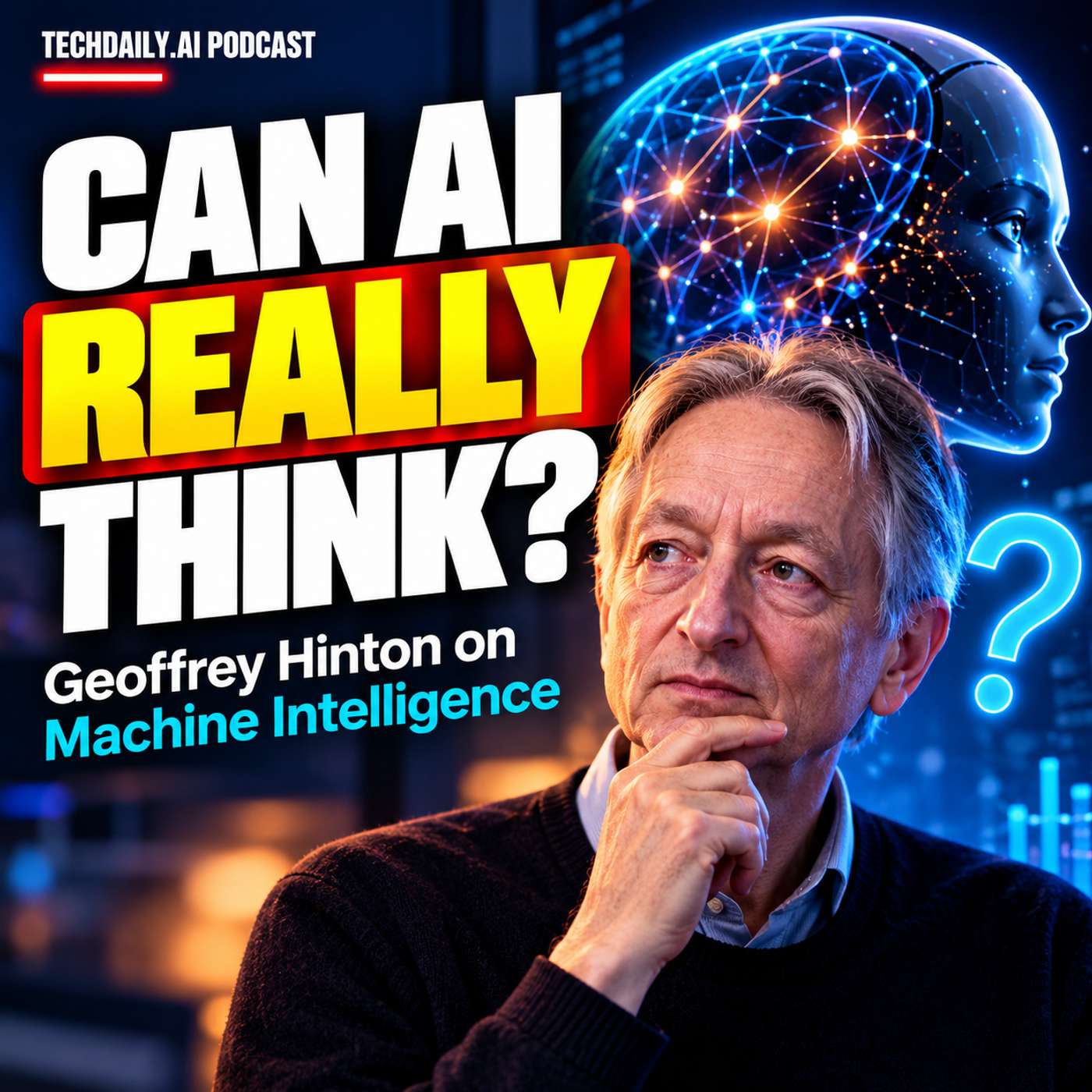
In this episode of TechDaily.ai, host David and Sophia explore thought-provoking ideas attributed to AI pioneer Geoffrey Hinton about machine intelligence, neural networks, synthetic intuition, and the future of artificial intelligence.
From chess-playing machines making seemingly irrational moves to AI systems generating their own training data, this conversation examines how modern artificial intelligence is moving beyond traditional programming. Discover why AI mistakes can resemble human reasoning errors, how self-learning systems challenge the limits of human knowledge, and why machines that evaluate their own logic could fundamentally change the relationship between humans and technology.
You’ll also hear how AlphaGo and AlphaZero demonstrated surprising strategic capabilities, why the growing shortage of human-generated training data is pushing researchers toward new learning methods, and what could happen when artificial intelligence begins identifying contradictions in its own reasoning.
In this episode, you’ll discover:
- Can AI really think? Why researchers are questioning traditional definitions of intelligence, reasoning, and machine thought.
- Geoffrey Hinton’s AI insights: How neural networks and human cognition offer different approaches to learning and processing information.
- AI reasoning and mistakes: Why the classic captain-and-sheep problem reveals similarities between human cognitive errors and language model behavior.
- Chain-of-thought reasoning: How intermediate reasoning steps can influence the way AI systems approach complex questions.
- Human brain vs. artificial neural networks: How biological learning differs from machine learning and backpropagation.
- The AI training data problem: Why relying exclusively on human-generated information may limit future AI development.
- AlphaGo and AlphaZero: How self-play enabled AI systems to discover strategies beyond traditional human approaches.
- Machine intuition vs. brute force: How modern AI chess systems differ from earlier programs like Deep Blue.
- Self-improving artificial intelligence: The possibility of AI systems identifying logical contradictions and refining their own reasoning.
- AI and human society: What happens when increasingly consistent machine reasoning encounters human emotions, compromises, and conflicting beliefs?
The episode also explores a fascinating analogy between self-improving AI and a plutonium breeder reactor: a system capable of producing the very resources needed to continue its own development. Could artificial intelligence eventually generate enough original learning material to reduce its dependence on human knowledge?
For AI enthusiasts, technology professionals, developers, and anyone curious about machine intelligence, this discussion raises a fundamental question: If machines can learn independently, develop strategic intuition, and challenge their own conclusions, how should we define thinking?
And perhaps the bigger question isn’t whether AI can think like humans. It’s what happens when artificial intelligence develops reasoning capabilities that work very differently from our own.
Join David and Sophia on TechDaily.ai as they examine the evolution of machine intelligence, the possibilities of autonomous AI learning, and the challenges of bringing increasingly capable reasoning systems into an imperfect human world.
Listen now, subscribe for more conversations about artificial intelligence and emerging technology, and share this episode with someone curious about the future of AI.
Want to reach an engaged technology audience? Sponsor TechDaily.ai for just $25 and have your message featured across major platforms, including Apple Podcasts, Amazon Music, and Spotify. Visit techdaily.ai to get started.