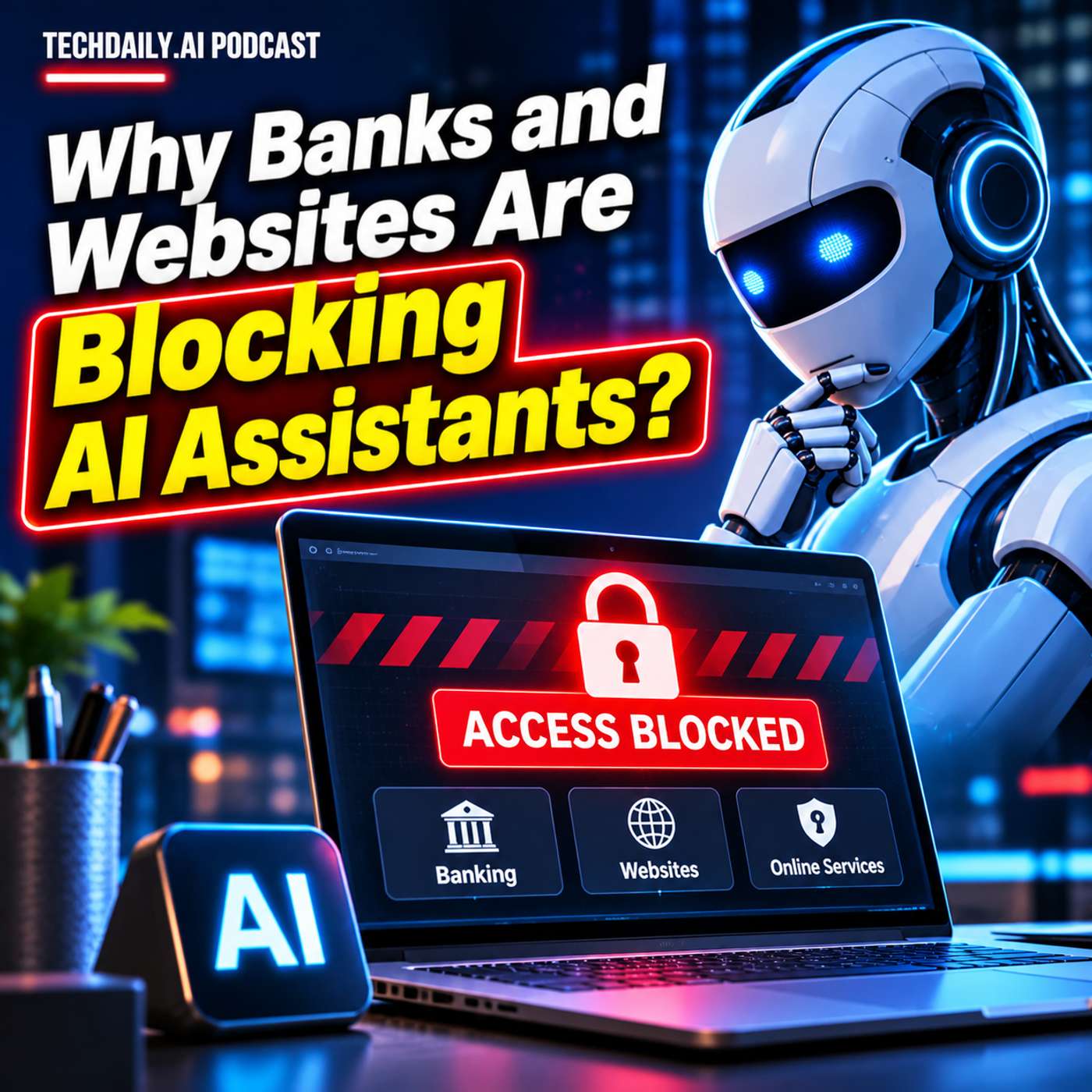


What happens when AI agents become smart enough to manage your daily life, but the internet refuses to let them in? From booking flights and shopping online to managing payments and schedules, autonomous AI assistants promise a future of effortless automation. Yet websites, banks, and online retailers are increasingly struggling to distinguish helpful AI agents from malicious bots.
In this episode of techaily.ai, host David and his expert guest explore the rise of the agentic economy and the growing conflict between artificial intelligence, cybersecurity, website access, and digital commerce.
As AI assistants move beyond answering questions to completing real-world tasks, a major challenge is emerging. The problem isn’t simply whether AI can perform complex actions. It’s whether websites can securely recognize, authorize, and trust the AI agents acting on behalf of legitimate users.
From specialized AI assistants and autonomous shopping tools to cybersecurity threats and emerging payment protocols, this conversation examines how the internet may need to be rebuilt for a world where AI agents handle everyday transactions.
In this episode, you’ll discover:
- The Rise of the Agentic Economy: How autonomous AI assistants are evolving into digital workers capable of managing shopping, travel, calendars, payments, and other everyday responsibilities.
- Specialized AI Agents: How tools discussed in the episode, including Grockbot, Dots, Instinct, Muse, and Duet, represent different approaches to automated task execution.
- Why Websites Block AI Agents: How legitimate automated traffic can resemble malicious bots, triggering firewalls, CAPTCHA challenges, and anti-fraud systems.
- AI Agents and Cybersecurity: Why persistent autonomous systems create new security concerns, including prompt injection, unauthorized actions, and sensitive data exposure.
- Authentication vs. Authorization: Why possessing valid login credentials doesn’t necessarily prove an AI agent has permission to execute a particular transaction.
- The Three Zones of the AI Internet: How websites could separate into verified partnership networks, fragile browser-automation environments, and restricted platforms that block AI agents entirely.
- AI-Powered Digital Payments: How payment tokens, spending limits, cryptographic signatures, and verified integrations could make autonomous transactions safer.
- The Battle for Online Shopping: Why retailers may resist AI assistants that bypass their websites, advertisements, and traditional customer relationships.
- The Future of Agent-Friendly Websites: How structured product information, transparent pricing, return policies, and machine-readable data could influence AI-driven purchasing decisions.
- AI Agent Safety: Why sandboxing, limited permissions, verified platforms, and careful monitoring are essential when allowing autonomous systems to access sensitive information.
One of the most important challenges discussed is the difference between an AI agent that can navigate a website and one that is actually authorized to perform actions.
An assistant might have access to your account credentials, but that doesn’t mean the receiving website can reliably verify your intent or determine whether the agent’s behavior is safe.
David and his guest also examine how infrastructure companies such as Stripe, Cloudflare, Shopify, and Google are approaching this challenge through digital signatures, secure payment systems, and protocols designed for machine-to-machine transactions.
The conversation explores why the future internet may be divided between businesses that welcome verified AI agents and those that restrict automated access to protect security, revenue, and customer relationships.
For consumers, the message is clear: AI agents offer exciting possibilities, but giving them unrestricted access to accounts, payments, and personal files introduces serious risks.
As autonomous assistants become more capable, the real competitive advantage may shift away from flashy websites and persuasive advertising toward accurate product information, secure infrastructure, and reliable transaction systems.
And that raises one fascinating question: If AI agents eventually do our shopping, compare prices, and complete transactions without opening traditional websites, what happens to an internet built around human attention and advertising?
Tune in to explore AI agents, the agentic economy, autonomous commerce, cybersecurity, digital payments, and the future of the internet.
Subscribe to techaily.ai for more conversations about artificial intelligence, emerging technology, cybersecurity, automation, and the innovations reshaping our digital world.
Share this episode with someone interested in AI assistants, online commerce, or the future of intelligent automation.
Want to sponsor techaily.ai? Promote your message across Apple Podcasts, Spotify, Amazon Music, and other major podcast platforms for just $25.
Visit https://techdaily.ai to get started.