Look at wrists at the start of any weekend race. You will see a lot of black plastic Garmins, a few white COROS watches, and a scattering of watches that cost more than the shoes under them. Then the gun goes and everyone runs the same course. That is the part the buying guides skip. Past a certain price, a running watch stops making you a better runner and starts making you a better-informed one.
That price is lower than the internet suggests. The best running watch for most people sits around two hundred dollars. Above that you are buying extra satellites, a sharper screen and more charts. Those are real things. They are just not the things that get you round a 10K faster.
- Spend around two hundred dollars and you get everything you need to train: honest pace, a plan on your wrist, and a battery that survives a long run.
- The step above that buys sharper satellite reception, longer battery and deeper charts. It does not buy speed.
- A general fitness watch and a running watch are not the same purchase. Know which one you are holding before you pay.
- Last season’s model usually keeps the features that matter. The Forerunner 165 runs the same Garmin Coach plans and daily suggested workouts as the pricier Forerunner 265.
- On-board music is the feature people most regret skipping. Only the Forerunner 165 Music, the Forerunner 265 and the vívoactive 5 store playlists; the COROS PACE 4 takes MP3 files only.
Heads up on links: we use Amazon affiliate links, so if you buy through one we may earn a small commission. It costs you nothing and it does not decide who makes this list.
What is actually pushing you to buy one?
★ Your pick: Amazfit Bip 6
Cheap enough to find out whether running sticks, with GPS and a big screen you can read while moving.
★ Your pick: Garmin Forerunner 165
Free Garmin Coach plans land on the watch, so you get told what to run each day.
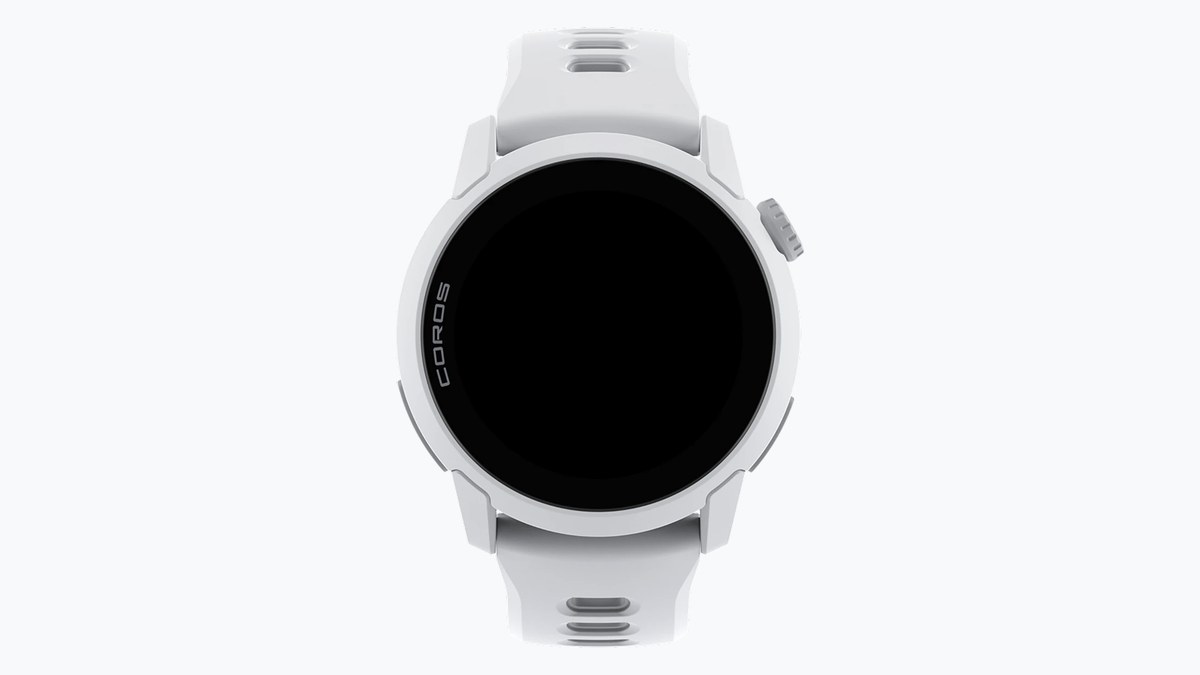
★ Your pick: COROS PACE 4
COROS lists 41 hours of GPS on one charge, which covers an ultra and a whole training week.
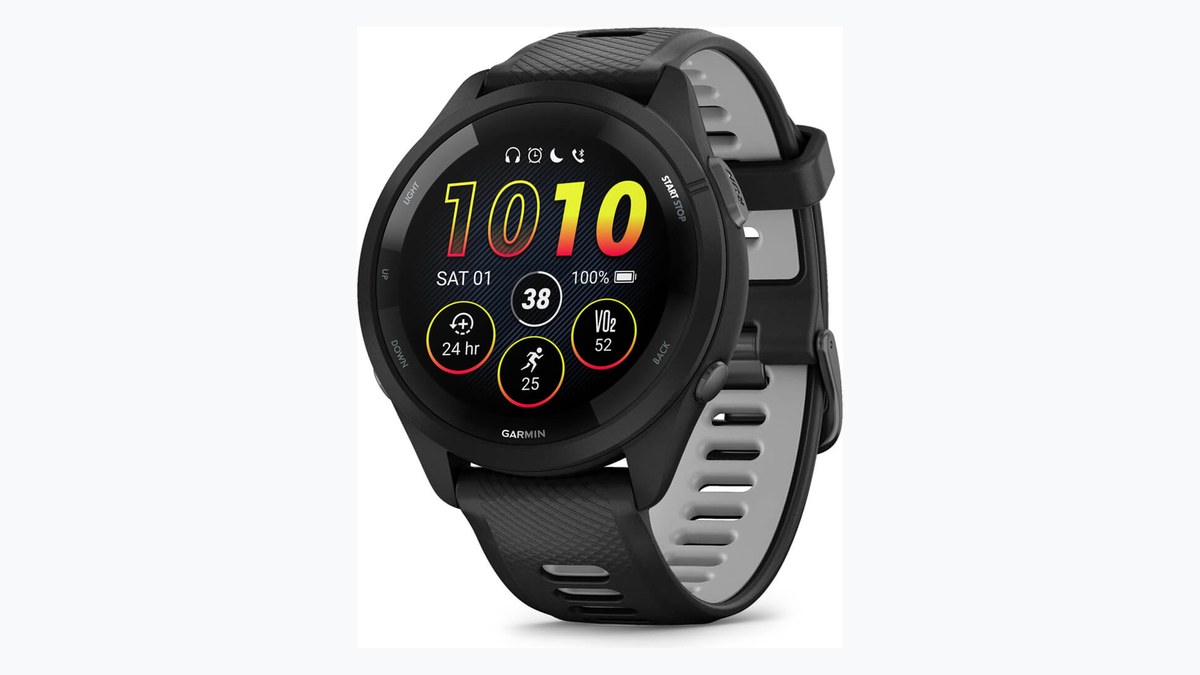
★ Your pick: Garmin Forerunner 265
Multi-band GPS is built for streets where the signal bounces off glass and concrete.
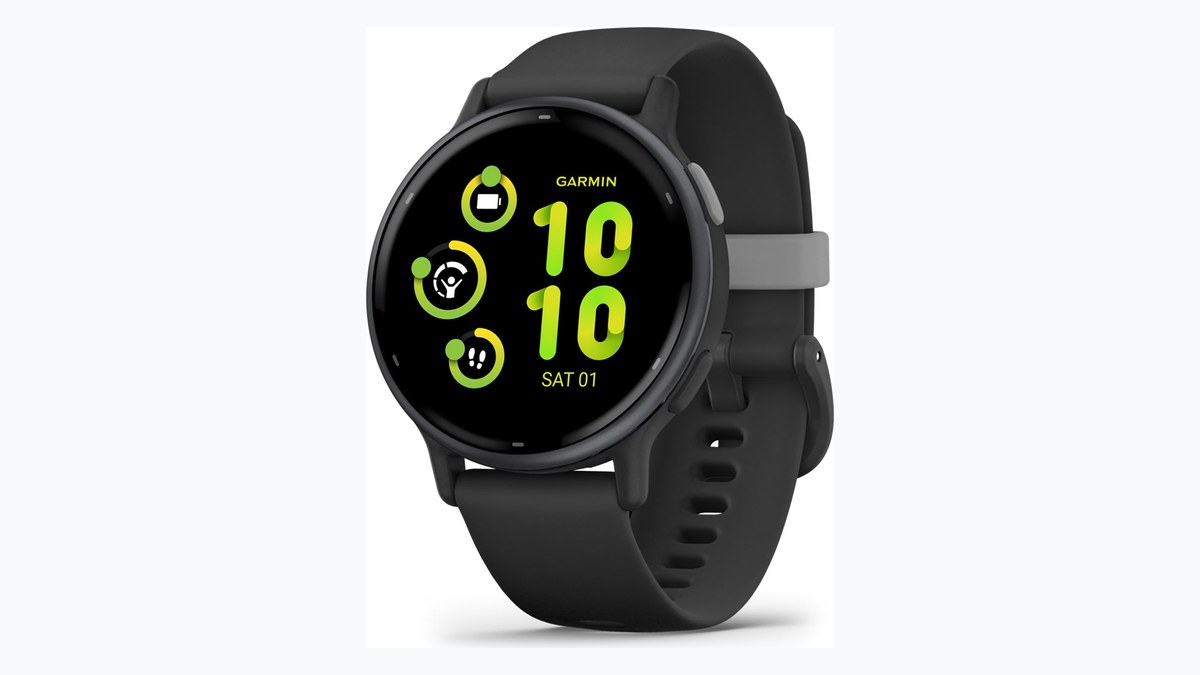
★ Your pick: Garmin vívoactive 5
A general fitness watch first. Good for a gym week with a few runs in it, not for chasing splits.
👑 Our Top Pick — Best Overall Value
Garmin Forerunner 165
The safe answer for almost anybody. Real running features, a plan you can follow, and a battery you charge about once a week.
Opens on our Top Pick. Tap an option to see the best match for you.
What More Money Buys You in a Running Watch
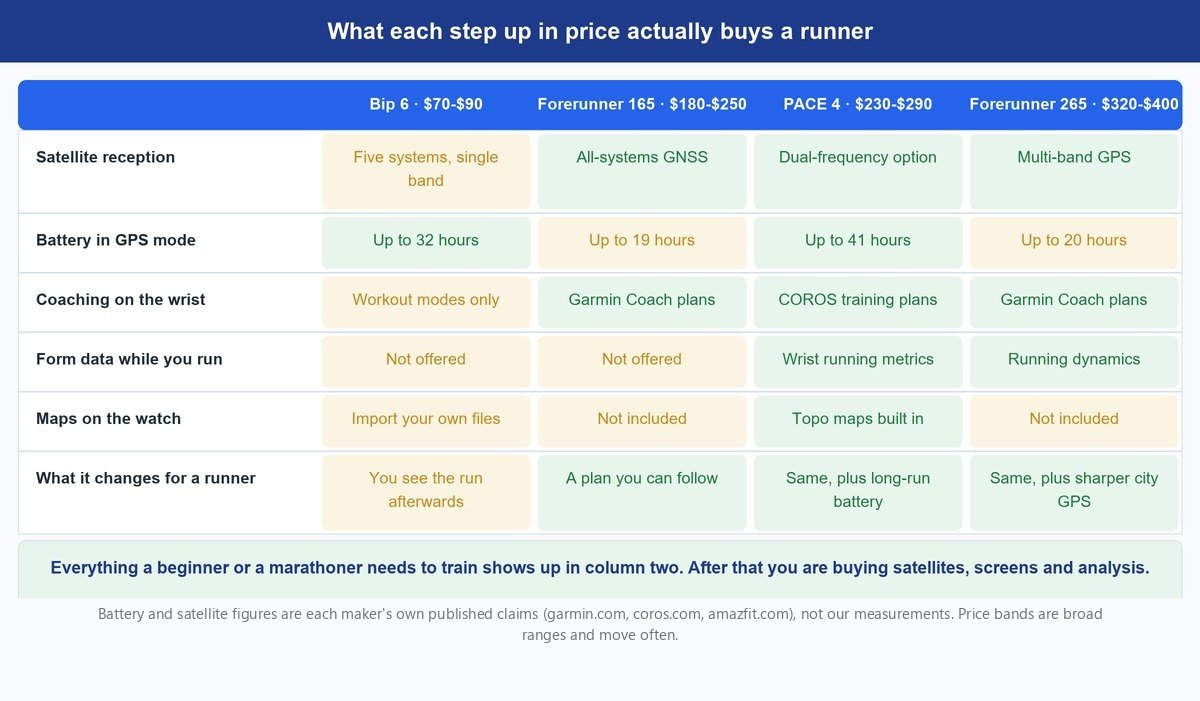
Every watch in this piece tells you your pace, your distance and your heart rate. That is the whole job. What changes as you pay more is how confident those numbers are, how long they last, and how much the watch does with them afterwards.
The first real step is satellite reception. Cheap watches listen to one radio band. Better ones listen to two at once, which helps when the signal is bouncing off buildings. Then comes battery. Then coaching, where the watch stops recording your training and starts prescribing it. Then form data, maps, and the analysis screens that people screenshot for social media.
Here is the honest part. The coaching step is the one that changes how you run, and it arrives at the second price step, not the fourth. Garmin puts free Garmin Coach plans and daily suggested workouts on a watch that sells for about the price of a decent pair of shoes. COROS does the same thing with its own plans. Everything above that is measurement, not instruction.
The Garmin Forerunner 970 and the Apple Watch Ultra 3 sit a full price step above every watch on this list, and the same rule applies to them: more money up there still buys measurement, not speed.
Worth knowing: dual-band GPS costs battery. Garmin’s own table for the Forerunner 265 drops from 20 hours in plain GPS mode to 14 hours with all systems plus multi-band switched on. Turn it on for city runs and off for the park.
There is a second reason the middle of the range wins. These watches take no subscription. Buy one and the training plans, the sleep scores and the recovery advice are included forever. That is a real difference from the band-and-ring crowd, where the hardware is the cheap part and the membership never ends, which is the trap we picked apart in our Whoop versus Oura comparison.
What a Running Watch Does That a Smartwatch Does Not
Search for a running watch and half of what comes back is a general smartwatch that happens to log a jog. The two overlap enough to be confusing and differ enough to ruin a purchase.
A running watch is built around one screen you look at while gasping. Big numbers, physical buttons you can press with cold or wet fingers, and a battery measured in days rather than hours. A general fitness watch is built around your whole life. It counts steps, tracks sleep, shows messages, and treats a run as one activity among a hundred.
The gap shows up in the small print. Garmin rates the Forerunner 165 at up to 11 days in smartwatch mode and up to 19 hours in GPS mode. COROS claims 41 GPS hours and 19 days of daily use for the PACE 4. A watch you charge every night will not give you that, and on a four-hour long run the difference stops being a spec and starts being a problem.
Your phone is the other option, and it is a fine one for a while. Strava and the free apps track distance well enough on a familiar route. The costs are that you carry it, and that a GPS app hammers the battery, which is one of the fastest ways to drain an iPhone in an afternoon. Most people buy a watch the week they get sick of holding a phone.
Real talk: we do not test watches in a lab. Every battery and satellite figure in this article comes from the maker’s own published specification, and we say which maker each time.
The Best Running Watch Picks for Every Kind of Runner
Five watches, arranged by what pushes you to buy rather than by score. Prices move constantly, so treat every band below as a range you should sanity-check on the day.
1. Garmin Forerunner 165 — Best Overall for Most Runners
≈ $180–$25011-day batteryAMOLED screenGarmin Coach
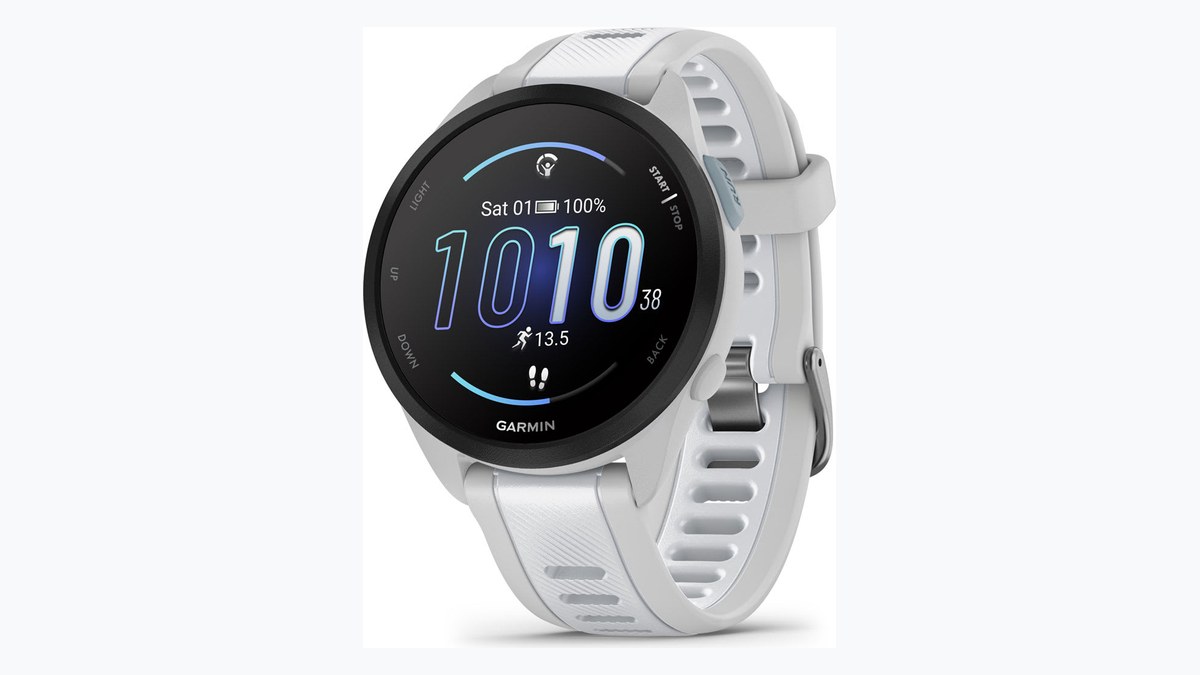
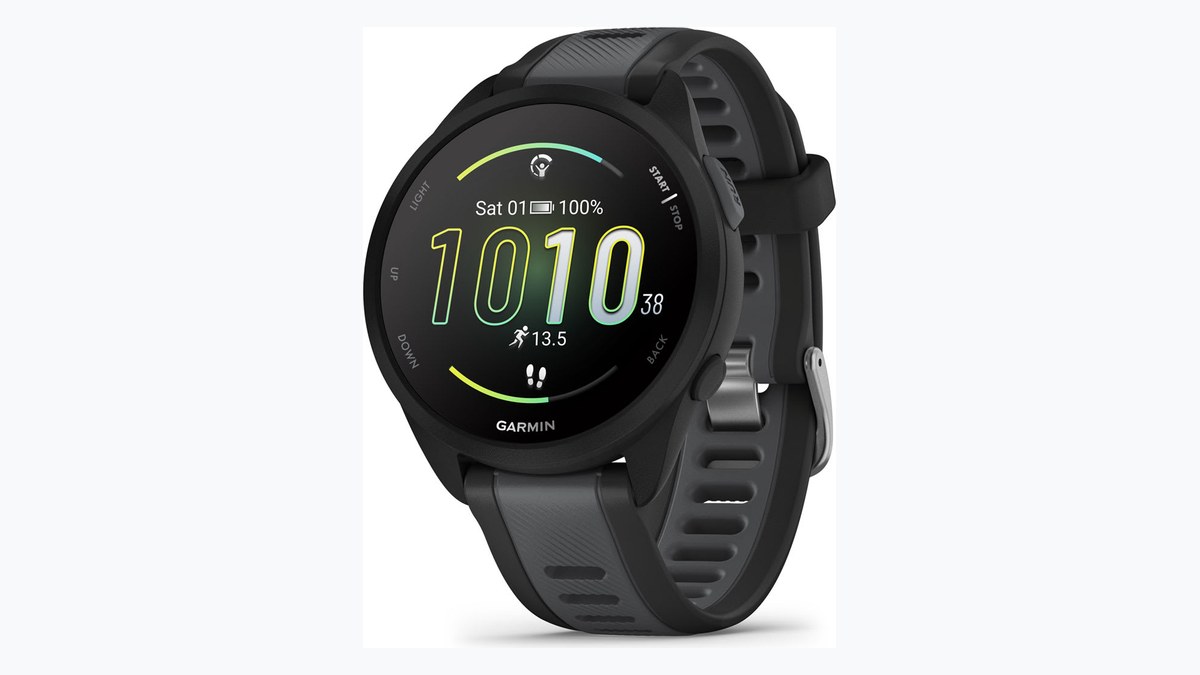
This is the watch we would hand to nine out of ten people who ask. It is a proper running watch with five buttons, a bright colour screen, and the Garmin training system behind it. You pick a 5K, 10K or half marathon plan, and the watch tells you what to run each morning instead of leaving you to invent a schedule.
The numbers are solid rather than showy. Garmin rates it at up to 11 days in smartwatch mode and up to 19 hours with GPS on, or 17 hours with every satellite system switched on. That covers a marathon with hours spare. You charge it on Sunday and forget about it. The screen is a 1.2-inch AMOLED at 390 by 390 pixels, bright enough to read in full sun, and the whole watch weighs 39 grams, so it disappears on your wrist by the second mile.
Where it earns the top spot is the training layer. You get Garmin Coach plans for a 5K, 10K or half marathon, daily suggested workouts that change after each run, training effect, recovery time, a race predictor, VO2 max and HRV status, plus a morning report that sums up your sleep. Those are the same coaching tools the Forerunner 265 runs. What the 265 adds is training readiness, training status, running dynamics and multi-band GPS. Those are measurement upgrades, not coaching upgrades.
One thing to know before you settle on it. In May 2026 Garmin launched the Forerunner 70 and Forerunner 170, and the 165 moved to Garmin’s previous-models list. The 70 has the same 43 mm case, the same 1.2-inch screen and the same five buttons, and it adds training readiness, training status, running dynamics and running power, the scores the 165 leaves to the 265. The 170 adds an altimeter and open-water swimming on top. If you already know you want those scores, the 70 is the one to look at. If what you want is a plan on your wrist, honest pace and a battery you forget about, the 165 does that job exactly as well, and that is why it stays our pick for most runners.
Satellite reception is the all-systems kind, not dual-band. In a park or a suburb you will never notice. Between glass towers you might, and that is the one job the 265 does better. Navigation is a breadcrumb line for a course you load in advance, not a map, which is where the COROS PACE 4 pulls ahead. Music is the other fork. The base 165 has no storage, so if you run phone-free you want the 165 Music edition, which holds Spotify, Deezer and Amazon Music playlists offline.
Walk past this one if you run between tall buildings where GPS tracks go wobbly, or if you want offline maps on your wrist. The 165 does not carry maps. It carries a training plan, which for most runners is the more useful of the two.
Features
- Colour AMOLED touchscreen with five physical buttons
- Garmin Coach plans and daily suggested workouts
- Up to 11 days of battery in smartwatch mode
- Up to 19 hours of battery with GPS running
- All-systems satellite reception
- 43 mm case, sold in several colourways
Pros
- The full Garmin training system at the low end of Garmin pricing.
- Battery you measure in days, not overnight charges.
- Buttons that work when your hands are wet and cold.
- Five buttons plus a touchscreen you can switch off entirely.
Cons
- Single-band satellite reception, so tall buildings can confuse it.
- No maps on the watch.
- The base version has no on-board music storage.
2. COROS PACE 4 — Best for Long Runs and Big Weeks
≈ $230–$29041 GPS hours32 gTopo maps
COROS built its reputation on battery life and lightness, and the PACE 4 is the clearest example of it. The company lists 32 grams with the nylon band, which is close to wearing nothing, and 41 hours of GPS on a single charge. If your weekend involves three or four hours on your feet, this is the watch that never makes you think about the charger.
It also does something the Garmins at this price do not. COROS puts landscape and topo map layers on the watch, with breadcrumb route following and an alert the moment you stray off course. Routes sync in from Strava, RideWithGPS or Wikiloc. It is not turn-by-turn street navigation, but it is more than the Forerunner 165 or 265 draw, which is a bare breadcrumb line. Add the dual-frequency satellite mode and you have the two upgrades that matter in awkward terrain, in a body 11.8 mm thin.
The training side is deeper than the price suggests. The watch tracks VO2 max, lactate threshold and a running fitness score, builds interval and running-power workouts, and pulls plans from TrainingPeaks or Final Surge. Recovery time, sleep stages and HRV live in the COROS app. Music is MP3 files you load yourself. There is no Spotify or Apple Music sync, which is the one place the Forerunner 165 Music and the 265 clearly win. Controls are two buttons, a touchscreen and a digital dial, and the watch is rated to 5 ATM for swims.
The trade is the ecosystem. Garmin Connect has years of features, more third-party links and more people you know already using it. COROS is smaller and its app is leaner. It syncs to Strava fine, and its training plans are well regarded among coaches, but you are joining the smaller party.
Walk past this one if you mostly run 5K loops from your front door. You will carry battery and maps you never touch, and the Forerunner 165’s Garmin Coach plans hand you a workout every morning, which is the more useful tool for that kind of running.
Features
- 1.2-inch AMOLED touchscreen
- 32 g with the nylon band, 40 g with silicone
- Up to 41 hours of GPS on one charge
- Up to 19 days of daily training and sleep tracking
- All-systems and dual-frequency satellite modes
- Landscape and topographic maps stored on the watch
Pros
- Battery figures nothing else here comes close to.
- Light enough that you stop noticing it on your arm.
- Map layers and off-course alerts on the wrist.
- No subscription for training features.
Cons
- Smaller app ecosystem than Garmin’s.
- Fewer everyday smartwatch touches.
- Music is MP3 files only, with no Spotify or Apple Music sync.
3. Amazfit Bip 6 — Best Cheap Way to Find Out If Running Sticks
≈ $70–$9014-day battery1.97-inch screenBuilt-in GPS
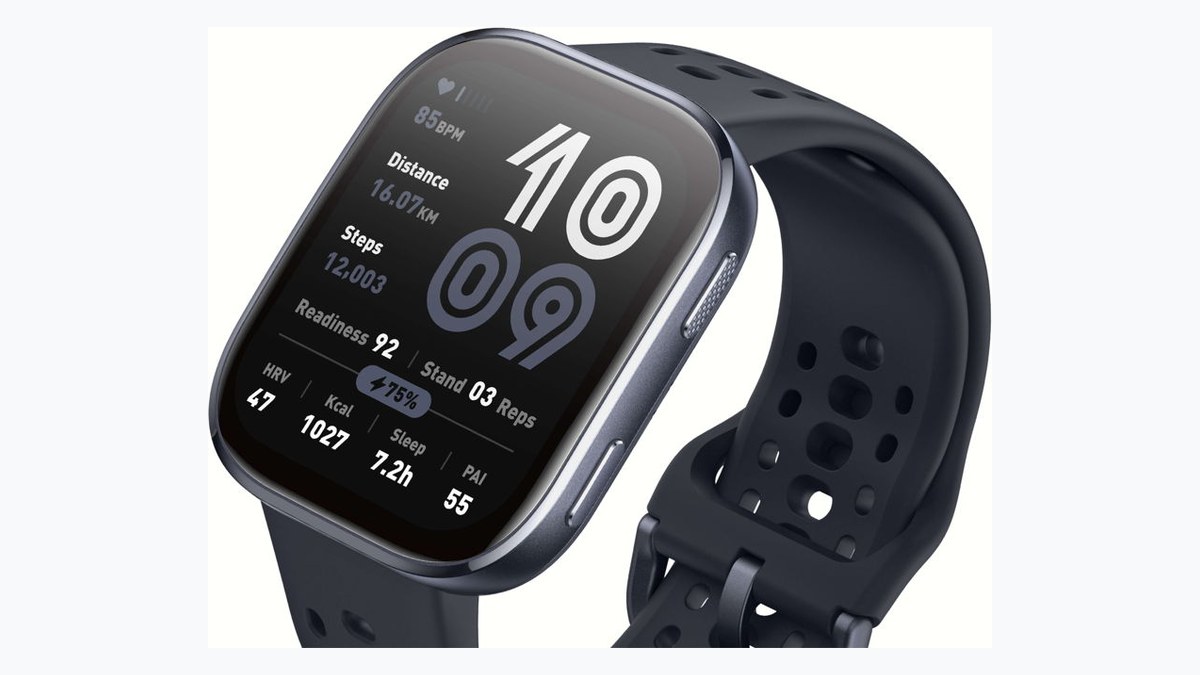
Be clear about what this is. The Bip 6 is a budget smartwatch that tracks running well, not a dedicated running watch. What you get for the money is still remarkable. Amazfit publishes a 1.97-inch AMOLED screen at 390 by 450 pixels that peaks at 2,000 nits, up to 14 days of typical battery, and up to 32 hours of continuous GPS from five satellite systems on a single band. The watch body weighs about 28 grams, light enough to forget.
For a new runner that is more than enough. You will know your pace, your distance and your heart rate from Amazfit’s BioTracker sensor, and the screen is large enough to read at a glance mid-run. There is more here than you would expect: offline maps in OpenStreetMap format, route import with turn-by-turn prompts in some sports modes, Bluetooth calls from the wrist, and a 5 ATM rating so rain and pool sessions are fine. That map support is something the Forerunner 165 and 265 do not offer at all.
What you do not get is Garmin’s coaching depth. Amazfit’s Zepp Coach will write you a training plan, and the watch gives you a daily readiness score and HRV, but the list stops there. The Forerunner 165 adds daily suggested workouts that adapt after every run, training effect, recovery time and a race predictor, and it shows them on the wrist. The Bip 6 also has two buttons where the Forerunner has five, so mid-interval you are swiping a touchscreen with sweaty fingers. Single-band GPS means tight streets can add distance you never ran.
Walk past this one if you already know you are training for a race. Buying it and then buying a real running watch four months later costs more than starting one step up. Buy it if you want to find out whether running sticks before you pay for a watch built around it.
Features
- 1.97-inch AMOLED display at 390 x 450
- Up to 14 days of typical battery, 6 days under heavy use
- Up to 32 hours of continuous GPS tracking
- Five satellite positioning systems, single band
- Bluetooth calls and phone notifications
- Offline maps in OpenStreetMap format, with route import
Pros
- The cheapest honest entry point with real built-in GPS.
- A huge, easy-to-read screen for the money.
- Battery life that embarrasses far pricier smartwatches.
- Low enough risk that quitting running costs you very little.
Cons
- Thinner training analysis than any Garmin here.
- Single-band satellites, so expect wobble in tight streets.
- Touch-first controls are fiddly mid-run.
4. Garmin Forerunner 265 — Best for Racing and Data
≈ $320–$400Multi-band GPSRunning dynamics13-day battery
This is the watch for the runner who has stopped asking how far and started asking how well. Garmin lists multi-band GPS, running dynamics and up to 13 days of smartwatch battery for the Forerunner 265, with up to 20 hours in GPS mode. Multi-band is the upgrade that earns its keep in a city, where a single-band watch can throw a mile split that never happened.
Running dynamics is the other real addition. The watch measures cadence, stride length, vertical oscillation and running power from the wrist, so you see how you move rather than just where you went. That matters if you are working on form or coming back from an injury and want proof that something is changing. It runs the same Garmin Coach plans and daily suggested workouts as the 165. On top of those it adds training readiness, training status and training load. Together they tell you whether today is a day to push or to rest.
The rest of the sheet is a step up too. The 46 mm model has a 1.3-inch AMOLED at 416 by 416 pixels and 8 GB of on-watch music storage for downloaded playlists. It also carries a barometric altimeter for honest climb numbers and a 5 ATM rating. Battery is the trade. Plain GPS lasts up to 20 hours, but with all systems plus multi-band switched on Garmin’s own table drops to 14 hours, and to 6 hours with music playing. The COROS PACE 4 runs 41 hours in its all-systems mode and weighs 15 grams less. Navigation is still breadcrumb courses, not maps.
Walk past this one if you have never once looked at a GPS track and doubted it, or if the phrase running dynamics does not immediately mean something to you. The 165 runs the same Garmin Coach plans. The 265’s extra numbers only pay off if you actually read them, and its 46 mm case is a lot of watch on a slim wrist, which is why the 42 mm 265S exists.
Features
- Multi-band GPS for built-up areas
- Running dynamics measured from the wrist
- Up to 13 days of battery in smartwatch mode
- Up to 20 hours of battery with GPS running
- On-board music storage
- Sold in a 46 mm size and a smaller 42 mm 265S
Pros
- The most reliable GPS track in this list.
- Form data that gives injury recovery something to aim at.
- Leave the phone at home and still have music.
- Same Garmin Coach plans as the 165, plus training readiness and load.
Cons
- Multi-band mode cuts GPS battery from 20 hours to 14, so it is not a set-and-forget setting.
- Still no maps on the watch, only breadcrumb courses.
- Shorter GPS battery than the lighter COROS.
5. Garmin vívoactive 5 — Best If Running Is Only Part of Your Week
≈ $170–$230Fitness watch11-day battery42 mm
The vívoactive 5 is in this list because so many people buy it for running, and it is worth saying plainly what it is. Garmin calls it a health and fitness smartwatch, not a running watch, and the difference is real. It has GPS, sports apps and up to 11 days of battery, but it is built for a life that includes gym sessions, yoga, sleep tracking and the occasional run.
If that is your week, this is a smarter buy than a Forerunner. The round 42 mm body is 11.1 mm thin and weighs 23 grams before the band, so it passes as a normal watch at the office. The 1.2-inch AMOLED runs at 390 by 390 pixels, the same size and sharpness as the Forerunner 165. You get Body Battery energy tracking, the sleep coach, nap detection, HRV status and the morning report, plus Garmin Pay and music storage for Spotify, Deezer, Amazon Music and YouTube Music playlists, which the base 165 does not have.
Where it falls short is the running layer. Garmin rates it at up to 11 days of smartwatch battery and 21 hours of GPS, more GPS time than the 165, but the satellite setup is all-systems only, with no multi-band and no barometric altimeter. You get recovery time, VO2 max and Garmin Coach running plans, but not the daily suggested workouts, training effect, race predictor or running dynamics the Forerunners give you. Navigation is back-to-start only. The controls lean on the touchscreen rather than a runner’s button layout. It records your run properly. It just will not coach your season. Garmin replaced it with the vívoactive 6 in 2025, which keeps the same 42 mm case and 1.2-inch screen and adds running dynamics, running power and PacePro pacing. Those are the numbers this card already tells you to look to a Forerunner for. For the gym-and-a-jog week this pick is built for, the 5 gives you the same sleep coach, Body Battery and 11-day battery, and that is why it stays the pick here.
Walk past this one if a race is the reason you are shopping. Buy it if running is one of five things you do and you want a watch you can wear to the office.
Features
- 42 mm round case with AMOLED touchscreen
- Up to 11 days of battery, about 5 with the screen always on
- Built-in GPS and a wide set of sports apps
- Sleep coaching and Body Battery energy tracking
- Works with the same Garmin Connect app as the Forerunners
- Music storage plus Garmin Pay contactless payments
Pros
- Looks like a normal watch, not running kit.
- Excellent all-day health tracking for the money.
- Same app and account as Garmin’s running watches.
- Music storage and Garmin Pay, which the base Forerunner 165 lacks.
Cons
- Not a dedicated running watch: no running dynamics, race predictor or daily suggested workouts.
- Thinner running analysis than any Forerunner.
- Touch-led controls are less certain with wet hands.
What to Check Before You Order
Match the Case Size to Your Wrist
Case sizes here run from 42 mm to 46 mm, and the gap is visible in person. If you have a slim wrist, the 46 mm Forerunner 265 will overhang it, which is why Garmin sells the 42 mm 265S version. Measure your current watch before you commit to a bigger one.
Decide Whether You Want Music Without Your Phone
On-board music is the single feature most likely to make you regret buying the base model. If your long runs are soundtracked and you hate carrying a phone, you need a version that stores tracks. Here that means the Forerunner 165 Music edition, the Forerunner 265, the vívoactive 5, or MP3 files loaded onto the COROS PACE 4.
Check What Your Running Friends Use
Training data is more fun shared. Garmin Connect and COROS both push to Strava, so nobody is locked out, but group challenges and comparisons are easier when you are in the same app as the people you run with.
Before you buy: Garmin’s training readiness, training status and HRV status scores live only in Garmin Connect, and COROS keeps its running fitness and recovery numbers in the COROS app. Both push the run itself to Strava, but the scores do not travel, so pick the app your running friends already use.
Where This Leaves You
Buy the watch that matches how you run, not the one that matches how you would like to be seen running. For most people that is the Forerunner 165 or something near it, because the coaching, the battery and the honest pace all show up at that price and nothing above it makes your legs any better.
Spend the difference on shoes, a race entry, or a coach. Those change your running. A brighter screen just changes the photograph of it.
Frequently Asked Questions
What is the best running watch for a total beginner?
Start with the cheapest thing that gives you real GPS, then upgrade when you know running has stuck. The Amazfit Bip 6 does that job for well under a hundred dollars. If you have already signed up for a race, skip that step and go straight to the Forerunner 165, because the training plan is the part that actually helps a beginner.
Do I really need a running watch, or is my phone enough?
Your phone is genuinely fine for the first few months. It tracks distance and pace on familiar routes, and it costs nothing extra. You buy a watch when carrying the phone starts to annoy you, when you want your pace visible without digging in a pocket, and when the battery drain gets old.
Do running watches need a monthly subscription?
Not the ones here. Garmin, COROS and Amazfit all include the training plans, sleep tracking and recovery advice in the price of the hardware. That is the main financial difference between a running watch and a recovery band or smart ring, where the membership fee keeps arriving long after the device is paid off.
How accurate is GPS on a cheap running watch?
Accurate enough on open roads and parks, and shaky in cities. Budget watches listen to one satellite band, so a signal bouncing off tall buildings can add distance that you never ran. Multi-band watches like the Forerunner 265 exist for exactly that problem. If your routes are suburban or rural, you will rarely notice the difference.
Will a more expensive watch actually make me faster?
No. It will tell you more about why you are not. The features that change your running, meaning a structured plan and honest pace feedback, arrive around the two hundred dollar mark. Everything above that is better measurement of the same effort, which helps if you are already training seriously and is decoration if you are not.
Should I buy last year’s model instead of the newest one?
Usually, yes. Running watches get a new generation every couple of years, and the outgoing model keeps most of the features that matter. The Forerunner 165 was replaced by the Forerunner 70 and 170 in May 2026, and it still runs the same Garmin Coach plans and daily suggested workouts. The vívoactive 5 was replaced by the vívoactive 6, and it keeps the full sleep coach and Body Battery system. What the newer models add is training scores and form data, not coaching. Check that the older model still gets software updates, then buy it without a second thought.