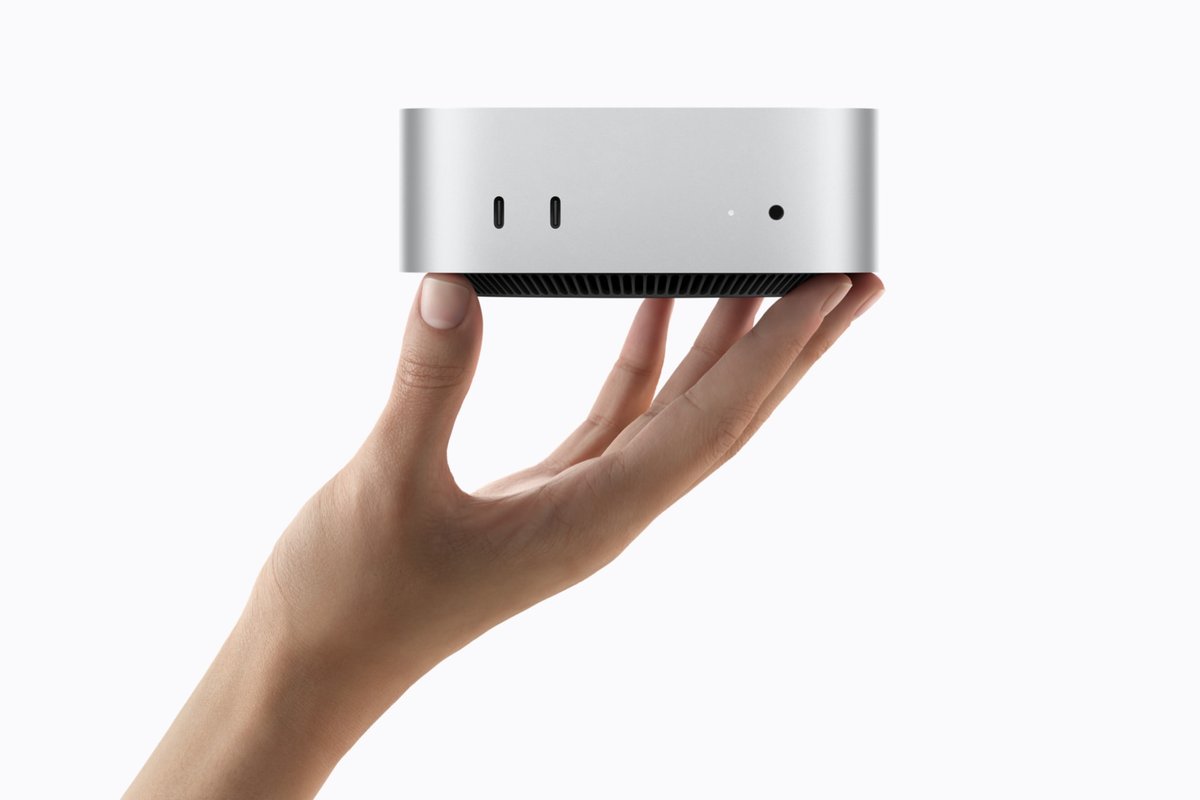
Apple opened pre-orders for the Mac mini M6 this morning, August 25, and the machine ships September 22. The base model costs $899 at Apple’s launch pricing. A $1,699 version with the M5 Pro chip sits above it. Here is the short answer before the spec sheets bury you. Buying your first desktop Mac, or upgrading from an M1, M2, or Intel machine? Order one. Sitting on an M4 mini? Keep your money. Eyeing the expensive model? Know that it runs last year’s chip — and that changes the whole decision.
- Pre-orders for the Mac mini M6 opened August 25 at $899, and machines start arriving September 22, 2026.
- The M6 is Apple’s newest chip generation, and right now the $899 mini is the only Mac that has it — the $1,699 model runs the older M5 Pro.
- Apple claims up to 40 percent faster CPU and 4x faster AI than the M4 mini, but those numbers came from a fully loaded M4 test rig.
- If you bought the M4 mini, skip this one. Your machine is not even two years old, and nothing about the design changed.
- The famous “2nm chip” story is reported, not confirmed. Apple never names its manufacturing process, so treat that detail as strong rumor.
Apple Put Its Newest Chip in Its Cheapest Mac First

For most of the Mac’s history, the cheap machine got the leftovers. The Mac mini launched in 2005 at $499 as the “bring your own keyboard and monitor” starter Mac. Then it spent the 2010s neglected. One stretch went four years without an update. The budget Mac waited its turn, always.
Today Apple flipped that script. The announcement puts the brand-new Apple M6 chip in the $899 mini. The Mac Studio revealed the same day carries M5-generation silicon. As of this morning, the cheapest Mac in the lineup is the only one you can order with Apple’s latest chip. No MacBook Pro has it. Nothing else does.
There is a cost to that promotion, though. The M4 mini arrived in October 2024 at $599. The new starting price is $899 — a $300 jump at the entry level, softened a little by the 16GB of memory Apple kept standard. That price hike is the real stake in this decision. The mini used to be the impulse-buy Mac. At $899, it asks you to actually think, and the rest of this post does that thinking with you.
What the M6 Chip Changes and What Is Only Reported
Start with what Apple has put in writing. The M6 chip carries a 12-core CPU and a 12-core GPU. It also has something no Apple chip has had before: two 16-core Neural Engines instead of one. Memory starts at 16GB, tops out at 32GB, and moves at 170GB/s. In plain words: the part of the chip that runs AI has been doubled, and everything feeding it got faster.
Apple’s own comparisons, all against the M4 mini: up to 40 percent faster CPU work, up to 2x faster graphics, and up to 4x faster AI tasks. The most interesting number for regular people is the local AI one. Apple says chatbot-style models in LM Studio run up to 4.8x faster than on an M4. That means a small desktop that can run a private AI assistant on your desk — no cloud subscription, no data leaving the room.
Watch out: Apple’s headline numbers come from a maxed-out comparison rig. MacRumors notes the M4 baseline was a 10-core model with 32GB of memory and 2TB of storage. A base-to-base jump will feel smaller than the keynote slides suggest.
Then there is the claim everyone repeats: that this is Apple’s first 2-nanometer chip. Apple’s press release never says “2nm.” Apple never discusses manufacturing processes at all. For months, supply-chain reports have called this the first chip built on TSMC’s 2nm process. They are probably right. Still, grade it as reported, not confirmed. What is confirmed is the result: more speed from the same tiny, silent box.
Why the Expensive Mac Mini Runs Last Year’s Chip
Here is the strange part of the lineup, and the part most buyers will miss on the order page. The $1,699 model does not have a bigger M6. It has the M5 Pro, a chip from Apple’s previous generation. That chip brings up to an 18-core CPU, up to a 20-core GPU, up to 64GB of memory, and 307GB/s of bandwidth. More muscle, older blueprint.
Apple has never paired chips across generations in the mini before. The M2 mini shipped beside the M2 Pro, and the M4 beside the M4 Pro. This split suggests a new rhythm: base chips leap ahead each year, and Pro chips follow a beat behind. Buy the $1,699 model and you are buying more cores and more memory — not newer architecture.
The table below shows how the two new models compare, with the outgoing M4 mini for context.
| Mac mini M6 | Mac mini M5 Pro | M4 mini (Oct 2024) | |
|---|---|---|---|
| Chip generation | Newest (M6) | Previous (M5) | Two back (M4) |
| CPU | 12-core | Up to 18-core | 10-core |
| GPU | 12-core | Up to 20-core | 10-core |
| Neural Engine | Dual 16-core | Not detailed by Apple | Single 16-core |
| Memory | 16GB, up to 32GB | Up to 64GB | 16GB base |
| Memory bandwidth | 170GB/s | 307GB/s | 120GB/s |
| Thunderbolt | Thunderbolt 4 | Thunderbolt 5 | Thunderbolt 4 |
| Launch price | $899 | $1,699 | $599 |
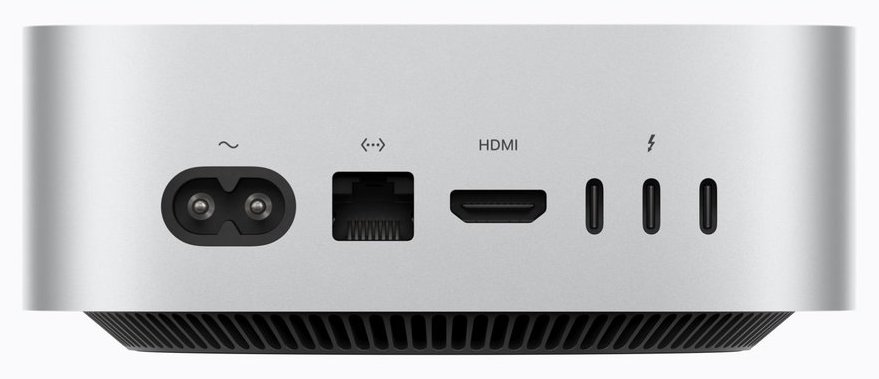
Before you buy: the $1,699 model’s Thunderbolt 5 ports move data up to three times faster than the Thunderbolt 4 ports on the $899 model. If you edit video off external SSDs, that is the one gap the cheaper mini can never close later.
So which chip wins for AI, the thing Apple spent the whole announcement on? Apple’s own claims make it murky. The M6 is quoted at 4.8x the M4 in LM Studio, while the M5 Pro is quoted at 4x the M4 Pro. Different baselines, no head-to-head. Until independent benchmarks land in late September, nobody outside Apple knows whether $1,699 buys faster AI than $899 does. That alone is a reason for heavy-workload buyers to wait three weeks.
Who Should Pre-Order the Mac Mini M6 Today
This post contains affiliate links, and TechDaily may earn a commission on purchases made through them.
Pre-ordering on day one makes sense for exactly three groups. If you see yourself below, the order page is open now, and stock for the new Mac mini on Amazon will follow the September 22 release.
You Are Buying Your First Desktop Mac
This is the best answer to “should I buy a Mac mini” that Apple has ever shipped. For $899 you get current-generation silicon, 16GB of memory, Wi-Fi 7, and a box that disappears behind a monitor. Desktops also hold value differently than laptops — no battery to wear out, no hinge to break. We ran the long-term math on Mac ownership in our piece on whether a Mac is worth it over five years. A mini at this price is the strongest version of that argument.
You Are Still on an M1, M2, or Intel Mac
The M1 mini is turning six. Apple’s numbers here are the most dramatic in the announcement: local AI models up to 13.5x faster than M1, and even Excel up to 2.3x faster. Those are Apple’s figures, not independent ones. But the direction is not in doubt. Five chip generations is a real leap, and your trade-in value only falls from here.
You Want to Run AI Models on Your Desk
The dual Neural Engine is aimed straight at you. A machine that runs a capable local chatbot for $899 undercuts every “AI PC” pitch of the last two years. One honest caveat: the M6 caps at 32GB of memory, and bigger local models are hungry for exactly that. If your ambitions run past mid-size models, read the next section before ordering.
Who Should Wait and Who Should Skip It
Everyone else falls into one of three camps, and two of them should not spend a dollar today.
You Bought the M4 Mac Mini
Skip this one, comfortably. Your machine is not yet two years old, and the case design is unchanged. The headline 40 percent CPU gain? It was measured on work your M4 already does without breaking a sweat. The M6’s real advances — the dual Neural Engine, faster storage — matter most to people who do not already own a fast small desktop. You do. The upgrade treadmill only works if you step on it. Sit this one out and let the M7 or M8 earn your $899.
You Need More Than 32GB of Memory
The base model’s ceiling is 32GB, full stop. Your choices are the $1,699 M5 Pro model with up to 64GB, or waiting to see whether a mini with a Pro-class M6 appears next year. The M5 Pro is already a generation behind on architecture. That makes spending $1,699 today the weakest position on this page. Wait for the September benchmarks before committing that kind of money.
You Are Hunting a Deal on the Outgoing Model
Every Apple launch quietly creates a bargain: the model it replaces. As M6 stock arrives, the M4 Mac mini will slide toward clearance pricing. For email, browsing, documents, and light photo work, it is still an excellent little computer. If none of the AI talk applies to your life, the smart money may be the old model at a falling price — not the new one at $899.
Worth knowing: Apple’s education store lists the M6 model at $799 and the M5 Pro model at $1,599 — a flat $100 off both. If anyone in your household is a student or teacher, that discount applies from day one, before any retailer runs a sale.
Frequently Asked Questions
When does the Mac mini M6 actually ship?
Pre-orders opened August 25, 2026, and Apple lists availability starting September 22, 2026. Order early if you want a day-one unit. Launch-window Apple stock has a habit of slipping into October for late orders.
Is the M6 chip really built on a 2nm process?
Apple has not said so, and it never discusses manufacturing processes in its announcements. Supply-chain reports have long pointed to this generation as TSMC’s first 2nm Apple chip, and that is probably accurate. But it remains a reported detail, not a confirmed one.
Should I buy a Mac mini now or wait for the reviews?
Upgrading from an M1, M2, or Intel Mac, or buying your first desktop? Pre-ordering now is safe. The worst case is a machine that is merely very good. If you are weighing the $1,699 M5 Pro model or need heavy AI performance, wait for independent benchmarks in late September. Apple’s cross-generation comparisons leave real questions open.
Is the Mac mini M6 worth it over the M5 Pro model?
For most people, yes. The M6 model is $800 cheaper, carries the newer chip generation, and its dual Neural Engine is Apple’s latest AI hardware. The M5 Pro model wins only if you need more than 32GB of memory, more CPU and GPU cores, or Thunderbolt 5 for fast external drives.
How much memory does the base Mac mini M6 come with?
Every M6 model starts at 16GB of unified memory and can be configured up to 32GB, with 170GB/s of bandwidth. There is no 8GB model, and that matters. 16GB is a comfortable floor for macOS, so the classic trap of underbuying the base config is gone.
Can the Mac mini M6 handle local AI models?
That is its headline trick. The M6 carries two 16-core Neural Engines, and Apple claims LM Studio models run up to 4.8x faster than on the M4. Independent tests are still pending, but the hardware direction is clear: small and mid-size local models are exactly what this box was built for. The 32GB memory ceiling is the practical limit for very large models.
The Bottom Line on the 2026 Mac Mini
The Mac mini 2026 refresh does something Apple has never done. It hands the newest chip in the company to the cheapest Mac on the shelf, and leaves the expensive model running last year’s architecture. That makes the $899 machine the honest star of the lineup — the right first Mac, the right M1-era upgrade, and the cheapest serious local-AI box anyone sells. It also makes the $1,699 model the config to second-guess, at least until benchmarks arrive in late September. And if you own an M4 mini, enjoy the best kind of Apple event: the kind where you get to keep your money.