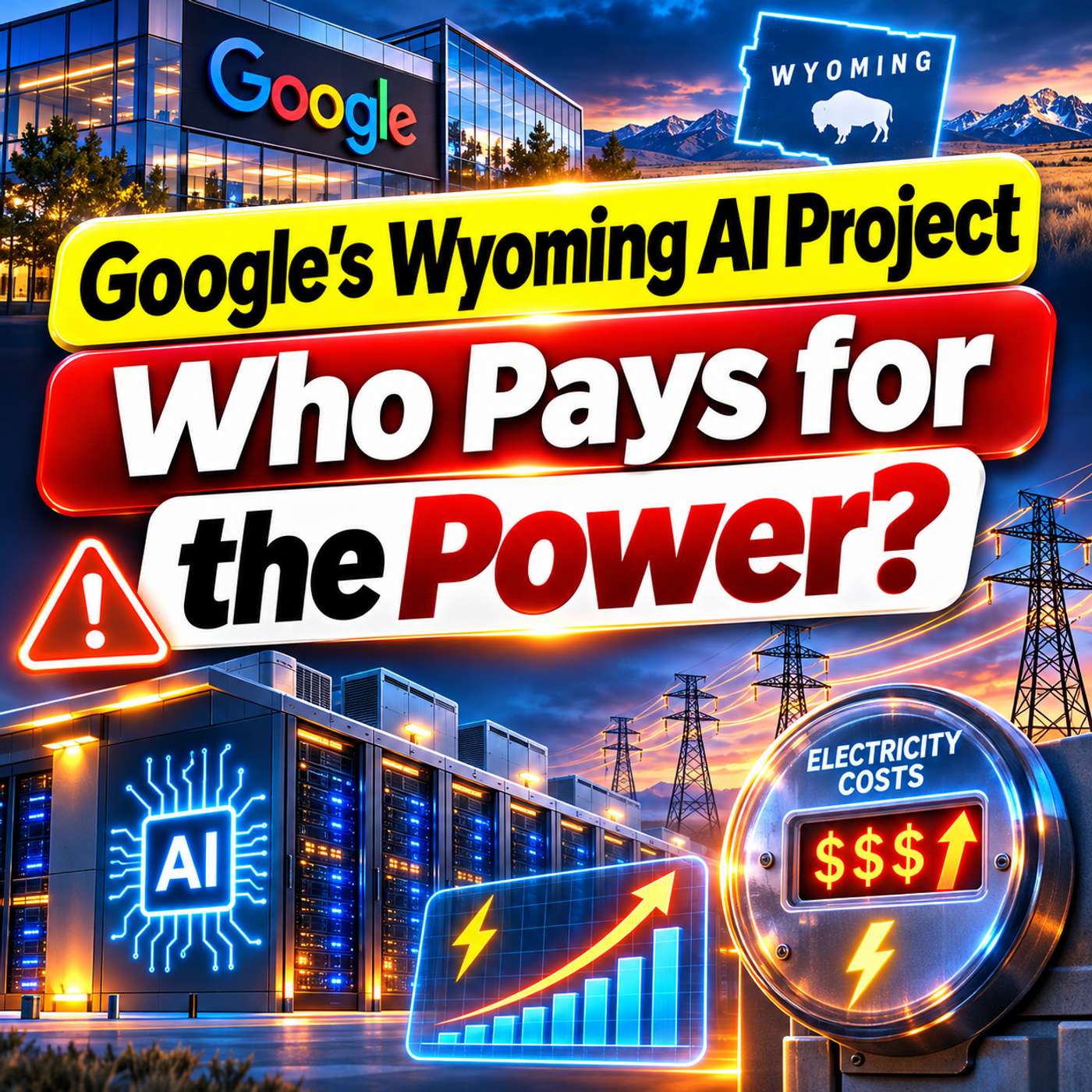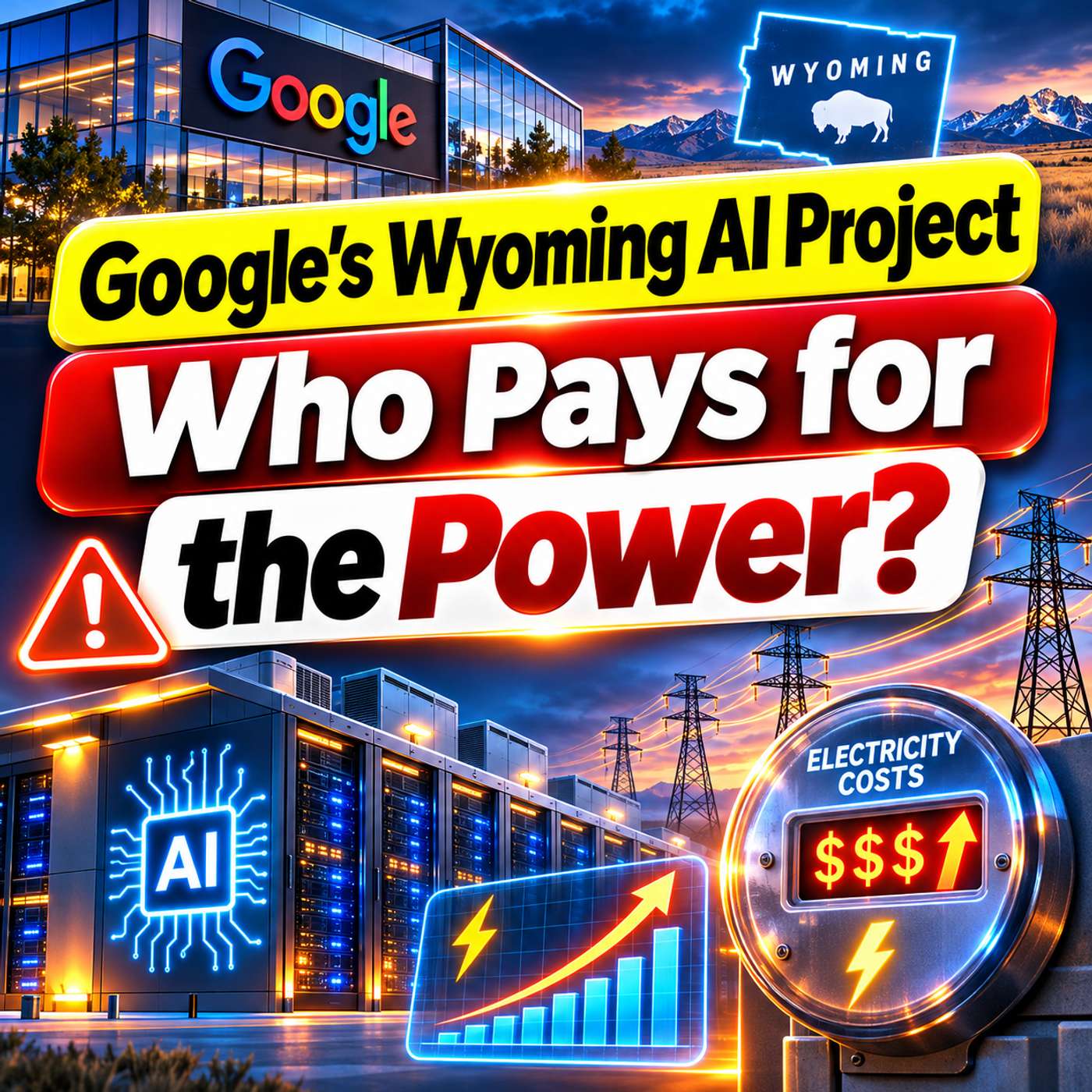


Google’s parent company, Alphabet, is planning a staggering $17 billion AI data center campus near Cheyenne, Wyoming, even as Wall Street grows increasingly nervous about the cost of artificial intelligence infrastructure. Why are tech giants committing billions to long-term power projects while investors demand faster returns?
In this episode of TechDaily.ai, host David and guest expert Sophia explore Google’s massive Wyoming data center investment, the energy infrastructure required to power next-generation AI, and the financial and environmental risks surrounding this ambitious project.
At the center of the development is a proposed 702-megawatt fuel cell installation involving Bloom Energy and American Electric Power, supported by a 20-year power agreement. But generating that much electricity creates new questions about natural gas consumption, carbon capture technology, grid reliability, and the long-term cost of AI computing.
The conversation also examines Black Hills Energy’s planned $1.8 billion investment in additional natural gas generation, Google’s proposed private microgrid, and contractual protections intended to prevent local Wyoming residents from subsidizing the development.
In this episode, you’ll discover:
- Why Alphabet is investing $17 billion in AI infrastructure despite growing investor anxiety.
- How Bloom Energy’s solid oxide fuel cells could supply 702 megawatts of electricity without traditional combustion.
- Why carbon capture and storage remains a major challenge for natural gas-powered AI data centers.
- How Google’s air-cooling strategy could reduce local water consumption while increasing electricity demand.
- What Black Hills Energy’s $1.8 billion generation investment means for Cheyenne’s power infrastructure.
- How a 2.1-gigawatt private microgrid could help isolate data center operations from the public grid.
- Why Google’s $399 million utility advance and long-term contracts matter for local electricity customers.
- Whether private AI power infrastructure could create a growing divide between corporate and public electricity systems.
Beyond the multibillion-dollar investment, this project signals a fundamental shift in the technology industry. Building advanced AI systems increasingly requires more than processors, software, and cloud infrastructure. It demands utility-scale electricity generation, long-term energy agreements, carbon management systems, and extensive physical infrastructure.
And that raises a provocative question: Could the race to power artificial intelligence eventually create two separate electrical realities—one highly resilient grid for technology companies and another for everyday consumers?
Tune in to TechDaily.ai as David and Sophia examine the economics, engineering, and environmental consequences of Google’s Wyoming AI data center project.
Subscribe to TechDaily.ai for more conversations about artificial intelligence, cloud computing, emerging technologies, and the infrastructure shaping the future of AI.