The best record player for most people is the Audio-Technica AT-LP70XBT. It plays records on its own, it has the extra amp it needs built in, and it can stream to a Bluetooth speaker. If money is tight, its little brother, the AT-LP60X, is the safe cheap pick. If you want the best sound and already own a stereo, get the Fluance RT82.
Here’s the part most gift guides skip. The speakers don’t decide whether a record player is good. The arm and the needle do. A bad arm presses too hard on the groove, and every play scrapes a little music off the record for good. That’s why the cheapest player can turn out to be the most expensive one you ever buy. You pay once for the player, then again for every record it wears down.
Two quick notes before we start. TechDaily didn’t lab-test these players. Every spec below comes from the maker’s own product page, and we link to those pages. Some links on this page are affiliate links, so we may earn a small commission if you buy. That never changes a pick, and it costs you nothing extra.
- The arm and needle protect your records. The speakers only decide how loud they play.
- For most people, the Audio-Technica AT-LP70XBT is the one to buy. It’s automatic, wireless, and its needle can be upgraded later.
- On a tight budget, the AT-LP60X does the basics right for roughly $150 to $200.
- Want speakers in the box? The AT-LP60XSPBT bundle pairs a real turntable with a wireless speaker.
- For the best sound, the Fluance RT82 has a fully adjustable arm. Just know it needs a separate preamp, a small box that boosts the record’s signal.
- Skip suitcase players with a heavy arm you can’t adjust. They look like a bargain and cost you in worn-out vinyl.
What matters most to you?
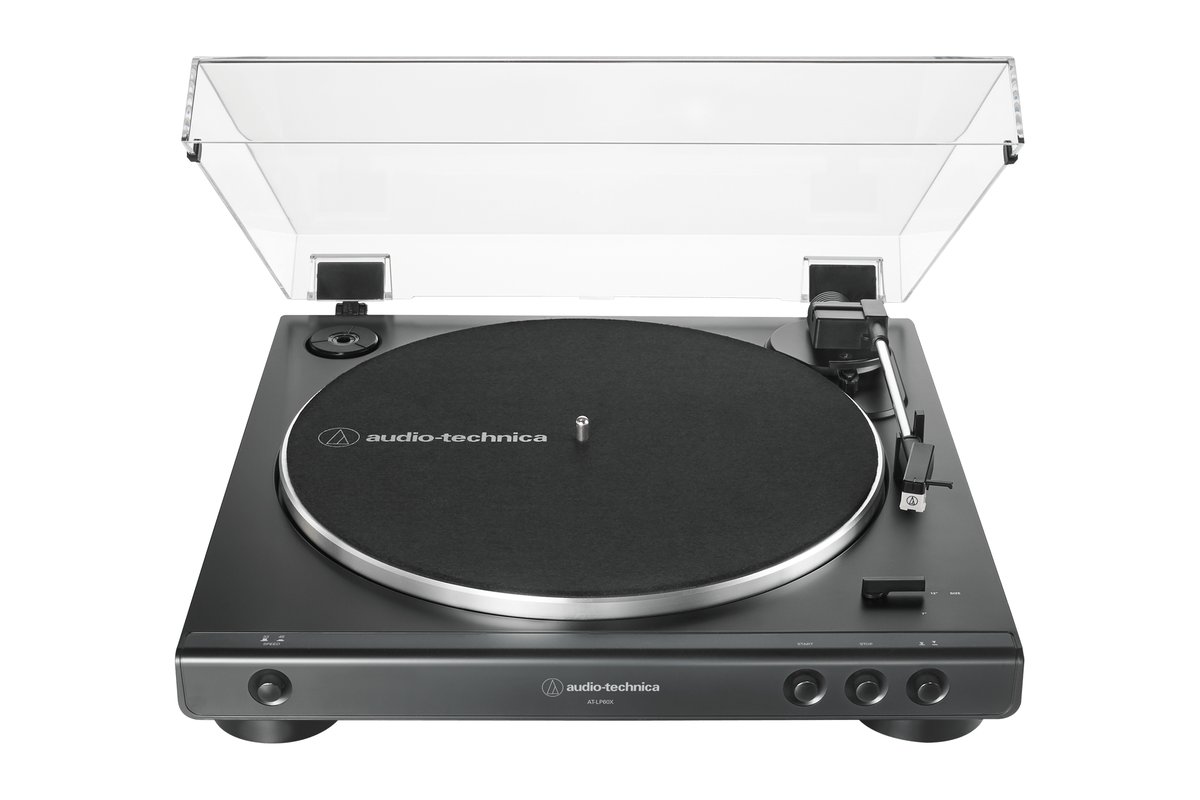
★ Your pick: Audio-Technica AT-LP60X
A real turntable with a built-in preamp and a safe factory-set arm, for not much more than a suitcase player.
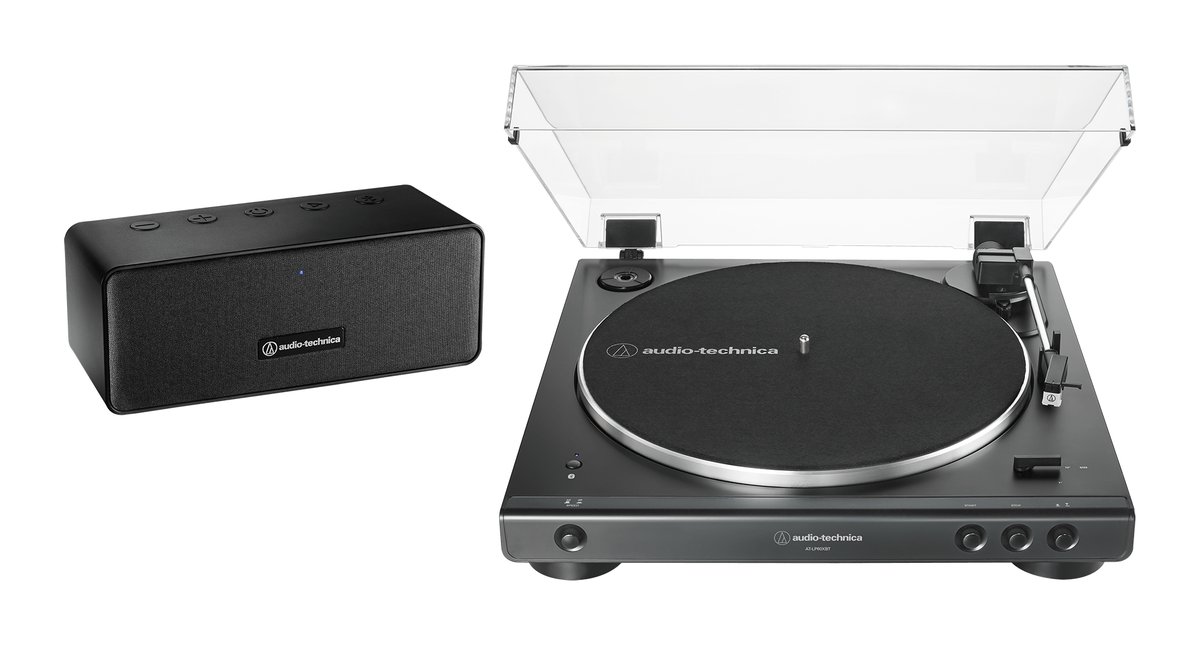
★ Your pick: Audio-Technica AT-LP60XSPBT
A turntable and a wireless speaker in one box. Unpack it, pair it, play a record.
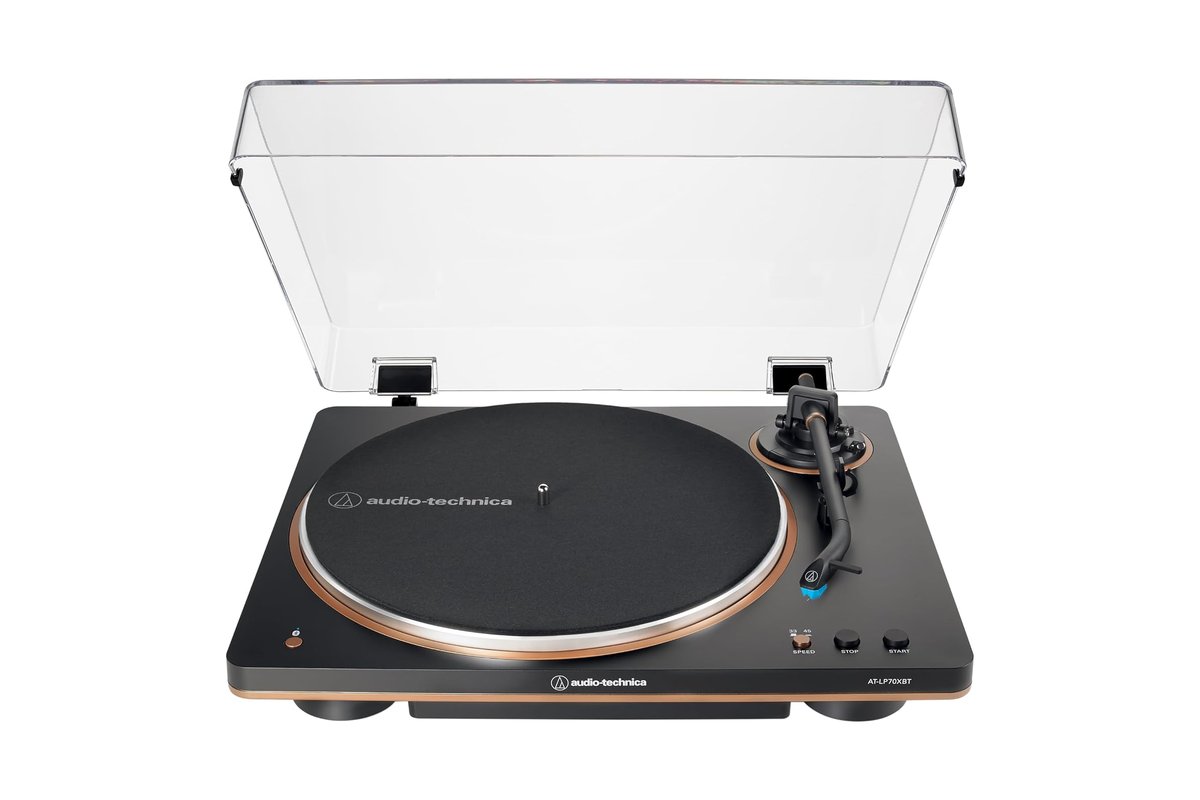
★ Your pick: Audio-Technica AT-LP70XBT
Better Bluetooth, a sturdier body and a needle you can swap for a nicer one later.
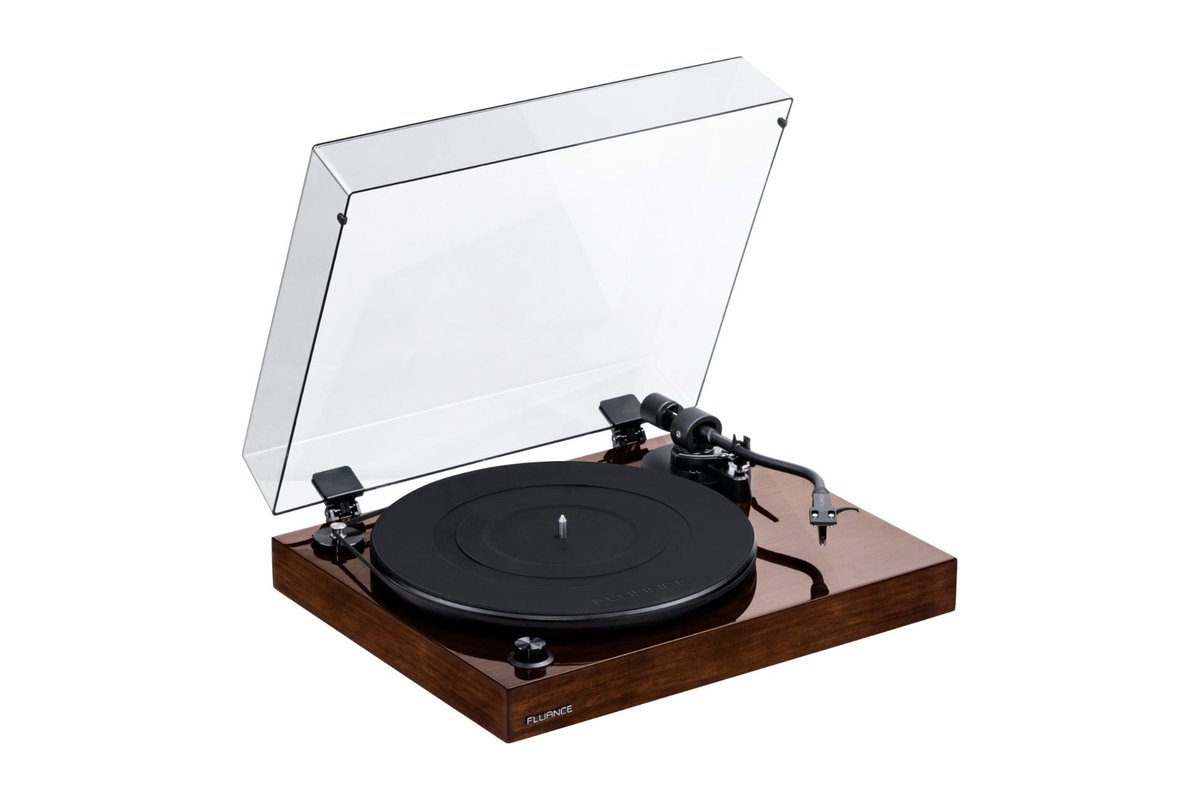
★ Your pick: Fluance RT82
A heavy wood base, an adjustable arm and a quality cartridge. Pair it with a preamp and good speakers.
👑 Our Top Pick — Best Overall Value
Audio-Technica AT-LP70XBT
The easy pick for most homes. It plays on its own, plugs into almost anything, streams over Bluetooth, and lets you upgrade the needle later.
Opens on our Top Pick. Tap an option to see the best match for you.
Why the Arm and Needle Matter More Than the Speakers
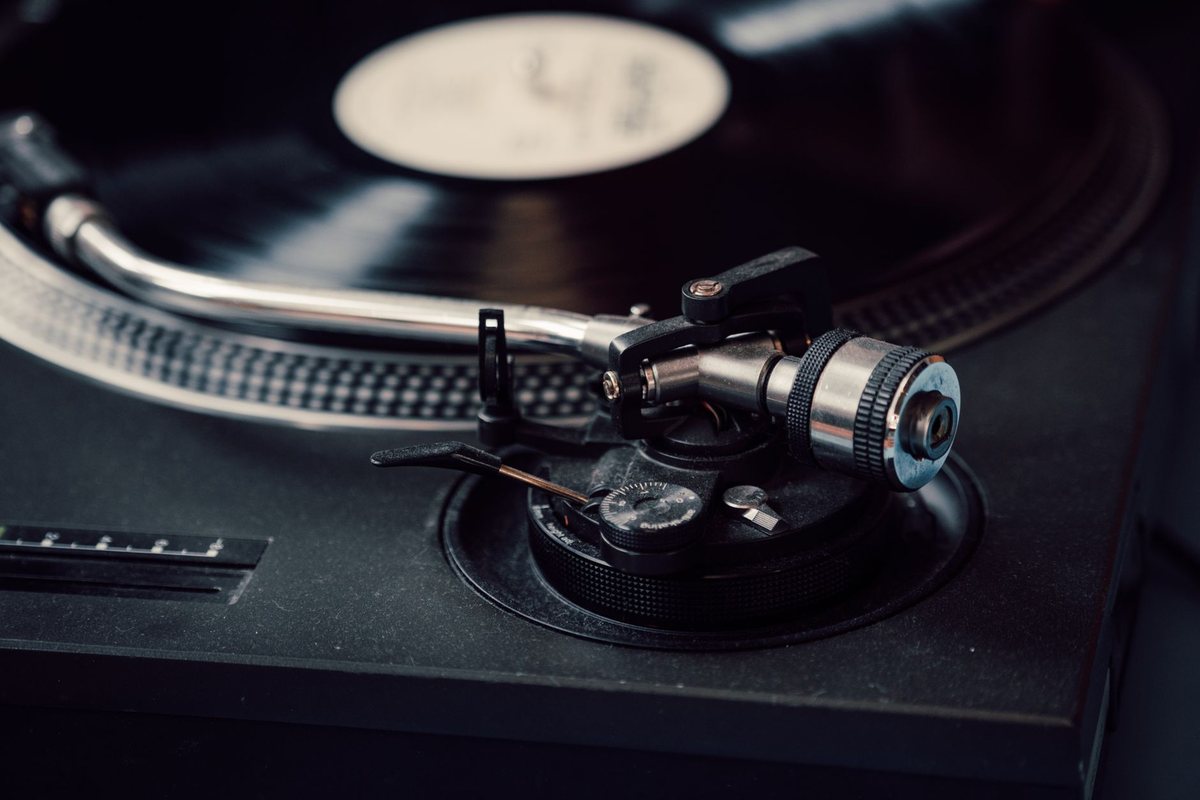
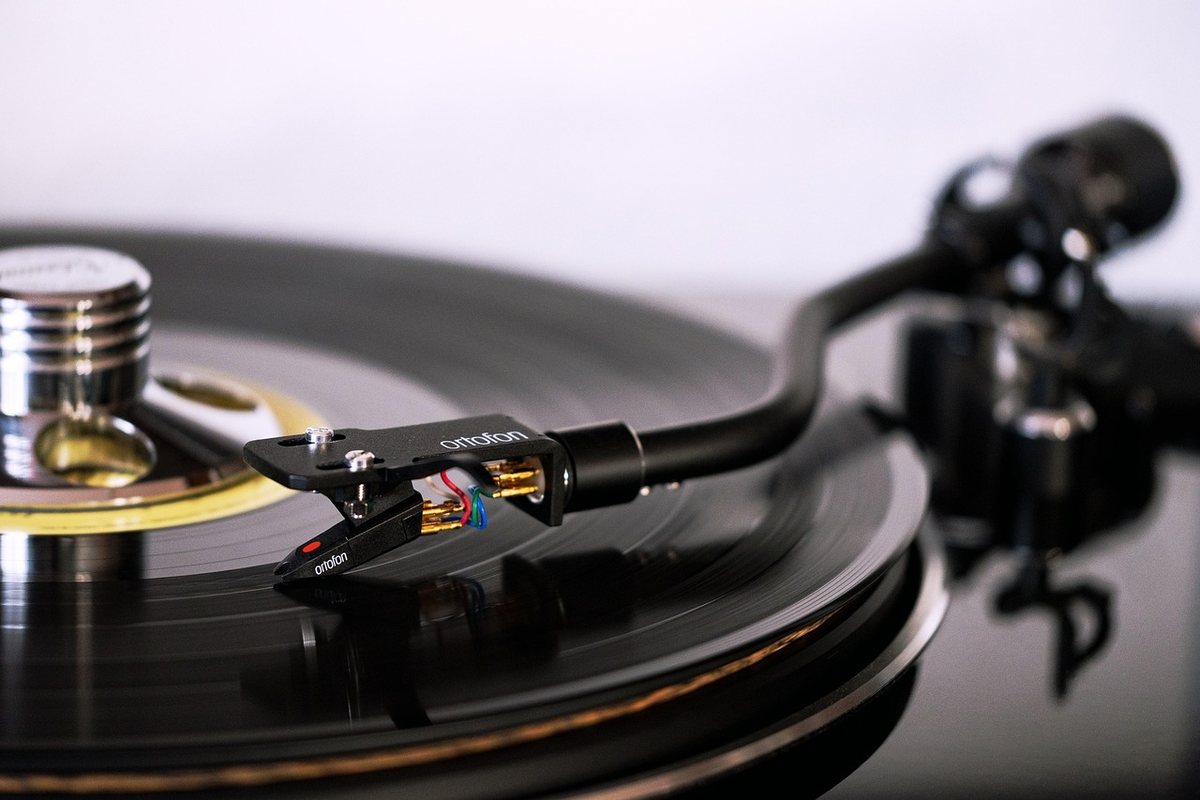
A record is a long spiral groove with tiny wiggles cut into its walls. The needle, also called the stylus, rides in that groove and traces the wiggles. The cartridge at the end of the arm turns those wiggles into an electrical signal. Everything you hear starts right there.
Now picture that needle as a tiny tip pressing on soft vinyl. The force it presses with is called tracking force. Too light and the needle skips. Too heavy and it grinds the groove walls a little on every play. Grinding is quiet at first. Over months, you start to hear hiss, crackle and fuzzy high notes that were never on the record when it was new.
A good arm lets the maker, or you, set that force exactly. On a manual turntable you do it with a counterweight, the round weight on the back of the arm. You twist it until the arm balances, then dial in the right number. Fluance says the cartridge on its RT82 needs only 1.5 grams. Pro-Ject ships its T1 EVO Phono pre-set to 17.5 millinewtons, which works out to about 1.8 grams. Those are the kinds of numbers a well-built arm runs at.
Good arms also have anti-skate. As the record spins, the arm gets pulled toward the center. Anti-skate pushes back gently so the needle sits evenly in the groove and wears both walls the same.
Then there’s the cartridge type. Real turntables use a magnetic cartridge, often called moving magnet. Many cheap suitcase players use a ceramic cartridge instead. Those are built to work with a heavier, fixed arm, and that’s the combination you want to stay away from.
Worth knowing: an automatic turntable has no counterweight for you to touch, and that’s fine. Audio-Technica sets the force at the factory on the AT-LP60X and AT-LP70XBT. “Fixed” is only a problem when the arm is heavy and the cartridge is cheap. A light arm with a magnetic cartridge, set right at the factory, is safe for your records.
What to Avoid When Buying a Record Player
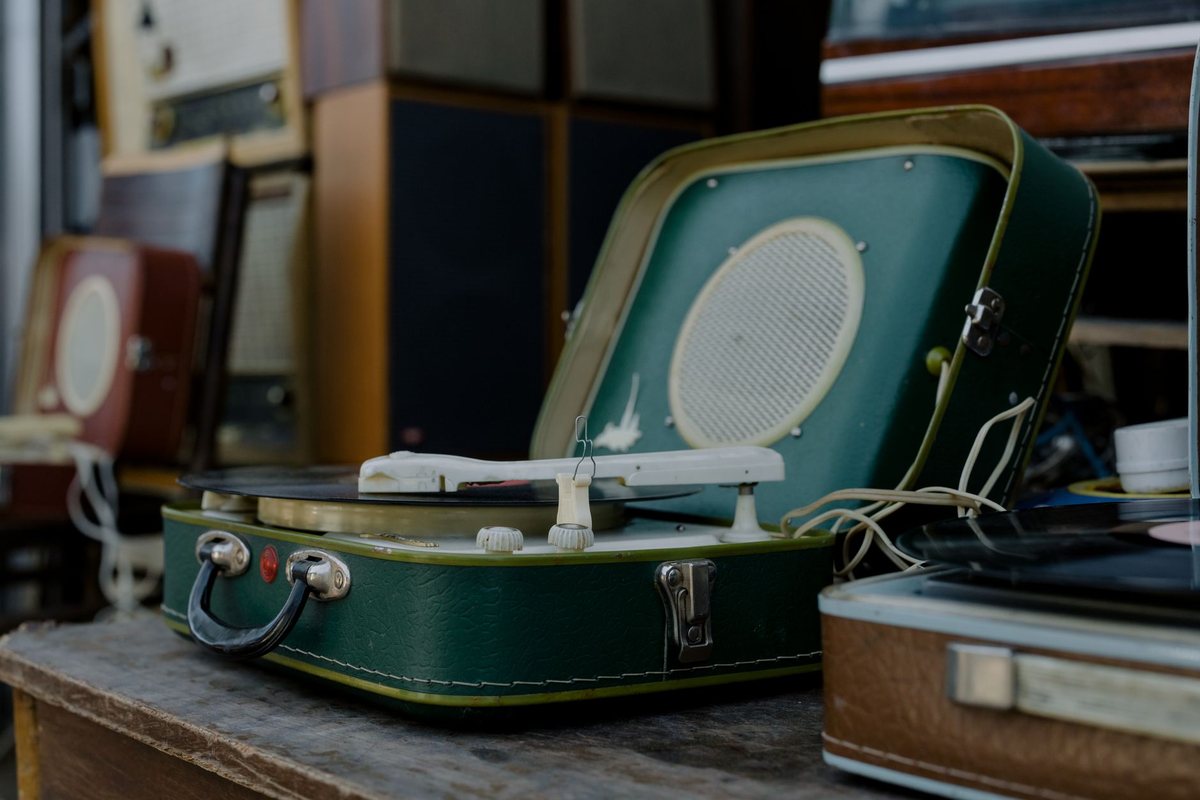
These are the traps that cost new vinyl buyers the most money. None of them are about how the player looks.
A Suitcase Player With a Heavy Arm You Can’t Adjust
This is the big one. Suitcase players are cute, cheap and everywhere in gift season. The problem is the arm. When What Hi-Fi tested a Crosley Cruiser, it measured the needle pressing down at just over 7 grams, against about 2.5 grams on most turntables, and the arm had no adjustment at all. If it has no counterweight and the box never tells you the tracking force or cartridge type, you have no idea how hard that needle presses. You also can’t fix it. Every record you own pays the price, play after play.
A Needle You Can’t Replace
Every stylus wears out in time. On a good player, you pull the old one off and push a new one on in seconds. Audio-Technica names the exact replacement for each model, such as the ATN3600LC for the AT-LP60X. If a player has no named replacement stylus, a worn needle means a new player, or worse, a worn needle you keep using without knowing it.
Speakers Built Into the Same Box as the Record
When the speakers sit in the same box as the record, the sound shakes the box. That shake travels back to the needle, which picks it up as a dull hum or a howl at high volume. Separate speakers, even small ones a few feet away, solve this for free.
Before you buy: check the product page for three things: the cartridge type, a named replacement stylus, and the words “built-in preamp” or “phono preamp required.” If a cheap player won’t tell you the first two, walk away.
The Four Best Record Players Worth Buying in 2026
Each pick below does the arm and needle right. They differ in how much setup you want, whether you need speakers, and how much sound quality you’re chasing.
1. Audio-Technica AT-LP70XBT — Best Record Player for Most People
$280–$340 rangeFully automaticBluetooth aptX AdaptiveBuilt-in preampUpgradable stylus
This is the one we’d hand to almost anyone. It’s a step up from the cheaper AT-LP60X in every way that matters over the years, and it still asks nothing of you. Press start, and the arm lifts, moves over and drops onto the record by itself. When the side ends, it goes back home on its own. That alone saves a lot of records from clumsy first-week drops.
The big win is the needle. The AT-LP70XBT uses the AT-VM95C cartridge, and Audio-Technica says it takes any stylus in its VM95 range. In plain words, you start with the basic tip, and later you can click in a nicer one for better detail. You don’t need to buy a new turntable to get better sound. The cheaper AT-LP60X has only a couple of stylus choices, so it has far less room to grow.
It also connects to almost anything. There’s a built-in preamp you can switch on or off, so it plugs into powered speakers or an old stereo. Bluetooth 5.2 with aptX Adaptive sends the music to a wireless speaker or headphones. Audio-Technica lists a three-part body built to cut shake, plus a tonearm lock that keeps the needle safe when you move it.
So who should skip it? If you want to tweak the arm yourself, this isn’t your deck. The tracking force is set at the factory, and you can’t change it. Audiophiles who own a good amp will get more from the Fluance RT82. But for a bedroom, a living room or a first-time gift, this is the best balance of safe, simple and future-proof on the list.
Pros
- Plays and returns the arm by itself, so fewer slips onto your records.
- Stylus can be upgraded to any VM95 model later.
- Bluetooth 5.2 with aptX Adaptive for wireless speakers and headphones.
- Built-in switchable preamp works with powered speakers or a stereo.
- Tonearm lock protects the needle when you move it.
Cons
- Tracking force is fixed, so there’s nothing to fine-tune.
- Costs noticeably more than the AT-LP60X.
- Bluetooth still squeezes the sound a little compared with a cable.
- No speakers in the box.
2. Audio-Technica AT-LP60X — Best Cheap Record Player for Beginners
$150–$200 rangeFully automaticBuilt-in preampReplaceable stylus
If you want to spend the least and still treat your records right, start here. The AT-LP60X has been the go-to first turntable for years, and for good reason. It costs only a little more than a suitcase player, but it’s built like a real turntable.
Here’s what you get. It’s fully automatic and belt-driven, with two speeds, 33 and 45, which covers almost every record you’ll buy. Audio-Technica uses a magnetic cartridge with a replaceable diamond needle, the ATN3600LC. The arm’s force is set at the factory, so a beginner can’t get it wrong. There’s a built-in preamp with a switch, so it plugs into powered speakers or a stereo. The platter is die-cast aluminum, and the whole deck weighs about 2.6 kg.
Compared with the AT-LP70XBT, you give up three things. There’s no Bluetooth on this model. The stylus has only a couple of options, not a whole upgrade range. And the body is lighter and simpler, about 2.6 kg against the AT-LP70XBT’s 2.9 kg. Compared with any suitcase player, though, it wins where it counts. Your records get a light, factory-set arm and a needle you can swap when it wears.
Buy it if you’re new to vinyl, buying a gift on a budget, or already own powered speakers. Skip it if you want wireless or think you’ll want better sound within a year. In that case, the AT-LP70XBT saves you from buying twice.
Pros
- Low cost for a real magnetic cartridge and a safe arm.
- Fully automatic, so it’s very hard to drop the needle by mistake.
- Built-in switchable preamp plugs into powered speakers.
- Replacement stylus is easy to fit, and Audio-Technica names the exact part.
Cons
- No Bluetooth on this version.
- Only a couple of stylus options, not a full upgrade range.
- Lighter, simpler body than the AT-LP70XBT.
- No speakers included.
3. Audio-Technica AT-LP60XSPBT — Best Record Player With Speakers Included
$300–$370 rangeTurntable plus wireless speakerBluetooth aptX12-hour speaker battery
This is the answer if you want a record player with speakers and no shopping list. It’s a bundle of two things in one box: the AT-LP60XBT turntable, which is the Bluetooth version of our cheap pick, and a matching wireless speaker. You set up the turntable, pair the speaker, and play.
The turntable part is the same safe design as the AT-LP60X. It’s fully automatic, it has a magnetic cartridge with a replaceable needle, the ATN3600LC, and it has a switchable built-in preamp. It adds Bluetooth 5.0 with aptX. The speaker uses two 3-inch drivers plus a passive radiator, a part that adds bass without needing more power. Audio-Technica rates its battery at 12 hours, and it works up to about 30 feet away.
Here’s why this beats a suitcase player with built-in speakers. The speaker sits away from the turntable, so its sound doesn’t shake the needle. You get the all-in-one ease without the hum. And when you outgrow the speaker, the turntable still works with any other speaker or stereo you buy.
The trade-off is sound size. One small speaker fills a bedroom or dorm, not a big living room. It’s also a single box, so you don’t get real left and right stereo the way you would with two speakers. If you already own a good speaker, buy the AT-LP70XBT instead and spend the difference on the deck.
Pros
- Everything you need in one box, with no extra purchases.
- Speaker sits apart from the deck, so no hum from vibration.
- Portable speaker battery rated at 12 hours.
- Turntable also works wired with a stereo later.
Cons
- One small speaker, so not true left-right stereo.
- Fills a small room better than a large one.
- Fewer stylus choices than the AT-LP70XBT.
- Bluetooth link adds a little compression.
4. Fluance RT82 — Best Record Player for Sound Quality
$320–$380 rangeManual with auto-stopOrtofon OM 10 cartridgeAdjustable counterweightPreamp required
The RT82 is the pick for people who care most about sound and want full control. It’s a manual turntable. You lift the arm with a cue lever and lower it yourself. It has an auto-stop you can turn off, which stops the platter at the end of a side so the needle isn’t left grinding in the run-out groove.
This deck shows off everything we said earlier about good arms. Fluance gives it an S-shaped arm with an adjustable counterweight and an anti-skating adjustment. The cartridge is an Ortofon OM 10 with an elliptical diamond tip, and Fluance says it tracks at just 1.5 grams. The motor is decoupled from the base and checked by a speed sensor, and Fluance lists wow and flutter, the tiny wobble in speed you hear as warbling, at 0.07%. The real wood MDF base is heavy too, about 6.8 kg, which helps soak up shake.
Now the catch. There’s no built-in preamp and no Bluetooth. Fluance says plainly that you need a separate phono preamp unless your amplifier or receiver already has a phono input. So the real cost is the turntable plus a preamp, plus speakers if you don’t have them. Setup also takes a few minutes of balancing the arm. That’s easy with the manual, but it’s a step the automatic picks skip.
Choose the RT82 if you already own a stereo, or plan to build one, and want your records to sound their best for years. The cartridge can also be upgraded down the road. Skip it if you want press-and-play or wireless. Any of the Audio-Technica picks will make you happier.
Pros
- Fully adjustable arm with counterweight and anti-skate.
- Ortofon OM 10 cartridge tracks at a light 1.5 grams.
- Speed sensor and isolated motor keep pitch steady.
- Heavy wood base cuts vibration.
- Auto-stop protects the needle at the end of a side.
Cons
- Needs a separate phono preamp in most setups.
- No Bluetooth.
- Manual play takes a little practice.
- Arm setup takes a few minutes out of the box.
How the Four Record Players Compare Side by Side
This table puts the deciding features in one place. The specs come from each maker’s page: AT-LP70XBT, AT-LP60X, AT-LP60XBT, the turntable in the AT-LP60XSPBT and Fluance RT82.
| Feature | AT-LP70XBT | AT-LP60X | AT-LP60XSPBT | Fluance RT82 |
|---|---|---|---|---|
| Built-in preamp | Yes, switchable | Yes, switchable | Yes, switchable | No |
| Bluetooth | Yes (aptX Adaptive) | No | Yes (aptX) | No |
| Arm force | Set at factory | Set at factory | Set at factory | Adjustable counterweight |
| Play style | Fully automatic | Fully automatic | Fully automatic | Manual, auto-stop |
| Speakers included | No | No | Yes, one wireless | No |
| Stylus | Upgradable (VM95 range) | Replaceable | Replaceable | Upgradable cartridge |
| Rough price | $280–$340 | $150–$200 | $300–$370 | $320–$380 plus preamp |
Real talk: the RT82’s price range sits close to the AT-LP70XBT’s, but the full setup doesn’t. Fluance’s own matching preamp, the PA10, adds around a hundred dollars, so a working RT82 setup lands nearer $420–$480 before speakers. That extra money buys better sound, not more convenience.
Do You Need a Preamp, Speakers or Bluetooth?
These three questions decide which pick fits your home. Answer them before you look at price.
The Preamp Question Comes First
If the turntable has a built-in preamp, you can plug it into powered speakers, a soundbar input or a stereo. All three Audio-Technica picks have one, with a switch to turn it off if your stereo already has a phono input. The Fluance RT82 has none, so it needs either a receiver with a “phono” jack or a small external preamp box. Check this before you buy, not after. Plug a no-preamp deck straight into powered speakers and you’ll hear almost nothing. It isn’t broken; it just needs that small box in between.
Powered Speakers Usually Beat an All-in-One
Powered speakers have their own amp inside, so they plug straight into a turntable with a preamp. A pair of them a few feet from the deck gives you real stereo and no hum. If you’re weighing speakers against a soundbar for the same room, our soundbar vs speakers guide walks through which one suits your space.
When Bluetooth Is Good Enough
Bluetooth turns the record’s sound into a digital stream and squeezes it to fit through the air. A cable to good speakers will always carry a little more detail. For casual listening through a decent speaker or headphones, most people won’t notice. Pick Bluetooth for ease, and keep the cable option for when you upgrade.
Watch out: don’t put a turntable on the same shelf as a big speaker or subwoofer. The bass shakes the shelf, the needle picks it up, and you get a low howl at higher volume. Even a separate stand a foot away fixes it.
Best Record Player Brands Worth Trusting
Three brands come up again and again for good reason. Each one is known for a different strength.
Audio-Technica Makes the Easiest Safe Choice
Audio-Technica started out in Tokyo in 1962 making phono cartridges, and that’s still its strength. Its automatic turntables are hard to misuse, easy to find, and every model lists its exact replacement stylus. For beginners and gift buyers, it’s the brand to start with.
Fluance Gives You Hi-Fi Parts for the Money
Fluance puts real hi-fi parts, like Ortofon cartridges, heavy wood bases and adjustable arms, into turntables at sane prices. It’s the brand for people who want to set up their own arm and build a proper stereo around it.
Pro-Ject Is the Step Up When You’re Ready
Pro-Ject is known for simple, well-made manual turntables. When you’re ready to spend more, the Pro-Ject T1 EVO Phono is a good next step, usually in the $550–$650 range. Per Pro-Ject’s own page, it has a glass platter, a pre-set Ortofon OM 10, electronic speed change and a built-in preamp you can switch off.
Frequently Asked Questions
What is the best record player for beginners?
The Audio-Technica AT-LP60X is the best place to start if budget matters. It’s fully automatic, has a built-in preamp and uses a factory-set arm, so there’s nothing to set wrong. If you can stretch a bit, the AT-LP70XBT adds Bluetooth and a needle you can upgrade later.
Are suitcase record players bad for your records?
Many are risky. The worry is a heavy arm you can’t adjust paired with a cheap ceramic cartridge, which can grind the groove a little on every play. If a player has no counterweight and won’t tell you its tracking force, cartridge type or replacement stylus, skip it.
Do I need a preamp for my record player?
You need one somewhere between the turntable and the speakers. Most beginner turntables, like all three Audio-Technica picks here, have one built in. The Fluance RT82 doesn’t, so it needs a stereo with a phono input or a small external preamp.
Is a record player with built-in speakers worth it?
Only if the speakers sit apart from the turntable. Speakers in the same box shake the needle and add hum. A bundle like the AT-LP60XSPBT, where the speaker is a separate wireless unit, gives you the same ease without that problem.
Does Bluetooth make vinyl sound worse?
A little, yes. Bluetooth compresses the sound to send it wirelessly, so a cable to good speakers carries more detail. Through a decent speaker or headphones, most people won’t hear much difference, and the AT-LP70XBT’s aptX Adaptive is one of the better Bluetooth options.
Which record player brands are best?
Audio-Technica is the safest bet for beginners and gifts. Fluance gives you hi-fi parts like Ortofon cartridges and adjustable arms for the money. Pro-Ject is a strong step up once you know you love vinyl.
The Bottom Line on Picking a Record Player
The record player you buy decides how long your records last. That’s the whole game. Speakers can be swapped any time. Worn grooves can’t be fixed.
So buy the arm first. For most people that means the Audio-Technica AT-LP70XBT: safe, simple, wireless and ready to upgrade. If the budget is tight, the AT-LP60X still protects your records. If you need speakers in the box, get the AT-LP60XSPBT. And if sound is the point and you own a stereo, the Fluance RT82 with a preamp is the one that rewards you most.