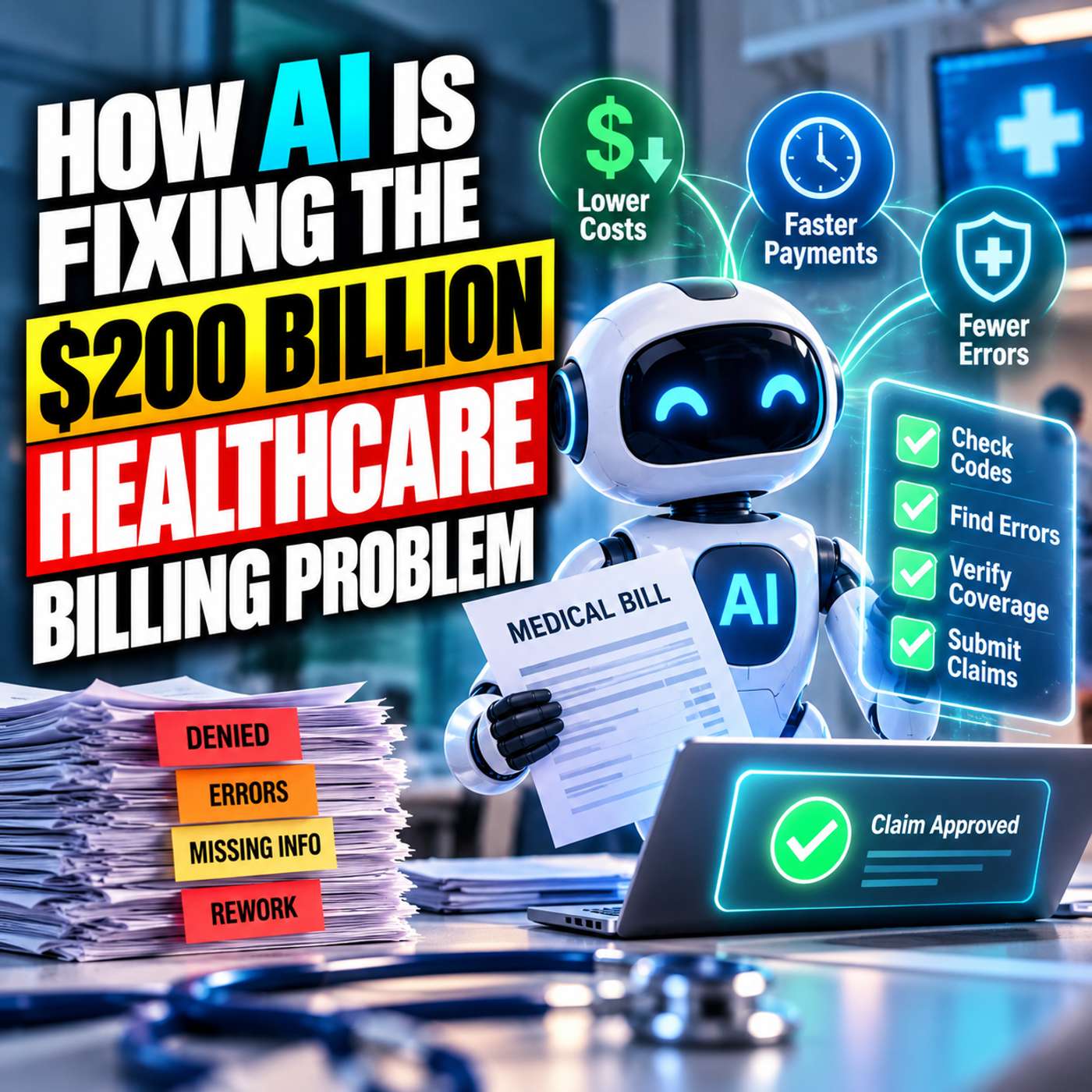


What if artificial intelligence could predict an insurance claim denial before a hospital even submits the bill? With the U.S. healthcare system spending over $200 billion annually navigating administrative complexities, AI could fundamentally change how healthcare providers manage billing, insurance claims, and patient care.
In this episode of techaily.ai, host David and guest Sophia explore the hidden financial costs of healthcare administration and how artificial intelligence is transforming healthcare revenue cycle management (RCM).
Healthcare providers spend an estimated $20 billion annually managing and appealing denied payments, according to figures discussed in the episode. But the real problem goes beyond paperwork and outdated billing systems. Healthcare organizations face fragmented medical records, constantly changing insurance requirements, and unpredictable reimbursement decisions that can delay payments for weeks.
David and Sophia examine why decades of electronic health record adoption haven’t resolved these challenges and how AI-powered predictive analytics, machine learning, and natural language processing are helping providers anticipate problems before they become costly insurance denials.
In this episode, you’ll discover:
- Why healthcare administrative complexity costs the U.S. over $200 billion annually.
- How insurance claim denials create financial pressure for hospitals and uncertainty for patients.
- Why traditional billing software and robotic process automation cannot solve healthcare’s deeper information problems.
- How AI analyzes medical records, historical claims, and insurance payer behavior to predict potential denials.
- What AI observability means for healthcare revenue cycle management and reimbursement accuracy.
- How predictive analytics can shift medical billing from reactive appeals to proactive denial prevention.
- Why insurance companies and healthcare providers may both benefit from reducing administrative friction.
- Whether AI could eventually make traditional insurance claims and lengthy adjudication processes obsolete.
Through practical examples, including a denied MRI claim and changing payer documentation requirements, the conversation reveals how seemingly minor administrative issues can trigger weeks of delays and significant financial stress.
The discussion also examines a provocative question: Will AI create a technological arms race between insurance companies and healthcare providers, or could better access to operational information encourage collaboration and reduce costs for everyone?
The potential benefits extend far beyond hospital finances. More accurate billing predictions could mean fewer unexpected medical bills, faster authorizations, improved cash flow for healthcare organizations, and greater financial clarity for patients.
As healthcare organizations move from reactive claim recovery toward proactive prediction, AI could help transform one of the most complicated administrative systems in modern business.
Could the future of healthcare billing involve insurance claims that are effectively approved before they’re even submitted?
Listen to this episode of techaily.ai as David and Sophia explore how artificial intelligence, predictive analytics, and operational intelligence could reshape healthcare administration.
Subscribe to techaily.ai for more conversations about artificial intelligence, emerging technologies, and their impact on business and everyday life. Share this episode with healthcare professionals, medical billing specialists, and anyone interested in the future of AI-powered healthcare.