Published July 8, 2026 · Last updated August 25, 2026
- Qi2 and MagSafe are not rivals: Qi2 is the open Wireless Power Consortium standard built on MagSafe’s magnetic ring, MagSafe is Apple’s proprietary version, and the two are fully cross-compatible.
- Speed comes in two shared tiers — base Qi2 and older MagSafe top out at 15W, while Qi2.2 and iPhone 16/17 MagSafe reach up to 25W, but only with a 30W+ USB-C PD adapter behind the charger.
- The real buying question is magnets: iPhone 12 and newer and the Pixel 10 have them built in, while Galaxy S25/S26 and OnePlus 13 are “Qi2 Ready” and need a magnetic case to actually snap and align.
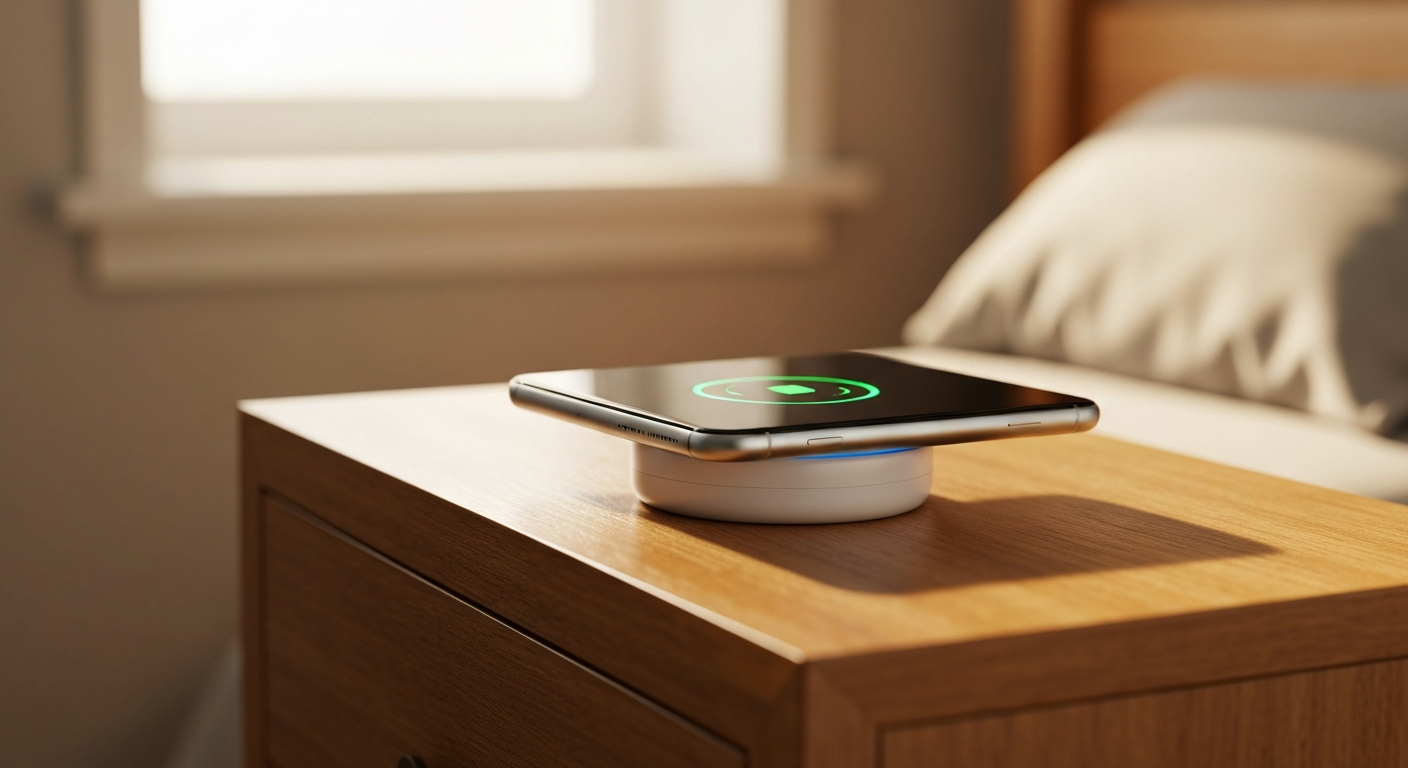
Here is the one-sentence answer almost every other page buries three scrolls down: Qi2 is the open, universal wireless charging standard from the Wireless Power Consortium, and it was built directly on Apple’s MagSafe magnetic ring, while MagSafe is Apple’s proprietary, branded version of the same idea. In other words, they are cousins, not rivals. MagSafe came first in 2020, the industry liked the magnetic snap so much that it standardized it, and the result is Qi2. If you snap a MagSafe iPhone onto a Qi2 charger, it just works.
That settles the headline question. The part that actually trips people up in 2026 is everything underneath it: which phones have magnets baked into the body, which ones secretly need a magnetic case to snap at all, and how fast each setup really charges. The marketing has gotten genuinely confusing, with terms like “Qi2 Ready,” “Qi2.2,” and “Pixelsnap” all flying around. This guide cuts through it with plain answers and a device-by-device table so you can figure out exactly what your phone needs before you spend money on the wrong charger.
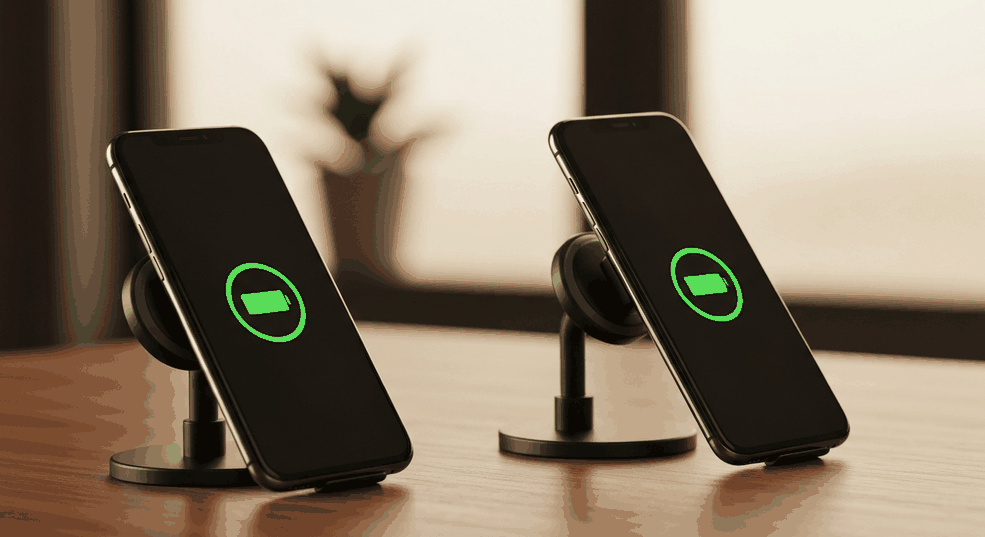
Is MagSafe the Same as Qi2?
The short version is that the technologies are nearly identical at the hardware level, but the branding and ownership are completely different. Understanding that split is the key to everything else.
- MagSafe is Apple’s proprietary, closed system. Apple launched it with the iPhone 12 in 2020, embedding a ring of magnets around the wireless charging coil so accessories would snap into perfect alignment every time. Because Apple controls the certification (the “Made for MagSafe” program), it can guarantee a tight, consistent experience, but third parties pay to play and Android phones were never invited. The practical consequence is a polished but walled garden.
- Qi2 is the open industry answer, governed by the Wireless Power Consortium. The Wireless Power Consortium’s Qi2 standard took the best part of MagSafe — the magnetic alignment ring, formally called the Magnetic Power Profile — and turned it into a free, universal specification any manufacturer can adopt without licensing the Apple brand. The result is that Samsung, Google, and OnePlus can now ship magnetic wireless charging that behaves like MagSafe.
- The Magnetic Power Profile is the shared DNA. This is the engineering core both systems rely on: a defined ring of magnets that locks the phone’s charging coil onto the charger’s coil so almost no energy leaks as heat from misalignment. Loose, coil-hunting wireless charging is what made old Qi pads slow and finicky; the magnetic profile is what fixed it. When people say Qi2 “is basically MagSafe for everyone,” this is what they mean.
- They are cross-compatible by design. Any MagSafe iPhone snaps onto a Qi2 charger and charges normally, and any Qi2 phone snaps onto a MagSafe-branded charger. You are not buying into incompatible camps. Per Apple’s MagSafe support documentation, MagSafe is fundamentally a magnetic wireless charging system, and Qi2 speaks the same magnetic language.
So when someone asks “is MagSafe the same as Qi2,” the honest answer is: same idea, same magnetic ring, same snap, different owner. MagSafe is the Apple-flavored, certified, slightly faster sibling. Qi2 is the open standard the whole industry now shares.
Which Charges Faster, Qi2 or MagSafe?
This is where real money and real frustration live, because “wireless charging speed” depends on three things stacking up: the phone, the charger, and the wall adapter behind it. Get any one wrong and you fall back to a slower tier.
- Base Qi2 tops out at 15W. The original Qi2 spec, which rolled out widely across 2023 to 2025, delivers up to 15 watts to a compatible phone. That matches the original MagSafe ceiling exactly, which is no coincidence — Qi2 was modeled on it. For most phones released before 2025, 15W is the realistic wireless Qi2 charging speed you should expect, and it will get a typical phone from low to roughly half in well under an hour.
- Qi2.2 raises the ceiling to 25W. The newer revision, officially branded “Qi2 25W” and commonly called Qi2.2, lifts the maximum to 25 watts using an upgraded, tighter Magnetic Power Profile. The reason it can push more power safely is that the stronger, more precise magnets hold the coils in near-perfect alignment, so less energy is wasted as heat. Reaching the full 25W requires a Qi2.2-certified charger, a phone that supports the higher tier, and a wall adapter rated at 30W or more.
- MagSafe matches the same two tiers. Apple’s MagSafe delivered up to 15W from 2020 through the iPhone 15 generation, then jumped to up to 25W starting with the iPhone 16. As MacRumors reported when the 25W charger launched, an iPhone 16 only hits 25W when paired with Apple’s newer MagSafe charger and a 30W-or-higher USB-C power adapter — plug an older iPhone into the same charger and it caps at 15W. The hardware is willing, but the phone sets the ceiling.
- The wall adapter is the silent bottleneck. Both Qi2.2 and 25W MagSafe demand a 30W+ USB-C Power Delivery adapter to unlock top speed; a tired old 20W brick will quietly throttle you to 15W or lower no matter how premium the charger is. This is the single most common reason people complain their fast charger “feels slow.” Check the adapter before blaming the puck.
The honest takeaway on Qi2.2 vs Qi2 speed: they are the same standard, one generation apart. Qi2 is 15W, Qi2.2 is 25W, and on the Apple side MagSafe simply tracks those same numbers (15W on iPhone 12–15, 25W on iPhone 16 and 17). Neither MagSafe nor Qi2 is inherently faster than the other at the same tier — what matters is whether your specific phone supports the 25W tier and whether you have the adapter to feed it. And if you are still deciding whether to buy a pad at all, here is why Qi2 finally makes the charging pad worth it.
Built-In Magnets vs. Magnetic Cases
Here is the trap that costs people money. Two phones can both claim “Qi2 support,” yet one snaps onto a magnetic charger naked and the other slides right off because it has no magnets in the body at all. The difference comes down to whether a phone has the magnetic ring built in or expects you to add it with a case.
- Built-in magnets mean the phone snaps on its own. Every iPhone from the iPhone 12 onward has the magnetic ring embedded in the chassis, so it locks onto a MagSafe or Qi2 charger straight out of the box. On the Android side, Google’s Pixel 10 series is the first major lineup to do the same, marketed as “Pixelsnap.” As covered in TechDaily’s look at the Pixel 10 and its custom chip and hardware, Google built the Qi2 magnets directly into the phone, so Pixel 10 owners need no special case to snap onto chargers and accessories.
- “Qi2 Ready” usually means no magnets in the phone. This is the phrase to watch. Samsung’s Galaxy S25 and S26 families support the Qi2 charging electronics but ship without the magnetic ring in the body. Samsung’s stated reasoning is thinness and the fact that most users add a case anyway, so it puts the magnets in official cases instead. The consequence is real: out of the box, a “Qi2 Ready” Galaxy will not snap onto a magnetic charger and may not even hold alignment well on a flat pad.
- A magnetic case is the fix for magnet-less phones. For a Galaxy S25/S26 or a OnePlus 13, the solution is a MagSafe-style case for Android — a case with the magnetic ring built into it. Snap that case on and the phone behaves almost exactly like a built-in-magnet device, locking onto Qi2 and MagSafe accessories alike. OnePlus follows the same playbook with its first-party “Mag” cases, since the OnePlus 13 also lacks magnets in the body and leans on its proprietary AirVOOC charging plus magnetic cases.
- MagSafe-branded cases and Qi2 cases are effectively interchangeable on the magnet front. Because both use the same Magnetic Power Profile ring, a case sold as “MagSafe compatible” will generally align with Qi2 chargers and vice versa. What a case cannot do is add a 25W data tier a phone doesn’t support — it only adds the magnets, not a faster charging profile.
So the question “do I need a MagSafe case for Qi2?” has a clean answer: it depends entirely on your phone. If you own an iPhone 12 or later or a Pixel 10, no — the magnets are already inside. If you own a Galaxy S25/S26, a OnePlus 13, or most other Android phones, then yes, you need a magnetic case to get the snap-and-align experience that makes Qi2 wireless charging worth having.
Which Phones Work With Qi2 and MagSafe
This is the part to screenshot. The table below shows, for the major 2024–2026 phones, whether the magnetic ring is built into the body or requires a magnetic case, and the realistic top wireless charging speed. Speeds assume a matching certified charger and a 30W+ adapter where the 25W tier applies. And for the deeper story behind these tiers, our full Qi2 wireless charging guide covers what the standard is and which charger shapes are actually worth buying.
| Phone | Built-in magnets? | Magnetic case needed? | Top wireless speed | Notes |
|---|---|---|---|---|
| iPhone 12, 13, 14, 15 (all models) | Yes (MagSafe) | No | Up to 15W | Native MagSafe ring; snaps onto Qi2 chargers at 15W |
| iPhone 16 / 16 Plus / 16 Pro / 16 Pro Max | Yes (MagSafe) | No | Up to 25W | Needs 25W MagSafe/Qi2.2 charger + 30W+ adapter for full speed |
| iPhone 16e | Yes (MagSafe) | No | Up to 15W | MagSafe ring, but capped at the 15W tier |
| iPhone 17 series | Yes (MagSafe) | No | Up to 25W | Supports the 25W tier with a Qi2.2-class charger + 30W+ adapter |
| Google Pixel 10 / 10 Pro / 10 Pro Fold | Yes (Pixelsnap / Qi2) | No | Up to 15W | First major Android line with magnets in the body |
| Google Pixel 10 Pro XL | Yes (Pixelsnap / Qi2) | No | Up to 25W | Hits the Qi2.2 25W tier with the Pixelsnap charger |
| Samsung Galaxy S25 / S25+ / S25 Ultra | No (“Qi2 Ready”) | Yes | Up to 15W | Magnets live in optional cases, not the phone |
| Samsung Galaxy S26 / S26+ / S26 Ultra | No (“Qi2 Ready”) | Yes | Up to 15–25W* | Same case-based magnet approach; higher tiers depend on model + charger |
| OnePlus 13 | No | Yes (OnePlus “Mag” case) | Up to 15W (Qi2) | Uses proprietary AirVOOC up to 50W with its own magnetic charger |
| Most other Android (no magnets) | No | Yes, to get the snap | Up to 15W (flat Qi/Qi2) | Without a case, charges on a flat pad only, no magnetic alignment |
*Reported Galaxy S26 wireless tiers vary by model and have shifted across pre-release coverage; confirm the exact figure for the specific S26 variant you are buying rather than assuming the top number.
A couple of patterns jump out of that table. First, Apple has the simplest story: every modern iPhone has magnets, and the only real variable is whether you get the 15W or 25W tier. The broader trajectory of Apple’s hardware strategy keeps MagSafe central to how iPhones charge and attach accessories. Second, Android is split down the middle: Google has fully committed to built-in magnets with Pixelsnap, while Samsung and OnePlus still treat magnets as a case-level add-on. That single design choice is the difference between “snaps on instantly” and “buy a case first.”
How to Choose the Right Wireless Charger
You do not need to memorize the spec sheet. You need to answer three questions about your own phone, in order.
Check Whether Your Phone Has Built-In Magnets
If you have an iPhone 12 or later or a Pixel 10, the answer is yes and you can buy any Qi2 or MagSafe charger and start snapping immediately. If you have a Galaxy S25/S26, a OnePlus 13, or an older Android, the answer is no, and your first purchase should be a magnetic case, not the charger.
Decide Whether You Actually Need the 25W Tier
The jump from 15W to 25W shaves real time off a top-up, but only if your phone supports it — iPhone 16/17 and the Pixel 10 Pro XL today. If your phone caps at 15W, paying extra for a Qi2.2 charger buys you nothing on speed, though it may still be a nicer charger. Match the charger tier to the phone’s ceiling.
Budget for a 30W USB-C PD Wall Adapter
This is the most overlooked line item. Both 25W MagSafe and Qi2.2 collapse to 15W on a weak brick. Many of the better magnetic chargers ship without an adapter, so budget for one if you want top speed. A good 30W or 35W USB-C PD adapter is the cheapest way to stop leaving wireless speed on the table.
Prefer Certified Gear Over Generic Magnetic Pads
Uncertified magnetic chargers exist, and many work, but certification is your guarantee of safe power delivery and correct magnet strength. The price gap has narrowed enough in 2026 that there is little reason to gamble on an uncertified puck for a daily charger.
Frequently Asked Questions
Is MagSafe the same as Qi2?
Not exactly, but they are extremely close. Qi2 is the open, universal standard from the Wireless Power Consortium, and it was built on Apple’s MagSafe magnetic ring (the Magnetic Power Profile). MagSafe is Apple’s proprietary, certified version. They share the same magnets and snap, and they are cross-compatible — a MagSafe iPhone charges fine on a Qi2 charger and vice versa. Think of Qi2 as “MagSafe for everyone.”
What’s the difference between Qi2 and Qi2.2?
It is a speed generation, not a different technology. Base Qi2 charges at up to 15W, while Qi2.2 (officially “Qi2 25W”) raises the ceiling to up to 25W using a tighter, stronger magnetic alignment. To get the full 25W you need a Qi2.2-certified charger, a phone that supports the higher tier, and a 30W-or-higher USB-C power adapter.
Which is faster, Qi2 or MagSafe?
At the same tier, neither is faster — they use the same wattage ceilings. Both offered 15W in their first generation, and both now reach up to 25W in their latest one (Qi2.2 on the open side, MagSafe on iPhone 16 and 17). The actual qi2 charging speed you get depends on your phone’s supported tier and whether your wall adapter can supply 30W or more.
Do I need a MagSafe case for Qi2?
Only if your phone lacks built-in magnets. iPhones from the iPhone 12 onward and Google’s Pixel 10 series have the magnetic ring inside the body, so they snap onto Qi2 chargers without any case. Samsung Galaxy S25/S26 phones and the OnePlus 13 do not have magnets in the body, so they need a magnetic case to align and snap properly.
Can I use a MagSafe case for Android?
Yes. A magsafe case for android is simply a case with the standard magnetic ring built in. Because Qi2 and MagSafe share the same Magnetic Power Profile, a magnetic case lets a Galaxy, OnePlus, or other Android phone snap onto both Qi2 and MagSafe-branded chargers and accessories. The case adds the magnets, not a faster charging tier.
Will my iPhone work on an Android-oriented Qi2 charger?
Yes. Qi2 chargers are universal by design, so any MagSafe iPhone will magnetically snap onto a Qi2 charger and charge at its supported speed — 15W for iPhone 12 through 15, and up to 25W for iPhone 16 and 17 with a Qi2.2-class charger and a 30W+ adapter. There is no Apple-versus-Android wall when it comes to Qi2 hardware.
Does the Samsung Galaxy S26 have built-in Qi2 magnets?
Based on coverage through early 2026, Samsung continued its “Qi2 Ready” approach, keeping the magnets in optional cases rather than the phone body for most of the S26 lineup. That means you will likely still need a magnetic case to get the snap-and-align experience. Specific wireless tiers and any per-model exceptions shift in pre-release reporting, so confirm the exact details for the S26 variant you intend to buy.