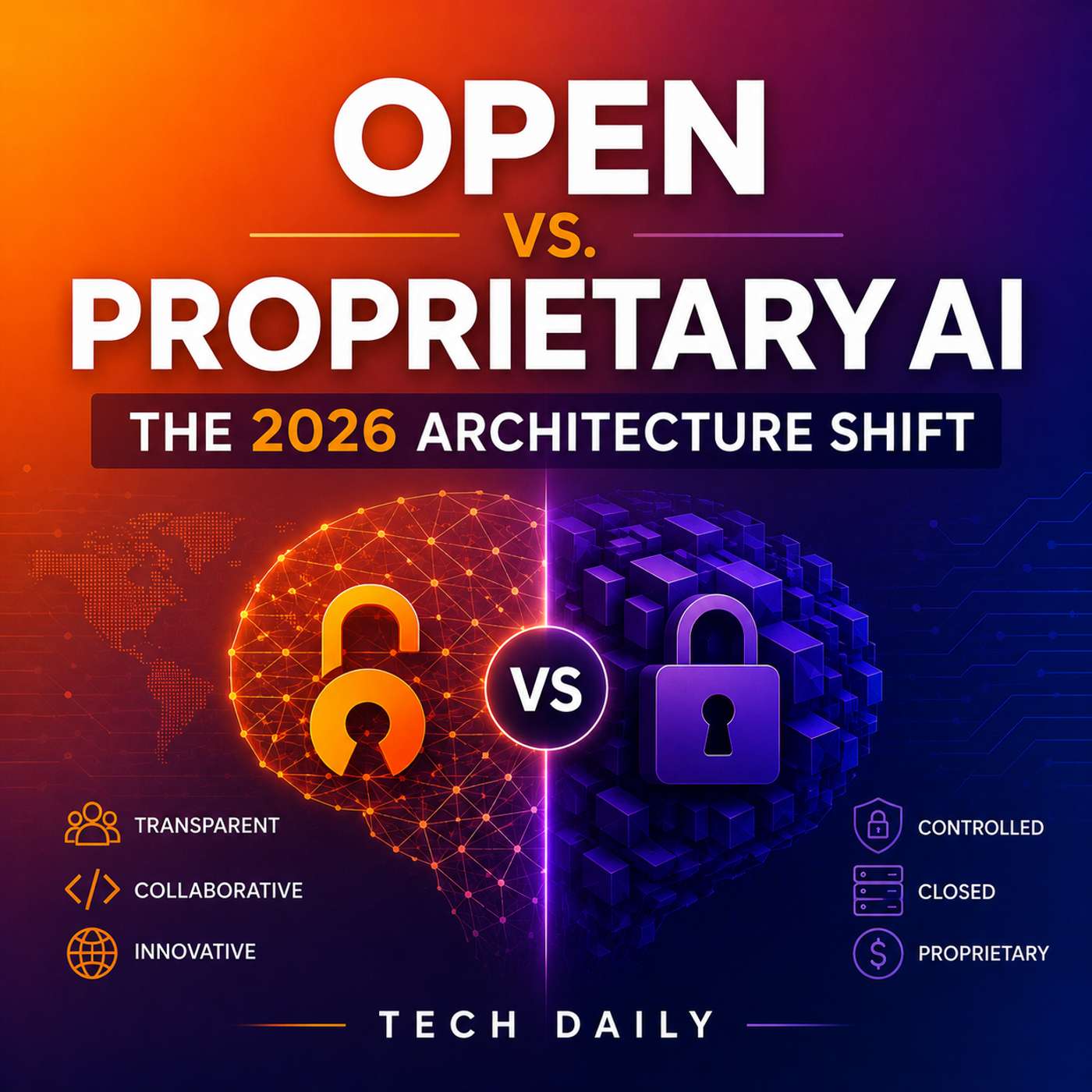


AI is no longer just another software feature. In 2026, it’s becoming core infrastructure—and that is forcing engineering teams to rethink how they choose models, control inference costs, manage API traffic, and protect their most important systems.
In this episode of TechDaily.ai, David and Sophia examine the architectural shift from model-centric AI strategies toward hybrid infrastructure built around open-weight models, proprietary frontier systems, semantic routing, and automated evaluation.
The discussion explores why open-weight models are gaining production traffic, how the narrowing performance gap is changing enterprise economics, and why developers increasingly abandon models that don’t immediately fit existing pipelines.
You’ll hear about:
- Why open-weight models have captured a growing share of AI token traffic
- The “glass slipper effect” driving rapid model adoption and abandonment
- How automated evaluations and CI/CD pipelines reduce model-switching costs
- Why coding and agentic workloads are consuming enormous token volumes
- The growing importance of long-context reasoning for autonomous AI agents
- How AI API consumption is shifting across the Asia-Pacific region
- Why self-hosting an open model isn’t automatically cheaper
- The hidden infrastructure, MLOps, maintenance, and talent costs behind localized AI
- How enterprises can evaluate models using business fit, total cost of ownership, team capability, and future-proofing
- Why semantic gateways can dynamically route simple workloads to efficient open models while reserving premium APIs for difficult tasks
- How vendor lock-in could affect control over an organization’s long-term cognitive infrastructure
The central lesson is bigger than choosing the “best” foundation model. Competitive advantage increasingly comes from the architecture surrounding the model: semantic routing, evaluation pipelines, context management, compliance controls, latency planning, and disciplined inference economics.
As open systems become more specialized and proprietary providers push toward premium multimodal capabilities, engineering leaders face a consequential decision: build more of their organization’s cognitive infrastructure internally, rent it from outside vendors, or construct a resilient hybrid of both.
Listen to the full episode for a technical look at where enterprise AI architecture is heading and what teams should evaluate before committing their next workload or infrastructure budget.
Visit techdaily.ai for more technical breakdowns and architectural resources, and subscribe to TechDaily.ai for future episodes.