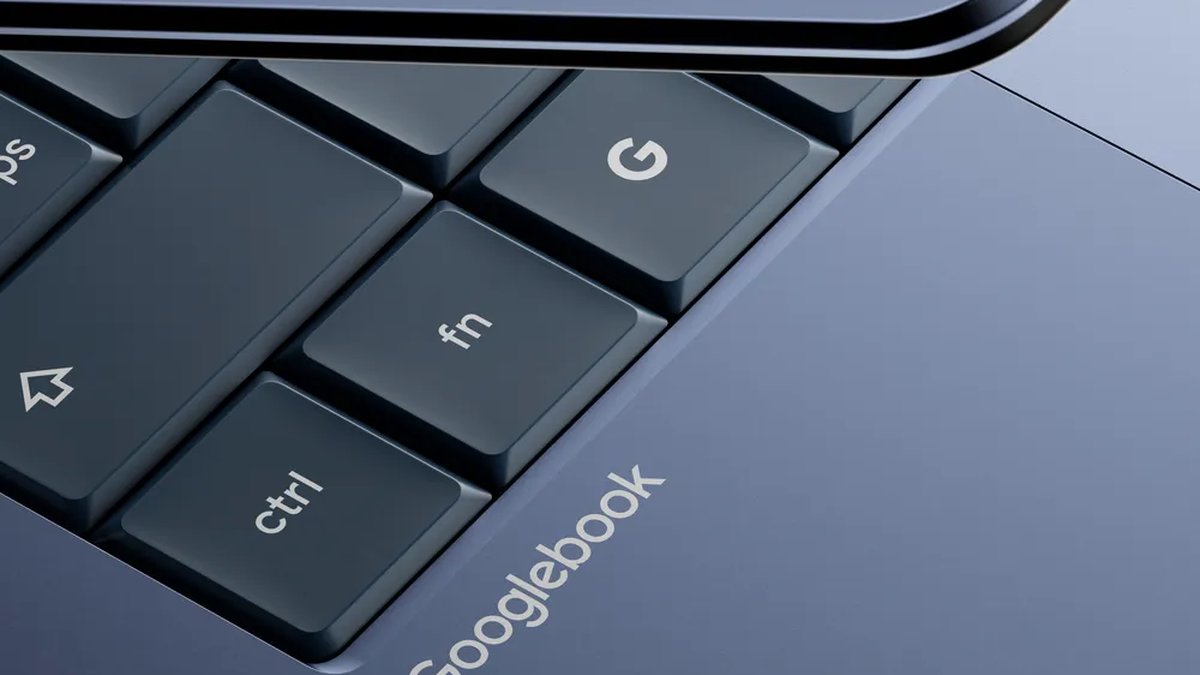
A Googlebook is Google’s new line of laptops, announced on May 12, 2026, and built on the Android software that runs your phone. A Chromebook is the laptop Google has sold since 2011, built around the Chrome browser. That is the simple version of the Googlebook vs Chromebook question. But it misses the real story. New computing platforms always launch small and careful. This one, if the leaks hold, is launching with a full fleet of flagship laptops from five different makers on day one. Nothing in laptop history looks like that. And it changes a very practical question. Should you buy a Chromebook this week, or hold your money until September 15?
- Googlebook is Google’s new Android-based laptop line. Google previews the full platform at an event in New York on September 15, 2026, with devices due this fall.
- New platforms usually start tiny. ChromeOS launched in 2011 with two plastic laptops. Apple’s M1 chip arrived in 2020 inside three recycled designs. Leaks point to roughly eight Googlebooks from five makers at launch.
- The real difference sits under the hood. A Chromebook runs Android apps inside a sealed software box. A Googlebook reportedly runs them natively, with no box at all.
- Nobody knows the price. Google has announced nothing, and anyone quoting a number is guessing.
- Shopping under $300 for school or basics? Buy the Chromebook now. Eyeing a premium model? Wait about three weeks. September 15 answers the platform question before you spend big.
New Platforms Never Launch This Big
Anyone who has followed laptops for the last fifteen years knows the script for a platform debut. It is always cautious. Always small.
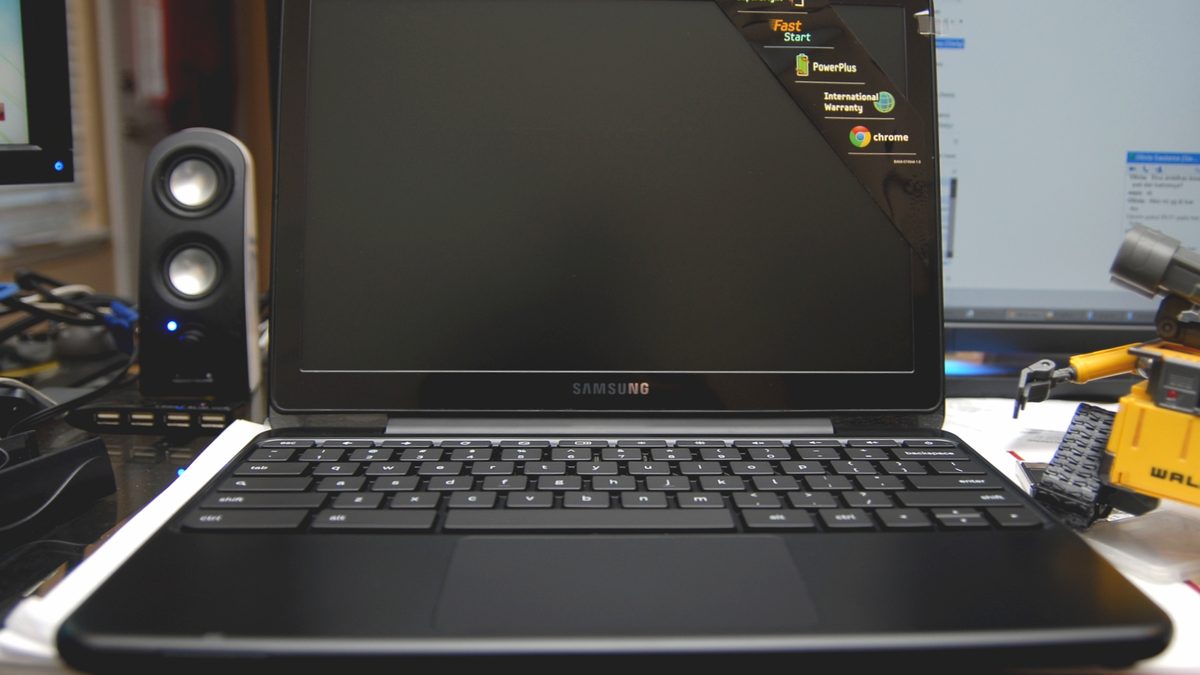
ChromeOS itself proved it in 2011. Google’s brand-new browser laptop arrived in exactly two machines, the Samsung Series 5 and the Acer AC700. Both were modest plastic laptops built for one job: opening Chrome. Nobody bet big, because nobody knew if anyone would buy one.
Apple ran the same play nine years later, and Apple controls everything it touches. When the M1 chip debuted in November 2020, it shipped inside three existing designs — the MacBook Air, the 13-inch MacBook Pro, and the Mac mini. Not one new case. Apple changed the brain and reused the bodies. Windows-on-ARM was even more timid. It spent a decade limping along with a handful of devices and constant app headaches before Qualcomm’s Snapdragon X chips finally made it credible in 2024.
That is the base rate. Platform debuts ship the minimum, because laptop makers hedge their bets. Which is exactly why the Googlebook reporting is so striking. Chrome Unboxed reports a launch wave of flagship laptops across Lenovo, HP, Dell, Acer, and ASUS. TechTimes counts roughly eight devices across those five brands, including at least one tablet. If that holds, Google is skipping the timid chapter entirely. That is the story a laptop buyer needs to understand before spending a dime this fall.
What a Googlebook Actually Is Under the Hood
Start with what Google has actually said, because it is the only confirmed ground here. In the official announcement, Alex Kuscher, Google’s Senior Director for Laptops and Tablets, calls the Googlebook “a new category of laptops built with Gemini’s helpfulness at its core, designed to work seamlessly with the devices in your life.” It is built on part of the Android tech stack, folded together with what Google learned from ChromeOS and Chrome.
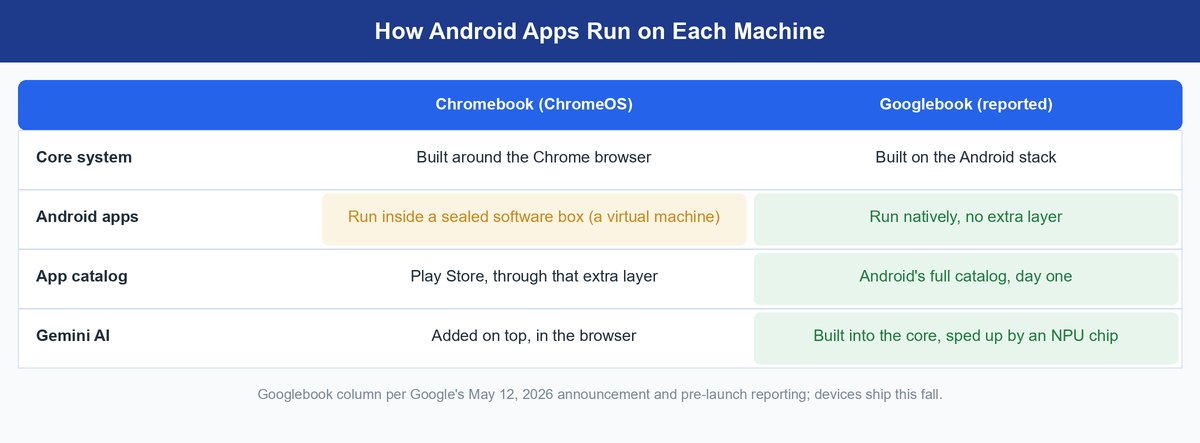
Here is the plain-words difference. A Chromebook is a browser with a keyboard. When it runs Android apps, it runs them inside a virtual machine — a sealed software box the system carries around. That box lets phone apps work on a laptop never built for them. It works, but it is a workaround. A Googlebook flips the foundation. The laptop itself reportedly runs the Android family of software, so those same apps run natively, no box required. Google has also shown its own new tricks. Magic Pointer pops up Gemini suggestions when you point at things. You can build a custom widget just by typing a prompt. And Quick Access lets you search your phone’s files from the laptop, no transfers needed.
One more name you will see in headlines: Aluminium OS. That is the reported internal codename for the operating system. Google has said the shipping name will be different. Expect the real name on September 15, per Android Authority’s event reporting. Until then, treat every “Aluminium OS” headline as a placeholder, not a product.
The AI piece matters too. These machines lean on an NPU — a small section of the chip that runs AI tasks without draining your battery. Our explainer on whether you actually need an AI PC covers that idea in plain English.
The Hardware Google Has Reportedly Lined Up
None of this section is confirmed. All of it comes from leaks, certification filings, and retailer slips — but the paper trail is unusually deep for a platform that has not launched.
For the record: device leaks like these surface through mandatory paperwork — energy certification databases, design award submissions, retailer listings that go live early. That makes them credible snapshots of real hardware. It does not make them final. Google and its partners can still change the specs before shipping day.
| Maker | Reported device | Reported chip | What leaked | How it surfaced |
|---|---|---|---|---|
| ASUS | Googlebook CX9406 | Intel Core Ultra 7 355 (Panther Lake) | Under 1 kg, “Ultra-Ceramic Light Alloy” body, up to 64GB RAM, 47-TOPS NPU | Energy Star database entry and an iF Design award listing, per TechTimes |
| Acer | Googlebook 14 GP714-91N | Intel Core Ultra 5 325 | 14-inch 2.8K OLED display, 16GB RAM | European retailer listing spotted by VideoCardz |
| Lenovo | Duet m detachable, plus clamshells | Not yet known | A detachable tablet design in a documented multi-device lineup | Press renders, per Chrome Unboxed’s reporting |
| HP and Dell | Under wraps | Snapdragon X and MediaTek Dimensity expected across the fleet | Devices tracked under codenames | Chrome Unboxed’s reporting |
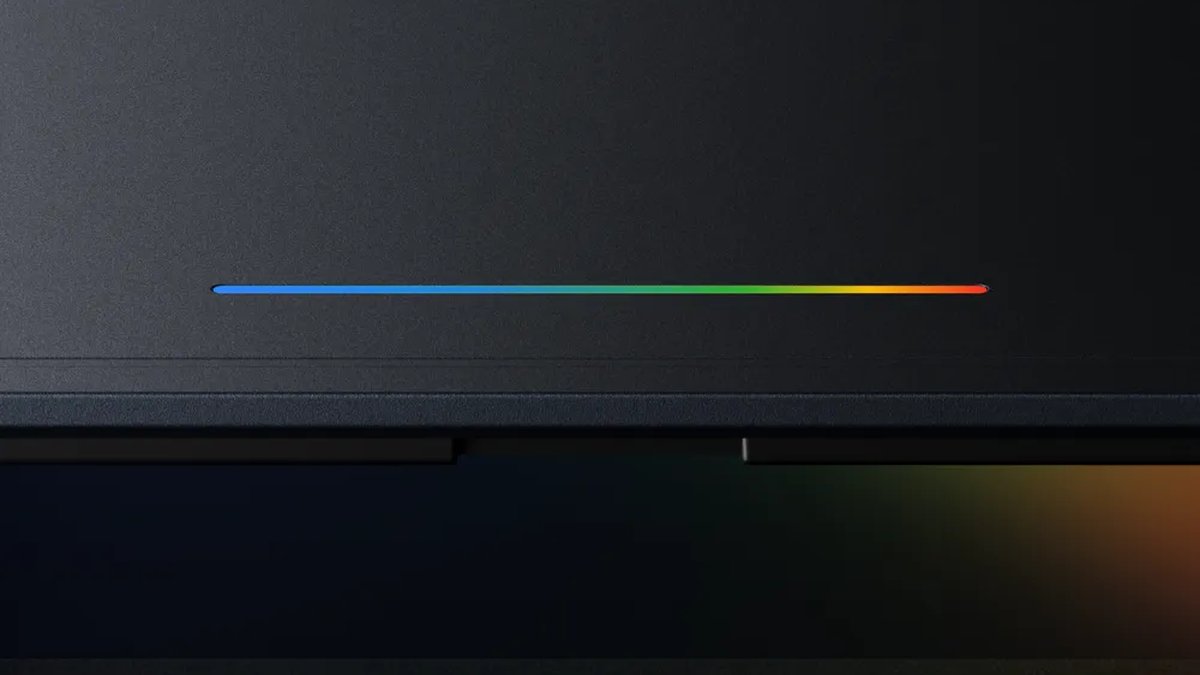
Two details in that table deserve a second look. First, the silicon spread: leaks point to ARM chips from Qualcomm and MediaTek running alongside Intel’s x86 Panther Lake parts on day one. In plain words, ARM and x86 are two different chip languages. Supporting both at launch is the kind of thing platforms usually attempt in year three, not week one. Second, the custom touches. Per Chrome Unboxed, these are not rebadged Chromebooks. Reports describe dedicated Gemini keys, haptic trackpads, and OLED touchscreens. There is even a light strip on the lid, the Glow Bar, which TechTimes reports is mandatory on every Googlebook. It animates whenever Gemini is working. Makers do not tool up custom keyboard decks and lid lighting for a platform they expect to quietly shelve.
Why Google Can Afford a Launch This Aggressive
Every cautious launch in that history section was a hostage of the same standoff. Laptop makers will not gamble factory lines on an operating system with no users. Users will not switch to an operating system with no serious hardware and no apps. Each side waits for the other to move first, so every new platform crawls out of the gate. That standoff killed more platforms than bad software ever did.
Google is attacking both sides of it at once. The hardware side, reportedly, is being pre-paid: five makers building flagship machines before a single customer exists. And the software side is the quiet genius of the whole plan. Because a Googlebook is built on Android, it does not open an empty app store. It opens the largest app catalog on Earth, day one. ChromeOS in 2011 had a browser and hope. Windows-on-ARM had emulation headaches. A Googlebook starts with millions of apps that already run on the chips inside it. That is the structural difference that makes this launch rational instead of reckless.
There is a second-order effect worth watching, too. If this works, the mid-range laptop aisle stops being a two-horse race. A third platform with genuine phone-app parity puts real pressure on the default “just get a Windows laptop” purchase. Especially for the hundreds of millions of people whose most important computer is an Android phone.
Is Google Replacing Chromebooks With Googlebooks?
The honest answer: Google has not said that, and nothing announced so far discontinues a single Chromebook. What Google has said is that the Googlebook is a new category built for Gemini — an addition, officially, not a replacement.
The commentary around it is sharper. Chris Hoffman at PCMag argues the original Chromebook dream is over — that Google is walking away from the cheap, simple web machine in favor of AI and Android. That is an opinion, not an announcement, but it is a reasonable read of where Google’s attention just went. Computerworld’s launch-week piece raised eight open questions about the Googlebook. The biggest is still unanswered in late August: what happens to the Chromebook line, and to the people holding one?
Heads up: every Chromebook already carries a fixed expiry date for software updates, called the AUE date — roughly ten years from when its hardware platform was released. Nothing about the Googlebook launch changes those dates, but they were always the fine print of Chromebook ownership. Look up your exact model on Google’s AUE list before you buy or sell anything.
So the question Google must answer on September 15 is not “is the Chromebook dead.” It is “what support promise do current Chromebook owners get during this transition.” Until that answer lands, treat any confident claim in either direction as noise.
Should You Buy a Chromebook Right Now or Wait?
This is the money question, and the answer depends entirely on which buyer you are. Quick disclosure: the product links in this section are affiliate links — if you buy through one, TechDaily earns a small commission at no extra cost to you.
Buying Under $300 for School or Everyday Basics
Buy the Chromebook now. Everything in the leaked material — ceramic alloy bodies, OLED touchscreens, 64GB of RAM — reads premium. That means your price segment is not the day-one battleground. A budget Chromebook bought this week does the homework, the streaming, and the email exactly as well as it did last month. And something like the Lenovo Chromebook Duet remains one of the best cheap two-in-one deals in tech. Just check the AUE date before checkout so you know how many update years you are buying. If you are shopping for a student, our college laptop guide walks the budget tiers.
About to Spend Premium Chromebook Money
Wait. Three to four weeks, that is all. If you were about to drop serious money on a Chromebook Plus-class machine, September 15 answers the biggest question hanging over that purchase. Is Google’s premium laptop future the platform you are buying into, or the one it just moved past?
Reality check: first-generation platform hardware has a documented tax. Apple’s first M1 Macs reused years-old designs, and the first Snapdragon X laptops shipped with app-compatibility misses. Wanting the platform is not a reason to preorder blind — let the first reviews land before your money does.
Already Own a Chromebook and Feeling Nervous
Relax. Nothing on your machine breaks on September 15. Your apps keep working, your AUE date is unchanged, and Google keeps shipping ChromeOS updates on the existing schedule. The one thing worth doing is watching the event for Google’s migration and support statement. That is the sentence that will actually affect you, and we will flag it when it lands.
Torn Between a Windows Laptop and Waiting It Out
If your phone runs Android, the thing to watch is not the chips — it is the phone integration. Gemini suggestions on point, your phone’s files searchable from the laptop, phone apps running natively: that is the pitch Windows cannot easily match. It is the same wait-or-buy logic we walked through on the Pixel 11 decision. When a genuine platform answer is weeks away, the expensive mistake is buying the day before it arrives.
The Bottom Line Before September 15
Every platform launch of the modern laptop era opened with a whisper. Two plastic Chromebooks in 2011. Three recycled Macs in 2020. A decade of Windows-on-ARM tiptoeing. If the leaks hold, the Googlebook opens with a shout — a full fleet, three chip families, five makers, and custom hardware down to a light bar on the lid. That is either the most confident platform launch in laptop history or the most expensive bluff. We find out which on September 15. Until then the play is simple: cheap Chromebook buyers buy, premium buyers wait, and nobody preorders blind. We will update this piece after the event, once the leaked lineup meets the real one.
Googlebook images in this story are official renders from Google’s May 12, 2026 announcement.
Frequently Asked Questions
What is a Googlebook?
A Googlebook is Google’s new category of laptops, announced May 12, 2026, and built on the Android tech stack with Gemini AI at the core. Acer, ASUS, Dell, HP, and Lenovo are building the first wave, due this fall. Think of it as Google rebuilding the laptop around the software your phone already runs.
Is Google replacing Chromebooks with Googlebooks?
Google has not said Chromebooks are discontinued, and no Chromebook loses support because of the launch. Officially, the Googlebook is a new category alongside them. PCMag’s Chris Hoffman argues it signals the end of the cheap-web-laptop era, but that is analysis, not an announcement. Expect Google to address its Chromebook support plans at the September 15 event.
When can I buy a Googlebook?
Not yet. September 15, 2026 is a preview event in New York — a keynote plus hands-on stations with partner devices, per Android Authority’s reporting on the media invites. Actual devices go on sale “this fall,” per Google’s announcement, with no exact retail date published so far.
How much will a Googlebook cost?
Nobody outside Google knows, and no pricing has been announced. The leaked hardware — ceramic alloy builds, OLED touchscreens, high-end chips — reads premium rather than budget. But that is positioning read from leaks, not a price. Treat any specific number you see before the event as a guess.
Are Chromebooks still worth buying in 2026?
For budget buyers, yes. A Chromebook under $300 still handles school, browsing, and streaming better than any Windows laptop at that money. The Googlebook launch does not change that math. The one check that matters: look up the model’s AUE date on Google’s support site so you know exactly how many years of updates you are getting.
Will my current Chromebook stop working when Googlebooks launch?
No. Your Chromebook keeps its apps, its updates, and its existing AUE support date after September 15. The launch adds a new product line; it does not switch anything off. The open question is longer-term: will Google offer current owners a migration path? That is exactly what to listen for at the event.