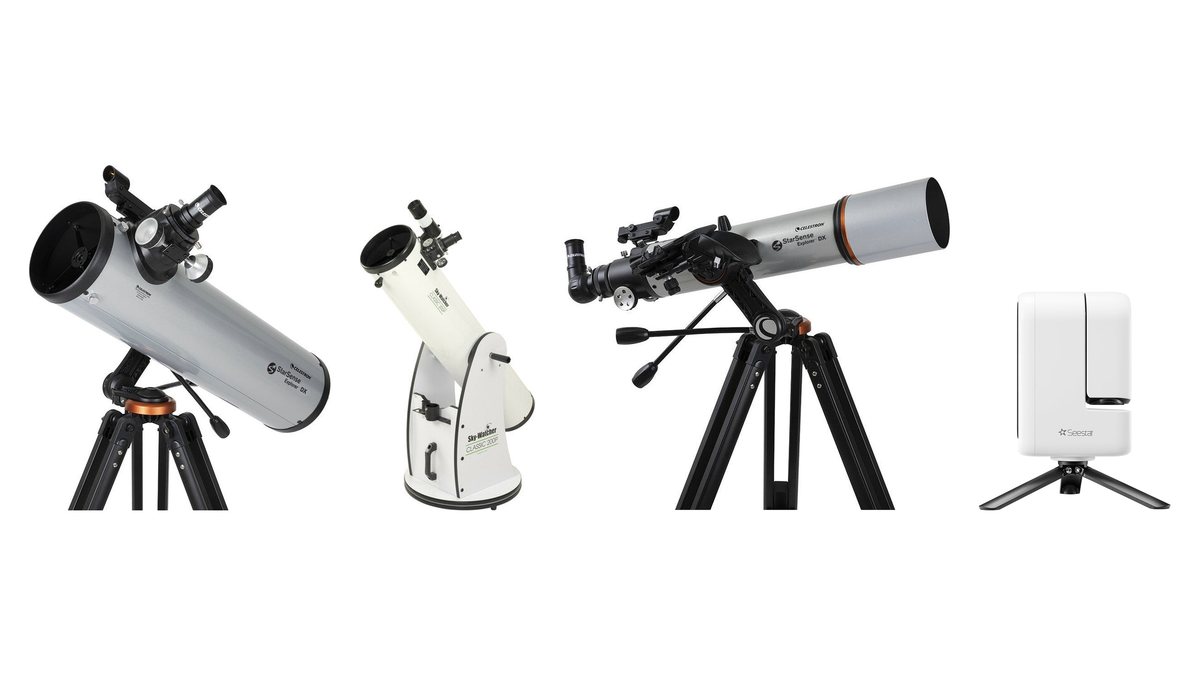
Every December, a lot of telescopes get unwrapped, tried once on the porch, and put away for good. The box promised huge power, but the view shook every time someone touched it. The best telescope for beginners avoids both traps, and neither has anything to do with the power printed on the box. What matters is how much light the scope catches and how still it holds. For most people, that points to the Celestron StarSense Explorer DX 130AZ. Your home and your sky can change the answer, though, so let’s work it out with real numbers.
Some links here are affiliate links, so we may earn a small commission if you buy. It never changes our picks or your price.
- Ignore the “675x” on the box, because useful power stops near twice the scope’s width in millimeters.
- Pay for aperture, the width of the main mirror or lens. A 130 mm mirror catches about three and a half times the light of a 70 mm lens.
- A shaky mount ends more hobbies than weak glass, and every pick below holds steady.
- Under bright city skies, a smart telescope that builds photos on your phone can beat an eyepiece for galaxies.
- This December gives you the Moon, Saturn’s thin rings and late-night Jupiter, with Jupiter’s best show coming in February.
Where will you use your first telescope?
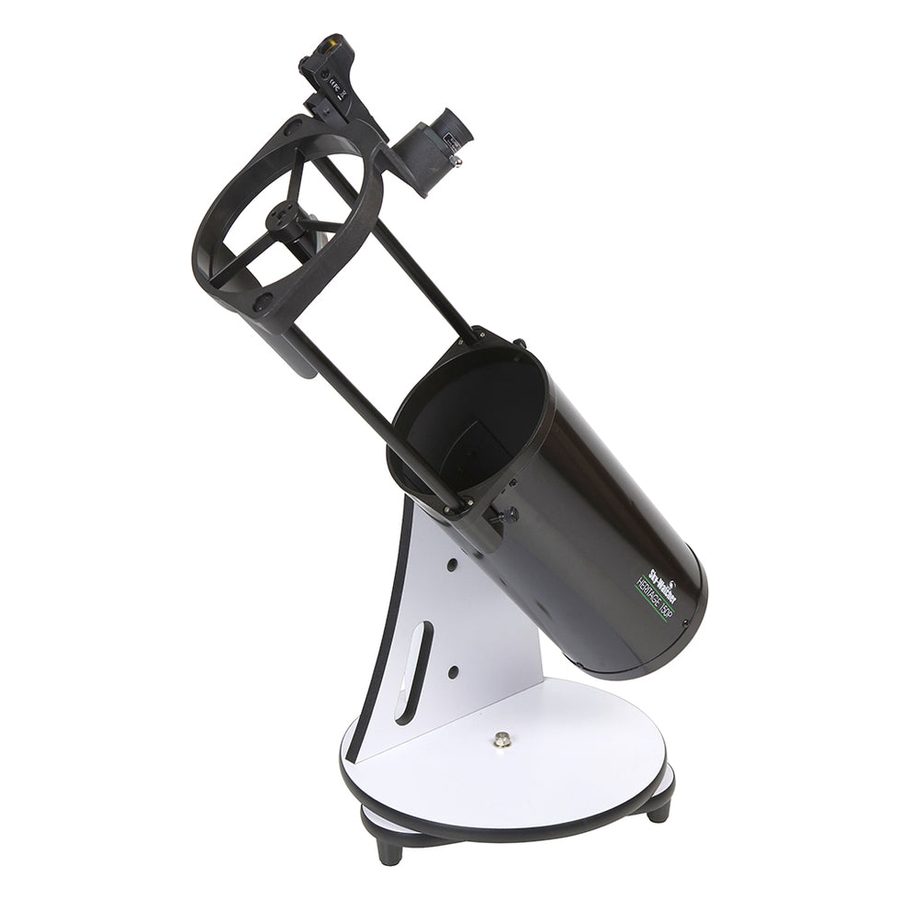
★ Your pick: Sky-Watcher Heritage 150 Tabletop
The most light you can fit on a patio table
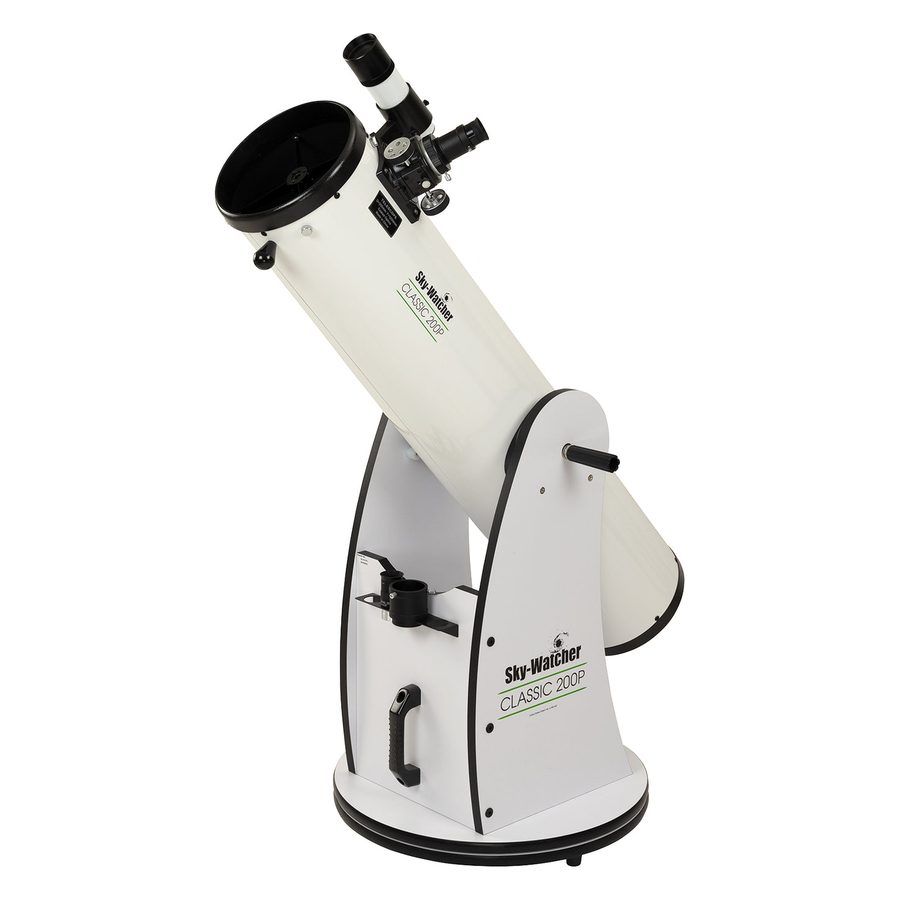
★ Your pick: Sky-Watcher Classic 200P
A big mirror and nothing to set up
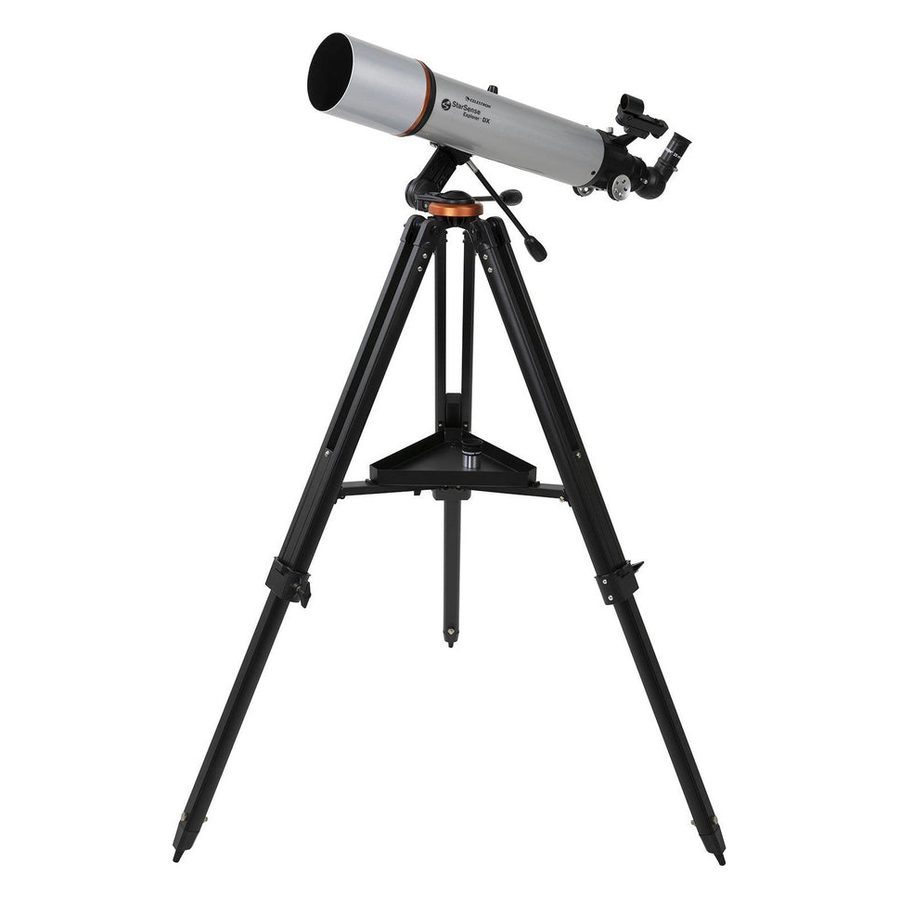
★ Your pick: Celestron StarSense Explorer DX 102AZ
A sealed lens scope that’s ready when you are
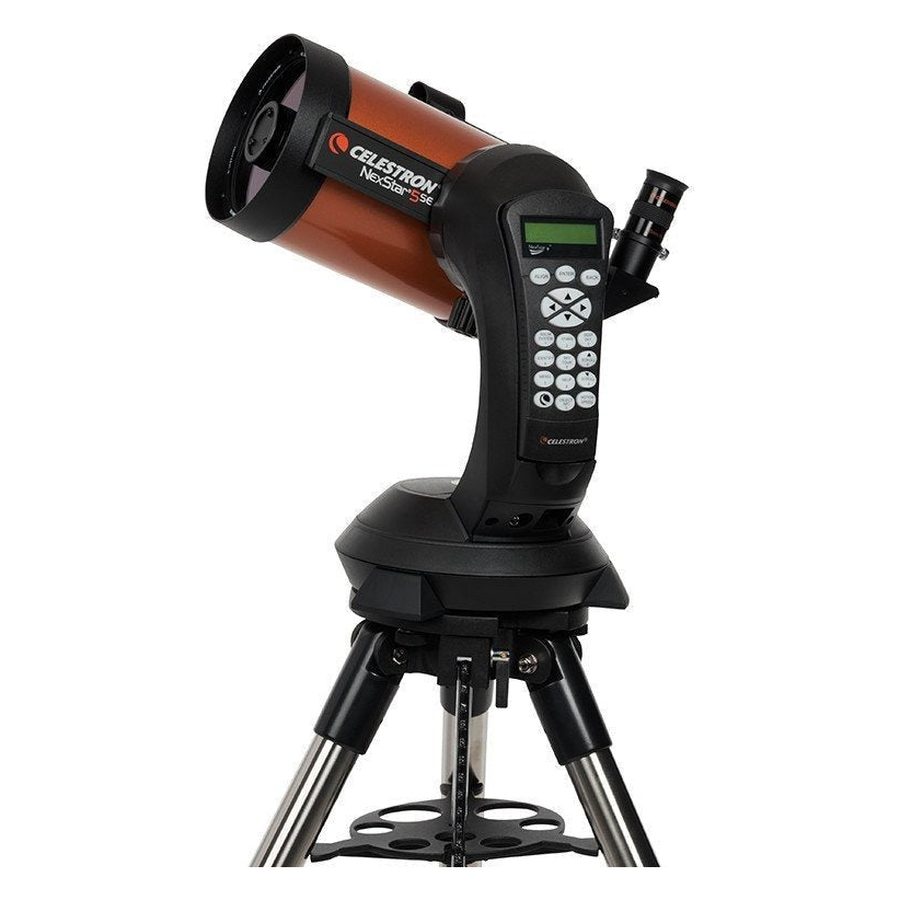
★ Your pick: Celestron NexStar 5SE
A small computer finds and follows targets
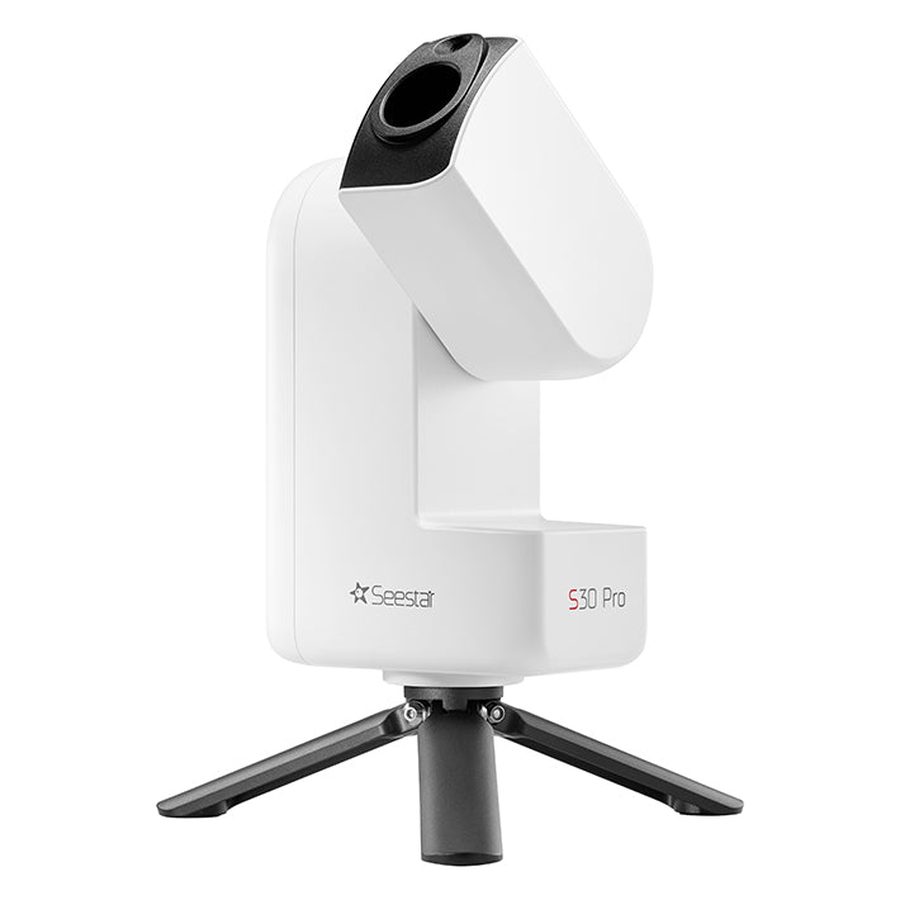
★ Your pick: ZWO Seestar S30 Pro
It builds galaxy photos even under streetlights
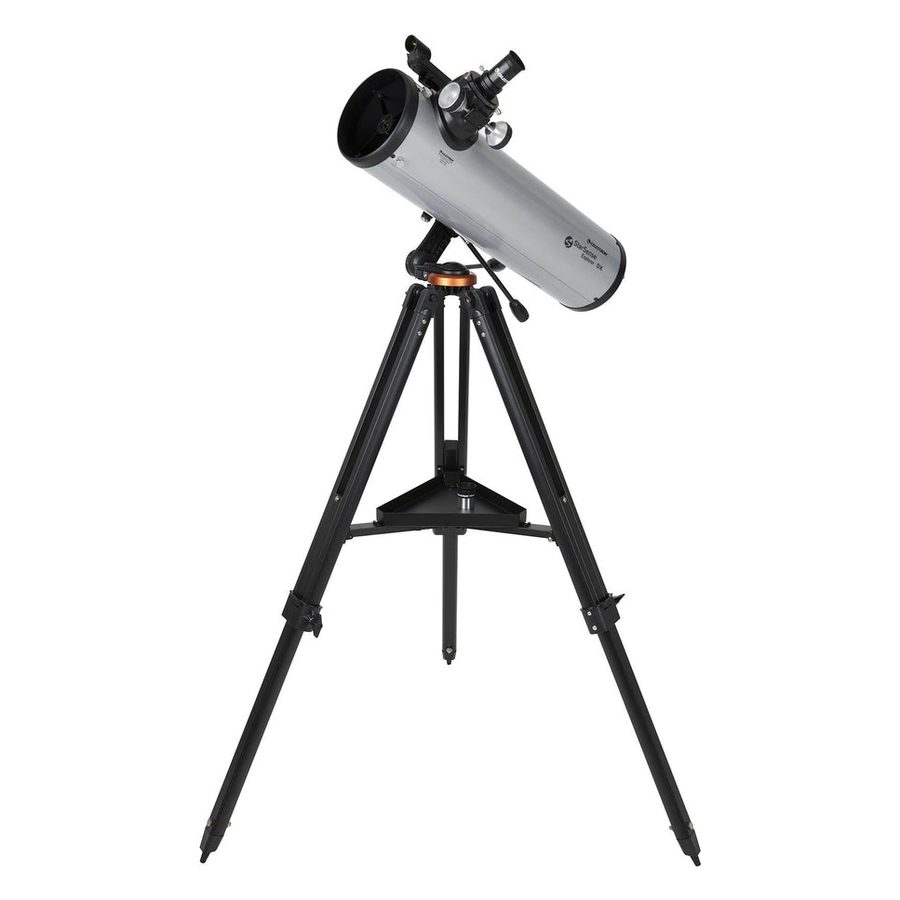
👑 Our Top Pick — Best Overall Value
Celestron StarSense Explorer DX 130AZ
Plenty of light, a steady mount and an app that shows where to point
Opens on our Top Pick. Tap an option to see the best match for you.
Our Beginner Telescope Picks at a Glance
The light and power columns are our own math, explained further down.
| Pick | Type | Aperture | Light vs a 70 mm scope | Top useful power | Best for |
|---|---|---|---|---|---|
| DX 130AZ | App-guided reflector | 130 mm | 3.4x | about 250x | Most beginners |
| Heritage 150 | Tabletop Dobsonian | 150 mm | 4.6x | about 300x | Small homes |
| Classic 200P | Full-size Dobsonian | 203 mm | 8.4x | about 400x | Biggest views |
| DX 102AZ | App-guided refractor | 102 mm | 2.1x | about 200x | No upkeep |
| NexStar 5SE | Computer-guided | 125 mm | 3.2x | about 250x | Planets |
| Seestar S30 Pro | Smart telescope | 30 mm | stacks photos | not used | City skies |
The Best Telescopes for Beginners in 2026
Each pick comes with what you’ll see, how much it wobbles, and the thing owners grumble about most.
Image: Celestron.
1. Celestron StarSense Explorer DX 130AZ Is the Best Telescope for Most Beginners
$400–$450 range130 mm mirrorPhone-guidedAbout 18 lb kit
This is the one I’d hand to almost anyone. It’s a reflector, which means a curved mirror at the back of the tube gathers the light. The mount just moves up, down, left and right, so there’s nothing to learn first.
The clever part is the phone dock: you clip your phone on, open the StarSense app, and it reads the stars above you. Then arrows on the screen show which way to push the tube. That fixes the biggest early problem, which is not knowing where anything is. By our math, the mirror gathers about three and a half times the light of a typical 70 mm starter scope. Damian Peach’s Space.com review called it an “exquisite telescope for the beginner,” with setup in about a quarter of an hour.
Celestron rates it to 307x. Plan on about 250x on a steady night, since that’s twice the mirror’s width in millimeters. The two eyepieces in the box are low power, so add a Barlow lens for bigger planets. A Barlow is a small tube that doubles any eyepiece’s power.
Wobble risk is low, and the main gripe is the tripod, which bumps the tube when you aim straight up.
Pros
- The app finds targets, so your first night isn’t wasted
- Enough mirror for Saturn’s rings and Jupiter’s belts
- Quick setup and a steady mount for the price
- Light enough to carry out in one trip
Cons
- Can’t point straight overhead
- Low-power eyepieces, so planets need a Barlow
- Phone alignment can be fiddly, owners say
Image: Sky-Watcher.
2. Sky-Watcher Heritage 150 Tabletop Is the Best Pick for Small Spaces
$300–$360 range150 mm mirrorCollapsible tubeAbout 15 lb
The Heritage is a tabletop Dobsonian. That’s a reflector on a squat, swiveling base that you steer by hand. The tube slides shut to a little over a foot long, so it fits on a closet shelf.
It punches well above its size. The mirror is wider than our top pick’s, yet the whole scope weighs about 15 pounds. By our math it gathers over four and a half times the light of a 70 mm scope. That shows up on faint star clusters and the brighter galaxies. There are no tools and no alignment, so you just set it down, point it and look. Planets look best once you add a sharper eyepiece for around 100x to 150x.
Here’s what you have to plan for: it’s not a floor-standing scope. You need a sturdy table, stool or crate outside, or you’ll be kneeling on cold ground. The rubber feet keep it planted on anything solid, which a Sky at Night review of the UK version praised. Wobble risk is low on a solid table and high on a wobbly one. Next to our top pick, you trade the app for more light and a much smaller footprint.
Pros
- The most mirror you can get at this size
- Folds down small enough for an apartment
- Nothing to align or assemble
- No batteries or phone needed
Cons
- Needs a steady table or crate to sit on
- No app, so you learn to find things yourself
- Mirrors need an occasional tune-up
Image: Sky-Watcher.
3. Sky-Watcher Classic 200P Gives You the Biggest Views for the Money
$600–$725 range8-inch mirrorSolid tubeNothing to align
Ask any astronomy forum what to buy and someone will tell you to just get an 8-inch Dob. This is that scope, a full-size Dobsonian with a solid tube and a rocker base that sits right on the ground.
The numbers explain the hype. By our math it catches over eight times the light of a 70 mm scope. That’s close to two and a half times our top pick. It also shows finer detail than anything else here, so Jupiter’s belts look knotted instead of plain. Trevor Jones at AstroBackyard makes the same case, that a Dobsonian gives you the most aperture per dollar.
So why isn’t it our top pick? Size. The tube alone weighs about 20 pounds, and the base adds more. The regret stories online are about lugging it, not the view. In one r/telescopes thread, an owner found a first 8-inch so heavy it got sold soon after. The big mirror also needs longer to cool down outside.
Buy it if you have a ground-floor door and a dark-ish yard. Skip it if you live up three flights of stairs. Wobble risk is very low, since the base sits right on the ground.
Pros
- Most light and finest detail on this list
- Simple base with nothing to align or power
- Planets, clusters and galaxies all look their best
- The scope seasoned observers suggest most
Cons
- Heavy and bulky, the top reason owners give up
- Big mirror takes longer to cool
- Needs an occasional mirror tune-up
Image: Celestron.
4. Celestron StarSense Explorer DX 102AZ Is the Easiest Telescope to Live With
$450–$500 range102 mm lensPhone-guidedZero upkeep
This is the lens version of our top pick. It’s a refractor, so a glass lens at the front does the work, the way a spyglass does. It uses the same phone dock and app on a similar mount.
Why choose it over the reflector? Upkeep. The tube is sealed, so the optics never need adjusting and dust stays out. A lens also settles to outdoor air quickly, so it’s ready almost as soon as you step out. That makes it a great scope for a kid with a parent, or anyone who won’t tinker, and it doubles as a daytime scope for birds and boats.
The trade-off is light: by our math, its lens catches a bit over twice the light of a 70 mm scope. That’s good, but the reflector gathers about 60% more for close to the same money. The Moon and bright planets look crisp, and wide star fields look lovely. Very bright objects can show a faint purple edge, which is normal for this kind of lens. Telescopic Watch gave it a measured thumbs-up, and that feels fair. Wobble risk is low.
Pros
- No mirror tune-ups, ever
- Ready within minutes of going outside
- Same helpful app as our top pick
- Works for daytime viewing too
Cons
- Less light than the reflector for similar money
- Faint purple fringe on very bright objects
- Low-power eyepieces in the box
Image: Celestron.
5. Celestron NexStar 5SE Is the Best Push-Button Telescope for Planets
$900–$1,000 range125 mm mirrorComputer-guidedOne 25 mm eyepiece
If you hate hunting for things in the sky, this is the scope that does it for you. You type in a target on a hand controller, the motors swing the tube over, and then they follow it as the Earth turns. It’s a Schmidt-Cassegrain, a folded design that packs a long light path into a short, stubby tube.
The mirror is 125 mm wide. By our math that’s about three times the light of a 70 mm starter scope, and close to our top pick’s 130 mm. Its light path is long for its size, which experts call a long focal length, so high power comes easily and Jupiter and the Moon look crisp. You can push to about 250x on a steady night, and the single 25 mm eyepiece in the box gives 50x to start.
Now the catches. Owners report the eight AA batteries last only a few hours, and less in the cold, so plan on buying a power pack. The front glass also dews up on damp nights. And the same long focal length means a narrow field of view, so big star clusters won’t fill your eyepiece.
You pay about double the price of our top pick for similar light. What you’re buying is the finding and tracking. Wobble risk is low once it’s level.
Pros
- Motors find and follow targets for you
- Sharp, high-contrast views of the Moon and planets
- Compact tube is easy to store
- Enough mirror for Saturn’s rings and Jupiter’s belts
Cons
- Costs about double the DX 130AZ for similar light
- Eight AA batteries run down in a few hours, so add a power pack
- Front glass collects dew
- Narrow field of view
Image: ZWO.
6. ZWO Seestar S30 Pro Is the Best Smart Telescope for City Skies
$650–$700 range30 mm lensPhone appAbout 3.6 lb
Know this first: you don’t look through it. The Seestar is a small camera telescope run from your phone. You tap a target, it finds it, then it takes many short photos and stacks them into one bright color image.
That stacking is the whole trick. Each frame is dim, but adding dozens together pulls out the faint glow of galaxies and nebulas. Your eye can’t do that. So from a suburb under streetlights, it can show the Orion Nebula in color when an eyepiece shows a gray smudge. It weighs under four pounds and fits in a backpack. The Space.com review liked how it copes with light pollution and that it saves raw files for editing.
Now the limits: its lens is tiny, so planets come out small and soft. That same review flagged weak planet views, limited manual control and storage that fills fast. If Saturn’s rings are the goal, buy an eyepiece scope. If you want pictures to share and you live somewhere bright, this beats every other pick here. Wobble risk is near zero, since you never touch it.
Pros
- Color galaxies and nebulas from bright suburbs
- Finds and tracks targets on its own
- Small enough to travel with
- Saves photos you can share or edit
Cons
- No eyepiece, so you never look through it
- Planets look small and soft
- Storage fills up quickly
Other Beginner Telescopes Worth a Look
- Celestron StarSense Explorer LT 80AZ: the cheapest scope we’d buy with the StarSense app, and a fine kid’s gift. The tripod can feel light in wind.
- ZWO Seestar S50 Pro: the bigger smart scope, launched in August 2026. Its wider lens gathers almost three times the light of the S30 Pro.
- DwarfLab Dwarf 3: another camera-style smart scope with long battery life.
- Apertura AD8: a popular 8-inch Dob. It’s the same big-mirror idea as the Classic 200P, with a few more extras in the box.
The Three Numbers That Decide What You’ll Actually See
Telescope boxes shout about power, but these three plain numbers tell you far more.
Aperture Sets How Much Light Reaches Your Eye
The Planetary Society calls aperture the single most important spec. Light gathering grows with the area of the mirror or lens, so it rises with the width squared. Small jumps in size matter a lot. Your own eye, wide open in the dark, has a pupil of about 7 mm. A 130 mm mirror collects roughly 345 times the light your eye does, so things you can’t see at all suddenly appear.
Useful Magnification Stops Near Twice the Aperture in Millimeters
Sky & Telescope’s rule of thumb is about 50x per inch of aperture, or 2x per millimeter. Past that, the image just gets bigger and blurrier. The air above you sets an even lower limit, near 200x on most nights for beginners. Astronomics says the “675x” department-store scopes really top out around 75x on an average night.
Do the math: a 60 mm scope sold as “675x” has a useful limit near 120x. The box claims more than five times what the glass can deliver.
A Wider Lens or Mirror Shows Finer Detail
Bigger optics also split finer detail. By Dawes’ limit, a 70 mm scope resolves about 1.7 arcseconds and an 8-inch about 0.6. An arcsecond is a sliver of sky, like a coin seen from three miles away. That’s the gap between Jupiter with two plain stripes and Jupiter with wavy, knotted belts.
What Jupiter and Saturn Look Like at 100x in Three Different Telescopes
Here’s one worked example, our own math rather than a test. Picture the same 100x view in a 70 mm starter scope, our 130 mm top pick and an 8-inch Dob.
Near its February opposition, when it’s closest and brightest, Jupiter is about 44 arcseconds wide, per EarthSky. At 100x it looks bigger than the full Moon does to your bare eye. So size isn’t the issue in any of these scopes, but brightness and sharpness are.
In the 70 mm scope, 100x sits near its limit, so the disk looks dim and a bit mushy. The 130 mm scope gives a view about three and a half times brighter at the same size, and it’s working well inside its range. The 8-inch is more than eight times brighter than the small scope. At 100x it’s coasting, and on a steady night you can push past 200x.
Saturn adds a twist this year. Its rings tilt only about 6 degrees toward us this winter, so they look like a thin line. A dim, soft view can blur that line into the planet.
Keep in mind: a cheap Barlow lens adds power any time. You can never add light later, so light is what you pay for.
Shaky Mounts, Cool-Down and Collimation Are Why Beginners Quit
Nobody keeps a solid count of how many beginners give up. But owner reviews and forums repeat the same three problems, and none of them is the glass.
A Wobbly Mount Ruins More Nights Than Small Optics
At 100x, a tiny shake becomes a big jump. If touching the focus knob makes Saturn bounce for five seconds, you’ll stop trying. Owners of one cheap app-guided reflector call its tripod so wobbly that viewing is nearly impossible. Simple up-down, left-right mounts also beat equatorial ones for beginners, since those must be lined up on the North Star first.
Mirrors Need Time to Cool Before the View Gets Sharp
Carry a warm reflector into cold air and the view boils, because heat rising off the mirror bends the light. Small mirrors settle in about half an hour, says High Point Scientific, and big ones can take close to an hour. The fix is free: set the scope outside before dinner.
Reflectors Need a Quick Mirror Tune-Up Now and Then
Reflectors and the NexStar’s design use mirrors that can drift slightly out of line. Lining them up again is called collimation. Sky & Telescope’s guide walks through it, and it mostly comes down to turning a few screws.
Tip: line up the small finder scope, and do your first collimation, in daylight on a distant treetop. Doing both in the dark is how first nights go wrong.
When a Smart Telescope Beats an Eyepiece Under Bright City Skies
Your sky matters as much as your scope. A team led by Christopher Kyba found the night sky grew about 9.6% brighter each year. They used over 51,000 volunteer sightings collected from 2011 to 2022.
Worth knowing: Kyba put it in human terms. A child born where 250 stars are visible would see about 100 by age 18.
The Bortle scale rates darkness from a remote desert to a city center, and most suburbs sit near the middle. That glow barely hurts the Moon and planets, but it wipes out faint galaxies. Stacking photos digs that faint light back out in a way your eye can’t.
So here’s our rule: in a city, if you want galaxies, get the Seestar. If you want planets, or you can drive somewhere dark, get an eyepiece scope. And if you mostly want photos from trips, our travel camera guide may serve you better.
What a New Telescope Can Show You in December 2026
A scope bought now has a good first month, and it gets better through winter.
The Moon Is the Best First Target on Christmas Night
The full Moon lands on December 23, per timeanddate, so it’s still big and bright on Christmas night. It also washes out faint galaxies, so save those for the dark nights around the new Moon on December 8. For craters, aim along the line between light and dark.
Saturn’s Rings Look Like a Thin Bright Line This Winter
Saturn sits in the evening sky all December, per Space.com. Earth passed through its ring plane in March 2025, so the rings still look like a slim line, not the wide loop from photos. Every eyepiece pick above shows them.
Jupiter Rises Late Now and Peaks in February 2027
Jupiter is a late-night target in December. It reaches opposition, its closest and brightest point, on the evening of February 10, 2027 in the US. A Christmas scope is ready for its best show of the year, four moons and all.
The Geminid Meteor Shower Is a Naked-Eye Show
The Geminids peak on the night of December 13 into 14, with little moonlight in the way. Leave the telescope inside, though, since meteors streak across the whole sky and a scope sees only a tiny patch.
Why Telescope Prices Climbed and Why Orion Listings Are a Risk
Telescope prices have been under tariff pressure since 2025. Most beginner scopes are made in China, and Astronomy.com reported that Celestron froze shipments from China during that spring’s tariff spike. This year, Space.com still named tariffs as a reason stargazing gear keeps getting pricier.
Watch out: Orion, once a big beginner brand, stopped operating in July 2024. Its scopes still show up from resellers, but no maker stands behind them for repairs.
A good telescope can last you twenty years, so buy one from a maker that will still answer the phone.
Pick the Steady Scope You Will Actually Carry Outside
The best telescope is the one you’ll use on a random Tuesday. That means real aperture, a mount that stays still, and a size you’ll happily carry. For most people, that’s the DX 130AZ. Pick the Heritage for a small home and the Classic for the biggest views. The DX 102AZ suits zero upkeep, the NexStar does push-button planets, and the Seestar handles city galaxies. Then point it at the Moon first, because it never disappoints.
Frequently Asked Questions
What is a good telescope to look at planets?
One with 100 mm or more of aperture on a steady mount. The NexStar 5SE gives sharp planet views, and the DX 130AZ does well with a Barlow lens. Smart scopes are weak on planets.
How much should I pay for a decent telescope?
Scopes under about $100 tend to frustrate, with shaky mounts and tiny optics. The Planetary Society put a good range at $200 to $400 in 2023, and tariffs have pushed that up since.
Can you see Saturn’s rings with a telescope?
Yes, even with a small scope. This winter they tilt only about 6 degrees, so they look like a thin bright line. More aperture and a steady mount keep it sharp.
What is the easiest planet to see through a telescope?
Jupiter. It’s big and bright, and its four largest moons show up in any scope, and it’s a late-night target in December and at its best in February 2027.
What is the best telescope for beginners who are kids?
The DX 102AZ, used with a parent, since it never needs a tune-up. On a smaller budget, the LT 80AZ uses the same app. Skip “675x” toy scopes, because the shaking puts kids off fast. And teach them never to point any telescope at the Sun, which can blind in an instant.
Should a beginner buy a smart telescope instead?
Yes, if you live under bright city skies and want color galaxy photos on your phone. No, if you want to look at planets through an eyepiece.