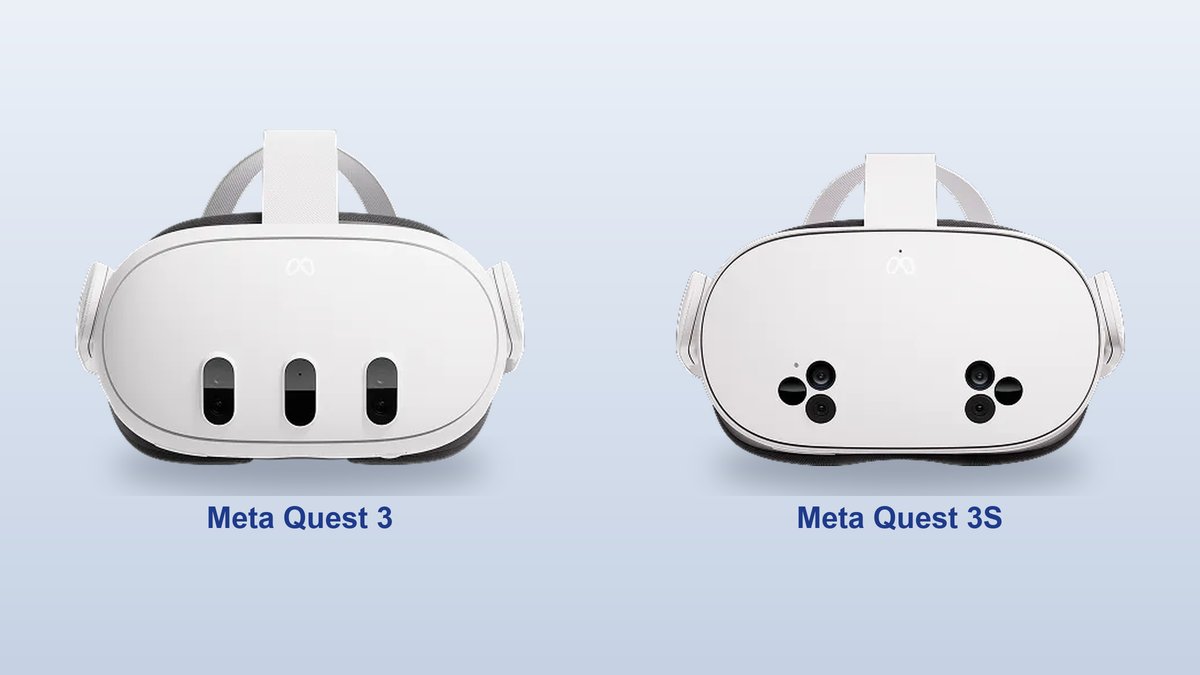
Picture two boxes on a store shelf this week. Both say Meta Quest. Both show a white headset and two controllers, and both promise the same games. One costs a lot more, and this Black Friday the gap is bigger than usual. So which one goes under the tree?
That’s the real question behind Meta Quest 3 vs 3S. Meta raised prices on both headsets in April, then left the pricier one out of its holiday sale. We went through Meta’s own pages, the main reviews and Meta’s support plans to work out what the extra money buys. It turns out to be a better view, not more games. Whether that’s worth it comes down to three things about you. One of them is a number you can measure with a ruler.
- Both headsets use the same chip and play the same games. Paying more buys a sharper, wider view, not more to play.
- The Quest 3S is the right first headset or gift for most people, and it’s the only one Meta put on sale this Black Friday.
- Measure the gap between your pupils first. If the cheaper headset’s lenses can’t reach it, the choice is made for you.
- Pay more if you’ll spend hours a week in VR, want a giant PC screen in the headset, or you’re coming from a Quest 2.
- Don’t hold out for a Quest 4. Meta showed no new Quest this fall, and reports point to late 2027 at the earliest.
What matters most to you in a VR headset?
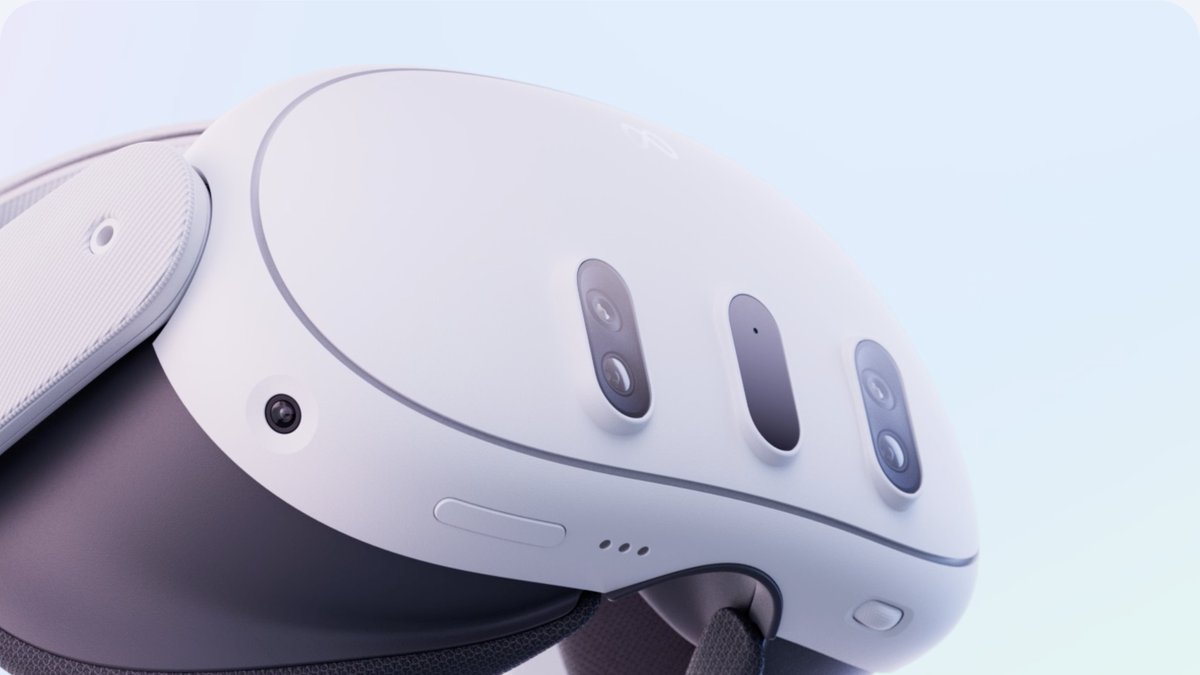
★ Your pick: Meta Quest 3 512GB
Sharper text and far less glare in long sessions.
★ Your pick: Meta Quest 3 512GB
Its lenses slide across a much wider range.
★ Your pick: Meta Quest 3 512GB
The cheaper one uses Quest 2 lenses, so you’d see little change.
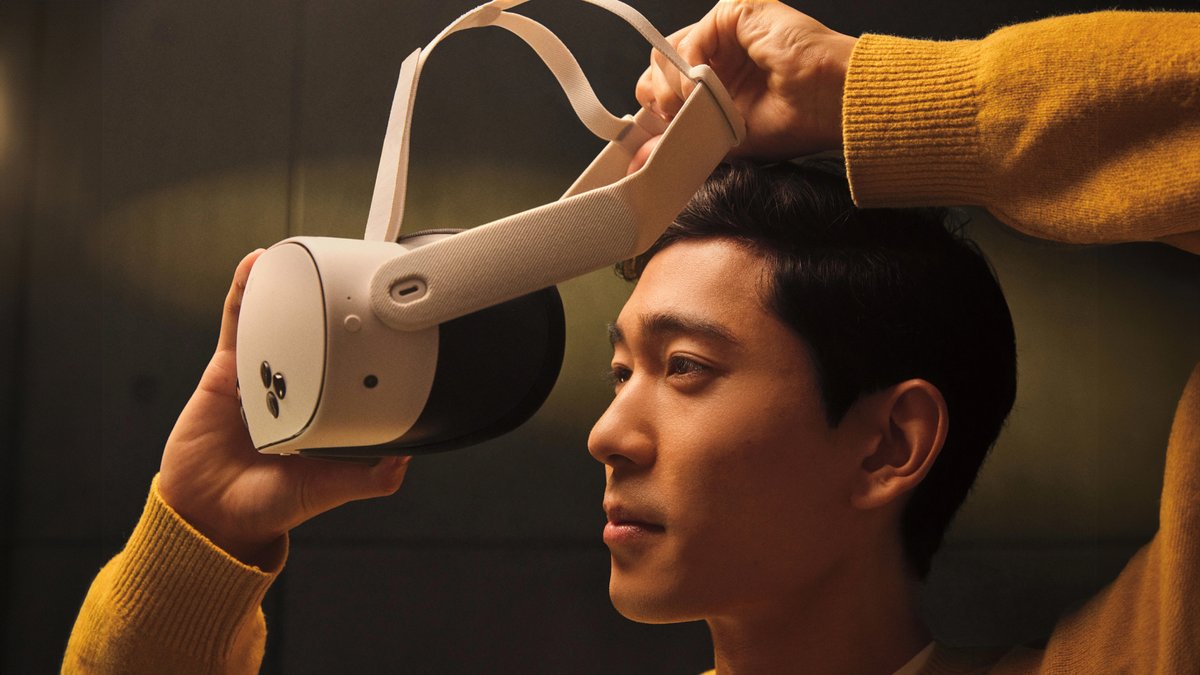
★ Your pick: Meta Quest 3S 128GB
The cheapest way to find out if they’ll stick with VR.
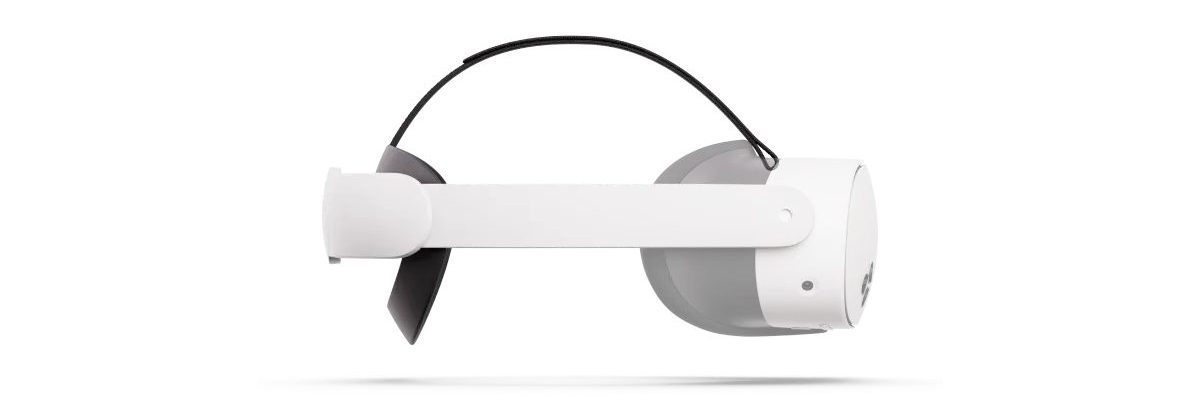
★ Your pick: Meta Quest Elite Strap
Moves weight off your cheeks on either headset.
👑 Our Top Pick — Best Overall Value
Meta Quest 3S 128GB
Same chip and same games for a lot less money.
Opens on our Top Pick. Tap an option to see the best match for you.
Both Headsets Play Every Game the Same Way
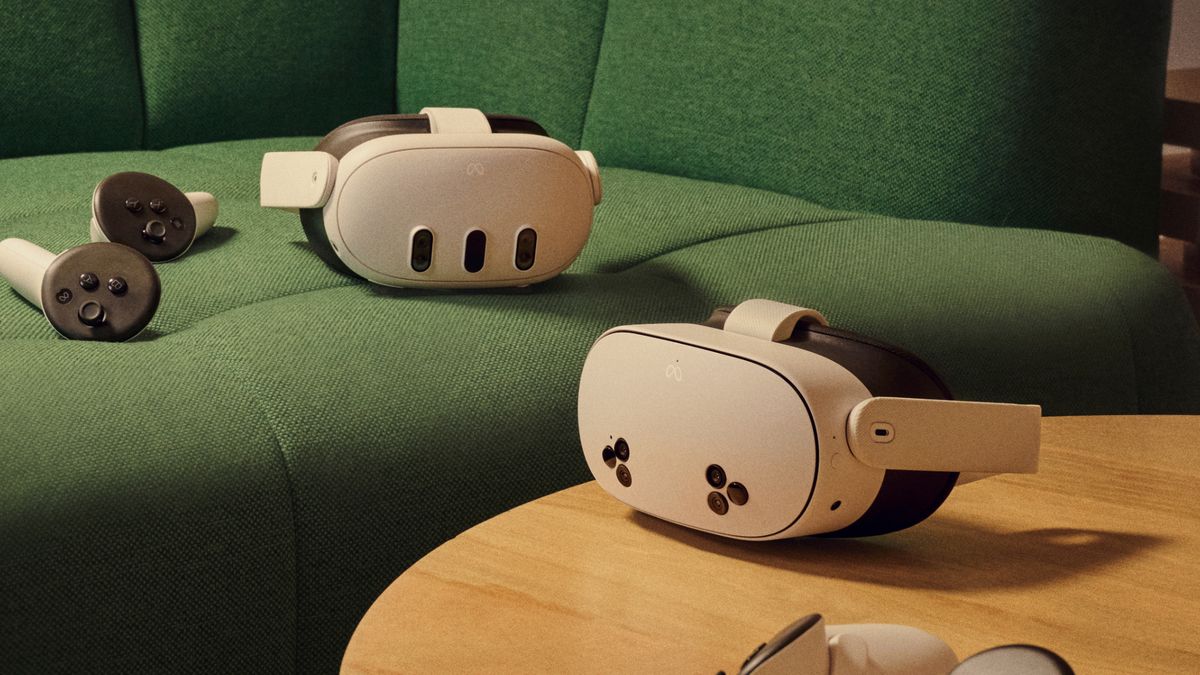
Start here, because it’s the part most buyers don’t know. Both run on the same chip, a Snapdragon XR2 Gen 2, with the same 8GB of memory. That chip is the headset’s brain. It decides which games run and how smoothly they play. Since both share it, they share one game store, the same apps and the same frame rates. No game is locked to the pricier one, as Android Central’s side-by-side points out.
So why does the cheaper one exist? Meta built it to hit a lower price, and it got there by reusing parts. It has the screens, lenses and body style of the old Quest 2, wrapped around the new chip. Think of a new engine dropped into last year’s car. It goes just as fast. It just doesn’t have the nicer windshield.
That makes the rest of this choice simpler. You aren’t picking what you can play. You’re picking how it looks and how it sits on your face.
The Quest 3 Buys You a Sharper and Wider View
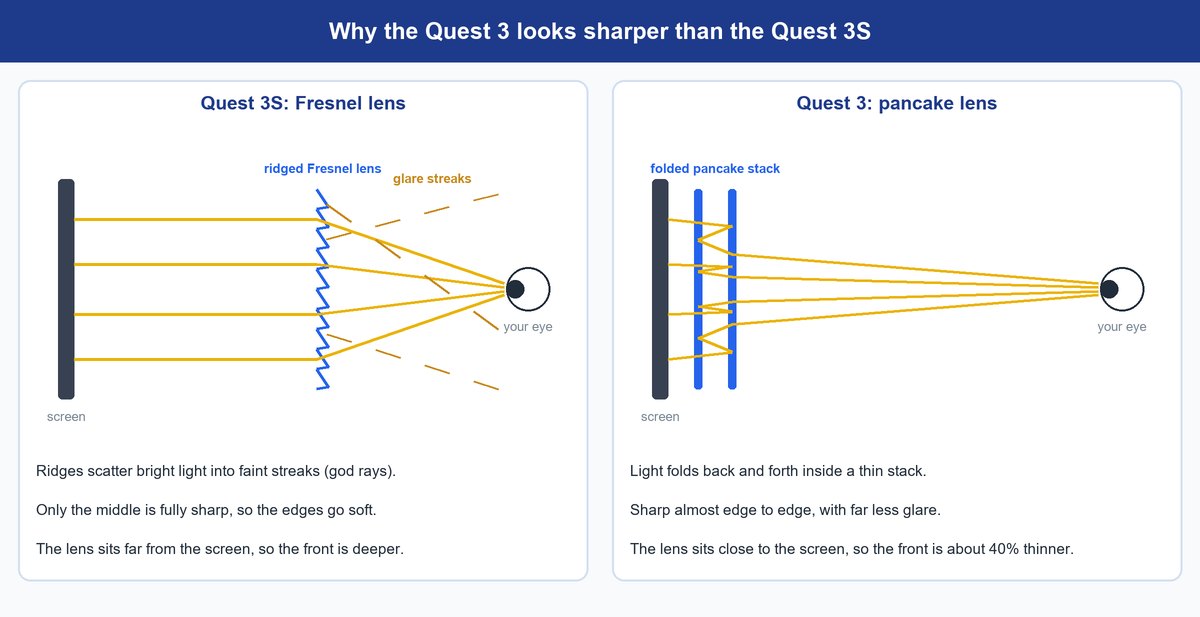
The biggest difference lives in the lenses. They sit between your eyes and the screens and bend the picture so it fills your view.
The 3S uses Fresnel lenses. A Fresnel lens is a thin lens cut into rings, a bit like the ridges on a lighthouse lamp. Those ridges keep it light and cheap. They also scatter bright light into faint streaks that VR players call god rays. You’ll spot them on white text against a dark background. The sharp zone in the middle is small too, so things go soft when you glance toward the edges. Reviewers at Road to VR and PCGamesN both call its clarity last-gen.
The Quest 3 uses pancake lenses instead. These fold the light back and forth inside a short stack, so the lens can sit much closer to the screen. The picture stays sharp almost edge to edge, with far less glare. The headset gets thinner too.
Here’s the full picture, using Meta’s figures from its own spec page and Road to VR’s spec breakdown.
| Spec | Meta Quest 3 | Meta Quest 3S |
|---|---|---|
| Chip and memory | Snapdragon XR2 Gen 2, 8GB | Same |
| Lenses | Pancake | Fresnel |
| Pixels per eye | 2064 x 2208 | 1832 x 1920 |
| Pixels per degree | About 25 | About 20 |
| Field of view (wide x tall) | 110 x 96 degrees | 96 x 90 degrees |
| Eye spacing it fits | About 53 to 75 mm | About 58 to 68 mm |
| Depth sensor | Yes | No |
| Battery (Meta’s average) | About 2.2 hours | About 2.5 hours |
| Headphone jack | Yes | No, USB-C only |
| Storage | 512GB | 128GB or 256GB |
What do those numbers mean on your face? Here’s our math. The pricier headset has close to a third more pixels per eye. Pixels per degree tells you how much detail sits in each slice of your view, and it packs a quarter more. That’s the number that decides whether small text is easy to read. Its view is also about 15% wider, so you see more without turning.
In a fast shooter, you’ll barely notice. With tiny flight-sim gauges or a giant virtual PC screen, you will.
Worth knowing: PC VR players lean hard toward the sharper headset. In Steam’s September hardware survey, as reported by vr.org, the Quest 3 made up about 27% of SteamVR headsets. The 3S made up about 11%.
Measure Your Eyes Before You Pick a Quest
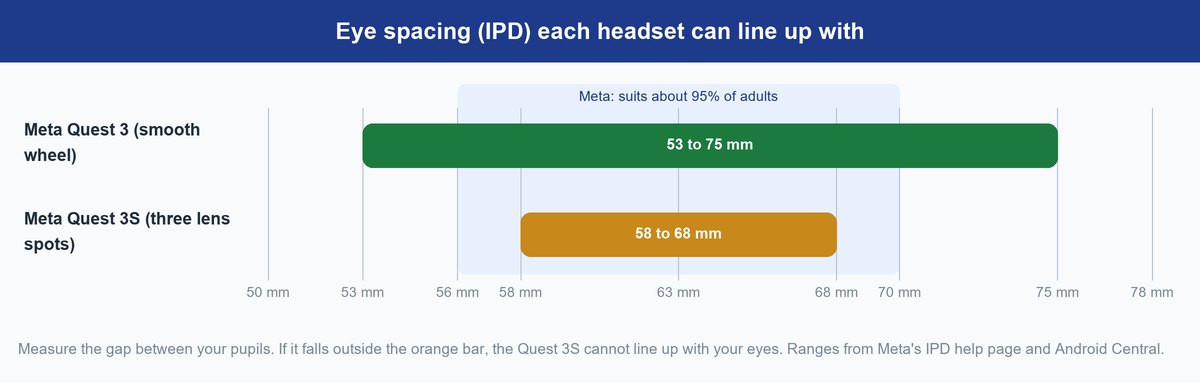
Here’s the test most buyers skip, and it can make the choice for you. IPD stands for interpupillary distance. It’s just the gap between the centers of your pupils, in millimeters. The lenses need to line up with your pupils. If they don’t, the picture looks blurry and your eyes work harder.
The two headsets handle this very differently. The Quest 3 has a wheel that slides the lenses smoothly. Meta’s IPD help page puts its range at about 53 to 75 mm. The 3S has just three fixed lens spots. The middle one sits at 63 mm, with the outer two at 58 and 68 mm. You can rest it between them, which helps a little, but in practice it stops at those two ends. Android Central’s IPD guide walks through each spot.
Most adults land inside both. Meta says its headsets suit about 95% of adults. The edges are what matter. If your eyes sit outside the cheaper headset’s range, it will never quite line up.
So how do you measure? Stand at a mirror and hold a ruler under your eyes. Close your right eye and line up the zero with your left pupil. Then switch eyes and read where the right pupil sits. Do it a few times and take the middle reading. Your glasses prescription may list it too, as PD.
Before you buy: if the headset is a gift, measure the person first. An IPD outside that narrower range is the one case where the cheaper headset is simply the wrong gift, whatever the sale price says.
Mixed Reality, Comfort and Battery Are Smaller Tiebreakers
Past the lenses, the gaps get smaller. One of them might still matter more to you than the view.
Mixed Reality and the Depth Sensor
Mixed reality means seeing your real room through the headset, with games drawn on top. Both do it with color cameras. The Quest 3 adds a depth sensor, which measures how far away your walls are. That helps it map your room on its own. The cheaper one has two small wins back. Infrared lights help hand tracking in dim rooms, and one button flips into mixed reality.
Comfort and Balance on Your Face
Both weigh about the same. Balance is the real story. Pancake lenses make the Quest 3’s front about 40% thinner, as Digital Trends explains. Less weight hangs past your nose, so there’s less pull on your cheeks, a point Which? makes too.
The soft fabric strap on both is the weak spot. If either feels front-heavy, a better strap fixes more than switching headsets would. Meta’s own Elite Strap fits both headsets and cups the back of your head with a rigid band and a fit dial. That moves the load off your cheeks.
Battery Life and Headphones
Meta rates the 3S at about 2.5 hours and the Quest 3 at about 2.2. By our math, the pricier one loses about 18 minutes per charge. A battery strap fixes that on either one. It adds a pack at the back, which also helps balance the weight.
Audio is simple. The Quest 3 keeps a headphone jack. The cheaper one drops it, so wired headphones need a USB-C adapter.
What the Price Gap Really Costs You per Hour
At list price, the Quest 3 costs about $250 more than the 128GB 3S. That’s been true since Meta’s April price change, which put the Quest 3 at about $600 and the 3S at about $350. This week the gap is closer to $300, because only the cheaper one is on sale.
Say you play four hours a week for three years. That’s about 620 hours in the headset. Spread the list gap across that, and the upgrade costs you about forty cents an hour. At this week’s wider gap, it’s closer to fifty cents. For a regular player, that’s cheap for a sharper view every time you put it on.
Now say it’s more like one hour a week. That’s about 150 hours over three years. The same upgrade now costs you roughly $1.60 to $2 an hour. That’s poor value for a headset that comes out a few weekends a year. Nobody publishes how often people keep using their headsets. So be honest with yourself about which player you are.
Do the math: the 256GB Quest 3S is the odd one out. At list it costs about $100 more than the smaller model. Yet it sits only about $150 below the Quest 3. That last step buys double the storage plus the better lenses. Neither headset takes a memory card, so only pick it when a sale pulls it close to the smaller model’s price.
Why the Gap Got Wider This Black Friday
Prices on both headsets went up on April 19 this year. Meta blamed a spike in memory chip prices in its pricing update. AI data centers buying up memory drove that spike, and Tom’s Hardware laid out the old and new prices. It wasn’t a first, either. Meta did the same to the Quest 2 a few years ago. Price hikes partway through a headset’s life are now a pattern.
Then came the holiday sale. Meta’s Black Friday deal cuts the 3S, and it’s under $300 at several big stores this week. The pricier one is sitting at full price, as vr.org’s deal tracker shows. Black Friday itself lands on November 27.
Two details are easy to misread. Every Quest bought through early January comes with the golf game GOLF+, sale or no sale. So the bundle isn’t a sign of a deal. And this year’s best sale price still sits above last year’s, when it dipped to about $250 with a gift card. If you were waiting for prices to keep falling, they went the other way.
If the Quest 3 is your pick, Meta also sells it refurbished for about $50 less than new.
Watch out: Meta’s sale ends November 30. After that, the gap shrinks back to its normal size. The cheaper model at full price next week is a slightly weaker deal than it looks today.
Waiting for a Quest 4 Is a Bad Bet Right Now
Some buyers hold off for the next model. This year, that plan doesn’t hold up. Meta’s Connect event in September had no new Quest. Its big headset news was the Meta VR Glasses, a lighter headset priced well over $1,000 and due next spring, per Meta’s Connect recap. In October, Mark Zuckerberg said Meta will only ship new devices when it has “major breakthroughs,” Road to VR reported. Reports gathered in vr.org’s Quest 4 tracker point to late 2027 at the earliest. Meta hasn’t confirmed anything.
Meta’s support history matters too. This month, Meta named its last feature update for the Quest 2 and Quest Pro. Security fixes run through the end of 2027, as Road to VR covered. Here’s the telling part. The Quest Pro came out two years after the Quest 2. Yet both get cut off on the same date. Support followed the chip generation, not the launch date.
That’s why we think the Quest 3 and 3S will very likely be retired together. They share the exact same chip, and the Quest 2 and Pro only shared a chip generation. This is our reading of that history, not a promise from Meta. But it means the newer 3S doesn’t buy you extra years, and the Quest 3 doesn’t buy you fewer. The Quest 2 got about six and a half years of feature updates. If Meta repeats that, this pair could get new features into roughly 2030. Again, that’s our estimate, not a date Meta has given.
Meta is also refocusing the Quest on games, Android Central reports. These two headsets are the ones those games will target.
Above the Quest 3, the next step is a big jump. Valve’s Steam Frame costs more than $1,000, as we covered in our look at whether the Steam Frame is worth it. For most people, the Quest 3 is still the cheapest sharp headset by a wide margin.
The Quest Headsets Worth Buying This Holiday
These are ranked by how well they fit most buyers, not by price.
Image: Meta.
1. Meta Quest 3S 128GB — Best First Headset and Gift
$300–$350 rangeSame chip as Quest 3Fresnel lensesThree lens spots
This is the headset we’d hand most people this year. It runs the same chip and memory as its pricier sibling, so every game in the Quest store plays the same on it. For a first headset, a family gift or a test of whether VR sticks, it’s the smart buy.
What you give up is the view. The Fresnel lenses and screens are the same parts the Quest 2 used. Text looks softer, bright scenes can show god rays, and the sharp zone is smaller. The three lens spots fit most adults. Battery life is a touch better than its sibling’s, and you get infrared lights for hand tracking in dim rooms.
Against the pricier model, you save a real chunk of money. Its storage holds a good stack of games, but big ones fill it fast. There’s no card slot, so plan on deleting what you’ve finished.
Skip it if you already own a Quest 2, if your eye spacing falls outside its range, or if you’ll mostly use VR as a big PC screen. Then the pricier model is worth the stretch.
Pros
- Same chip and games as the pricier model.
- The lowest-cost way into Meta’s current headsets.
- A little more battery life per charge.
- Infrared lights help hand tracking in dim rooms.
- One-press button for mixed reality.
Cons
- Fresnel lenses show god rays and go soft at the edges.
- Only three lens spots for eye spacing.
- No depth sensor for room mapping.
- No headphone jack.
Image: Meta.
2. Meta Quest 3 512GB — Best for Long Sessions and Sharp Text
$550–$600 rangePancake lensesDepth sensorSmooth lens wheel
The Quest 3 is the one to buy when you’ll actually notice the view. It plays the exact same games as the cheaper model. What changes is how they look, and how the headset sits on your face over a long session.
The pancake lenses are the headline. They stay sharp almost to the edge and cut most of the glare. The screens pack close to a third more pixels, and the view is wider. The lens wheel slides across a much wider range, so it fits far more faces. You also get a depth sensor, a headphone jack, four times the base model’s storage and a thinner front.
The trade-off is cost and timing. It costs a couple hundred dollars more at list. You also lose a few minutes of battery per charge.
Buy it if you play several hours a week, love flight or racing sims, want a giant virtual PC screen, or you’re coming from a Quest 2. Buy it too if your eyes sit outside the cheaper model’s range. Then it isn’t really an upgrade. It’s the only one of the two that fits you.
Pros
- Pancake lenses stay sharp nearly edge to edge.
- Close to a third more pixels per eye than the cheaper model.
- Smooth lens wheel fits a much wider range of faces.
- Depth sensor helps map your room for mixed reality.
- Plenty of storage and a headphone jack.
Cons
- Costs a couple hundred dollars more at list.
- Slightly shorter battery life than the cheaper model.
- Plays no games the cheaper headset can’t.
Which Quest We’d Buy for Most People
For most people this holiday, the Quest 3S 128GB is the right headset. It plays everything the pricier one plays, and it’s the one on sale. The Quest 3 is the better headset, no question. It’s just better at things a first-timer may never test. Measure your eyes, be honest about your hours, and let those two answers pick for you. And if a Quest 4 is what’s holding you back, let it go. That’s a 2027 story at best.
Want us to review your product? Send it over.
Frequently Asked Questions
How much better is Meta Quest 3 compared to 3S?
It’s sharper, not more capable. It has close to a third more pixels per eye, a wider view and pancake lenses with far less glare. Both run the same chip and games, so the gap is in how things look.
Should I buy Meta Quest 3 or wait for Quest 4?
Buy now if you want VR this year. Meta showed no new Quest at Connect this fall, and reports point to late 2027 at the earliest for a Quest 4. Meta says it will only ship new devices after major breakthroughs.
Is Oculus Quest 2 still good in 2026?
It works, but its support is winding down. Meta’s last feature update reaches it by March 2027, with security fixes through the end of that year. A Quest 3S has the same lenses, a newer chip and more years ahead.
Is Meta Quest 3 worth buying in 2026?
Yes, if you’ll use it a lot. It pays off for long sessions, sims and virtual PC screens. It’s also the pick for eyes outside the cheaper model’s range and for Quest 2 owners.
Is the Quest 3S a good gift for a kid?
It can be, with two checks first. Meta accounts need the user to be at least 10. Kids under 13 need a parent-managed account. Measure their eye spacing too, since the cheaper model’s lenses only reach so far.
Do the Quest 3 and Quest 3S play the same games?
Yes. Both use the Snapdragon XR2 Gen 2 chip with 8GB of memory, so they share one game store. No game needs the pricier one.