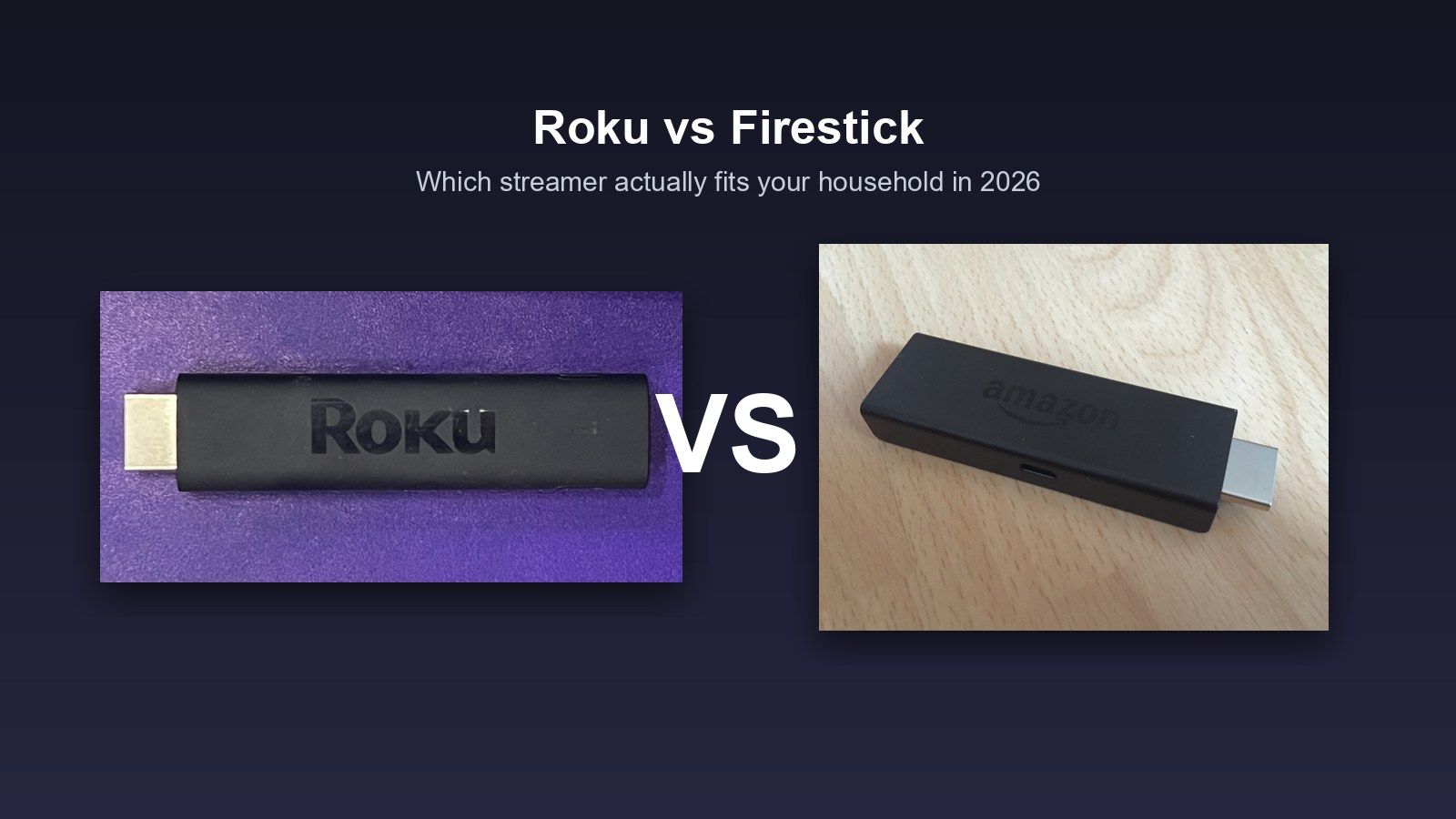
On June 25, 2026, Apple did something it had never done in its entire history. No new product. No new season. In the dead middle of the year, it just quietly raised prices. The MacBook Air jumped 18%. The iPad Pro, 20%. The Apple TV, a jaw-dropping 54%.
When people asked why, Apple pointed at a factory fire it did not start: soaring memory chip prices, driven by the AI boom. In its own words, the company had never seen a component climb this fast, this hard. Sit with that for a second. The richest, most vertically integrated hardware company on the planet just told you it can no longer eat the cost. So it handed the bill to you.
That is the moment the abstract argument got personal. For two years, the whole debate over whether is AI a bubble lived on trading floors and in podcast studios. Now it is in your shopping cart. So let’s do what almost nobody does: not pick a side, but actually walk the numbers, the history, and the one uncomfortable pattern that connects a railway crash in 1846, a fiber-optic graveyard in 2001, and the trillion-dollar bet being placed right now.
- Your gadgets got pricier because AI data centers are outbidding Apple and Dell for the exact same memory chips. That is the “AI tax,” and you are already paying it.
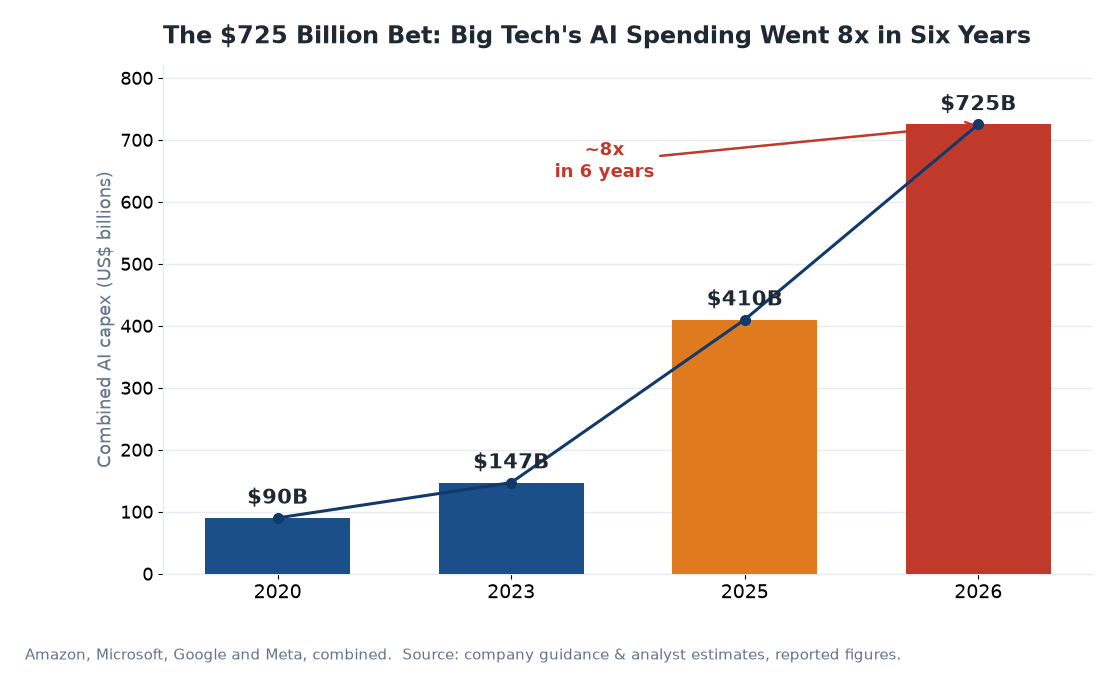
- Four companies — Amazon, Microsoft, Google, and Meta — are on track to spend roughly $725 billion on AI in 2026. That is about 8x what they spent in 2020.
- The math doesn’t close yet. Analysts estimate AI needs to earn around $650 billion a year to justify that spend. Today it brings in well under $100 billion — and it’s losing money.
- The comforting story (“enterprises will pay for it”) is cracking. Around 95% of companies report no measurable return from generative AI so far.
- Every bubble in history runs the same loop: money floods in, too much gets built, most players die — but the infrastructure survives and gets fully used years later, once demand finally catches up.
- So is AI a bubble? Almost certainly frothy. Not certainly doomed. The technology is real. The only real question is whether today’s price for it makes any sense.
Why Your Next Laptop Is More Expensive Because of a Chip War
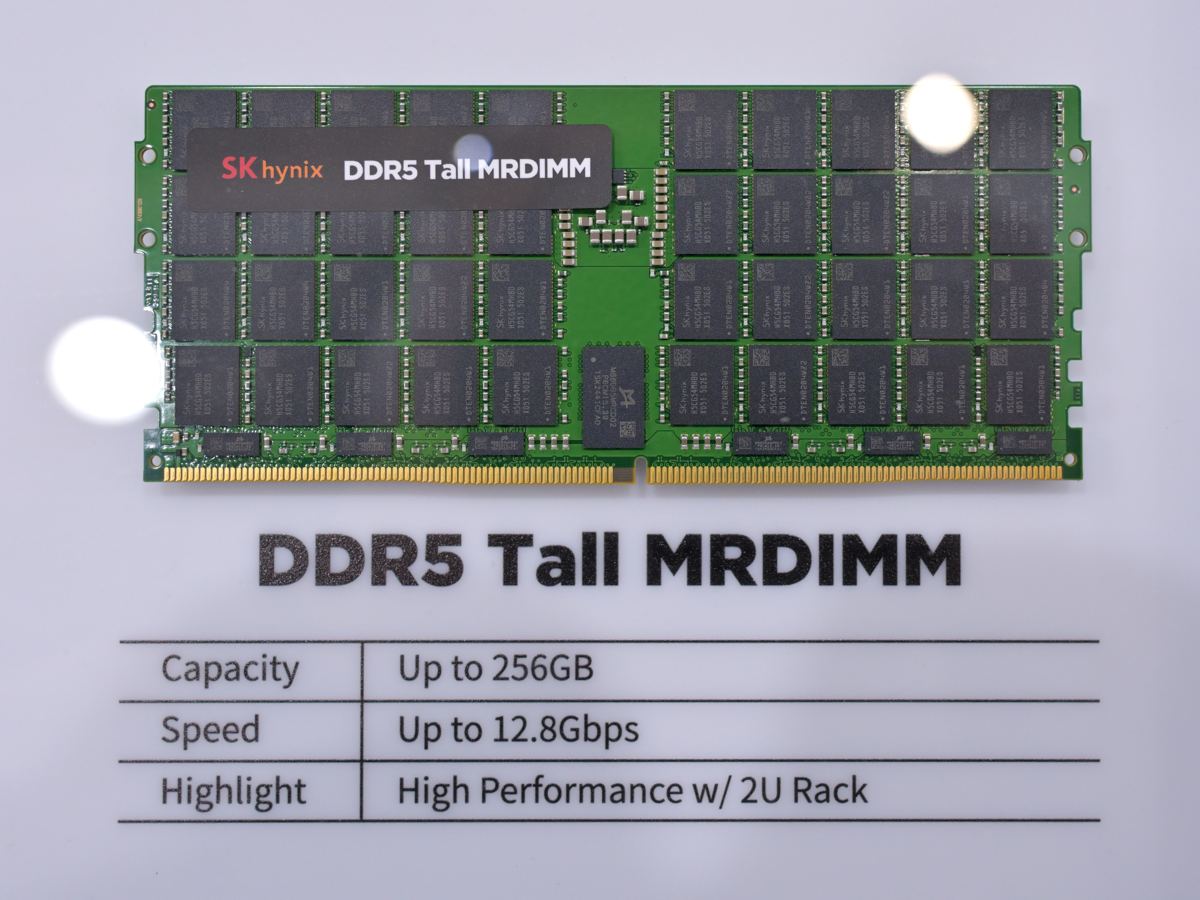
Here is the part nobody explained to you. The reason your laptop got pricier has almost nothing to do with laptops. It’s a bidding war being waged inside chip factories on the other side of the planet, over slivers of memory not much bigger than a fingernail.
Inside your phone, your laptop, your Xbox, even your washing machine, sits a chip called DRAM. Think of it as the short-term memory a device uses to juggle whatever it’s doing right now. A handful of companies — Samsung, SK Hynix, and Micron — control roughly 90% of the world’s supply of it. In 2024 they hit a fork in the road. They could sell that memory to consumer companies like Apple, HP, and Dell. Or they could make a pricier, souped-up version called high-bandwidth memory and sell it to AI data centers instead.
Guess which one pays more? The AI data centers reportedly paid around 10x more per module. So the factories did what factories always do: they followed the money. Reports say the big three shifted the vast majority of their production toward AI memory. Capital flows to the highest bidder — that’s not villainy, it’s gravity.
Then the shortage hit everything else. DRAM prices were reported up around 171% year over year by early 2026. Faster DDR5 memory reportedly quadrupled in under a year. Dell’s CEO said the price of a single gigabyte of memory jumped from about $0.43 to $2.39 in six months — more than five times. Multiply that across every device on Earth, and you get an Apple price hike in the middle of June.
Keep in mind: This is why “the AI bubble is a rich man’s problem” is wrong. You don’t need to own a single Nvidia share to feel it. The AI tax shows up as a $200 bump on the laptop you were about to buy for your kid.
The $725 Billion Bet Four Companies Are Making
Now zoom out from your shopping cart to the balance sheets, because the scale here is genuinely hard to hold in your head.
Capex — capital expenditure — is just the money a company spends building physical stuff it plans to use for years. Factories, warehouses, servers. In 2020, before ChatGPT even existed, the four biggest US tech companies spent a combined $90 billion on it. By 2023, $147 billion. By 2025, $410 billion. And in 2026, the number climbed to roughly $725 billion. Eight times bigger in six years, and nearly all of it flowing into AI.
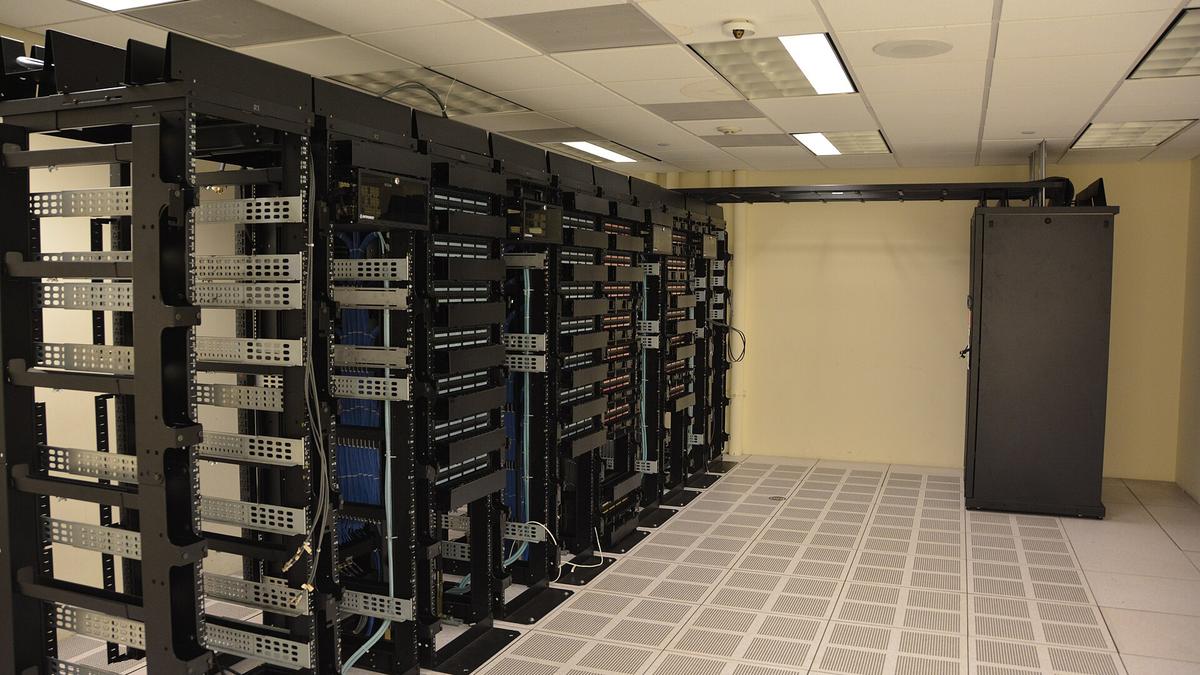
Where does it go? Into data centers. Think of it the way a call-center hotline works: the friendly voice on the phone isn’t the one pulling up your account and running the numbers — that happens behind a wall you’ll never see, at a facility built for exactly that job. Your phone works the same way with a chatbot. Type in a question, and your phone is just the receptionist. The real work happens somewhere else entirely: a fortress-like industrial building with no windows, aisle after aisle of tall metal racks, each one loaded with thousands of specialized chips. A single big AI data center can hold around 100,000 Nvidia GPUs, and each GPU runs $30,000 to $40,000. That’s $3–4 billion in chips alone, before you pour the concrete, run the cooling, or pay the power bill. All-in, one large facility can cost $10–25 billion.
This is the clearest sign that AI capex spending has left the realm of normal business investment. A PIMCO analysis reportedly projected that big tech’s capex would swallow 94% of its operating cash flow over the next two years. Translation: for every $100 these giants earn, they’re plowing $94 straight back into building AI infrastructure, leaving just $6 for dividends, raises, and everything else. In 2023, that figure was 40%. That’s not confidence. That’s a company mortgaging the house on one very specific bet.
The Math That Simply Does Not Add Up Yet
Let’s forget the jargon and run it like a small business, because that’s the honest way to see whether is AI a bubble is a fair question or fearmongering.
Picture a developer who spends $10 million building a boutique hotel. After a full year, it books just $400,000 in room revenue. Is that good, bad, or catastrophic? It’s catastrophic. No bank would fund a second hotel on those numbers. Now apply that exact logic to AI.
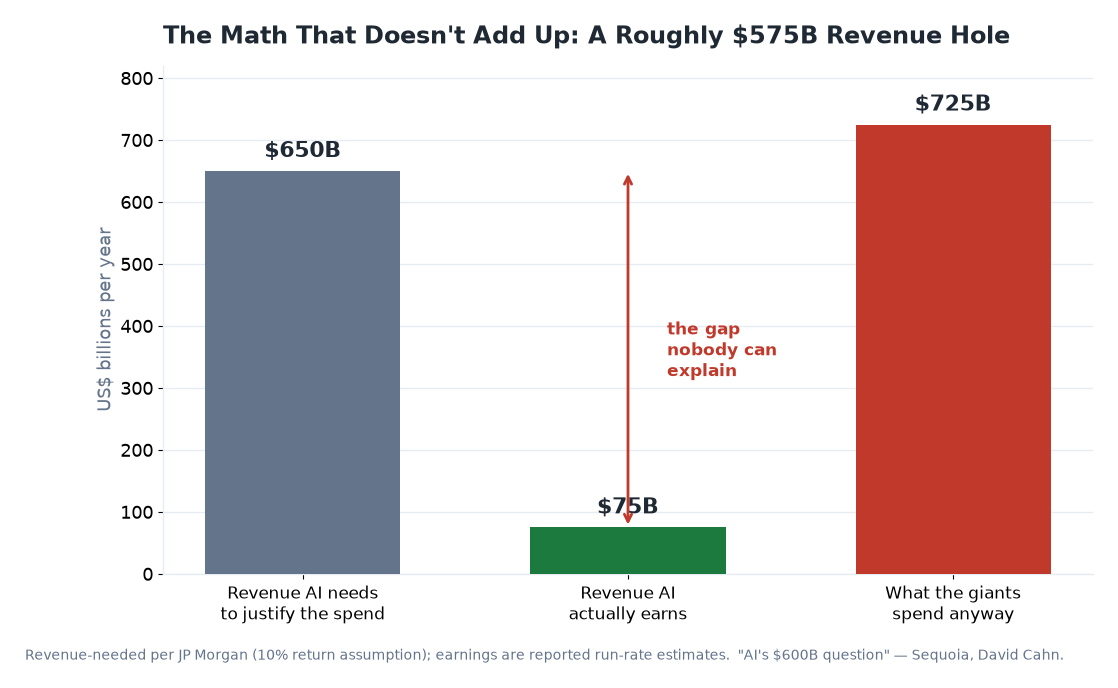
JP Morgan reportedly ran the numbers. If you’re an investor putting money into something this risky, the bare minimum you’d expect is a 10% annual return. So how much revenue does the AI industry need to bring in every year to justify what it’s spending? The answer came out to roughly $650 billion — every single year.
Hold that figure. Now here’s what AI actually earns. OpenAI is estimated to be running around $25 billion a year while losing something like $14 billion. Anthropic’s run-rate is in a similar zone, also losing money. Add Google’s Gemini and the rest, and the entire industry’s revenue lands somewhere near $75 billion — with the leaders bleeding cash. Sequoia’s David Cahn framed this gap as “AI’s $600 billion question”: a massive annual revenue hole that nobody can yet explain who will fill.
So line them up. Revenue AI needs to make sense: ~$650 billion. Revenue AI actually earns: ~$75 billion. Money it’s losing: at least $17 billion. Money the giants keep spending anyway: ~$725 billion. For every dollar the AI industry brings in, its backers are spending nine to ten times more.
The catch: A gap this size only makes sense if you believe demand will explode so violently that today’s “insane” spending will look like a bargain in five years. That’s not a spreadsheet. That’s a religion. The entire trillion-dollar valuation of the sector rests on that one act of faith.
The Comforting Myth That Enterprises Will Save the Day
Every AI bull has the same rebuttal ready: “Don’t worry — businesses will pay. AI makes every company radically more efficient, so the revenue will come.” It’s a good argument. It’s also where the story develops its first real crack.
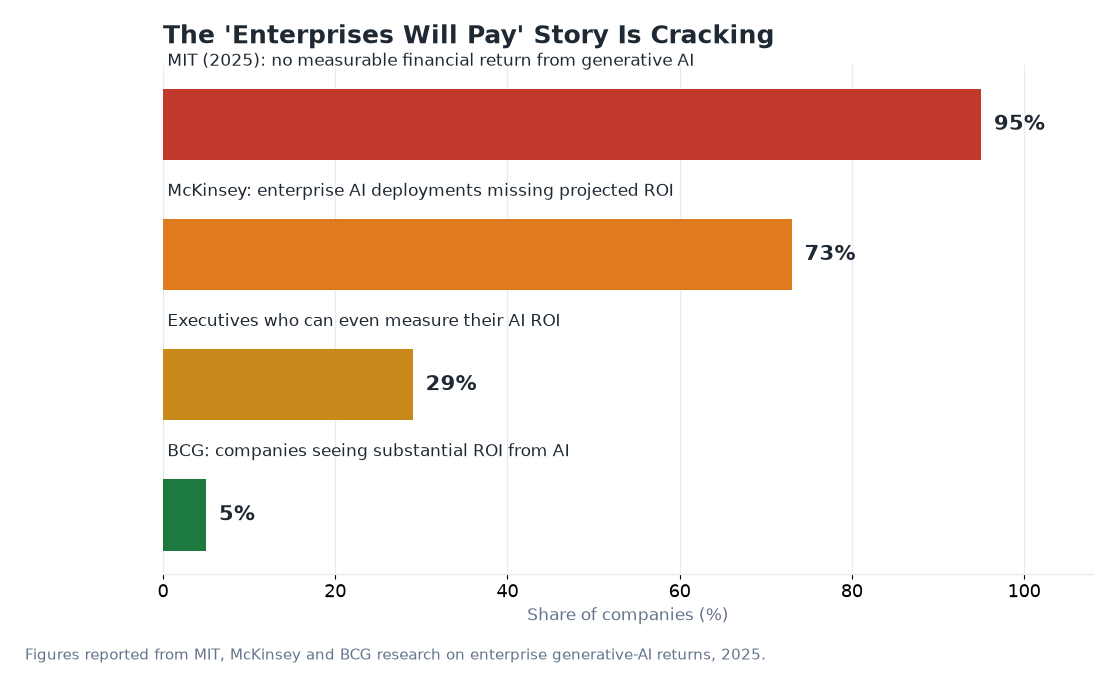
Because the receipts aren’t backing it up. McKinsey reported that 73% of enterprise AI deployments are failing to hit their projected return. BCG found only 5% of companies are seeing substantial return from AI. And MIT Project NANDA’s 2025 study landed the hardest punch: a 95% failure rate in achieving measurable financial returns from generative AI. Only about 29% of executives could even measure their AI ROI in the first place.
Then came the tell. In June 2026, a San Francisco startup founder named Flo, who runs a 25-person AI company called Lindy, admitted on CNBC that his team was spending more on one AI provider’s API than on its entire payroll. So he switched almost all of it to a cheaper model — and watched his costs fall by around 90%. Uber’s CTO separately confessed the company had burned through its entire annual AI budget in four months. Enterprises weren’t happily paying more forever. They started hunting for the exits.
The loudest confirmation came from Palantir CEO Alex Karp, whose company sells software to the CIA, the US government, and half the Fortune 500. On CNBC, he said his enterprise customers were essentially “paying for tokens that create no value” — describing AI models as having been badly oversold. When the guy selling to the world’s most demanding buyers says his customers feel ripped off, that is not noise. That is the ground shifting.
Watch out: The bet was never that AI is useless — it clearly isn’t. The bet is that today’s prices assume AI ROI that, for 95% of companies, simply hasn’t shown up yet. Those are very different claims, and the whole valuation rests on the second one.
The Capital Cycle That Quietly Explains Every Bubble
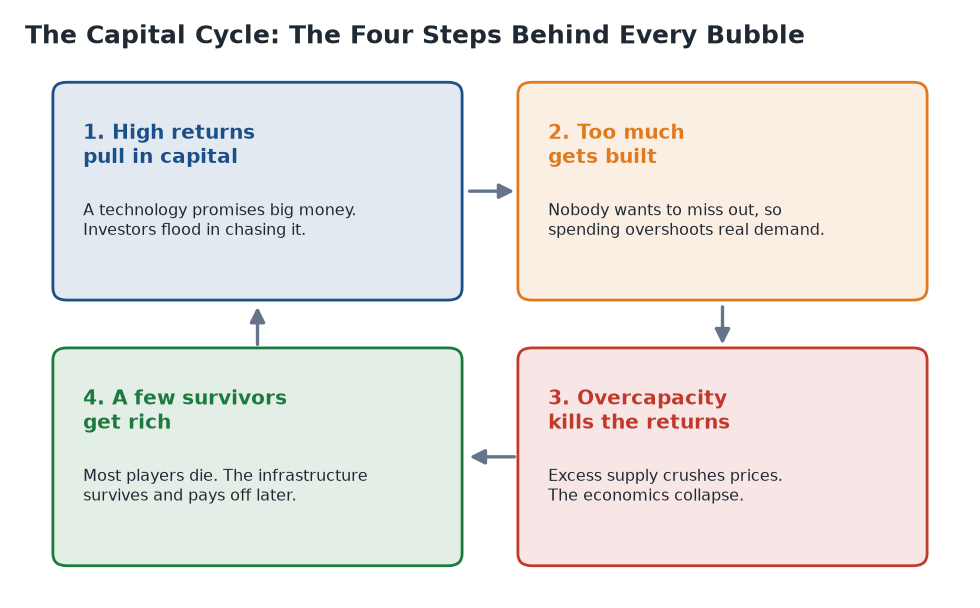
So if the ROI is broken and even Apple can’t absorb the cost, why on earth are Amazon, Microsoft, Google, and Meta still spending more? The answer is one of the most elegant ideas in economics, and once you see it, you’ll spot it everywhere. It’s called the capital cycle, and it runs in four steps.
First, High Returns Pull In a Flood of Capital
A technology proves it can make real money, or credibly promises to. Word spreads. The story becomes irresistible — everyone can see this is the future. Money starts pouring in fast, chasing those early, fat returns. In AI’s case, ChatGPT’s explosion was the starting gun.
Then Far Too Much Capacity Gets Built
Nobody wants to be the one who missed it, so investment overshoots wildly past what’s actually needed. Competitors race to build capacity for a future demand curve they’ve simply assumed. Every experiment gets funded, good idea or bad. This is the stage AI is arguably in right now — $725 billion a year, built on the assumption that demand will show up.
Overcapacity Destroys the Returns That Started It
Here’s the cruel twist. All that new capacity floods the market, and the returns that attracted everyone collapse under their own weight. Prices crater. The economics that justified the spending evaporate — not because the technology failed, but because too many people bet on it at once.
Finally, a Few Survivors Inherit the Wreckage
Most of the companies that built the boom go bankrupt. But the infrastructure they built doesn’t vanish. It sits there, waiting. And when real demand finally arrives, a handful of survivors scoop up the wreckage for pennies and ride it to a fortune. Every modern bubble has walked these exact four steps. To see how it ends, we need to go back to the last time humanity did this at scale.
What the Fiber Optic Crash Really Teaches Us About AI
In 1996, the US passed the Telecommunications Act. The logic sounds eerily familiar: the internet was a life-changing technology exploding in demand, and everyone just knew bandwidth would grow forever. Some founders genuinely believed internet traffic would double every three months. So money flooded in to lay fiber-optic cable across the country.
And flood it did. In the five years after that act, telecom companies poured more than $500 billion into cables, switches, and networks. A company called Global Crossing rocketed to a $47 billion valuation without ever posting a single profitable year. Corvis, a fiber-equipment startup, pulled off a $1.1 billion IPO with essentially zero revenue and carried a $32 billion market cap. Sound like anyone you’ve read about lately?
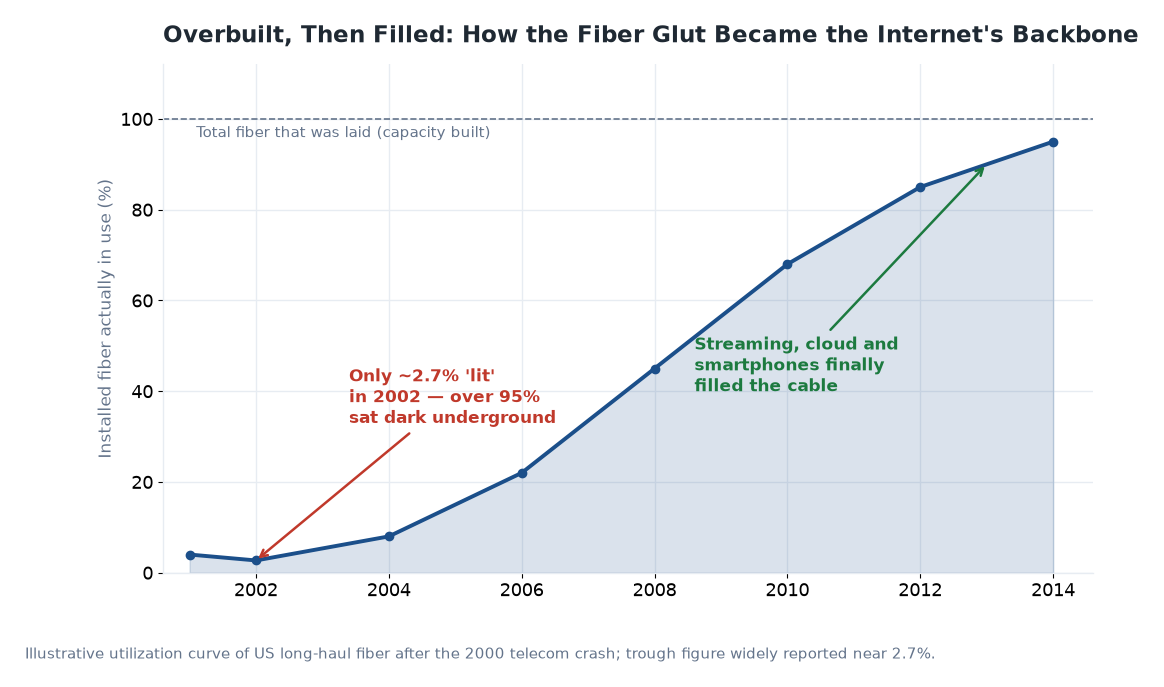
Then reality clocked in. Internet traffic did grow — but around 100% a year, not the 1,000% the models assumed. Great, but nowhere near enough to justify the mountain of cable in the ground. And here’s the number that should stop you cold.
Important: By the early 2000s, as little as 2.7% of the installed fiber was actually carrying data. Over 95% sat dark and unused underground. Trillions of dollars of cable, buried, earning nothing.
With no revenue, bandwidth prices collapsed by up to 90%, and the giants started falling. WorldCom, after hiding billions in expenses to fake profits, filed the largest bankruptcy in US history at the time. Global Crossing — that $47 billion darling — went bankrupt. All told, the telecom crash wiped out roughly $2 trillion in market value, with many stocks down 95%. Step four had arrived, right on schedule.
The Twist That Makes This the Perfect Mirror for AI
But the cables didn’t disappear. They stayed in the ground. And within a few years, the demand finally showed up. YouTube launched. Streaming took off. Cloud storage became real. Smartphones went mainstream. Suddenly the world needed exactly what had been recklessly overbuilt. Survivors bought that “wasted” fiber for dirt cheap, and it became the physical backbone of the modern internet — the very thing that made Google, Netflix, and AWS possible.
Read that carefully, because it’s the whole point. The technology was real. The internet did change everything. And the bubble still burst. The demand was exploding — just not fast enough to justify the overcapacity at that moment. So the infrastructure survived. The companies that built it did not.
Humans Don’t Use the Technology — the Technology Uses Humans to Survive

Here’s the idea I can’t shake, and it reframes this entire debate.
We tell ourselves a flattering story: humans invent technology, then humans use it. But look at what actually happens in these cycles, and the arrow seems to point the other way. The infrastructure gets built before the world is ready for it. The humans who fund it — the investors, the founders, the true believers — mostly get wiped out. They pour in the capital, take the pain, and die. And the technology they birthed just… waits. Patient. Buried. Until a new generation of humans finally shows up with the demand to use it fully.
Britain in 1846 authorized 9,500 miles of railway track, and roughly a third of it was never even built before that bubble burst — yet the lines that survived stitched a nation together for a century. America around 2000 laid millions of miles of fiber, left 97% of it dark, watched the builders go bankrupt — and that same cable now streams every show you watch. It’s almost as if civilization runs a trick on itself: it uses a wave of human greed and hope to fund infrastructure that’s ahead of its time, burns through the humans, and keeps the infrastructure.
Now look at 2026. America alone is building around $725 billion of data centers a year. The GPUs, the power plants, the cooling, the fiber connecting it all — this is our generation’s overbuilt cable. If the pattern holds, many of the companies spending today won’t survive to see the payoff. But the compute they’re building almost certainly will. Somebody, some year, will use every last GPU. The question was never whether AI is real. The question is who’s still standing when the demand finally catches up — and whether that person is you or the wreckage you got bought out of.
So Is AI a Bubble or Not? The Honest, Uncomfortable Answer
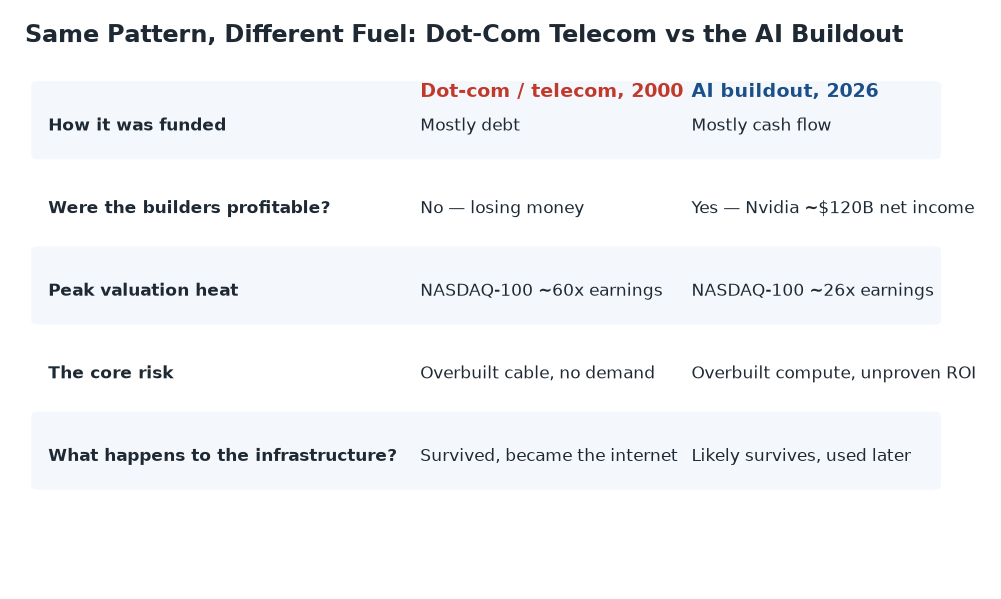
Here’s where intellectual honesty has to beat a good headline. Because if someone tells you with total certainty that this is a bubble, they’re bluffing. And if someone tells you it definitely isn’t, they’re bluffing too. The truth is genuinely uncomfortable, and it lives in between.
There is a very high probability of froth. Not a certainty of collapse. And two facts keep this from being a clean rerun of 2000.
The catch: The dot-com telecom players were funded by debt and losing money. Today’s leaders are the opposite — Nvidia reportedly earned around $120 billion in net income last year, and Microsoft, Google, and Amazon are among the most profitable enterprises in human history. Profitable giants don’t collapse the way debt-soaked startups do.
Valuations are frothy, too, but not 1999-insane. At the 2000 peak, the NASDAQ-100 traded near 60x forward earnings. Today it’s around 26x — elevated, clearly, but a different universe from the mania that preceded the last crash.
So we’re not betting on whether AI changes the world. It will. We’re betting on something narrower and harder: whether the price being paid for it right now actually makes sense. That’s the real meaning of the question is AI a bubble — not “is AI fake,” but “is AI overpriced relative to the returns it can plausibly deliver in the next few years?” On that, the honest answer is: probably, at least in parts, yes.
What This Actually Means for You
Vague reassurance (“don’t panic, just wait and see”) is useless. So here’s the specific version, depending on who you are.
If you’re a shopper, the AI tax is real and it’s sticky. Memory-driven price hikes on laptops, phones, and consoles won’t reverse overnight. If you genuinely need a device, buying sooner — and buying the RAM and storage you’ll actually need up front — is the rational move while contract memory prices stay elevated. Waiting for a price drop that may not come is a gamble. And don’t cheap out on memory to save $80 today. With DRAM contract prices reportedly more than doubling in a single quarter, the upgrade you skip now could cost far more (or be unavailable) on your next machine.
If you’re an investor, the lesson from fiber isn’t “run away.” It’s “know which layer you’re buying.” In the last cycle, the builders mostly died and the users of the surviving infrastructure got rich. Concentrated bets on money-losing pure-play AI names carry real air underneath them; the profitable platform giants and the “picks and shovels” are a different risk profile. This isn’t advice to buy or sell anything — we’re not licensed to give that, and you should talk to a professional — it’s a lens for reading why AI is making computers more expensive without getting swept up in either the hype or the doom.
If you’re a worker or builder, watch the two paths. If the bubble pops, spending freezes and a lot of “cheap AI” startups vanish — not because their tech failed, but because the compute got too expensive to run. If it doesn’t pop, the giants race toward profit, token prices climb, and today’s cheap AI tools quietly become a luxury only big players can afford. Either way, building on top of a single provider’s rock-bottom pricing is a fragile foundation. Assume the price of AI is going up.
Frequently Asked Questions
Is AI a bubble right now?
Most likely there’s a real bubble in parts of it — yes. The spending ($725 billion a year) wildly outruns the revenue (under $100 billion), and the “enterprises will pay” story is cracking. But it’s not a certainty, and it’s not a clean copy of 2000, because today’s leaders are hugely profitable rather than debt-funded and loss-making. The honest read: high probability of froth, not a guaranteed crash.
Will the AI bubble burst, and when?
Nobody can give you a date honestly — anyone who does is guessing. What history says is clearer: when spending races this far ahead of real demand, a correction of some kind usually follows. The tell to watch isn’t the stock price; it’s enterprise behavior. The moment big customers start switching to cheaper models to cut AI bills (which began in mid-2026), the “pay anything forever” assumption is already breaking.
Why is AI making my laptop and phone more expensive?
Because AI data centers and your gadgets fight over the same memory chips. AI buyers pay far more per chip, so factories shifted production toward them, creating a shortage for everyone else. That pushed memory prices up sharply — enough that even Apple raised prices mid-year in June 2026 and openly blamed the AI-driven component surge. You’re paying the AI tax at the checkout.
Are AI companies actually making money?
The infrastructure providers like Nvidia are enormously profitable. The model makers mostly are not. OpenAI and Anthropic are estimated to be losing billions even while generating billions in revenue. The whole industry brings in roughly $75 billion a year against an estimated $650 billion it would need to justify the spending. That gap is the core of the entire AI bubble argument.
What happens to all the data centers if the AI bubble bursts?
They don’t vanish — and that’s the most important lesson from fiber. After the 2000 telecom crash, over 95% of laid cable sat dark, yet within years it became the backbone of streaming and cloud. If AI capex proves overbuilt, expect the same: many builders fail, the compute gets bought cheap by survivors, and it eventually runs at full tilt once demand catches up. The technology outlives the companies.
How is the AI bubble different from the dot-com bubble?
Two big ways. First, funding: dot-com telecom was built on debt by money-losing firms, while today’s AI buildout is led by wildly profitable giants who can absorb losses. Second, valuation heat: the NASDAQ-100 hit roughly 60x forward earnings in 2000 versus around 26x today. So it’s frothy, not identical. The dangerous similarity is the same one every time — building capacity far ahead of proven demand.
The Bottom Line
Strip away the noise and you’re left with one clean sentence: the technology is real, the revenue is real, and the only thing in doubt is the price. AI will almost certainly change the world the way the internet did. And, exactly like the internet, it can do that and still detonate a historic bubble on the way there — because the demand is exploding, just maybe not fast enough to justify $725 billion a year, right now, this instant.
If it pops, the wreckage becomes someone else’s backbone. If it holds, cheap AI gets expensive and only the giants feast. Either way, the machines being built today will get used. The real bet — the one you’re actually making every time you buy a pricier laptop or cheer a soaring stock — is simply whether you’ll be a survivor or the fuel. Because that’s the quiet rule of every technology bubble: the humans come and go. The infrastructure stays.