- Qi2 is the open Wireless Power Consortium standard that bakes MagSafe-style magnets into Qi, snapping phone and charger into perfect coil alignment for more reliable, more efficient charging.
- Speed comes in two tiers — base Qi2 at 15W and the newer Qi2.2 25W tier — but hitting the full 25W needs a 30W+ USB-C PD adapter plus a 25W-class phone and charger.
- iPhone 12 and newer and the Pixel 10 have magnets built in, while Galaxy S25 and OnePlus are “Qi2 Ready” and need a magnetic case; from there you choose among certified pads, stands, and power banks.
For years, wireless charging felt like a compromise you tolerated rather than a feature you loved. You set your phone down, walked away, and came back to find it had barely charged because it slid a few millimeters off the coil. Qi2 wireless charging fixes the single most frustrating part of that experience by building magnets into the standard itself, so your phone snaps into perfect alignment every time and actually charges at the speed it promises. In 2026, Qi2 has gone from an Apple-flavored novelty to a genuine cross-platform standard supported by iPhones, Pixels, and Samsung flagships alike, and the newest revision pushes speeds high enough to make the cable feel optional for the first time.
This guide explains what Qi2 wireless charging is, how the magnetic alignment actually works, what real-world speeds look like (including the new Qi2.2 25W tier), which phones support it today, and how to choose between a pad, a stand, and a power bank. If you specifically want the head-to-head breakdown of Qi2 versus Apple’s MagSafe, we cover that relationship briefly here and link to the full comparison so you get the complete picture without the repetition.
What Qi2 Wireless Charging Actually Is
Qi2 is the latest version of the Qi wireless charging standard maintained by the Wireless Power Consortium, the industry body whose 350-plus member companies define how nearly every wireless charger on the planet talks to your phone. The headline change from old Qi is not raw power; it is a ring of magnets baked directly into the specification.
- Qi2 is an open standard, not a single company’s accessory ecosystem. Because the Wireless Power Consortium controls the spec, any certified Qi2 charger from any brand works with any certified Qi2 phone, which keeps you from being locked into one manufacturer’s pricing. That openness is the difference between buying a cheap generic certified pad and paying a premium for a proprietary puck.
- The defining feature is the Magnetic Power Profile, a built-in ring of magnets. Older Qi pads relied on you eyeballing the placement, and a small misalignment dropped charging speed or stopped it entirely. Qi2’s magnets pull the phone and charger into exact coil-over-coil alignment, which means the energy transfer is more efficient and far more reliable, so you stop waking up to a phone that never charged overnight.
- The magnetic design was directly inspired by Apple’s MagSafe. Apple contributed the magnetic concept to the consortium, which is why a Qi2 charger and a MagSafe charger feel nearly identical when a phone clicks onto either one. The practical upshot is a shared accessory world where many magnetic mounts, wallets, and stands fit both systems.
- Qi2 is backward compatible with the hundreds of millions of older Qi devices already in use. A Qi2 charger still powers a plain Qi phone, and a Qi2 phone still charges on an old flat pad, just without the magnetic snap and at the older, slower rate. That overlap protects the accessories you already own while you upgrade gradually.
How the Magnetic Alignment Makes Charging Faster and More Reliable
The reason Qi2 charges faster is not only about pushing more watts; it is about wasting fewer of them. Wireless charging works by passing energy between two copper coils through a magnetic field, and that handoff is only efficient when the coils sit almost perfectly on top of each other.
- Perfect coil alignment cuts the energy lost as heat. On a loose flat pad, even a slight offset forces the system to work harder and dump the difference as warmth, which both slows charging and ages your battery faster. Qi2’s magnets lock the coils into place so more of the incoming power reaches the battery instead of heating up the back of your phone. Worried about long-term wear? Here is the honest answer on whether wireless charging is bad for your battery.
- The charger and phone negotiate their capabilities before charging begins. Qi2 includes an accessory-identification handshake where the device and the charger exchange information about what each can safely handle, then settle on the fastest rate both support. This is why a single Qi2 charger can deliver 15W to one phone and a slower trickle to your earbuds without you changing anything.
- The magnetic hold lets you keep using the phone while it charges. Because the phone is physically attached rather than balanced on a slick surface, you can pick it up to answer a text and set it back down without re-hunting for the sweet spot. On a stand, that means you can prop the phone up for video calls or as a nightstand clock while it tops off.
- Tighter alignment is what unlocks the higher speed tiers. The jump to 25W in the newest revision is only safe because the magnets guarantee the coils stay precisely positioned; you cannot reliably push that much power across a misaligned gap. Alignment, in other words, is the foundation that the entire speed story is built on.
How Fast Qi2 Wireless Charging Really Is
This is where the most confusion lives, because “Qi2” now refers to two different speed tiers, and the marketing on charger boxes does not always make the distinction clear. Here is the honest breakdown of qi2 wireless charging speed as it stands in 2026.
The original Qi2 standard, finalized in late 2023, charges at up to 15W. That matches the rate Apple’s MagSafe delivers and is the speed you get on the vast majority of Qi2 phones and chargers sold today. It is a comfortable, low-heat rate that will fully charge most phones overnight or add a meaningful chunk during a lunch break.
The newer revision, officially Qi v2.2.1 and branded Qi2.2 25W (sometimes written as “Qi2 25W”), raises the ceiling to 25W, roughly a 67% increase over 15W. The Wireless Power Consortium launched this tier in mid-2025, and according to the consortium a Qi2.2 setup can take a compatible phone from empty to about 50% in roughly 30 minutes under good conditions.
There is a critical catch with qi2.2 25w that trips up a lot of buyers, so it is worth stating plainly:
- Hitting the full 25W requires a 30W-or-higher USB-C Power Delivery wall adapter. Wireless charging loses a meaningful slice of energy to heat during the coil-to-coil handoff, so a 20W brick that looks adequate on paper cannot sustain a true 25W output once those losses are subtracted. If you plug a Qi2.2 charger into an old 12W cube, it quietly falls back to a slower rate and you never see the speed you paid for.
- The charger, the phone, and the adapter must all support the 25W tier. A Qi2.2 charger paired with a 15W-only phone tops out at 15W, and a Qi2.2 phone on a 15W charger does the same. All three links in the chain have to be 25W-class before the fast lane opens, which is why checking each component matters more than just trusting the word “Qi2” on the box.
- Qi2.2 chargers are fully backward compatible. A 25W charger will still power a regular Qi2 phone at 15W and an older Qi phone at its legacy rate, so buying the newer charger today is a safe bet even if your current phone cannot use the top speed yet.
Which Phones Support Qi2 Wireless Charging
Support splits into two camps, and the difference matters when you shop for accessories. Some qi2 wireless charging phones have the magnets built into the body, so a charger snaps on instantly. Others are “Qi2 Ready,” meaning the charging electronics support the standard but the magnets only show up if you add a compatible case.
On the Apple side, the iPhone 16 and iPhone 17 families ship with full Qi2 support and built-in MagSafe magnets, and the 25W Qi2.2 tier is broader than most people realize: every iPhone 17, and every iPhone 16 model except the budget 16e, reaches 25W — the 16 family just needs the free iOS 26 update to unlock it. Apple also extended Qi2 backward through software: the magnetic MagSafe architecture ships in every model from the iPhone 12 forward, Apple’s current spec sheets now list Qi2 by name right beside MagSafe, and a Macworld test confirmed the iPhone 12 jumped to 15W magnetic charging after the iOS 17.4 update. In short, if you own an iPhone 12 or newer, you already have magnetic Qi2-class charging.
On Android, Google made the bigger leap. As we covered in our Pixel 10 launch breakdown, the Pixel 10 series is the first mainstream flagship Android line with magnets built directly into the body, under Google’s “Pixelsnap” branding, and only the top-end Pixel 10 Pro XL reaches the Qi2.2 25W tier while the rest charge at the standard rate. Multiple outlets flagged this as the moment Qi2 truly arrived on Android rather than living only in Apple’s world.
Samsung and OnePlus sit in the “Qi2 Ready” camp for now. The Galaxy S25 line supports the Qi2 standard electronically but lacks magnets in the body, so to get the magnetic snap for qi2 wireless charging samsung users need a magnetic case or ring. OnePlus takes a similar approach, with weak or absent internal magnets that work best with the company’s own magnetic case.
| Phone | Built-in magnets | Qi2 speed tier | What you need |
|---|---|---|---|
| iPhone 16 / 17 | Yes (MagSafe) | Up to 25W (Qi2.2); 16e stays 15W | iOS 26 on iPhone 16 |
| iPhone 12 to 15 | Yes (MagSafe) | Up to 15W | Recent iOS update |
| Pixel 10 / 10 Pro | Yes (Pixelsnap) | 15W class | Nothing extra |
| Pixel 10 Pro XL | Yes (Pixelsnap) | Up to 25W (Qi2.2) | 30W+ PD adapter |
| Galaxy S25 series | No (Qi2 Ready) | Up to 15W | Magnetic case or ring |
| OnePlus flagships | Weak / none | Up to 15W | OnePlus magnetic case |
The Three Kinds of Qi2 Chargers People Actually Buy
Once your phone is sorted, the next decision is which form factor fits your life. A qi2 charger comes in three main shapes, and each one solves a different problem.
The Flat Pad Is the Cheapest and Most Discreet
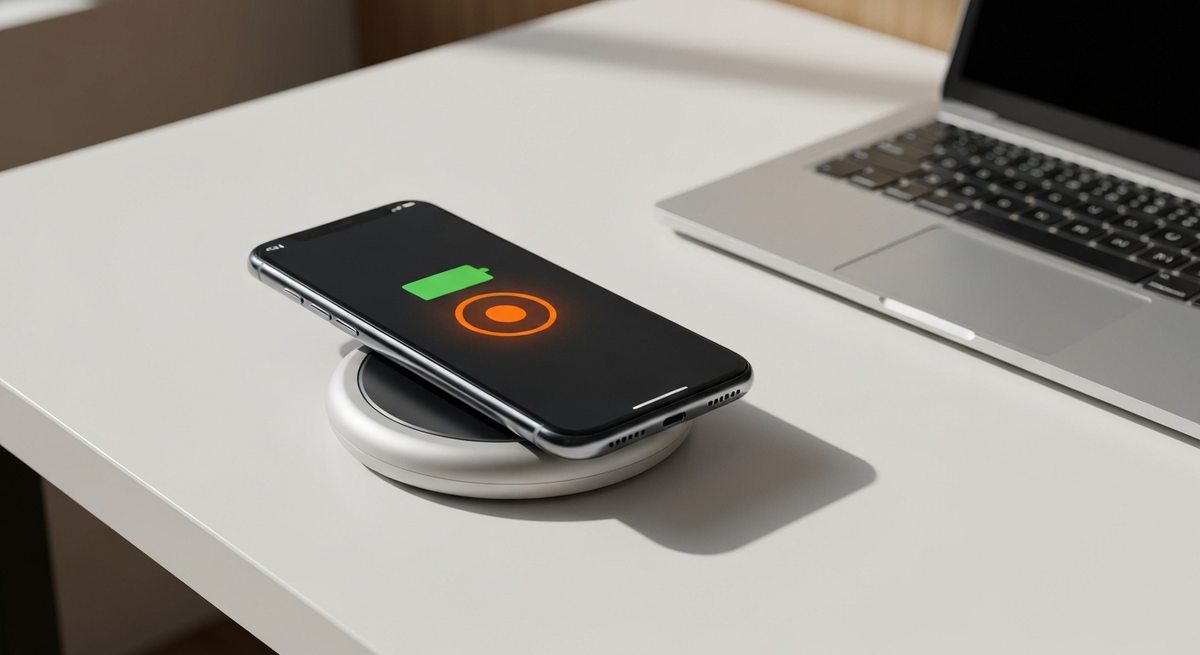
A qi2 wireless charging pad is a low puck you set on a desk or counter; the magnets hold the phone flat against it. It is ideal when you want charging that disappears into your setup and do not need to see the screen, though glancing at notifications means lifting the phone. Certified pads are the most affordable entry point, and genuinely cheap.
The Stand Keeps the Screen Visible While It Charges
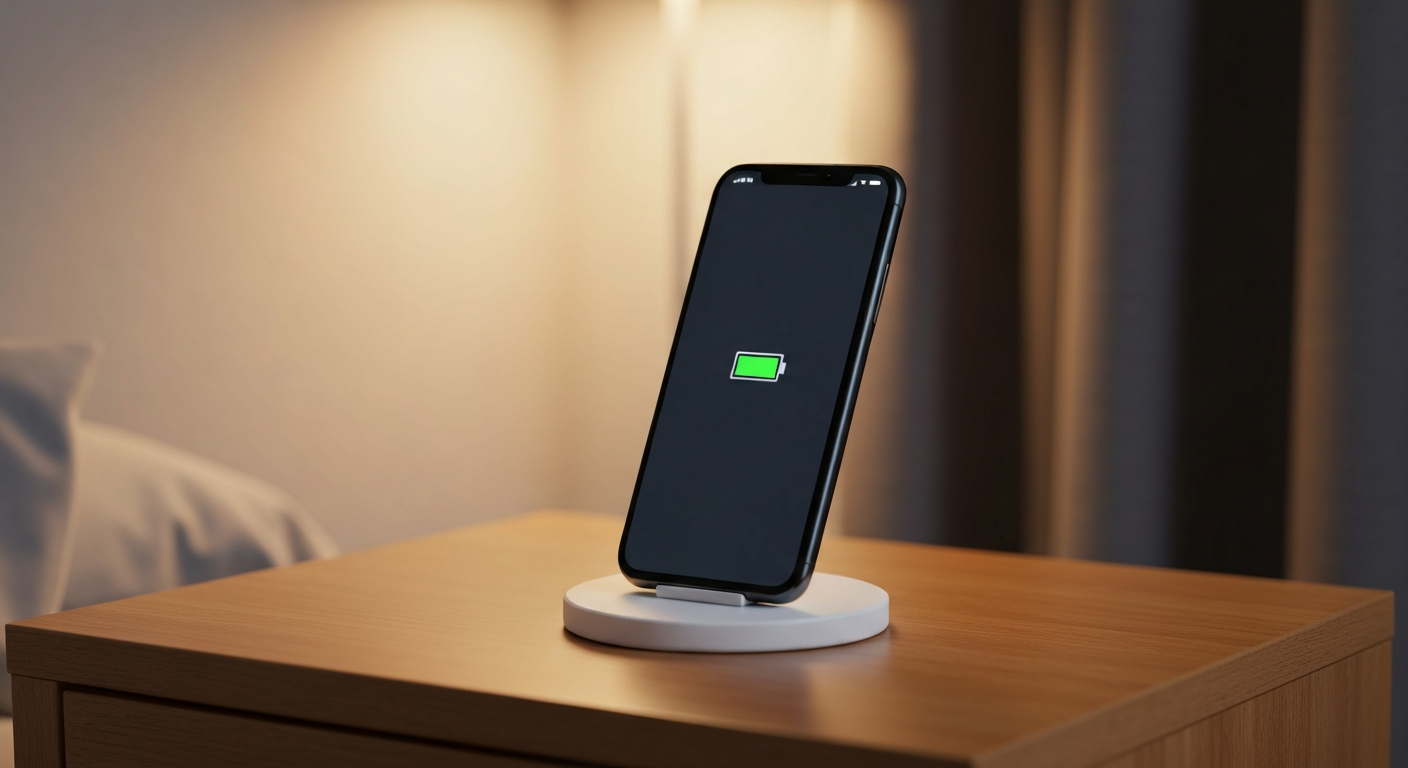
A qi2 wireless charging stand holds the phone at an angle, which makes it the best choice for a desk or nightstand where you want to read notifications, take video calls, or use the phone as a clock while it charges. On iPhones and the Pixel 10, an upright magnetic stand also triggers ambient standby display modes, turning the charger into a small bedside dashboard.
The Power Bank Frees Qi2 Charging From the Outlet
A qi2 wireless charging power bank is a battery with the magnetic ring built in, so it clicks onto the back of your phone and tops it up in your pocket or bag. It is the right pick for travel and long days out, and because the magnets keep it locked in place, you can keep using the phone while it charges instead of juggling a dangling cable.
Multi-Device Chargers Fold All Three Into One Hub
Many Qi2 stands now add a second pad for earbuds and a small platform for a smartwatch, which clears three cables off a nightstand at once. If your goal is a single tidy charging hub, these combo units are usually a better value than buying separate pieces.
How to Pick the Right Qi2 Charger
With the form factor chosen, a few specifics separate a charger that delivers what it promises from one that quietly underperforms. Use this short checklist before you buy.
- Confirm it is certified, not merely “compatible.” Only chargers that pass the Wireless Power Consortium’s lab testing earn the official Qi2 or Qi2 25W certification mark, and that mark is your guarantee of safe, full-speed charging. A listing that says “works with Qi2” without the certification badge may be an uncertified magnetic charger capped at a slower rate.
- Match the speed tier to your phone, and do not overpay for headroom you cannot use. If your phone tops out at 15W, a 25W charger only charges it at 15W, so the extra cost buys you future-proofing rather than present speed. Buy the 25W tier if you own a Qi2.2 phone — any iPhone 16 or 17 except the 16e (on iOS 26), or the Pixel 10 Pro XL; otherwise a quality 15W unit is the smarter spend.
- Check whether a wall adapter is included. Many Qi2 chargers ship as the pad or stand only, and a Qi2.2 unit needs that 30W-plus PD adapter to reach full speed, so factor the cost of a brick into your budget if you do not already own one. Plugging a fast charger into a weak adapter is the most common reason buyers feel disappointed.
- For Samsung or OnePlus, budget for a magnetic case. Because these phones are Qi2 Ready without built-in magnets, the charger alone will not snap on; you need a magnetic case or ring to get the alignment benefit. Plan for that accessory so you are not stuck balancing the phone on a magnetic pad it cannot grip.
Where Qi2 25W Stands in Late 2026
Here is the state of play right now. Qi2 25W is real, certified, and on shelves. The Wireless Power Consortium finalized the faster tier — spec name Qi v2.2.1, badge name Qi2 25W — in July 2025, and the first wave of certified gear cleared testing that same summer. The consortium’s official Qi standard page puts the gain at nearly 70% more power than the 15W original, enough to take a compatible phone from empty to about half full in roughly 30 minutes.
A year on, the phone makers have picked their lanes. Apple went all in: Apple’s iPhone 17 spec sheet lists Qi2 wireless charging at up to 25W, backed by a 30W-or-higher adapter — and as covered above, the whole 17 family shares that tier. Google went halfway: per Google’s own Pixel 10 announcement, all three Pixel 10 phones get Pixelsnap magnets, but only the Pixel 10 Pro XL charges at the 25W Qi2.2 rate. Samsung’s flagships remain “Qi2 Ready” — the charging electronics are there, the magnets still come from a case. Read between the lines and the direction is obvious: 25W is fast becoming the standard tier on flagship phones, which makes it the safe tier to buy accessories for.
One more habit worth building before you pay for any pad: look the charger up in the consortium’s public database of certified products. If a charger is not in that database, it never passed Qi2 safety and heat testing, no matter what the listing claims — and at 25W, those thermal controls are the whole point of buying certified.
How Qi2 Compares to MagSafe in Brief
Because Qi2 borrowed its magnets from Apple, people constantly ask whether the two are the same thing. The short answer is that MagSafe is Apple’s proprietary system and Qi2 is the open industry standard built on the same magnetic idea, and on modern iPhones the two now charge at the same rates on any given model, up to 25W on the newest ones. The differences that remain are about certification, accessory features, and a few Apple-specific extras rather than raw charging speed. We have a full, detailed walkthrough in our dedicated guide on how Qi2 compares to MagSafe, so if you are weighing one ecosystem against the other, start there for the complete breakdown.
Frequently Asked Questions
Is Qi2 wireless charging worth it in 2026?
Yes, for most people the magnetic alignment alone justifies the upgrade. Even at the 15W tier, snapping the phone into perfect position means it actually charges reliably overnight instead of slipping off, and the shared accessory ecosystem keeps prices reasonable. If you own a Qi2.2 phone, the jump to 25W makes wireless charging fast enough to use as your primary method.
What is the difference between Qi2 and Qi2.2?
Qi2 is the base standard that charges at up to 15W with magnetic alignment, while Qi2.2 (officially Qi v2.2.1, branded Qi2 25W) raises the ceiling to 25W. Both use the same magnets and are backward compatible; the practical difference is that Qi2.2 charges supported phones roughly 67% faster, provided you pair it with a 30W-or-higher PD adapter.
Do I need a special adapter for Qi2.2 25W charging?
Yes. To reach the full 25W you need a USB-C Power Delivery wall adapter rated at 30W or higher, because wireless charging loses energy to heat and a smaller brick cannot sustain the output. A weaker adapter still works, but the charger automatically falls back to a slower speed.
Does Qi2 wireless charging work with Samsung phones?
It works electronically because the Galaxy S25 line is “Qi2 Ready,” but those phones lack built-in magnets, so the charger will not snap on by itself. To get the magnetic alignment that makes Qi2 worthwhile, Samsung owners need a case or ring with built-in magnets.
Will a Qi2 charger work with my older iPhone or Android phone?
Yes, Qi2 chargers are backward compatible. An older Qi phone will charge on a Qi2 pad at its original, slower rate without the magnetic snap, and iPhones from the iPhone 12 onward gained 15W magnetic Qi2-class charging through software updates.
Can I use a Qi2 power bank while using my phone?
Yes, and that is one of its biggest advantages. Because the power bank’s magnets lock it to the back of the phone, it stays put while you scroll, navigate, or take calls, unlike a cabled charger that pulls and dangles.
Is Qi2 the same as MagSafe?
Not exactly. MagSafe is Apple’s proprietary magnetic charging system, while Qi2 is the open, cross-brand standard built on the same magnetic concept that Apple contributed. On current iPhones they charge at the same 15W rate; the differences come down to certification and accessory features, which our dedicated comparison covers in full.