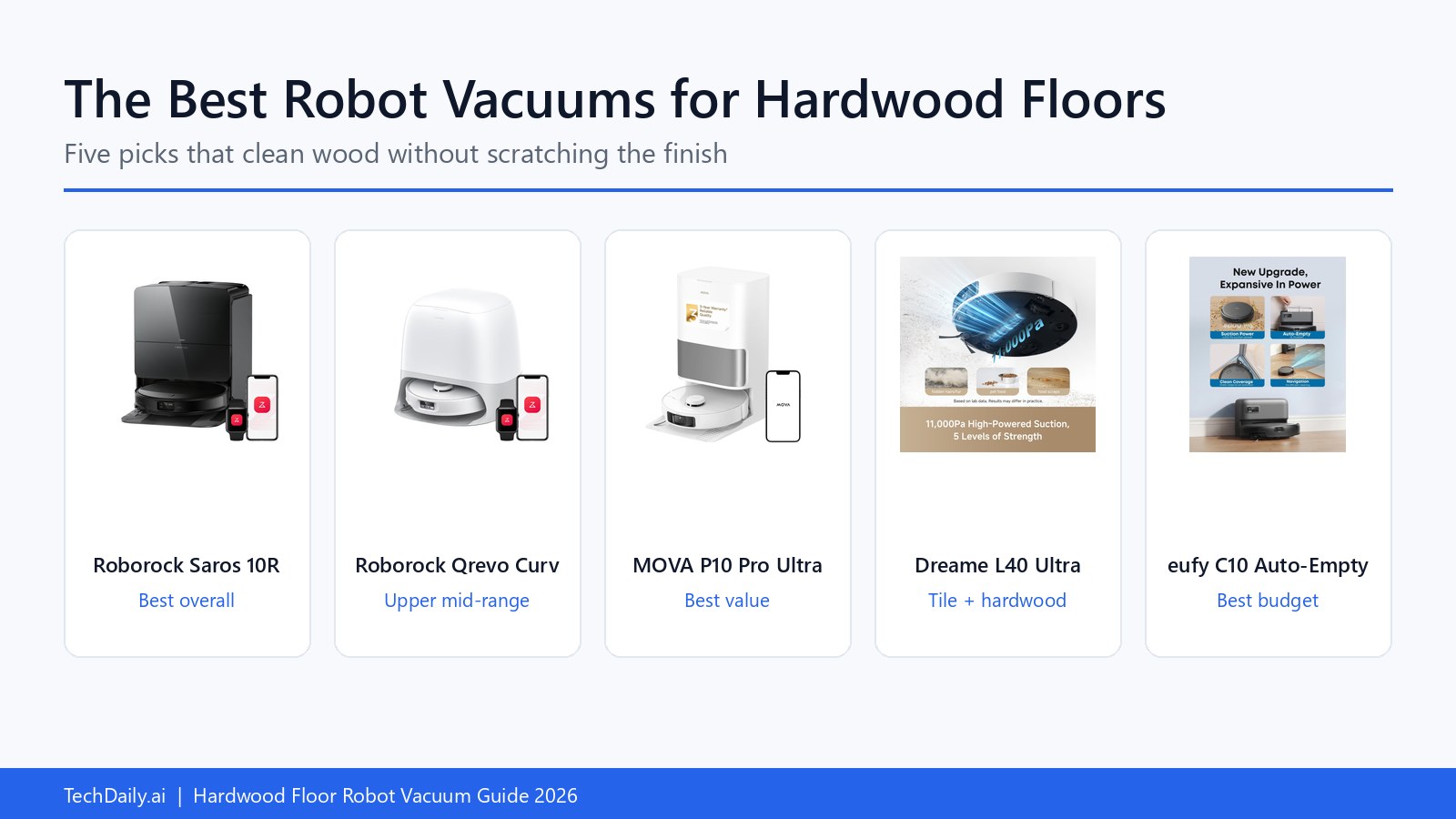
Robot vacuums and hardwood floors have a complicated relationship. The flat surface makes navigation easy — no pile height to fight, no edges to snag on. But the same smoothness that helps robots glide also makes their flaws obvious: a missed patch shows instantly, and the wrong brush roll can leave micro-scratches you won’t notice until sunlight hits at the right angle.
We dug through every major robot vacuum test from RTINGS, Vacuum Wars, and Consumer Reports to find which models actually earn their keep on hardwood. The winner isn’t the most expensive one — it’s the one that cleans the floor without eventually ruining it.
- The Roborock Saros 10R is the best robot vacuum for hardwood floors thanks to its front-mounted sensor design that fits under low furniture where top-mounted LiDAR robots can’t reach
- Budget buyers should look at the Eufy C10, which drops below $200 on sale and still delivers LiDAR navigation and a self-emptying dock — features that were premium-only two years ago
- Every pick on this list uses rubber or silicone brush rolls, not bristle — bristle brushes are the number-one cause of micro-scratches on finished hardwood
- A mop function isn’t optional for hardwood owners; the models with dual spinning mops (Roborock Saros 10R, Qrevo Curv) handle sticky spills that vacuum-only robots leave behind
- The MOVA P10 Pro Ultra punches above its $500 price with obstacle avoidance that rivals robots costing twice as much
Which robot vacuum is right for your hardwood floors?
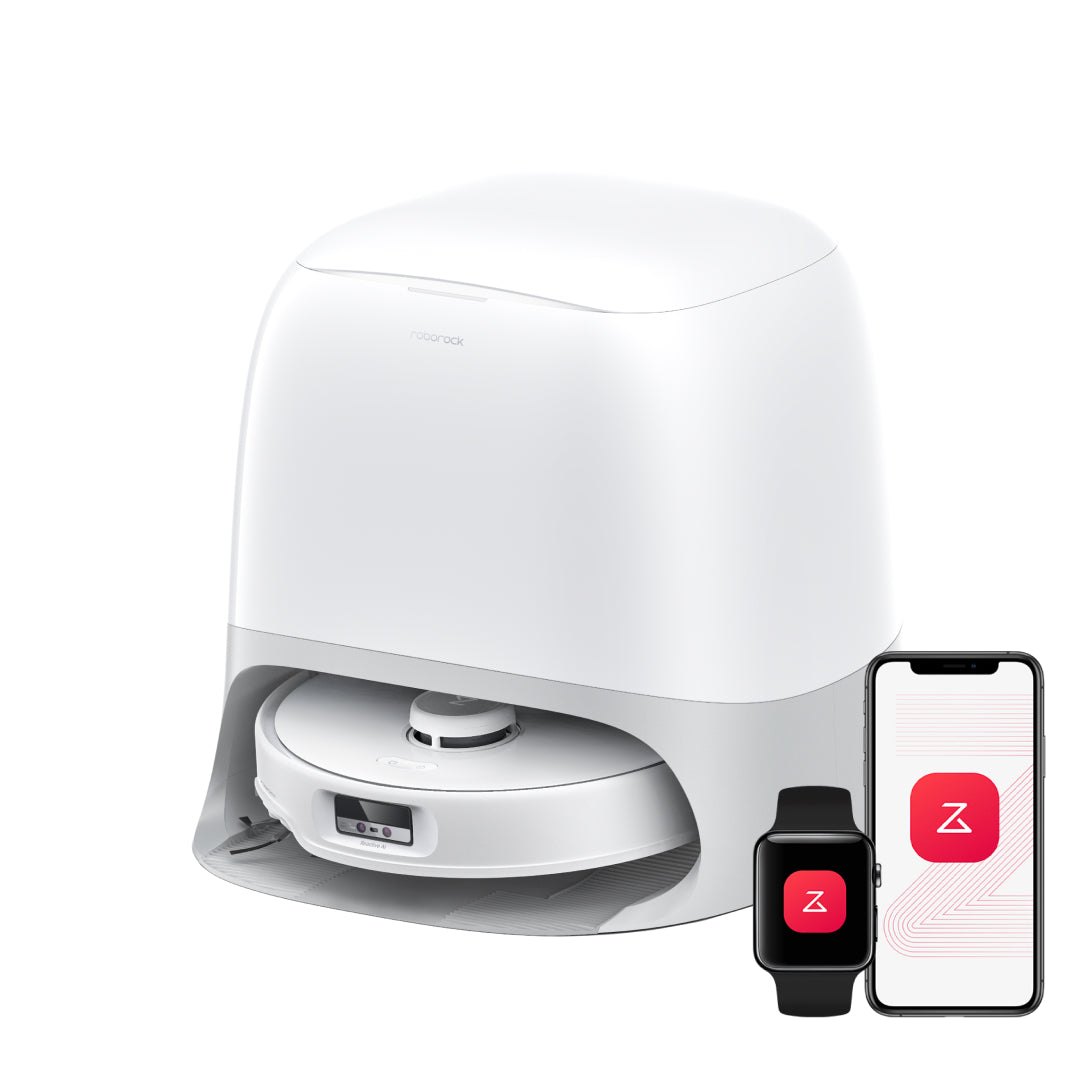
★ Your pick: Roborock Qrevo Curv
Best mid-range — AdaptiLift auto-adjusts
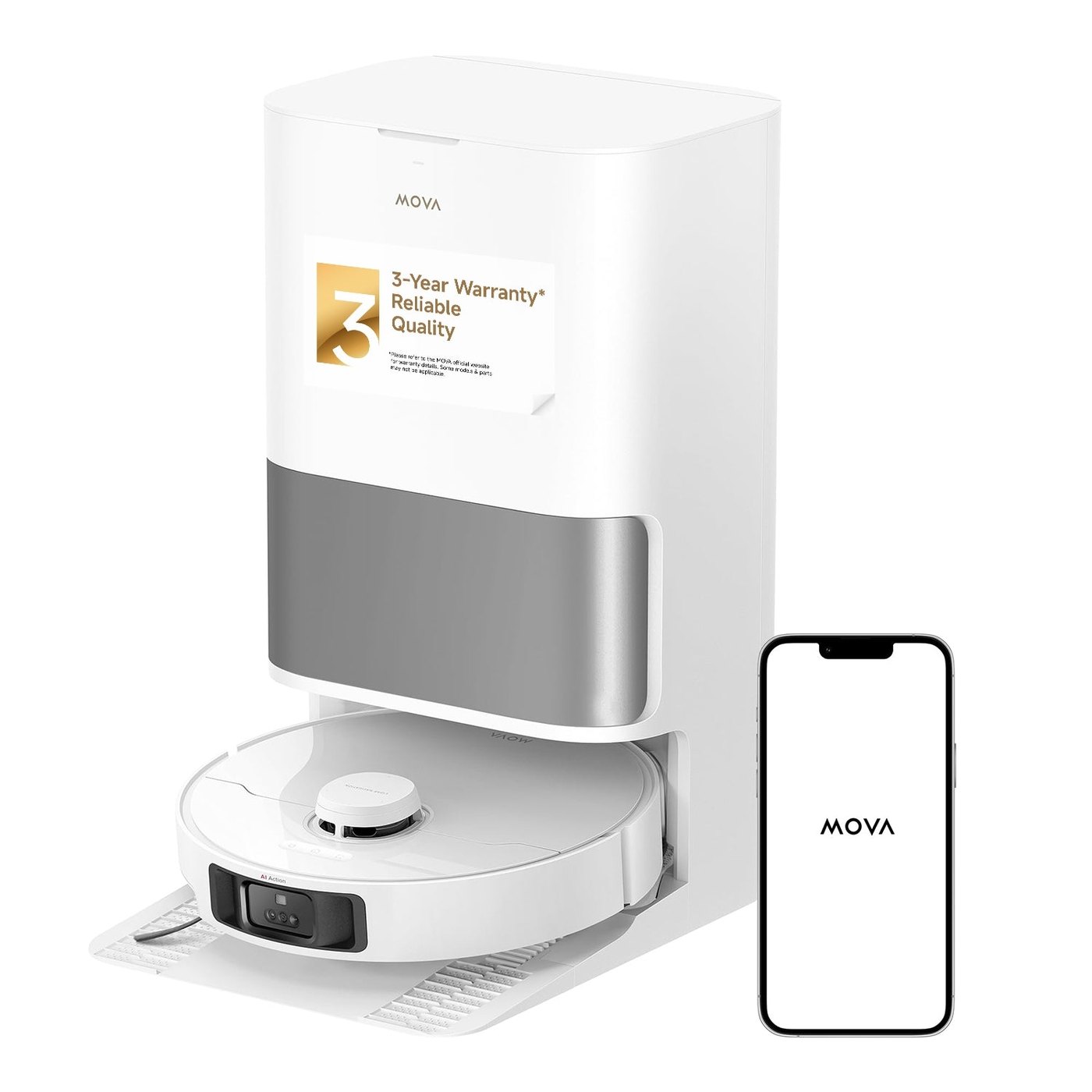
★ Your pick: MOVA P10 Pro Ultra
Best value — flagship features at $500
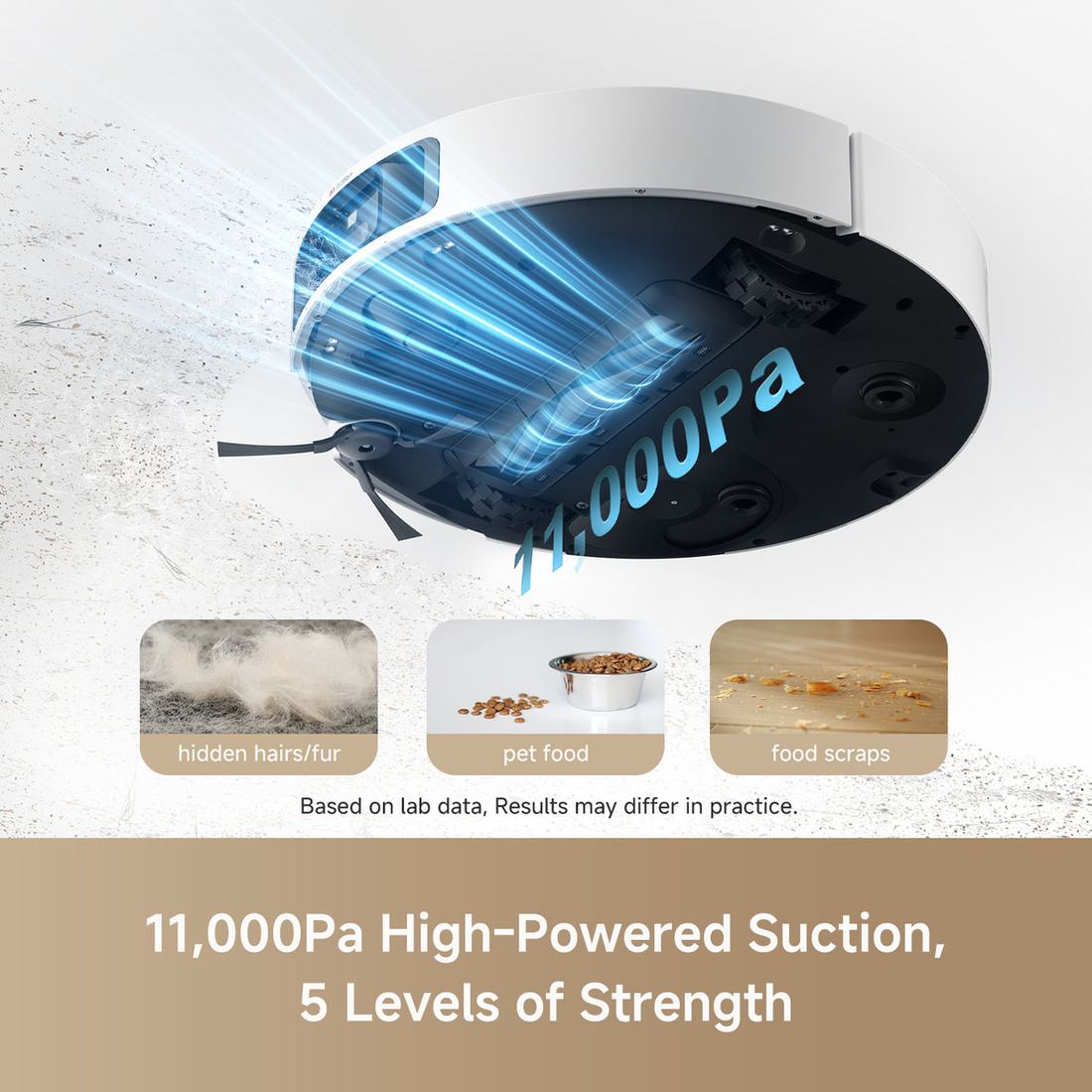
★ Your pick: Dreame L40 Ultra
Best for tile+hardwood mix — roller mop handles grout
★ Your pick: Eufy C10 Auto-Empty
Best budget — under $200 on sale
👑 Our Top Pick — Best Overall Value
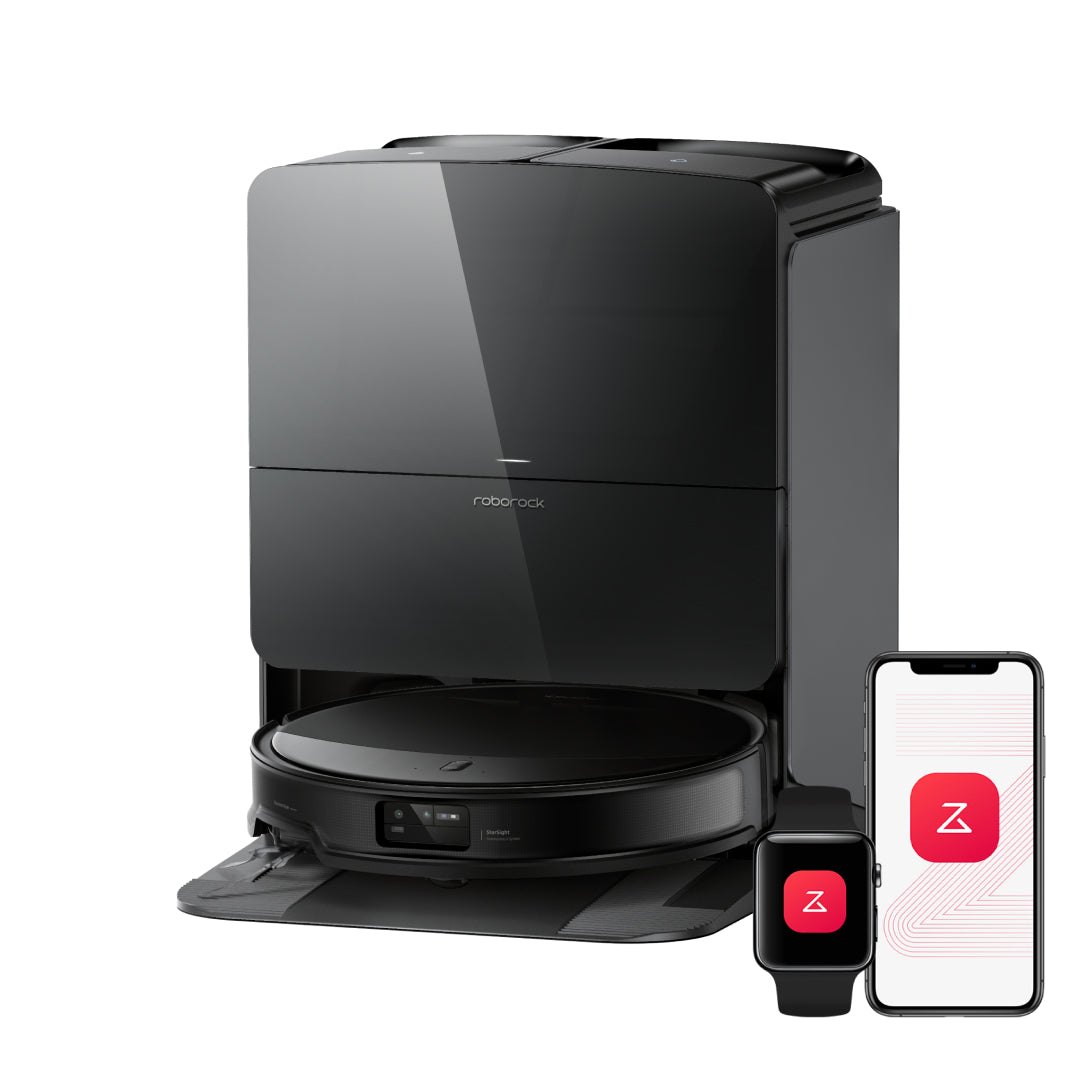
Roborock Saros 10R
Best overall — fits under low furniture and mops
Opens on our Top Pick. Tap an option to see the best match for you.
Why Hardwood Floors Need a Different Robot Vacuum
Most robot vacuum reviews test on carpet first and treat hard floors as an afterthought. That’s backwards for hardwood owners, because the failure modes are completely different.
On carpet, a weak robot misses embedded dirt you can’t see anyway. On hardwood, a weak robot leaves visible streaks, misses edges where dust bunnies collect, and — critically — can scratch the finish with cheap bristle brushes spinning at high speed. The National Wood Flooring Association identifies surface abrasion as the most common cause of finish damage in homes, and a robot vacuum running daily on a bad brush roll accelerates it.
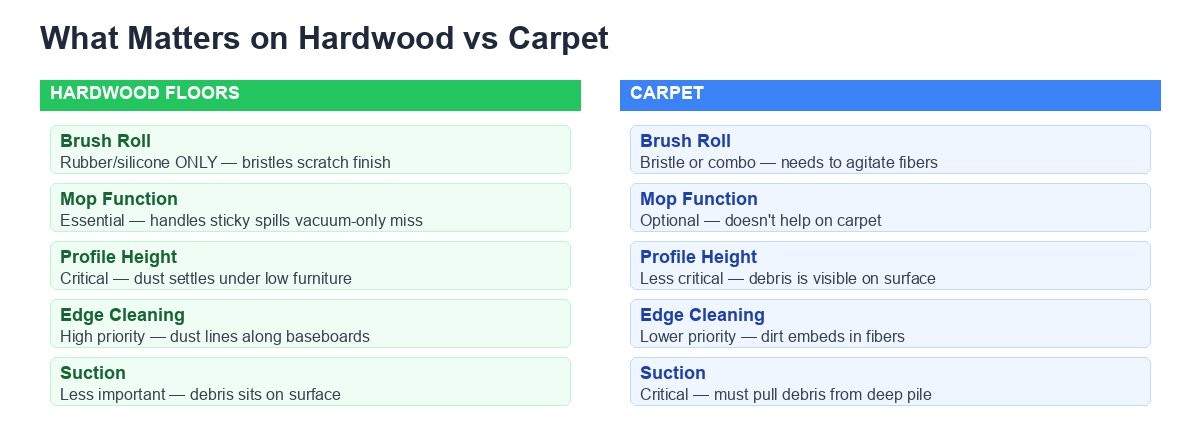
The features that matter most on hardwood are straightforward: rubber brush rolls (silicone won’t scratch polyurethane finish), strong edge cleaning (dust accumulates along baseboards), a low-profile body (to slide under sofas and cabinets where dust settles), and — increasingly — a mop function that actually lifts dried spills instead of smearing them.
Note: If your hardwood has a matte or oil-rubbed finish, test any robot on an inconspicuous spot first. High-gloss finishes show scratches more, but matte finishes are softer and scratch easier.
The Best Robot Vacuums for Hardwood Floors
1. Roborock Saros 10R — Best Overall for Hardwood
≈ $900 on sale18,000Pa SuctionDual Spinning MopsLiDAR + Front Sensors
The Saros 10R solves the biggest problem with robot vacuums on hardwood: reaching under low furniture. Most robots mount their LiDAR sensor on top, which adds height and blocks them from sliding under beds, couches, and media consoles — exactly the places where dust accumulates most on hard floors.
Roborock moved the sensors to the front of the Saros 10R, dropping the body profile low enough to clear furniture that stops other robots cold. In RTINGS’ testing, this translated to measurably better coverage in real homes versus the top-sensor competitors.
The dual spinning mops are the other reason this tops the list. Where cheaper robots drag a static cloth across the floor, the Saros 10R’s twin pads spin at high speed and apply downward pressure, handling dried coffee drips and kitchen spills that vacuum-only robots simply push around. The dock washes the pads with hot water and dries them automatically, so you’re not maintaining a dirty mop.
The catch: At $1,599 MSRP (though frequently discounted to around $900 during sales), this is the most expensive option here. If you have mostly carpet with some hardwood rooms, the Saros 10R’s carpet performance is merely average — its split brushroll resists tangles well but struggles to lift embedded pet hair from carpet fibers. It excels on hard floors because that’s what it was designed for.
Pros
- Lowest profile in its class
- outstanding hard-floor pickup
- dual mop with auto-wash dock
- excellent obstacle avoidance
Cons
- Premium price
- carpet performance lags behind dedicated carpet robots
- heavy at 10+ lbs
2. Roborock Qrevo Curv — Best Upper Mid-Range
≈ $80018,500Pa SuctionDual Spinning MopsAdaptiLift Chassis
If the Saros 10R’s sale price still stings, the Qrevo Curv is where Roborock’s hardwood-floor DNA shows at a lower price. The AdaptiLift chassis automatically raises and lowers itself depending on floor type — lifting the mops when it transitions to carpet, pressing them down on hard floors for better contact.
The 18,500Pa suction is actually higher than the Saros 10R on paper, and Vacuum Wars’ testing confirmed the Qrevo Curv achieved a 92% carpet deep-clean score with zero hair tangles — numbers that rank third overall in their database regardless of price. On hardwood specifically, the edge cleaning is excellent thanks to Roborock’s extendable side brush that physically reaches into corners.
The dual anti-tangle system uses a combination of rubber brush rolls and a comb structure that separates hair before it wraps. If you have long hair or pets, this matters more on hardwood than you’d think — hair on hard floors doesn’t embed like it does in carpet, so it accumulates on the brush roll faster.
Keep in mind: The Qrevo Curv’s body is slightly taller than the Saros 10R because of the top-mounted LiDAR. Measure the clearance under your lowest furniture before choosing between them.
Pros
- Excellent suction-to-price ratio
- AdaptiLift auto-adjusts for floor type
- zero hair tangles
- strong edge cleaning
Cons
- Taller body than the Saros 10R
- no front-sensor low-profile design
- dock is large
3. MOVA P10 Pro Ultra — Best Mid-Range Value
≈ $50013,000Pa SuctionDual MopsAI Obstacle Avoidance
MOVA is a sub-brand of Dreame, and the P10 Pro Ultra inherits Dreame’s navigation algorithms at roughly half the price. In Vacuum Wars’ obstacle avoidance evaluation, the P10 Pro Ultra scored 19 out of 24 points — matching or beating robots that cost $800+.
For hardwood specifically, the P10 Pro Ultra’s strength is its consistent edge cleaning. The side brush design sweeps debris inward toward the main brush rather than scattering it outward — a problem that plagues cheaper robots and leaves visible lines of dust along walls after each run. The dual mops aren’t as aggressive as Roborock’s, but they handle daily maintenance mopping well.
The self-emptying dock holds about 60 days of debris, and the mop pads wash automatically. At $500, you’re getting features that were exclusive to $1,000+ robots two years ago.
Caveat: The 13,000Pa suction is adequate for hardwood but won’t match the Roborock models on larger debris like cereal or cat litter scattered on the floor. Plan for a manual sweep of kitchen floors after cooking if you’re a heavy spiller.
Pros
- Best value on this list
- excellent obstacle avoidance
- solid edge cleaning
- self-emptying dock
Cons
- Lower suction than top picks
- mop performance trails Roborock
- smaller dustbin
4. Dreame L40 Ultra — Best for Mixed Hardwood and Tile
≈ $60012,000Pa SuctionRoller MopLiDAR Navigation
The Dreame L40 Ultra uses a different mop design than the spinning-pad robots above: a roller mop that continuously self-cleans as it rotates. This matters on tile with grout lines, where spinning mops can push dirty water into the gaps. The roller design maintains consistent pressure across both hardwood and tile, making it the best pick if your home has a mix of hard floor types.
Dreame’s navigation is mature — the L40 Ultra maps rooms accurately on the first run and handles transitions between floor types without getting stuck. The roller mop lifts automatically when it detects carpet, so you can run it on mixed floors without babysitting.
The trade-off is suction power: at 12,000Pa, it sits at the bottom of this list. For daily maintenance on hardwood, that’s fine — robot vacuums work best as daily sweepers, not deep cleaners. But if you’re cleaning up after a party or a pet that sheds heavily, you’ll notice the difference versus the Roborock models.
Pros
- Roller mop handles grout lines
- consistent performance across floor types
- reliable navigation
Cons
- Lowest suction on this list
- mop isn’t as aggressive on sticky spills
- fewer smart-home integrations
5. Eufy C10 Auto-Empty — Best Budget Pick
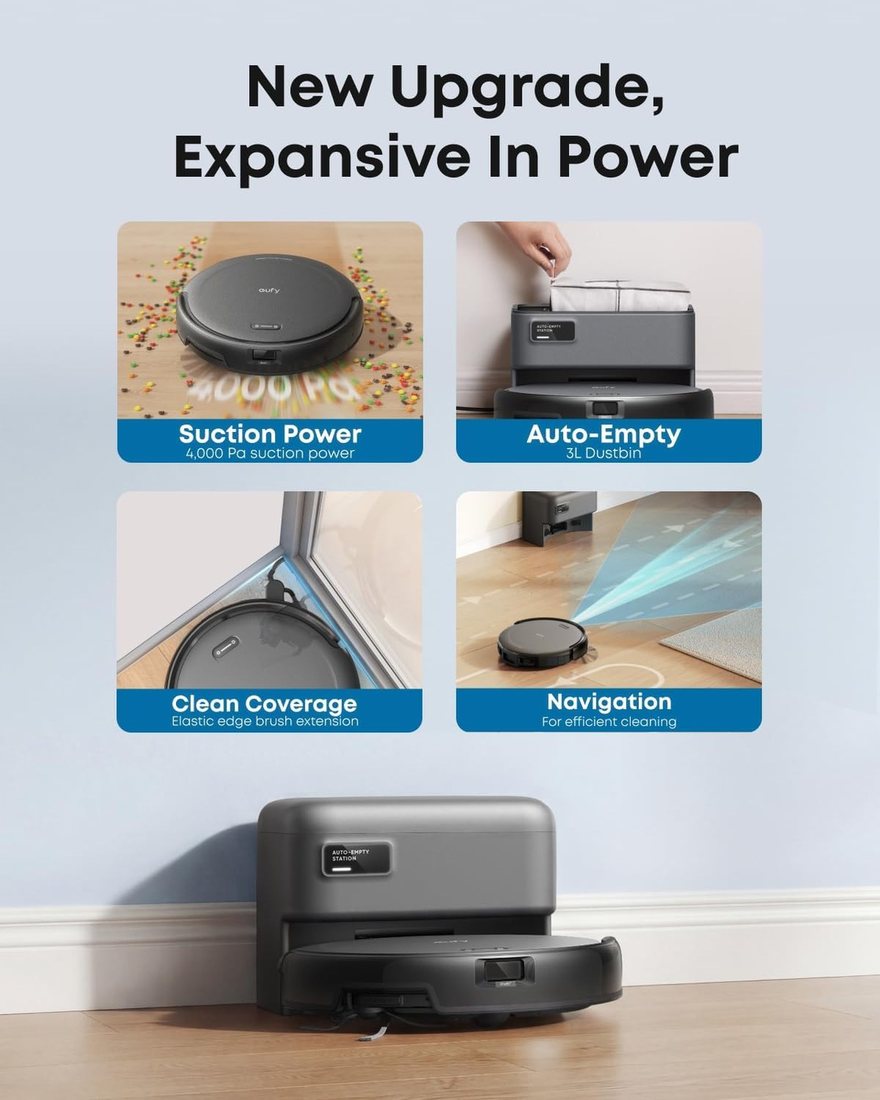
≈ $200 on sale4,000Pa SuctionNo MopLiDAR Navigation + Self-Empty
The Eufy C10 strips robot vacuuming down to the essentials: LiDAR mapping, a self-emptying dock, and a 2.85-inch body that slides under most furniture. At its frequent sale price of $200 or less, it costs less than some people spend on a single robot vacuum mop pad replacement set.
What makes the C10 work on hardwood despite its low suction is the rubber brush roll and the edge-expansion brush that physically extends outward during corner cleaning. The low body profile — under three inches — means it reaches under furniture that taller robots can’t, and the LiDAR navigation creates accurate room maps so it doesn’t bump into things or miss areas.
The C10 has no mop function, which is its main limitation for hardwood owners. You’ll still need a separate mop for sticky spills. But as a daily sweeper that picks up dust, hair, and light debris on hardwood, it outperforms robots that cost three times as much.
Tip: The C10’s 8-week self-empty capacity means you genuinely can set it and forget it. For hardwood floors that don’t generate the heavy debris loads carpet does, this is more than enough between bag changes.
Pros
- Unbeatable price
- low profile reaches under furniture
- LiDAR navigation
- self-emptying dock
Cons
- No mop
- 4,000Pa suction struggles with larger debris
- basic app compared to Roborock/Dreame
What to Look for When Buying a Robot Vacuum for Hardwood
Brush Roll Material Is Non-Negotiable
The single most important spec for hardwood is the brush roll material. Rubber or silicone rolls glide over finished wood without scratching. Bristle rolls — still common on budget robots — act like sandpaper at high RPMs. Over months of daily runs, they leave fine circular scratches in polyurethane finish that dull the floor’s appearance.
Every robot on this list uses rubber or silicone. If you’re shopping outside these picks, check this first — and if you’re considering a used or open-box unit to save money, read our guide to what refurbished actually means before you buy, because brush rolls are a wear part.
Is a Mop Function Worth It or Just a Gimmick?
On hardwood, a mop function goes from nice-to-have to essential. Robot vacuums push crumbs and dust effectively, but they can’t handle dried spills, sticky residue, or the thin film of kitchen grease that accumulates on hard floors. The spinning-pad mops on Roborock models apply real downward pressure and handle most daily messes. Roller mops (Dreame L40 Ultra) work better on tile with grout.
The key difference is in the dock: robots with auto-wash docks clean their own mop pads, which means you’re not spreading dirty water across your floors. Robots that require manual pad washing lose their convenience advantage fast.
Measure Your Furniture Clearance First
Hardwood floors often mean furniture with legs — mid-century sofas, platform beds, media consoles that sit close to the ground. A robot that can’t reach under these pieces leaves visible dust trails. Measure your lowest furniture clearance and compare it to the robot’s height. The Saros 10R’s 3.5-inch profile and the Eufy C10’s 2.85 inches are the standout options for low-clearance homes.
Edge Cleaning Separates Good from Great
Dust accumulates along baseboards and in corners — the edges of your hardwood floor where the vacuum’s main brush can’t reach. A robot with an extendable or well-designed side brush that sweeps inward (not outward) will keep these areas noticeably cleaner. The Roborock models and the MOVA P10 Pro Ultra excel here; cheaper robots often scatter debris away from walls rather than collecting it.
Frequently Asked Questions
Do robot vacuums scratch hardwood floors?
A robot vacuum with a rubber or silicone brush roll will not scratch finished hardwood floors under normal use. Bristle brushes can cause fine surface scratches over time, especially on softer finishes like matte or oil-rubbed polyurethane. The National Wood Flooring Association recommends avoiding abrasive cleaning tools on finished hardwood, and a spinning bristle brush qualifies. Every model on this list uses rubber or silicone rolls specifically to avoid this issue.
How often should I run a robot vacuum on hardwood?
Daily is ideal for hardwood floors. Unlike carpet, where debris embeds in fibers, dust and grit sit on the surface of hard floors where they get walked around and can scratch the finish underfoot. A daily robot vacuum run keeps this grit layer minimal. Most self-emptying models hold 60 to 68 days of debris on hardwood, so the maintenance burden is low.
Can a robot vacuum replace mopping hardwood floors?
A robot vacuum with a quality mop function can handle daily maintenance mopping — light dust, dried water spots, and thin residue. It cannot replace periodic deep mopping for sticky spills, grease buildup, or cleaning products. Think of it like a robot vacuum itself: excellent for daily upkeep, not a substitute for a thorough manual clean once a week or so.
What’s the difference between a robot vacuum for hardwood versus carpet?
The key differences are brush roll material (rubber for hardwood, bristle or combo for carpet), suction requirements (hardwood needs less because debris sits on the surface), and mop integration (essential for hardwood, optional for carpet). Carpet robots focus on deep-cleaning power and agitation; hardwood robots focus on edge cleaning, scratch prevention, and mopping.
Are expensive robot vacuums worth it for hardwood?
For hardwood specifically, the mid-range models ($400 to $600) offer the best value. The MOVA P10 Pro Ultra and Dreame L40 Ultra deliver 90% of the flagship performance at half the price. The premium you pay for top models like the Roborock Saros 10R primarily buys a lower-profile body, better obstacle avoidance, and a more refined mop — genuinely useful features, but not necessities for every home.
Do I need a robot vacuum with a self-emptying dock?
On hardwood floors, a self-emptying dock is more convenient than necessary. Hard floors generate less debris than carpet, so the dustbin fills slower. However, the convenience factor is real: a self-emptying dock means you interact with the robot perhaps once every two months instead of every few days. If your budget allows it, the time savings are worth the extra $100 to $200.