
Your carrier’s international day pass runs roughly ten to twelve dollars a day. Over a two-week Europe trip, that’s the price of a very nice dinner in Rome, spent on nothing. The best eSIM for Europe swaps that bill for a one-time plan that usually costs less than a single week of day passes. My top pick for most travelers is Airalo, with Saily right behind it for first-timers. But here’s what most travel blogs soft-pedal. Every “unlimited” travel plan hides a speed limit in the fine print. I read those policies so you don’t have to, and they change which plan you should buy.
- Airalo is the pick for most Europe trips. One eSIM, 41 countries, and unlimited tiers from about $11.50 for three days as of this writing.
- “Unlimited” always has a catch. Saily slows you to about 1 Mbps after 5 GB a day. Nomad drops to 512 kbps. Holafly caps hotspot sharing at 1 GB a day.
- If you know your usage, fixed GB beats unlimited on price. Ubigi sells 10 GB for around $15, which is some of the cheapest full-speed data in Europe.
- Every provider draws the Europe map differently. Check the country list for the UK, Switzerland, and the Balkans before you pay.
- Set the eSIM up at home on Wi-Fi, not at baggage claim. It takes five minutes and saves you the one airport hour when you actually need data.
Why Unlimited Travel Data Never Means Unlimited Speed
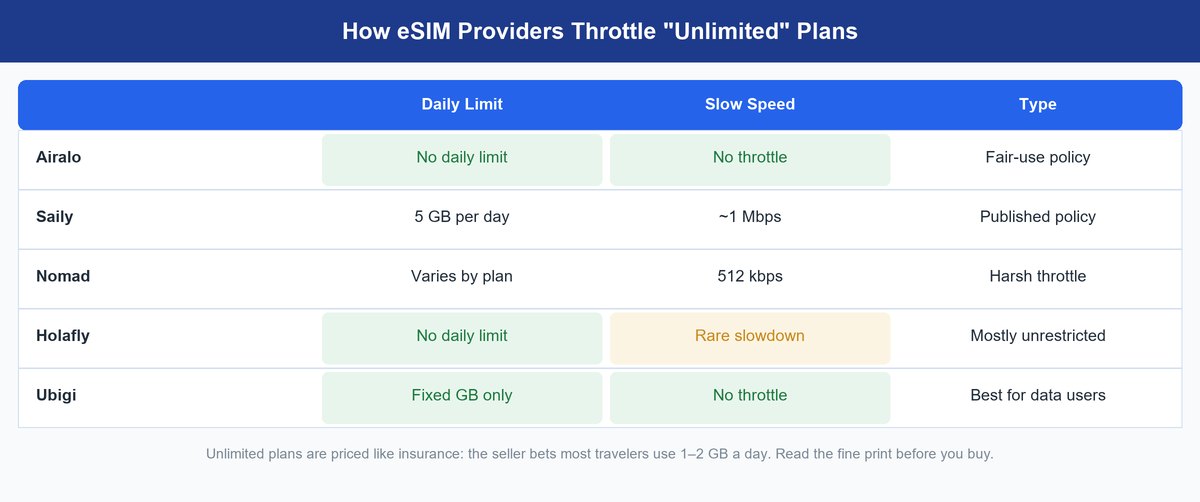
The travel eSIM business has quietly borrowed a trick from home internet providers. “Unlimited” doesn’t describe your data. It describes your bill. What actually limits you is a fair-use policy, and each provider writes its own version.
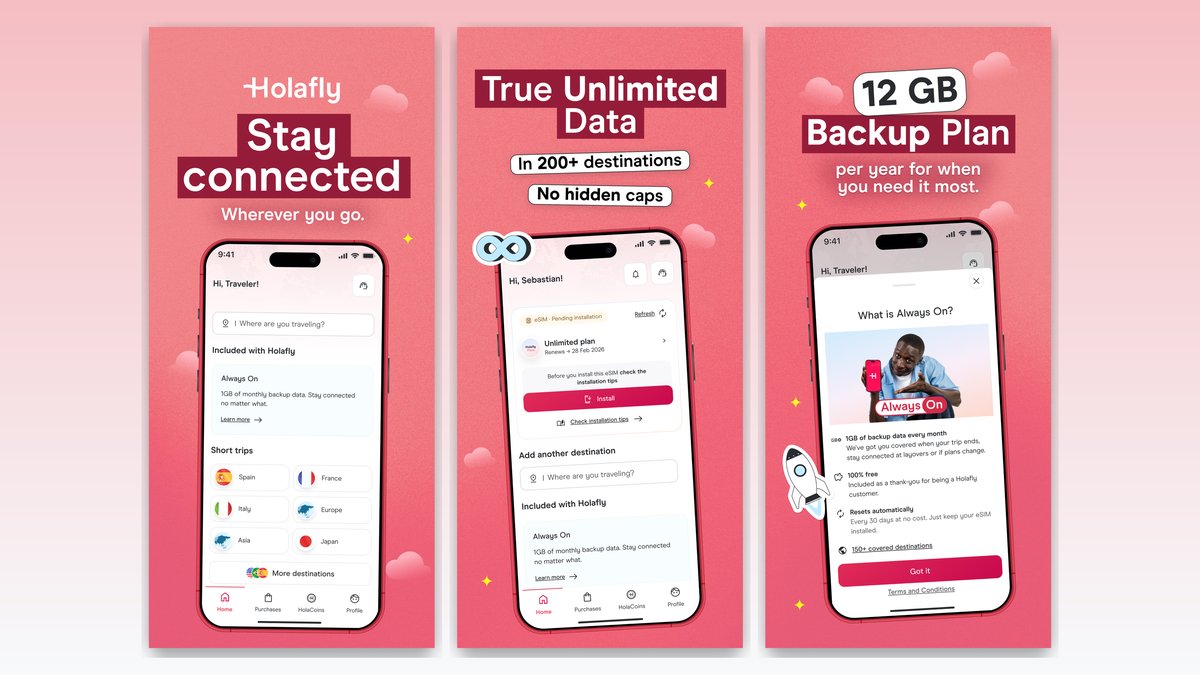
Here’s how the three big unlimited sellers handle it, straight from their own published terms. Saily’s unlimited Europe plan gives you 5 GB a day at full speed. After that, it slows to about 1 Mbps until the next day. Nomad’s unlimited plans work the same way, but the slow lane is 512 kbps. That’s rough for anything past text. Holafly publishes no daily GB cap and says slowdowns are rare, one-day events under its fair-usage policy. Its catch moves elsewhere. Holafly’s Europe plan caps hotspot sharing at 1 GB a day.
Why do they all do this? Because unlimited plans are priced like insurance. The seller bets most travelers use 1 to 2 GB a day. The premium you pay over a fixed-GB plan covers the rare traveler who streams video for six hours. You’re not buying more data. You’re buying the freedom to stop checking a meter. That’s worth real money to some people. It’s not worth it if you already know your usage. And most people’s Europe usage is boringly steady: maps, translation, photos to the group chat, some evening scrolling. Call it 500 MB to 1 GB a day.
The math that matters: divide the plan price by the full-speed gigabytes you’ll really get, then compare across plans. Under about $2 per full-speed GB is a good Europe rate as of this writing. A 15-day Saily unlimited plan at roughly $50 works out near 67 cents per full-speed GB — but only if you’d truly use 5 GB every single day. Almost nobody does.
So here’s the honest rule. Buy fixed GB if you can guess your usage within a couple of gigabytes. Buy unlimited only if you tether a laptop, stream a lot, or feed the family hotspot. And if you tether, note the trap: Holafly’s 1 GB daily sharing cap makes the “no daily limit” plan the wrong unlimited for you.
The Five Best eSIMs for Europe, Matched to How You Travel
I judge travel eSIMs on four things. What a full-speed gigabyte really costs. How the seller draws its Europe map. What the fine print does to the headline promise. And how painless the app feels when you’re jet-lagged at passport control. All five picks sell one eSIM that works across dozens of European countries. Prices are what each seller listed on September 7, 2026. Treat them as ballparks, because they move with sales.
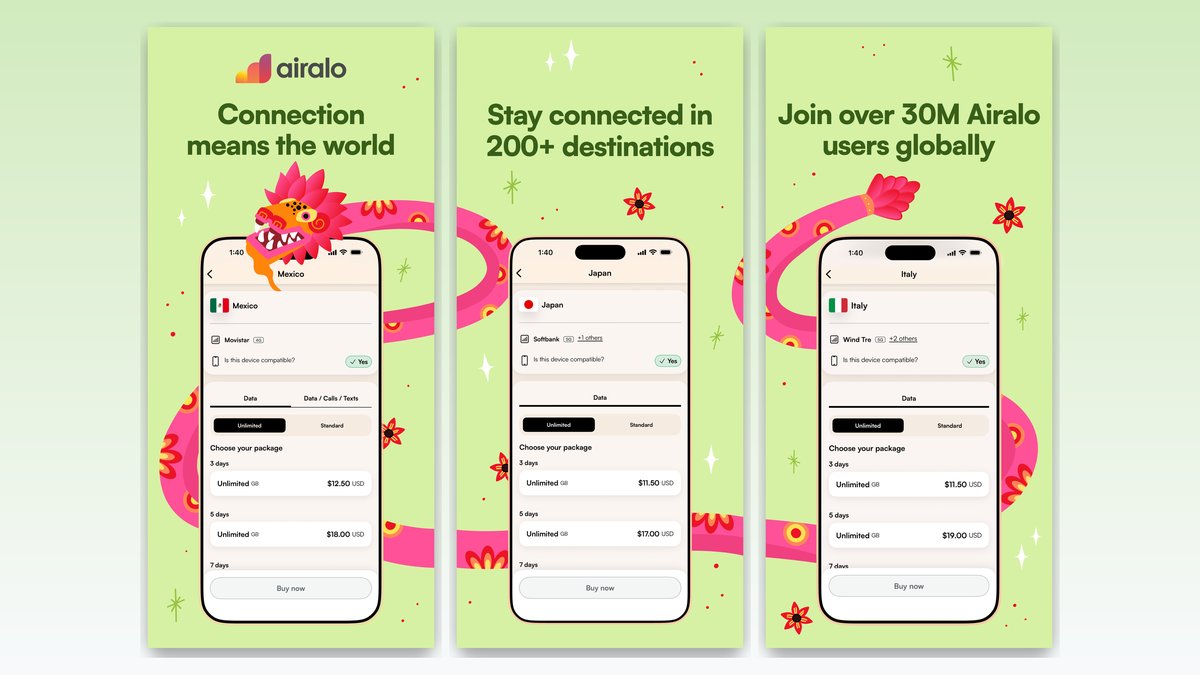
1. Airalo — Best Overall for Most Europe Trips
≈ $11.50–$7141 countries4.6★ rated
This is the one I’d hand to almost anyone flying to Europe. Its Eurolink eSIM covers 41 countries and networks — the widest country list of any single eSIM here. It sells packages from three days up to thirty. Unlimited tiers ran from about $11.50 for three days to about $71 for a month at the time of writing. Fixed-GB packages start at just a few dollars. It’s also the biggest eSIM marketplace in the world, with over 100,000 App Store ratings averaging 4.6. That scale shows in the boring, important stuff. The install flow is polished, and someone has usually asked your coverage question before you.
The honest read: Airalo wins on flexibility, not rock-bottom price. Its fixed-GB rates are fair but rarely the cheapest here. What you’re paying for is one app that covers this trip and every future one. Airalo sells plans for 200-plus destinations. The eSIM you install today is the one you top up in Tokyo next year. For a first eSIM you’ll keep using, that convenience just keeps paying off.
Features
- Covers 41 European countries and networks on one eSIM
- Same app also sells plans for 200-plus destinations worldwide, Japan included
- Packages run from 3 days up to 30 days
- Fixed-GB from a few dollars; unlimited tiers from about $11.50 (3 days) to about $71 (a month)
- Over 100,000 App Store ratings, averaging 4.6
Pros
- Widest Europe list here, at 41 countries.
- Sells both fixed GB and unlimited.
- Polished app with a huge user base.
- The same eSIM works for every future trip.
Cons
- Rarely the cheapest per GB.
- Its unlimited plans have their own fair-use terms, so read them before you tether.
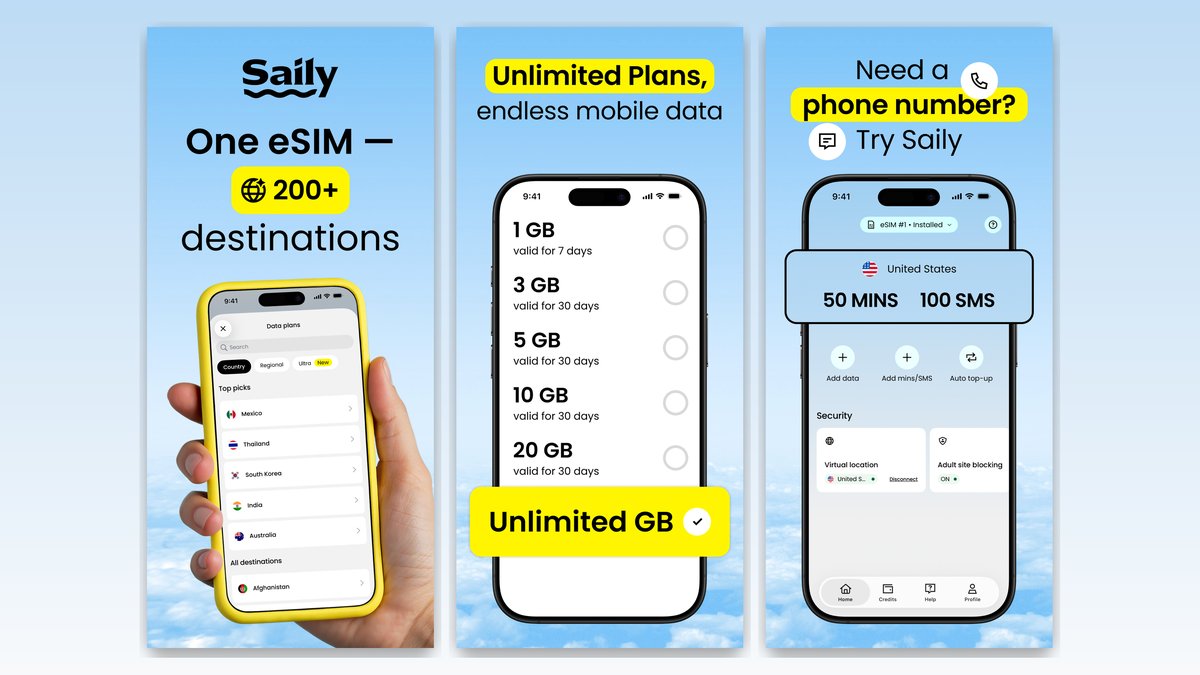
2. Saily — Best for First-Timers Who Want Guardrails
From $4.9935 countries5 GB/day full speed
Saily comes from the NordVPN family, and it shows in the polish and the pitch. Its Europe plans cover 35 countries. They start at about $4.99 for 1 GB over seven days, the cheapest way on this list to try an eSIM at all. From there it steps through 3, 5, and 10 GB tiers up to a 50 GB plan. An unlimited tier starts around $50 for fifteen days. Saily is also unusually honest about its throttle. The plan page says it plainly: 5 GB a day at full speed, then up to 1 Mbps. I wish everyone printed it like that.
Two extras earn the “guardrails” label. The app bundles an ad blocker. Saily’s own testing says it can cut data use by up to 28.6 percent, which matters when you bought a small plan. Its security features also block harmful sites — useful on sketchy hotel Wi-Fi. The trade-off is per-GB price at the top end. Saily’s 10 GB tier costs about double what Ubigi charges for the same data.
Features
- Covers 35 European countries
- Tiers step through 1, 3, 5, and 10 GB up to a 50 GB plan
- Unlimited tier runs about $50 for fifteen days
- Full speed for 5 GB a day, then throttles to about 1 Mbps
- Built-in ad blocker Saily says cuts data use by up to 28.6 percent
Pros
- Cheapest way in, at about $4.99.
- Says plainly how its throttle works.
- The ad blocker stretches small plans.
- Nord-grade app and support.
Cons
- Its mid-size and large plans cost well above the best per-GB rates here.
- The 35-country list is solid but smaller than Airalo’s.
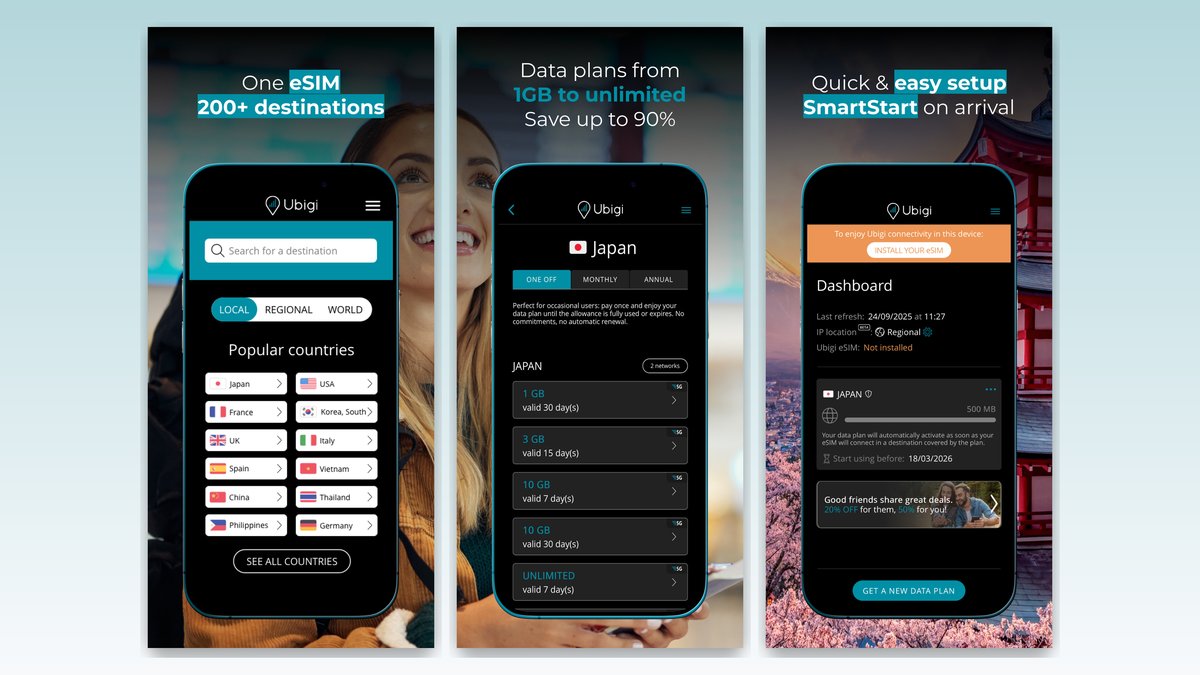
3. Ubigi — Best Price per Gigabyte for Heavy Data Users
≈ $15 / 10 GBNo daily capNTT-backed
Ubigi is the pick the spreadsheet loves. It’s run by Transatel, an NTT company — actual telecom people, not a reseller with a nice logo. Its Europe rates are startling. About $15 buys 10 GB over thirty days, with no daily cap to think about. That works out to $1.50 per full-speed gigabyte, cheap enough to beat most unlimited plans on real cost. There’s even a $2 half-GB plan for layovers, and unlimited tiers from about $23 a week if you insist.
The best extra is the monthly plan. About $19 a month buys 20 GB across Europe, and you can keep it active if you cross the Atlantic a few times a year. The trade-off is charm. Ubigi’s app is functional rather than lovely, and setup takes a few more taps than Airalo or Saily. If you tether a laptop and eat data, none of that matters. This is the plan that costs half as much.
Features
- Run by Transatel, an NTT company
- 10 GB for about $15 over thirty days — about $1.50 per full-speed gigabyte
- Also sells 25 GB ($29), 50 GB ($54), and a $2 half-GB layover plan
- Monthly plan: about $19 for 20 GB, good for frequent travelers
- No daily speed cap on any fixed-GB tier
Pros
- Best fixed-GB prices on this list, by a clear margin.
- Backed by NTT’s network deals.
- A monthly plan for frequent flyers.
- Even a tiny $2 layover plan.
Cons
- The app and setup are the least friendly here.
- The cheap headline plans are fixed tiers you must size right.
4. Holafly — Best Set-and-Forget Unlimited
$11.90–$73.9033 countriesNo daily GB cap
Holafly sells one idea, relentlessly: never look at a data meter again. Its Europe eSIM is unlimited-only and covers 33 countries. The list is smart, too. It includes the UK, Switzerland, Norway, and Iceland — four places that catch travelers off guard. Pricing ran from about $11.90 for three days to about $73.90 for thirty as of this writing. And the fair-use terms treat slowdowns as the exception, not a daily schedule. Holafly says a speed cap can apply in rare cases, lasts at most one day, then resets.
So who’s it for? People whose usage spikes without warning. One day it’s 400 MB of maps. The next it’s a three-hour video call with the office. If that’s you, Holafly’s version of unlimited fits best, because there’s no daily GB budget to blow through. The catch is the hotspot cap. Sharing stops at 1 GB a day, so this is a phone-first plan. If your laptop needs the data, buy Ubigi’s fixed GB instead and tether freely.
Features
- Unlimited-only plans covering 33 European countries
- Includes the UK, Switzerland, Norway, and Iceland
- Priced from about $11.90 for three days to $73.90 for thirty
- No daily gigabyte cap; slowdowns are rare, one-day events under its fair-use policy
- Hotspot/tethering sharing capped at 1 GB a day
Pros
- No daily GB cap.
- Slowdowns are rare and last a day at most.
- The UK, Switzerland, Norway, and Iceland are included.
- Buying is simple — just pick days.
Cons
- Hotspot sharing is capped at 1 GB a day.
- It costs more than fixed GB if you can guess your usage.
5. Nomad — Best for Short and Cheap Trips
From $5.5035 countries512 kbps throttle
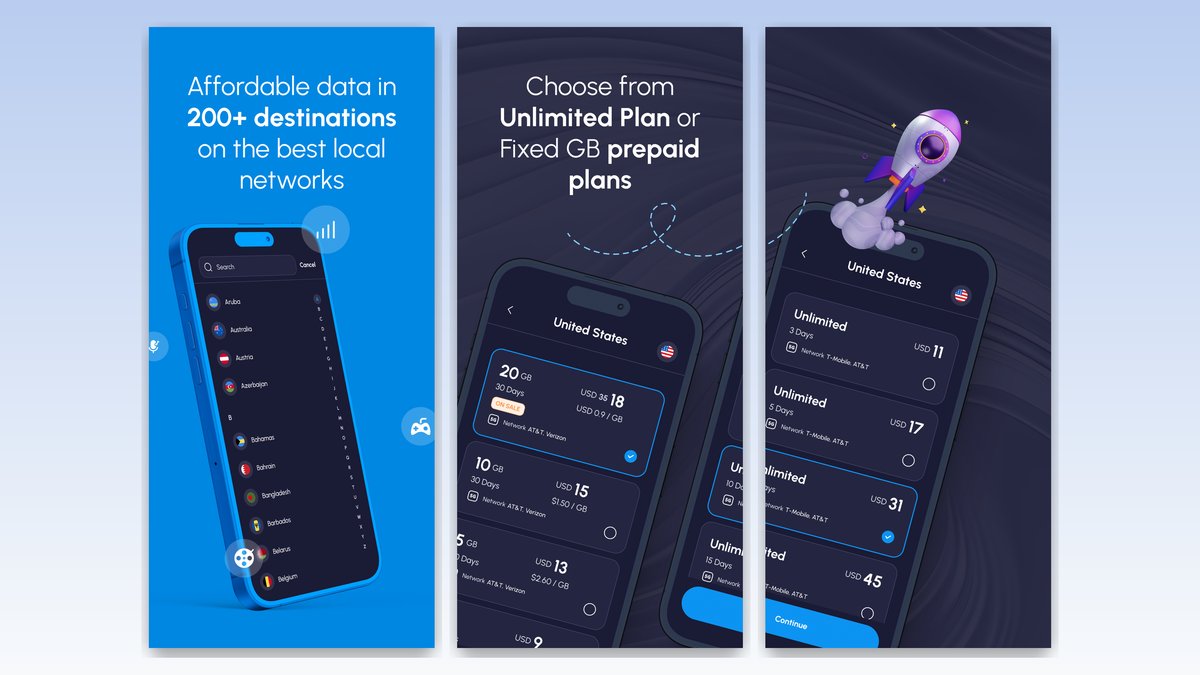
Nomad is the flexible budget option. Its Europe plans cover about 35 countries, in usefully small steps. 1 GB runs around $5.50. Mid-size tiers like 10 GB sit near $23, with bigger buckets on frequent sale. Short unlimited plans ran about $19 for five days and $34 for ten as of this writing. That five-day unlimited is the cheapest “don’t make me think” option here for a long weekend in one or two countries.
The fine print is the least generous here, and you should know it going in. After each day’s high-speed allowance on unlimited plans, Nomad slows you to 512 kbps. That’s half the slow lane Saily gives you. At that speed, maps limp and photos crawl. So treat Nomad’s unlimited as a short-trip tool for days you’ll mostly spend on hotel Wi-Fi. The real draw is the fixed-GB sales. When a 20 GB Europe plan drops under $30, it’s hard to beat.
Features
- Covers about 35 European countries
- Fixed-GB tiers in small steps: 1 GB near $5.50, 10 GB near $23
- Short unlimited plans: about $19 for five days, $34 for ten
- Throttles to 512 kbps after each day’s high-speed allowance on unlimited plans
- Fixed-GB bucket prices drop often on sale
Pros
- Cheap short unlimited plans for weekend trips.
- Many plan sizes, so you don’t overbuy.
- Frequent sales on big fixed-GB buckets.
Cons
- Harshest throttle of the group, at 512 kbps.
- Prices ride on sales, so last week’s great rate may be gone.
What Data-Only Really Means for Calls, Texts, and Bank Codes
Almost every plan above is data-only. No phone number, no SMS. Most guides mention this in passing. But it decides real problems, so let’s be exact about what breaks and what doesn’t.
- What still works: WhatsApp, iMessage, FaceTime, email, and every app call. Your home SIM stays in the phone next to the eSIM. So your real number still gets texts, including the bank codes everyone panics about. Getting a text abroad is free on nearly all carriers. Using data or answering calls is what costs.
- What breaks: calling European restaurants, taxi firms, or your hotel’s front desk. Also any service that must call you back on a local number.
- The middle path: Saily’s app can add a virtual phone number with minutes and texts on top of its data plan. Airalo sells some packages with calls and texts included. If your trip involves booking tables by phone, that add-on earns its keep.
The setup that works for nearly everyone is simple. Keep your home SIM active with data roaming switched off. Run all data through the travel eSIM. Your number keeps getting codes, and your wallet stays closed. We walked through the mechanics in our eSIM vs physical SIM explainer if you want the deeper version.
Before you buy: your phone must be carrier-unlocked to add any travel eSIM. On an iPhone, open Settings, then General, then About. “No SIM restrictions” under Carrier Lock means you’re clear. Apple keeps a current list of eSIM-capable phones and carriers if you’re not sure your model qualifies.
Check the Country List Before You Count on the UK or Switzerland
“Europe” is not a coverage area. It’s a marketing word, and every seller draws the map their own way. The EU’s roam-like-at-home rules force carriers inside the EU to treat member states as one zone. That’s why these regional plans exist at all. But the places travelers actually pass through often sit outside that zone.
The classic traps are easy to name. The United Kingdom left the EU roaming framework. Switzerland was never in it. Chunks of the Balkans sit outside too. That’s how a traveler doing London, Paris, and Zurich buys a “Europe” plan and gets surprises in two of three cities. Among our picks, Holafly’s 33-country list includes the UK, Switzerland, Norway, and Iceland by design. Airalo’s 41-country Eurolink casts the widest net. Saily and Nomad each cover around 35. But lists change, so the rule stands. Before paying, open the plan’s country list and check every country you’ll touch — even a two-hour train transfer.
Watch out: day trips are where this bites. A Geneva side-trip from Lyon. A Belgrade stop on a rail loop. An Istanbul layover. Each can sit outside your plan’s map while feeling like “still Europe.” Thirty seconds with the country list beats a day of hunting cafe Wi-Fi.
The Best eSIM for Japan When Your Trip Keeps Going
A lot of people shopping for a Europe eSIM are really planning a year of travel, and Japan is the next stamp. Good news. The same five apps compete there, and the pecking order barely moves.
Airalo’s Japan eSIM ran from about $11.50 for three unlimited days to about $69 for thirty as of this writing. It rides on Softbank’s network. Ubigi may be even more at home in Japan than in Europe. It’s an NTT-family company, Japan headlines its app’s popular list, and its Japan lineup runs from 1 GB up to unlimited. Holafly and Saily sell Japan plans with the same trade-offs they show in Europe. Holafly for no-meter unlimited, Saily for cheap fixed GB in a friendly app.
One Japan rule matters most. Buy the local Japan plan, not a global one, unless your trip truly spans regions. Single-country plans almost always cost less per gigabyte. And Japan’s public Wi-Fi is excellent, so most people burn less data there than in Europe.
Set Up Your eSIM at Home Before You Fly
Every horror story about travel eSIMs starts the same way. Someone scanning a QR code at the airport, on airport Wi-Fi, with a phone at 12 percent. Do it on your couch instead. The whole flow takes about five minutes.
- Install at home, on Wi-Fi. Buy the plan, follow the app’s install steps, and let the eSIM sit idle. Most plans don’t start their clock until you land and connect. But check, because policies differ.
- Mind the activation window. These plans aren’t gift cards. Saily, for one, activates a plan on its own 180 days after purchase, even if you never travel. Buy weeks ahead, not seasons ahead.
- Set your lines before takeoff. Data through the travel eSIM. Home SIM on, but with data roaming off. Calls and texts still reach your real number. Data bills don’t.
- Label the lines. Both iPhone and Android let you name each line. “Europe Data” and “Home” saves you fumbling through settings on a moving train.
Don’t skip this: your battery drains faster abroad, because the phone works harder. Constant maps, camera, and hunting for weak signal between networks. Data planning and power planning are the same job. Our guide to the best power bank for travel covers the flight-legal picks that pair with any eSIM here.
Frequently Asked Questions
What is the best eSIM for Europe right now?
Airalo is the best pick for most travelers. You get 41 countries on one eSIM, fixed-GB and unlimited options, and the most polished app in the category. Ubigi wins if you want the cheapest full-speed data. Holafly wins if you want unlimited with no daily gigabyte budget. There’s no single best for everyone. There’s a best for how you use data.
Is an eSIM cheaper than international roaming in Europe?
Almost always, and it’s not close on longer trips. Major US carriers’ daily travel passes run roughly $10 to $12 a day. Two weeks of that is around $150 per line. A two-week Europe eSIM runs about $12 to $50, depending on how much data you buy. The day pass only makes sense for a trip of a couple of days, or if you truly need your own number for constant calls.
Do travel eSIMs give you a phone number?
Most don’t. They’re data-only, which covers WhatsApp, maps, email, and app calls. Your home SIM stays in the phone and still gets texts and bank codes for free. Need to call local numbers often? Saily can add a virtual number with minutes on top of its data plan. Airalo sells some packages that include calls and texts.
Will my phone work with a travel eSIM?
If it’s an iPhone XS or newer, or a decent Android from about 2020 onward, almost certainly. The one condition is that it’s carrier-unlocked. That part trips people up. A phone still on an installment plan is often locked, and a locked phone can’t add any travel eSIM. Check Carrier Lock in your settings before you buy a plan, not after.
How much data do I need for a two-week trip to Europe?
Most travelers use 500 MB to 1 GB a day. That’s maps, translation, messaging, photo uploads, and evening scrolling. So 10 GB is the sweet spot for two weeks, with room to spare. Double it if you stream video on trains or hotspot a laptop. If you truly can’t guess your usage, that’s the one case where a fairly priced unlimited plan earns its premium.
Does one Europe eSIM work in the UK and Switzerland?
Only if those countries are on your plan’s list. This is the most common Europe eSIM mistake. The UK and Switzerland sit outside the EU’s roaming zone, so some plans skip them. Of our picks, Holafly includes both by design, and Airalo’s 41-country list covers them too. Whatever you buy, open the country list and check every stop on your route first.
The Bottom Line on Buying Data for Europe
The best eSIM for Europe comes down to matching the plan to how you travel, not picking one universal winner. Know your daily usage, and the right pick is obvious. Airalo for most people, most trips. Ubigi when you want the cheapest real gigabytes and don’t mind a plainer app. Saily for a cheap, guided first eSIM. Holafly when you refuse to think about a meter — on your phone, not your laptop. Nomad for short trips and sale-price buckets. Whatever you choose, do three things. Read the throttle policy before checkout. Check the country list against your real route. Install the eSIM at home. Do those, and the only surprise on your trip will be how little you spent staying connected.